By Ronan Shields | July 2, 2026
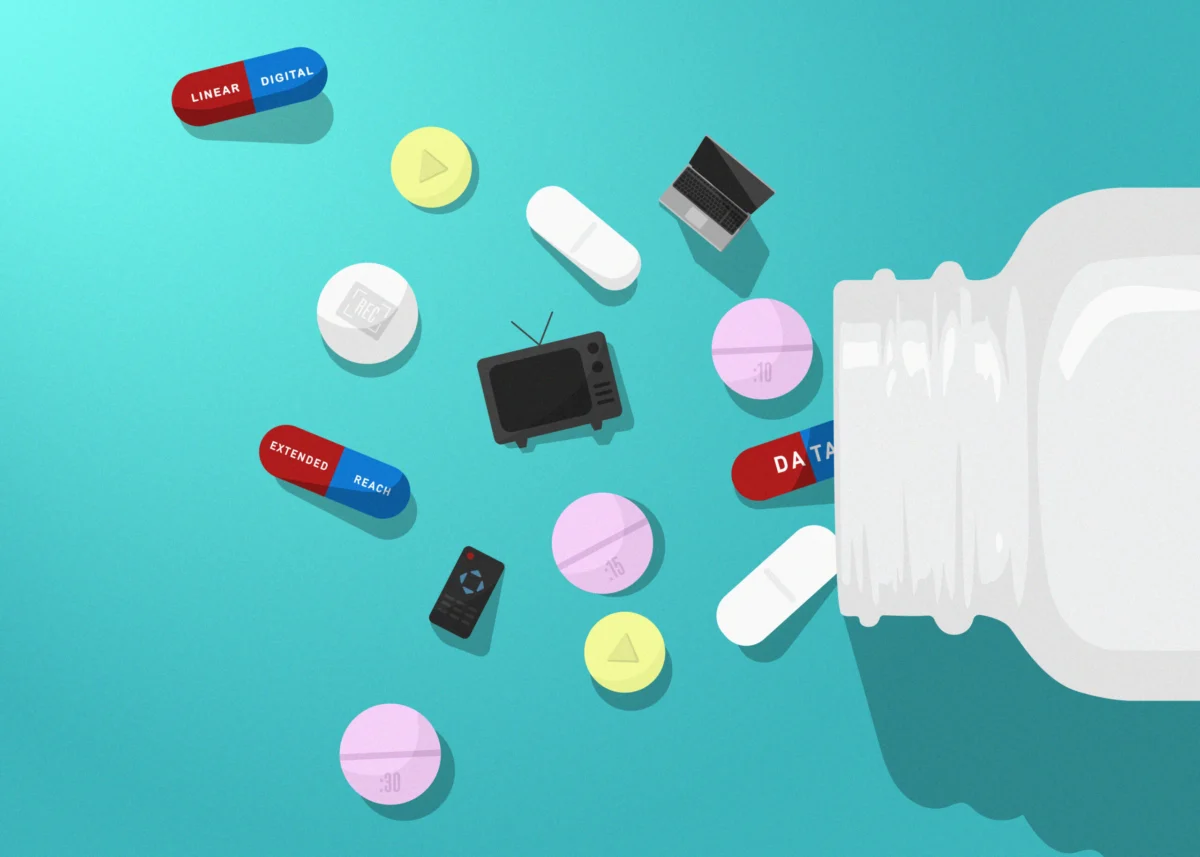
For decades, the pharmaceutical industry’s relationship with advertising was defined by a singular, monolithic medium: linear television. From the ubiquitous "ask your doctor" commercials during the evening news to the glossy spreads in national magazines, pharma marketing was synonymous with broad-reach, high-visibility campaigns. However, as of mid-2026, the sector is undergoing a seismic shift. Driven by aggressive regulatory oversight and a technological evolution that favors granular targeting, pharma brands are rapidly abandoning legacy media in favor of specialized, AI-driven digital ecosystems.
The Regulatory Pressure Cooker
In the highly regulated world of healthcare, the "shock of the new" is rarely a welcome disruption. Marketers in this sector operate under the watchful eyes of the Food and Drug Administration (FDA), the Federal Trade Commission (FTC), and a sprawling web of privacy regulators. Unlike the CPG (Consumer Packaged Goods) sector, where a misguided ad campaign might lead to a bruised brand image, a misstep in pharmaceutical marketing carries existential risks: patient safety concerns, debilitating litigation, and severe government sanctions.
For years, this environment fostered a deeply conservative orthodoxy. But the ground is shifting. The FDA has intensified its scrutiny of traditional television advertisements, questioning the efficacy and transparency of legacy messaging. As the regulatory noose tightens around linear TV, the pharmaceutical industry—once the bedrock of traditional ad spend—is pivoting toward digital channels that offer better compliance tools, superior data hygiene, and, crucially, the ability to pivot messaging in real-time.
Chronology: From Broadcast to Binary
The transition did not happen overnight, but the acceleration has been stark:
- 2024: Pharma marketers begin testing the waters of programmatic digital advertising as a supplement to TV, though linear remains the dominant budget priority.
- 2025: A watershed moment occurs. For the first time in history, digital ad spending in the healthcare sector surpasses linear TV spend. Agencies and brands, wary of the "upfronts" economy and the looming threat of stricter TV ad bans, begin diversifying aggressively.
- Late 2025: DeepIntent, a key player in the healthcare-specific ad tech space, signals the maturity of the sector by selling a majority stake to private equity firm Vitruvian Partners for $637 million.
- June 2026: In the lead-up to the Cannes Lions Festival of Creativity, the industry witnesses a flurry of product launches, most notably "Helix AI," signaling that the era of generic DSPs (Demand-Side Platforms) is coming to a close.
The Data-Driven Divide: $26.2 Billion vs. $6.9 Billion
The numbers tell a compelling story of decline and growth. Forecasts for 2026 indicate that digital ad spending within the healthcare and pharmaceutical verticals will reach a staggering $26.2 billion. In contrast, spending on traditional media has withered to a mere $6.9 billion.
This disparity is not merely a reflection of audience behavior—it is a reflection of necessity. As Mallory Wils, EVP of Sales at Branchlab, noted during discussions in 2025, the industry is currently grappling with a "patchwork of emerging state-level regulations." These regulations demand a level of privacy-forward targeting that traditional, broad-reach TV simply cannot provide. To stay compliant while remaining competitive, brands are migrating their budgets to platforms that can navigate these complex legal requirements while simultaneously delivering personalized health information to the right patients and providers.
The Rise of Specialized Ad Tech
The shift in spending has birthed a new power structure in the ad tech ecosystem. Generalist platforms—the traditional demand-side and sell-side platforms that once dominated the digital landscape—are losing ground to "niche-specialist" firms. Companies like DeepIntent, PatientPoint, and PulsePoint have moved from being peripheral vendors to central pillars of the pharmaceutical marketing stack.
These companies are winning because they speak the language of healthcare. Where a standard DSP treats a patient audience as a series of cookies or device IDs, these specialized platforms treat them as clinical segments. They offer an infrastructure built to withstand the scrutiny of medical-legal-regulatory (MLR) review teams, ensuring that the right message reaches the right person without violating patient privacy or regulatory mandates.
Helix AI and the "Agentic" Era
The recent unveiling of "Helix AI" by DeepIntent represents the current state-of-the-art in this sector. Billed as the first "agentic AI" platform purpose-built for healthcare marketers, it marks a departure from traditional "set-and-forget" advertising.
Helix AI allows marketers to interact with complex datasets—patient claims, provider prescribing patterns, and clinical insights—using natural language. Instead of spending weeks manually building audiences through multiple layers of data silos, marketers can now query the system to identify high-potential patient cohorts and immediately activate them across various channels, including social media and streaming platforms.
This is not just about automation; it is about commercial intelligence. By integrating these capabilities into a single, cohesive stack, companies like DeepIntent are positioning themselves not as mere ad-buyers, but as intelligence engines that bridge the gap between clinical data and marketing performance.
Official Responses and Strategic Implications
The shift has not gone unnoticed by the C-suite. DeepIntent CEO Chris Paquette has been vocal about the company’s evolution, emphasizing that the firm is pivoting away from the DSP label toward a broader definition: a "commercial intelligence and activation platform."
During the recent PR blitz surrounding the Cannes Lions, Paquette underscored the importance of live, high-impact moments. "This upgraded stack is meant to support big, high-QPS (queries per second) moments like live events," Paquette explained. With the FIFA World Cup and the NBA Finals acting as testing grounds, DeepIntent has secured partnerships with major broadcasters to allow pharma brands to buy and optimize ad inventory in real-time.
When probed on how this growth is impacting the broader market, DeepIntent representatives were characteristically guarded regarding their competitors, though Paquette noted that the firm is seeing growth rates "multiple times higher than the competition." This, he argues, is a direct result of "a disproportionate amount of new dollars flowing into DeepIntent" as brands realize that legacy DSPs are no longer sufficient to handle the nuances of modern healthcare marketing.
Implications for the Future
The implications of this migration are profound. First, the "death" of traditional linear TV for pharma is likely premature, but its role is changing. It is becoming a top-of-funnel awareness tool, while the heavy lifting—the conversion, the educational engagement, and the patient outreach—is moving entirely to the digital sphere.
Second, the barrier to entry for ad tech providers in the healthcare space has never been higher. To compete, platforms must now offer more than just reach; they must offer compliance, data security, and an AI-driven interface that can translate complex medical data into actionable marketing insights.
Finally, for the pharmaceutical brands themselves, the challenge is no longer about finding the largest audience, but about finding the most relevant one. As they move away from the "blunt instrument" of linear television, they are entering a new, more precise era of communication. While the risks of marketing in this space remain high, the tools available to manage those risks have become significantly more sophisticated, effectively turning the "shock of the new" into a competitive advantage for those willing to innovate.
As the industry looks toward the remainder of 2026 and beyond, one thing is clear: the era of the mass-market pharmaceutical commercial is fading. In its place, a data-dense, AI-powered, and highly regulated digital infrastructure is rising—one that promises a future where healthcare marketing is as precise as the medicine it promotes.