Evan Lee Salim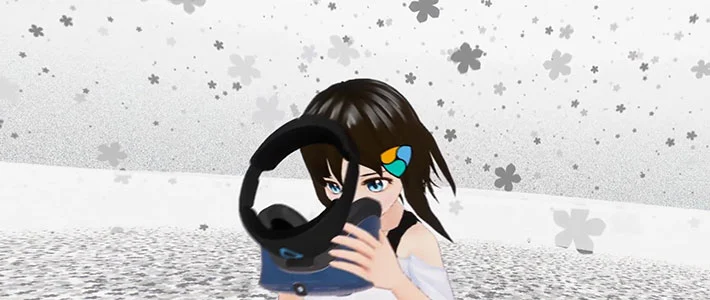
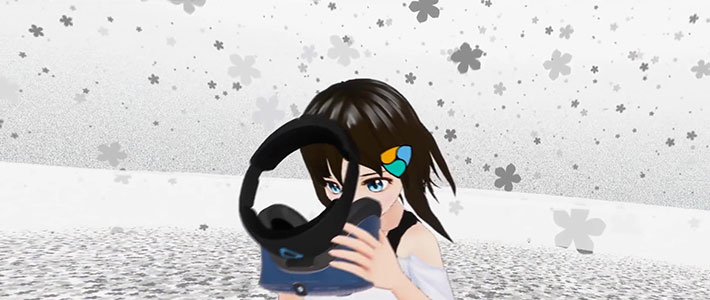
In the rapidly expanding frontiers of the Metaverse, where millions of users congregate to socialize, work, and express themselves through digital avatars, the line between immersive freedom and psychological safety is becoming increasingly blurred. As social Virtual Reality (VR) platforms like VRChat, RecRoom, and Neos VR grow in popularity, so too does the prevalence of toxic behavior. In a proactive effort to quantify these risks and demand better safeguards, prominent Japanese VTuber Virtual Bishojo Nem and Swiss anthropologist and VTuber Mila (Liudmila Bredikhina) have launched an extensive, data-driven initiative to study harassment in the virtual space.
Supported by the Japanese non-profit organization Virtual Rights, this collaborative survey aims to move beyond anecdotal evidence, providing the factual data necessary to foster a more secure digital future. As the digital landscape continues to evolve, this research represents a critical milestone in the ongoing discourse surrounding online safety, bodily autonomy in digital spaces, and the ethical responsibilities of Metaverse platform developers.
Main Facts: A Call for Empirical Data
The survey, which officially opened to the public on September 5, 2022, serves as an academic and community-led inquiry into the nature of harassment within social VR. Unlike previous efforts that may have focused on broader internet toxicity, this study is laser-focused on the unique nuances of VR—a medium where the sense of "presence" and "embodiment" makes harassment feel significantly more intrusive and psychologically impactful.
The research project is structured to gather insights across three primary pillars:
- The Prevalence and Typology of Harassment: Assessing the frequency of unwanted interactions and categorizing the specific behaviors users encounter.
- The Intersection of Identity and Safety: Investigating how a user’s perceived gender, sexuality, and avatar representation influence their vulnerability to targeted harassment.
- Coping Mechanisms and Impact: Analyzing how users navigate and mitigate unwanted behavior, and the long-term psychological or social repercussions these interactions have on their participation in the Metaverse.
Participation is strictly limited to individuals who have utilized social VR platforms with a head-mounted display (HMD) at least five times within the preceding year. This ensures that the data reflects the experiences of "active residents" rather than casual observers, providing a more accurate snapshot of the day-to-day realities of VR users. The survey, which takes approximately 3–7 minutes to complete, guarantees anonymity, with the researchers explicitly instructing participants to avoid sharing any personally identifiable information.
Chronology: A History of Virtual Advocacy
This initiative is not the first foray into community research for Nem and Mila. The duo has built a reputation as pioneers in "VTuber-led sociology," leveraging their massive platforms to conduct meaningful research that traditional academia might struggle to distribute effectively.
- Initial Collaboration: The partnership began with a focus on understanding the rapid shifts in digital communication patterns during the COVID-19 pandemic. Their study, "How did COVID-19 accelerate virtual communication?", highlighted the unprecedented reliance on digital avatars for human connection during lockdowns.
- Lifestyle Analysis: Following the pandemic research, the pair conducted the "Social VR Lifestyle Survey," which examined how users structure their lives, economies, and social circles within virtual environments.
- The Harassment Inquiry (September 2022): Building on their previous work, Nem and Mila identified a growing need for a dedicated investigation into safety. With the backing of the NPO Virtual Rights, they launched the current survey on September 5, 2022, with a deadline set for September 24, 2022.
The timeline of their work tracks the evolution of the Metaverse itself—from a niche hobby to a essential space for human interaction, and finally, to a site of complex social challenges that require urgent attention.
Supporting Data: Why VR Harassment is Different
The necessity for this survey stems from the unique nature of VR interaction. In traditional gaming or social media, harassment is largely textual or auditory. In VR, the integration of 3D motion tracking and haptic feedback creates a sense of "embodied presence." When an avatar is harassed, it is not merely a user account being targeted; it is a digital representation of a person’s physical body in a 3D space.
Existing anecdotal reports and early industry studies suggest that VR harassment often involves:
- Boundary Violations: Unwanted proximity or "groping" of an avatar.
- Voice/Auditory Harassment: Targeted verbal abuse that feels more intimate due to the spatial audio of VR environments.
- Platform-Specific Toxicity: Harassment that exploits platform-specific tools, such as the ability to "block" or "mute," or the lack thereof in certain social hubs.
The researchers intend to use the findings from the current survey to create a comprehensive report. By compiling this data, they hope to move the conversation from "users should just mute" to a structural discussion about safety design features, such as personal "safe bubbles," reporting tools that function in real-time, and community moderation standards that respect the privacy of the user while punishing offenders.
Official Responses and Industry Context
The involvement of the NPO Virtual Rights adds significant weight to the survey. As an organization dedicated to the protection of user rights in virtual spaces, their official endorsement signals that this is not merely a fan project, but a serious sociological effort.
The industry at large has been slow to react to these concerns. While companies like Meta (formerly Facebook) have introduced "Personal Boundary" features to prevent avatars from getting too close to one another, critics argue that these measures are reactive rather than proactive. The survey by Nem and Mila aims to provide the "factual data" that platform developers often claim is missing when they are asked to implement more robust safety protocols.
Furthermore, the legal landscape is shifting. In Japan, the courts have begun to recognize the severity of online harassment, with recent rulings siding with VTubers in defamation cases. This sets a precedent that the digital self has legal standing. By gathering data on how users experience harassment, Nem and Mila are effectively building a knowledge base that could eventually inform future policy-making and legal frameworks regarding virtual conduct.
Implications: The Future of the Metaverse
The implications of this survey extend far beyond the immediate results. If the Metaverse is to become a "next-generation internet," it cannot be a space where only the loudest or the most aggressive thrive.
The Empowerment of the User
By participating in this survey, users are being given a voice in the architectural development of the spaces they inhabit. The researchers are empowering the community to define what "safety" means to them, rather than having it dictated by corporations that may prioritize engagement metrics over user well-being.
A Blueprint for Future Research
The methodology employed by Nem and Mila—using VTuber avatars to reach specific demographics and bridge the gap between academic research and community engagement—could serve as a blueprint for future digital sociologists. This model of "influencer-driven research" is particularly effective in subcultures that are inherently distrustful of traditional corporate or academic oversight.
Challenging the Status Quo
Ultimately, the study challenges the "wild west" mentality that has plagued the Metaverse since its inception. The argument is simple: if VR is to be a place for creative expression, professional collaboration, and authentic connection, it must be governed by a set of ethics that prevent the exploitation of that very connection.
Conclusion
The collaboration between Virtual Bishojo Nem and Mila represents a pivotal moment in the history of the Metaverse. By turning their focus toward the darker aspects of virtual interaction, they are not only highlighting the reality of harassment but are also advocating for a more mature, safe, and inclusive digital ecosystem.
As the survey results are synthesized and shared, the expectation is that they will serve as a wake-up call for platform developers and policy makers alike. The digital avatars we inhabit are more than just pixels and polygons; they are the extensions of our identities. As we continue to blur the lines between the physical and the virtual, ensuring that those identities remain safe is not just a technological challenge—it is a fundamental human rights issue. Through their dedication, Nem, Mila, and the NPO Virtual Rights are ensuring that the Metaverse has the chance to become a space that fosters genuine human flourishing, rather than one defined by the same toxic patterns that have hindered the growth of the open internet for decades.


 Azzam Bilal Chamdy
 Muslim