

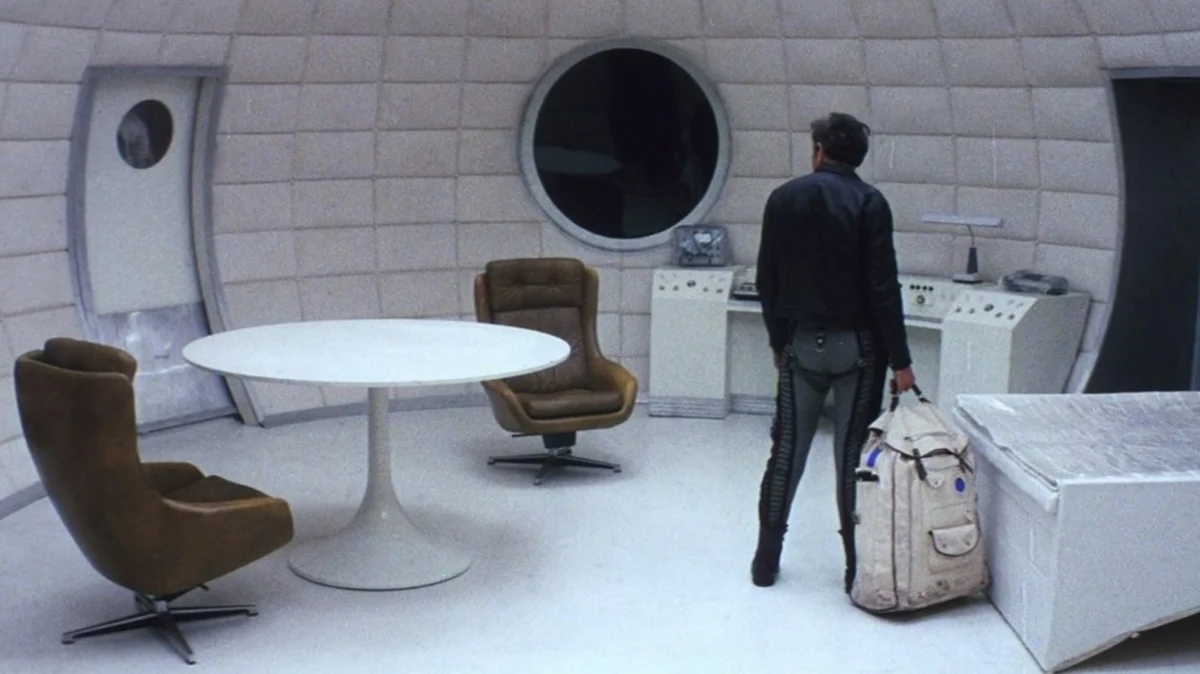
In the history of global cinema, few films have defied the traditional metrics of success quite like Andrei Tarkovsky’s 1972 masterpiece, Solaris. While Western science fiction in the 1970s was increasingly defined by the brisk pacing of blockbusters and the spectacle of space opera, the Soviet Union was home to a cinematic phenomenon that defied the logic of the box office. Solaris, a meditative, sprawling, and deeply introspective exploration of the human psyche, maintained a continuous theatrical run in its native Russia for an astounding 15 years.
To understand why a film characterized by its glacial pace and profound melancholy held audiences captive for over a decade, one must look beyond the genre of science fiction and into the soul of Soviet cinema.
The Architecture of Slow Cinema: Defining the Tarkovsky Style
Andrei Tarkovsky was not a filmmaker interested in the mechanics of the "pulse-pounding" narrative. He was a pioneer of what critics often call "slow cinema"—a style defined by long takes, minimal editing, and a meditative atmospheric quality that forces the viewer to confront time itself.
In Solaris, as in his later masterpiece Stalker, Tarkovsky treats the camera as an observer rather than a participant. His films are punctuated by long sequences of silence, where the protagonist—Kris Kelvin, played by Donatas Banionis—navigates environments that feel less like physical locations and more like manifestations of the subconscious. The film is famous for its deliberate lack of conventional action. A notable sequence, often cited by film scholars, involves a four-minute and 42-second shot from inside a car navigating a highway. It is a moment of pure atmosphere, devoid of traditional plot progression, designed specifically to force the audience into a state of hypnotic reflection.
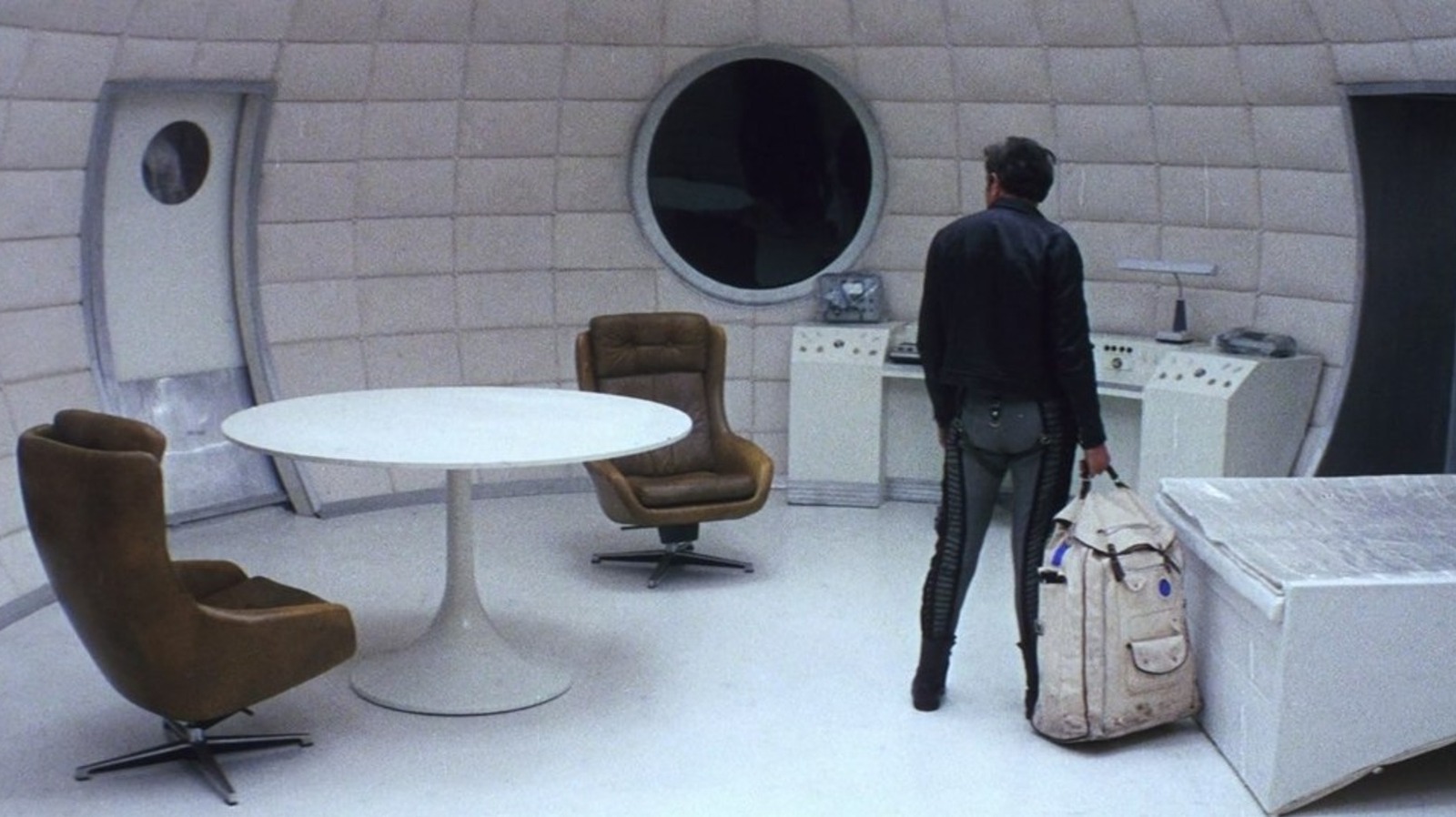
This was not a mistake; it was a philosophy. Tarkovsky believed that cinema could achieve a "sculpting in time." By slowing the breathing of his audience and immersing them in an eerie, static environment, he effectively moved them into a fugue state, bridging the gap between the film’s reality and the viewer’s own inner world.
The Narrative Core: A Mirror to the Soul
Based on the 1961 novel by Polish author Stanisław Lem, Solaris presents a premise that serves as a perfect vehicle for Tarkovsky’s philosophical inquiries. The story follows Kris Kelvin, a psychologist sent to a space station orbiting the planet Solaris, which is covered by a mysterious, sentient ocean.
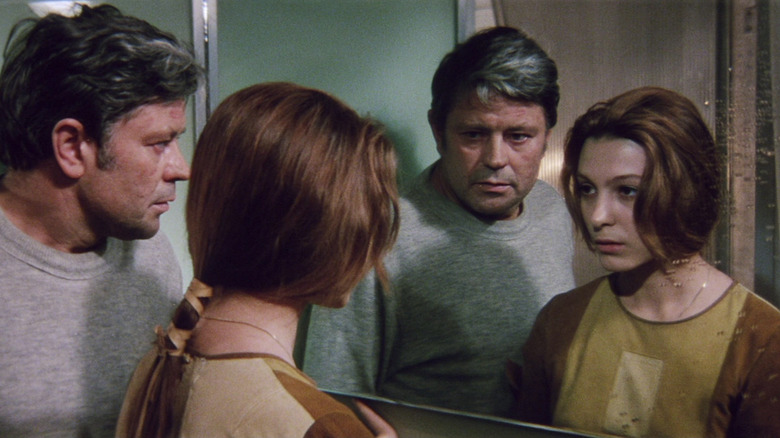
Upon arrival, Kelvin finds the station’s crew in a state of psychological collapse. He soon learns that the planet is capable of "reading" the minds of those who orbit it and manifesting physical replicas of their most suppressed memories and guilts. For Kelvin, this manifests as the return of his wife, Hari, who had died by suicide years prior.
Unlike the book, which focuses on the impossibility of communicating with an alien intelligence, the film uses the alien presence as a psychological catalyst. It asks a fundamental question: If you were given a second chance to be with the person you loved—or the person you believe you loved—would you take it, even if you knew it was a phantom?
Chronology: From Soviet Release to International Stature
The trajectory of Solaris is a study in cultural endurance. Following its 1972 release, the film was initially met with skepticism by some, including the author of the source material. However, it quickly embedded itself into the Soviet cultural fabric.
- 1972: Solaris premieres to critical acclaim in the Soviet Union. It is framed by the state as a "humanistic" alternative to Western sci-fi.
- 1972–1987: The film remains in constant rotation in state-run theaters. Unlike Western cinema, which cycled out films within weeks or months, Solaris became a permanent fixture, watched by generations of Soviet citizens.
- 1972–1980s: While the West was undergoing a shift toward the high-octane excitement of Star Wars and Alien, Soviet audiences found in Solaris a somber, intellectual anchor.
- 1987: The theatrical run concludes, marking the end of an era where a single work of art served as a generational touchstone.
- 2002: Steven Soderbergh directs a Hollywood remake starring George Clooney, which, despite high production values, fails to replicate the cultural weight or the longevity of the original.
The Friction Between Creator and Filmmaker
One of the most fascinating aspects of Solaris is the public disdain held by its author, Stanisław Lem. Lem, a titan of hard science fiction, believed that Tarkovsky had fundamentally betrayed the spirit of his work.
Lem’s vision for the novel was rooted in the concept of the "truly alien"—an entity so vastly different from humanity that communication is impossible. He was deeply unimpressed by Tarkovsky’s focus on the domestic, emotional, and religious aspects of Kelvin’s experience. Lem famously remarked that Tarkovsky had turned his work into a version of Dostoevsky’s Crime and Punishment set in space.
Tarkovsky, however, was less interested in the "hard" science of the ocean and more interested in the "soft" science of human morality. He was a man of deep faith, and he viewed the ocean of Solaris not as a biological entity, but as a divine or cosmic mirror that forced humanity to confront its own sins. This friction defines the film’s legacy: it is either a brilliant adaptation or a complete subversion of the source material, depending on whether one prefers the rigors of physics or the complexities of the human spirit.
Supporting Data: Why It Endured
The 15-year run of Solaris is unprecedented in modern cinema, but it can be explained by the Soviet Union’s state-controlled distribution model and the film’s function as a "Great Movie."
- The "Antidote" Strategy: Soviet leadership famously positioned Solaris as the intellectual superior to Stanley Kubrick’s 2001: A Space Odyssey. Where 2001 was viewed in the USSR as "cold" and "technocratic," Solaris was championed for its "human warmth" and emotional vulnerability.
- Film School Integration: Solaris became the primary text for film students in the Eastern Bloc. Its cinematography—masterminded by Vadim Yusov—set the standard for how to frame isolation and psychological dread.
- Roger Ebert’s Endorsement: Decades later, legendary critic Roger Ebert solidified the film’s legacy by including it in his "Great Movies" collection. He argued that Tarkovsky’s genius lay in his ability to predict the virtual reality age, where our relationships are increasingly defined by our perceptions rather than physical presence.
Implications for Modern Sci-Fi
The failure of the 2002 Steven Soderbergh remake serves as a cautionary tale about the nature of cinema. Even with a massive budget, a Hollywood star like George Clooney, and the backing of producer James Cameron, the remake could not capture the lightning in a bottle that was the 1972 original.
The implication is clear: true science fiction excellence often relies on the audience’s willingness to sit with uncomfortable questions. In an era of content consumption where pacing is dictated by engagement metrics, the legacy of Solaris stands as a defiant reminder that art does not need to be fast to be meaningful.
The film remains a testament to the idea that science fiction is at its best when it leaves the stars behind to focus on the terrain of the human mind. Whether one finds it a "head trip" or a masterpiece of slow-burn storytelling, the 15-year run of Solaris in Russia remains a unique testament to the power of cinema to act as a mirror—not just to our technology, but to our own unresolved guilt, our capacity for love, and our desperate, eternal search for meaning in the vast, silent vacuum of the cosmos.











No comments yet. Be the first to join the conversation!