Layla Zulfa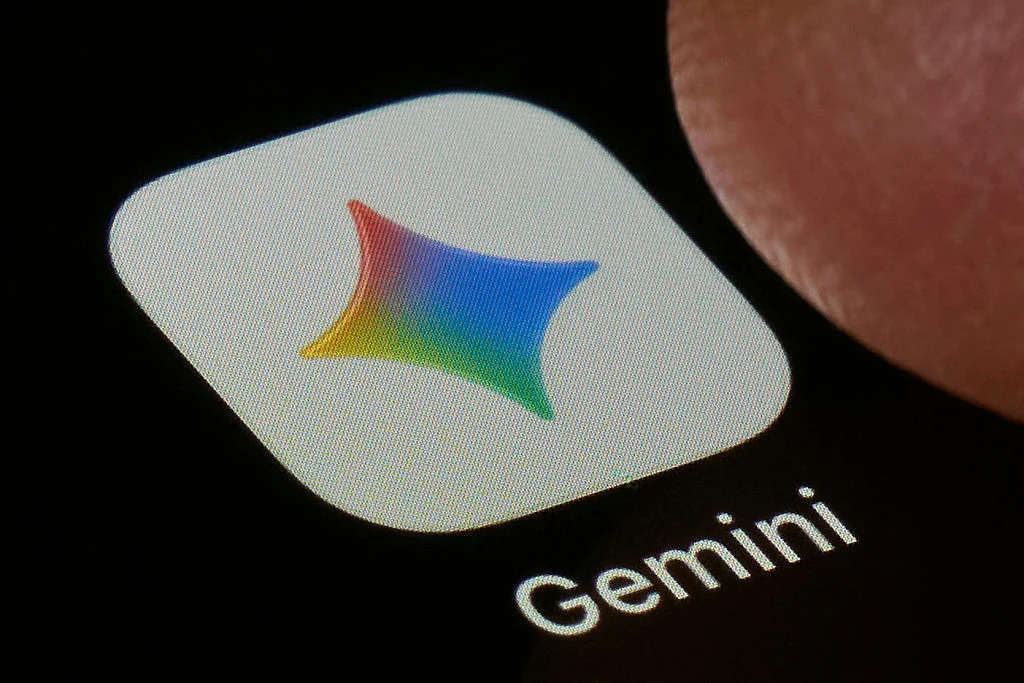
In a significant escalation of the ongoing battle between the creative arts and the tech industry, a coalition of major publishers and prominent authors has filed a class-action lawsuit against Google. The legal challenge centers on the core of Google’s artificial intelligence strategy, accusing the tech giant of mass copyright infringement in the development of its Gemini AI platform.
The plaintiffs, a formidable group including industry giants Hachette, Cengage, and Elsevier, alongside renowned author Scott Turow and the advocacy group S.C.R.I.B.E., allege that Google utilized their copyrighted works without authorization. Perhaps more damaging is the accusation that Google intentionally scrubbed or altered copyright management information (CMI) from these works to mask the origins of its training data—a move the plaintiffs describe as a deliberate effort to “conceal” that Gemini was built upon stolen intellectual property.
The Core Allegations: A Breach of Trust
The lawsuit, filed in the U.S. District Court for the Southern District of New York, highlights a specific, long-standing relationship between these publishers and Google. For years, publishers provided Google with digital copies of books for the limited, agreed-upon purpose of powering the "Google Books" search function. That service was designed to allow users to search for content and view brief snippets of text—a model that publishers argue is fundamentally different from the wholesale ingestion of books for generative AI training.
The complaint alleges that Google leveraged its position as a trusted partner to gain access to vast libraries of copyrighted material, subsequently misappropriating that data for Gemini. By moving the litigation to the Southern District of New York, the plaintiffs hope to distance themselves from the recent, unfavorable rulings handed down by California courts, which have thus far been more lenient toward AI companies.
Chronology of the Conflict
The friction between AI developers and the creative community has been building for years, characterized by a series of legal skirmishes that have slowly transformed from niche disputes into a battle over the future of the digital economy.
- The Early Years (Pre-2023): As Large Language Models (LLMs) began to emerge, publishers and authors were initially wary but largely focused on existing copyright frameworks.
- The Generative Explosion (2023–2024): Following the release of ChatGPT and subsequent models, the scale of data harvesting became apparent. Authors began to realize their works were being used to train systems capable of mimicking their unique voices and prose styles.
- The California Precedents (2025): Two landmark decisions in California saw federal judges side with Meta and Anthropic, respectively. The courts leaned heavily on the “fair use” doctrine, suggesting that the transformative nature of AI training—converting data into a functional model—did not violate copyright.
- The Anthropic Settlement (Mid-2025): Despite the fair use win, the industry faced a massive setback when Anthropic was ordered to pay a record-breaking $1.5 billion for pirating training data. This highlighted a distinction between the "use" of data and the "source" of data. While the court allowed the training, it penalized the company for the unauthorized acquisition of the books themselves.
- The Current Suit (2026): The Hachette v. Google lawsuit represents the latest chapter, moving the theater of conflict to New York and raising the stakes by alleging active, intentional concealment of copyright data.
Supporting Data: The Cost of Innovation
The legal arguments surrounding this case are underpinned by a tension between the intent of 20th-century copyright law and 21st-century technological capability. The current U.S. copyright framework, largely solidified in 1976, was never designed to account for machine learning.
One of the most compelling pieces of evidence cited in the complaint is an internal Google document. The plaintiffs allege that this document contains an internal risk assessment acknowledging that using copyrighted books for AI training could be “highly problematic for Google,” with potential financial liabilities reaching into the "$10Bs–$100Bs." This alleged admission, if verified, could prove fatal to Google’s defense that its actions were an innocent, transformative application of technology.
Furthermore, the economic impact is being felt globally. The $1.5 billion Anthropic settlement, while historic, served as a catalyst rather than a conclusion. With half a million writers eligible for compensation, many opted out of the settlement, choosing instead to join new class actions. This mass opt-out signals that authors are not merely seeking a payout; they are seeking a legal precedent that mandates consent and compensation for every instance of AI training.
The Fair Use Defense: A Strained Legal Doctrine
The primary defense deployed by AI companies—including OpenAI, Meta, and Google—is the "fair use" doctrine. This doctrine allows for the use of copyrighted material without permission under specific circumstances, such as criticism, news reporting, teaching, or research.
Tech companies argue that training an AI is a "transformative" act that creates a new product with utility far beyond the original work. However, critics, including the authors represented in this lawsuit, argue that AI models are essentially high-tech plagiarism machines. They contend that by consuming a book in its entirety and then generating outputs that can mimic that author’s style, the AI acts as a market substitute for the original work, thereby directly harming the author’s livelihood.
The California decisions established a potential roadmap for tech giants, but they are not binding in New York. The Southern District of New York has a history of robust protection for intellectual property rights, particularly in the publishing sector. A decision here could create a "circuit split," effectively forcing the U.S. Supreme Court to intervene and provide a definitive interpretation of how copyright applies to the age of artificial intelligence.
Implications for the Future of AI and Publishing
The implications of the Google lawsuit extend far beyond the defendants. If the courts decide that Google’s training methods constitute copyright infringement, it could force a massive, industry-wide restructuring.
1. The Death of the "Wild West" Era
If companies are forced to license the data they use for training, the era of scraping the open web for "free" training data will come to an abrupt end. This would likely favor larger companies with deep pockets—like Google, OpenAI, and Microsoft—who can afford to strike multi-billion dollar licensing deals with publishers, potentially squeezing out smaller startups that cannot afford such overhead.
2. The Rise of "Opt-In" Training
We may see a shift toward an opt-in or opt-out ecosystem, similar to the GDPR in Europe. Platforms would be required to verify that they have explicit permission to use copyrighted data, creating a new market for "AI-ready" datasets.
3. The Future of Authorship
For writers, this case is an existential battle. If AI can continue to digest, replicate, and synthesize the collective knowledge and creativity of humanity without compensation, the incentive to create new, original works may be severely diminished. The publishers are betting that the court will recognize the value of human labor and protect the intellectual property that forms the backbone of the information economy.
Official Responses and Next Steps
As of press time, Google has not provided a detailed response to the specific allegations in the Hachette v. Google complaint. In past statements regarding AI training, the company has maintained that its use of information is consistent with the principles of fair use, emphasizing that AI contributes to the advancement of knowledge and innovation.
For the plaintiffs, the goal is clear: they are seeking injunctive relief to stop Google from continuing to use their works, as well as significant damages for past infringement. The legal community will be watching the New York court closely, as this case may serve as the definitive benchmark for the next decade of digital law.
As the lines between machine-generated and human-authored content continue to blur, the judiciary’s role in defining "fair use" will become the most consequential decision in the history of the internet. Whether this lawsuit results in a settlement or a landmark verdict, it has already succeeded in doing one thing: it has forced the tech industry to confront the fact that, in the rush to build the future, they may have burned the foundations of the past.


 Sagoh
Sagoh
 Raul Delapena Setiawan