

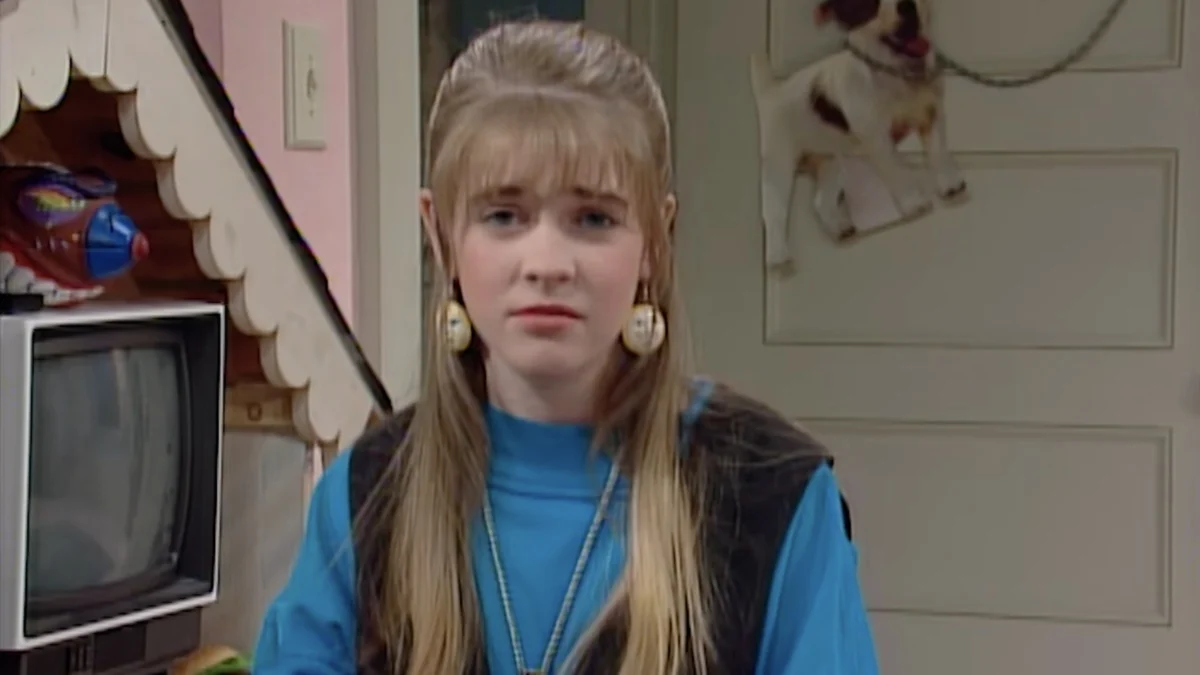
In the landscape of 1990s television, the cultural divide was sharp and unmistakable: you were either a "Disney Channel kid" or a "Nickelodeon kid." While the House of Mouse leaned into polished, high-gloss family standards, Nickelodeon—a network named after the early 20th-century five-cent movie theaters—positioned itself as the edgier, cooler alternative. It was a network that embraced the chaotic energy of the decade, oscillating between the surreal, grotesque humor of The Ren & Stimpy Show and the grounded, relatable live-action comedies that defined the era’s aesthetic.
Among the crown jewels of this programming block was Clarissa Explains It All. The series was a cultural touchstone for teenagers, particularly young girls, who saw themselves reflected in the titular character, Clarissa Darling. Played with dry wit and an authentic, non-preachy charm by Melissa Joan Hart, Clarissa was a pioneer of the "breaking the fourth wall" technique, inviting viewers into her bedroom to navigate the minefields of acne, parental authority, and the quintessential annoyance of a younger brother named Ferguson.
Yet, the role that launched a thousand careers and became the blueprint for the modern teen dramedy almost didn’t happen for Hart. In a twist of fate that reads more like a Hollywood script than real life, it was a minor, recurring wardrobe malfunction that ultimately swayed the show’s creator, Mitchell Kriegman, to cast Hart—a decision he initially resisted for a rather specific, casting-related reason.
The Casting Hurdle: Breaking the "Blonde" Stigma
The path to stardom is rarely a straight line, and for a young Melissa Joan Hart, the road to becoming Clarissa Darling was fraught with internal industry biases. As Hart revealed during an appearance at Tampa Bay Comic Con in August 2025, and further elaborated upon during her interview on Tori Spelling’s misSPELLING podcast, the executive team behind the show had a very specific image of their protagonist in mind—and it did not include a blonde.
"They said, ‘We do not want a blonde for this part.’ That was their big thing," Hart explained. The executive producers were searching for a specific archetype of the "smart girl," and in the early 90s, the prevailing industry trope often associated intellectual depth or "the girl next door" persona with darker hair, leaving blonde actresses at a disadvantage.
Hart was only in the room to begin with because of a chance encounter. She had been performing on Broadway at the time, and her talent had caught the eye of a theatergoer who just happened to be Mitchell Kriegman’s veterinarian. The recommendation was passed along, leading to an audition invitation. Despite the "no-blonde" mandate from the production office, Hart’s raw capability and magnetic stage presence made her impossible to ignore. However, what sealed the deal was not her resume, but a recurring incident involving her favorite "lucky" audition outfit.
Chronology of an Audition: The Lucky Overalls
To understand how the audition unfolded, one must look at the specific routine of a 12-year-old actress trying to make her mark. Hart described a superstitious habit of wearing the same outfit to every callback, believing it brought her good fortune.
"I think I went three times to each audition," Hart recounted. "I would always wear the same thing. Because it was, like, good luck. And I had a pink t-shirt on and these acid-washed overalls. And it turns out the producer really liked pink and blue, so it was, like, pink and blue."
The "lucky" ensemble, however, was not perfectly engineered for the physicality of an audition. As Hart moved through her lines, the straps of her overalls—the hallmark of 90s fashion—repeatedly slipped down. Unfazed, Hart would simply pull the strap back up and continue with her dialogue.
This cycle of the strap falling and the actress naturally, and perhaps unconsciously, adjusting it happened multiple times. It was an authentic, human moment that captured the spirit of a young girl trying to manage the mundane frustrations of her wardrobe—exactly the kind of grounded, unscripted behavior that would define Clarissa Darling.
The Creator’s Perspective: A Masterclass in Subconscious Acting
Years after the show became a global phenomenon, Hart finally learned the truth about how her performance was perceived by the show’s creator. Mitchell Kriegman, who had initially been skeptical of casting a blonde, was watching the audition tapes back-to-back. He noticed that in every iteration of the callback, the strap of her overalls fell at the exact same moment in the script.
"He watched the two auditions side-by-side, and my strap fell off at the same point," Hart told listeners on the misSPELLING podcast. "And it was years later that he asked me, he goes, ‘You planned that, didn’t you?’ He thought I was so brilliant. He thought I was so well-planned, at 12 years old."
Kriegman had interpreted the wardrobe malfunction as a calculated piece of physical comedy—a deliberate choice by a young actress to demonstrate her character’s frustration and physical presence. When Hart admitted that it was entirely accidental, a result of the same movement patterns occurring during her performance, it only served to validate her instincts. Her ability to stay in character while managing a wardrobe malfunction without breaking the "fourth wall" of the audition room convinced the creative team that she was the only choice for the role.
Supporting Data: The Impact of Clarissa Explains It All
The casting of Melissa Joan Hart turned out to be the catalyst for a new era of Nickelodeon programming. Clarissa Explains It All debuted in 1991 and ran for five seasons, totaling 56 episodes. Its success provided a template for future shows like The Secret World of Alex Mack and, eventually, Hart’s own massive hit, Sabrina the Teenage Witch.
The show’s impact was not merely anecdotal. It achieved high ratings by treating its audience with respect. It was one of the few shows at the time that tackled the "awkward" years of adolescence—training bras, the desire for independence, and the friction of sibling dynamics—without resorting to the saccharine, moralizing tone of the traditional 80s sitcom. By speaking directly to the camera, Clarissa bypassed the "after-school special" lecture, creating a parasocial bond with a generation of viewers who felt as though she was a real friend explaining the complexities of growing up.
Implications: The Nature of "Authenticity" in Casting
The story of Melissa Joan Hart’s audition serves as a fascinating case study in the unpredictability of the entertainment industry. It highlights a recurring theme in acting lore: that the "perfect" performance is often a collision between technical skill and genuine human spontaneity.
In an industry that is increasingly obsessed with manufactured perfection, the Clarissa story reminds us that producers are often searching for a specific "x-factor." Sometimes, that factor is an intentional choice by an actor; other times, it is a vulnerability or a flaw that makes the performer feel more human.
For the casting directors, Hart’s "wardrobe malfunction" was a diagnostic tool. It allowed them to see how she handled pressure, how she remained in character, and whether she possessed the natural charisma to hold an audience’s attention even when the situation became unpredictable. Had she been a more rigid, "polished" actor, she might have paused, apologized, or been flustered by the falling strap. Instead, she integrated the accident into her performance, demonstrating the exact type of resilience and "cool under pressure" attitude that the character of Clarissa Darling required.
Legacy and the "What If" of Reboots
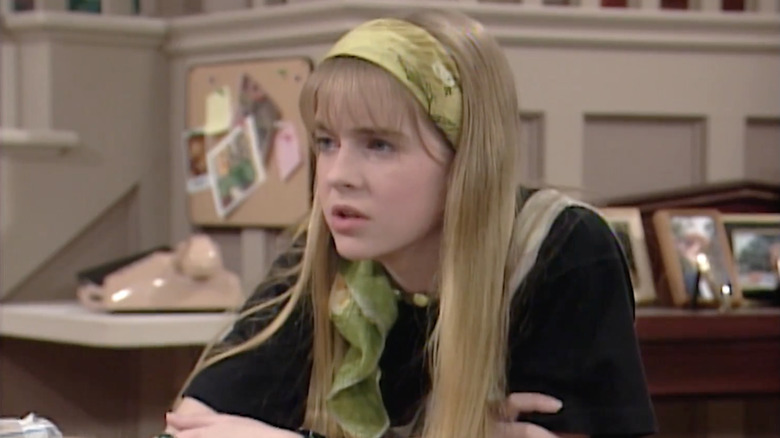
The legacy of the show remains profound. Even decades later, fans who grew up in the 90s still look back on the series as a formative part of their youth. The influence of the show’s aesthetic, its dialogue, and its approach to teen issues has been cited by numerous creators as a primary influence for modern coming-of-age stories.
There was a flicker of hope for a revival in 2018, when reports surfaced that a reboot was in the works, potentially featuring Hart as a mother navigating the same challenges she once faced as a teen. However, the project ultimately stalled, leaving the original 56 episodes as a preserved time capsule of a unique moment in television history.
In the end, the "wardrobe malfunction" that almost kept Hart from being considered for the part became the very reason she was chosen. It is a poetic reminder that in the high-stakes world of Hollywood, the smallest accidents can sometimes lead to the biggest breakthroughs. Melissa Joan Hart didn’t just land a role; she defined a decade of television simply by being herself—straps, overalls, and all.










