

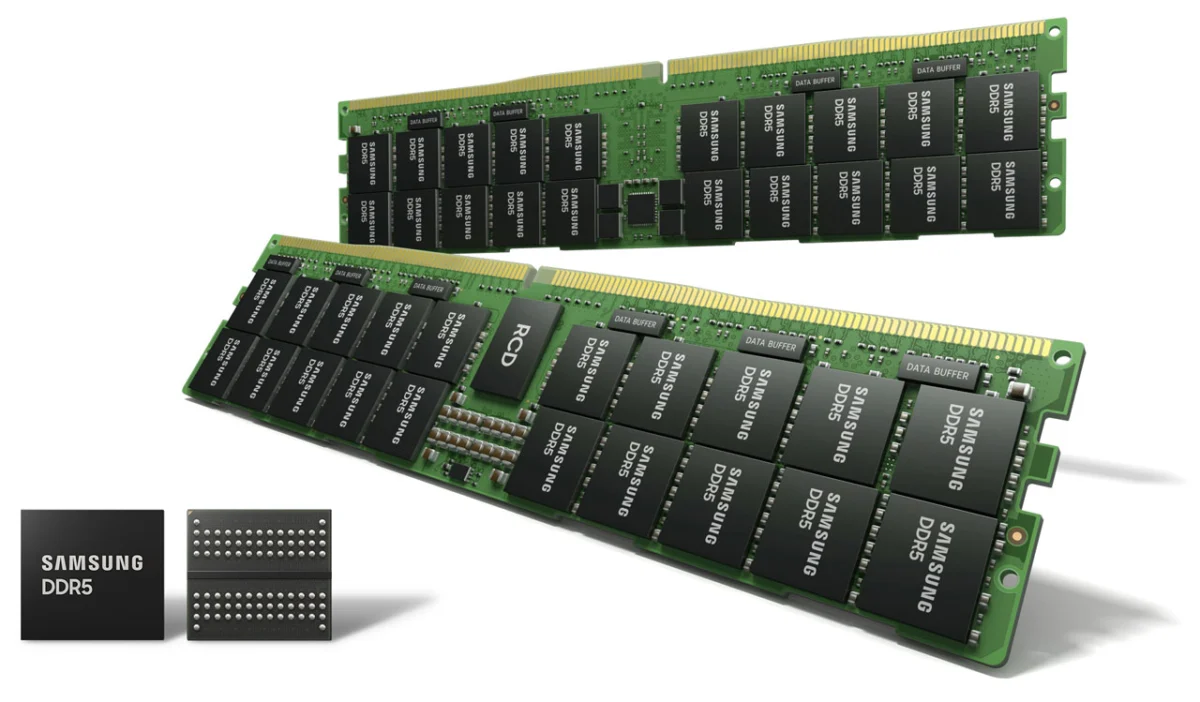
In a landmark development for the semiconductor industry, Samsung Electronics has officially commenced the mass production of its most advanced 14-nanometer (nm) Extreme Ultraviolet (EUV) DDR5 DRAM. This milestone not only cements Samsung’s leadership in high-density memory manufacturing but also signals a pivotal shift in how data-intensive workloads—ranging from artificial intelligence and 5G infrastructure to the nascent metaverse—will be handled by next-generation computing systems.
By integrating EUV technology into its 14nm process, Samsung has successfully engineered the industry’s densest memory modules to date. Utilizing a five-layer EUV process, the company claims its new DDR5 architecture delivers a massive leap in performance and capacity, setting the stage for a new standard in computing efficiency.
The Chronology of an Industry Breakthrough
Samsung’s journey toward this announcement has been marked by a relentless pursuit of miniaturization. While the semiconductor industry has long relied on Deep Ultraviolet (DUV) lithography, the physical limitations of light wavelengths made shrinking transistors below certain thresholds increasingly difficult.
- 2020: The EUV Inauguration: Samsung made waves in the industry by becoming the first manufacturer to successfully ship EUV-based DRAM. This initial proof-of-concept demonstrated that EUV lithography, previously reserved for advanced logic chips, could be adapted to the more delicate and complex manufacturing requirements of DRAM.
- 2021: Scaling the 14nm Barrier: Having proven the efficacy of the EUV process, Samsung shifted its focus to scaling. By transitioning to a 14nm node, the company achieved the highest level of integration yet seen in the memory market. This latest stage of mass production represents the culmination of that research, effectively moving from laboratory success to high-volume commercial availability.
- The Future Roadmap: Looking ahead, Samsung has indicated plans to further refine its 14nm output. The objective is to increase Integrated Circuit (IC) density to 24Gb per die, a development that will fundamentally change the capacity landscape for data centers and enthusiast-grade workstations.
Technical Specifications and Performance Data
The shift to DDR5 is not merely an incremental upgrade; it represents a generational leap in bandwidth and efficiency. According to internal testing performed by Samsung, the new 14nm EUV DDR5 DRAM provides a 20 percent improvement in overall productivity compared to the previous generation of memory technology.
Power and Bandwidth Metrics
The technical advantages of this new memory architecture are underscored by its raw performance figures:
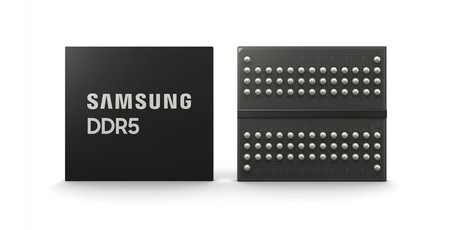
- Speed: The new DDR5 standard is capable of reaching speeds of up to 7.2 gigabits per second (Gbps). To put this into perspective, current DDR4 modules typically operate at roughly 3.2 Gbps. This effectively more than doubles the data throughput, alleviating the memory bottlenecks that have hampered high-frequency processors in recent years.
- Power Efficiency: Beyond speed, power consumption remains a critical concern for modern data centers. The new 14nm process offers a 20 percent gain in efficiency, allowing for significantly higher performance-per-watt ratios. This is a vital metric for enterprises looking to scale their AI and cloud infrastructure while controlling electricity costs.
The Density Frontier
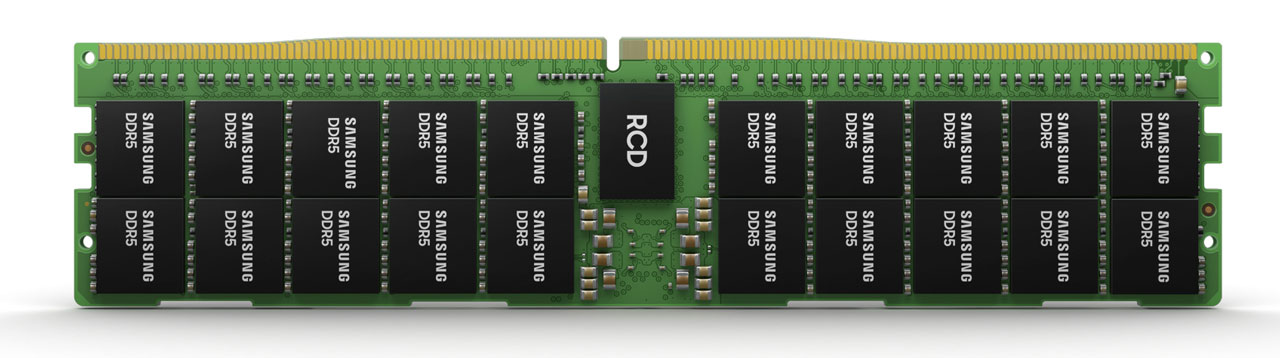
Samsung’s commitment to increasing density is arguably its most ambitious goal. While mainstream DDR5 modules are expected to debut at capacities around 64GB per stick, Samsung’s roadmap for 24Gb ICs suggests that the ceiling for consumer and enterprise memory is about to be shattered. By utilizing these high-density dies, the industry could eventually see massive 768GB DDR5 DIMMs, a capacity previously relegated to expensive, specialized server configurations.
Official Responses and Strategic Vision
The transition to 14nm EUV is a strategic move, not just a technical one. Jooyoung Lee, Senior Vice President and Head of the DRAM Product & Technology team at Samsung Electronics, emphasized the significance of this development in a recent press statement.
"Samsung has set an important milestone with its extreme miniaturization of DRAM thanks to the application of our EUV 14nm technology," Lee noted. He further elaborated that the company’s focus is squarely on the "data-driven world." According to Samsung, the current explosion of AI, 5G, and the metaverse requires memory that is not just faster, but fundamentally more reliable and capable of handling massive parallel data streams. By pushing the boundaries of miniaturization, Samsung is positioning itself as the foundational hardware provider for these emerging digital ecosystems.
Market Implications: The Cost of Early Adoption
While the technical specifications are impressive, the transition to DDR5 will not be without its growing pains—most notably regarding pricing and motherboard compatibility.
The "DDR5 Premium"
Early adopters are likely to face significant financial hurdles. Recent retail listings have provided a sobering look at the cost of being on the cutting edge. A listing on Newegg for a GeIL Polaris RGB SYNC 32GB (2 x 16GB) DDR5 4800 kit was spotted at a retail price of US$349.99. When converted, this places the cost of entry between £250 and £300 in the UK market. This premium pricing is expected to be the norm during the initial launch phase as manufacturers struggle to balance the high costs of new production lines with supply chain constraints.
The Hybrid Era: Motherboard Diversification
Recognizing that the high price of DDR5 might alienate mainstream users, motherboard manufacturers are adopting a pragmatic strategy. We are seeing a bifurcation in the market, particularly with the arrival of the Intel Z690 chipset (associated with the Alder Lake-S platform).
Evidence from manufacturers like Asus shows that they are registering multiple variants of their boards, such as the Prime Z690-A, Z690-P, and Z690-V, with ‘D4’ suffixes. These suffixes indicate that some boards will support legacy DDR4 memory, while others will support the new DDR5 standard. This dual-track approach allows users to build systems with the latest CPUs while potentially avoiding the current high cost of DDR5 memory, providing a bridge for consumers as the market stabilizes.
Conclusion: A New Era for Computing
Samsung’s mass production of 14nm EUV DDR5 DRAM is a seminal event that will dictate the pace of hardware development for the next several years. By successfully merging EUV lithography with high-volume DRAM manufacturing, the company has provided a path forward for processors that are increasingly starved for bandwidth and capacity.
While the immediate future will likely be defined by a "DDR5 premium" and a transition period where DDR4 remains a viable alternative, the trajectory is clear. As the digital world continues to move toward AI-driven analysis and the complex rendering requirements of the metaverse, the sheer density and speed offered by Samsung’s 14nm process will become the bedrock of the next generation of computing. Whether in the data center or the enthusiast’s desktop, the memory revolution has officially begun.









No comments yet. Be the first to join the conversation!