

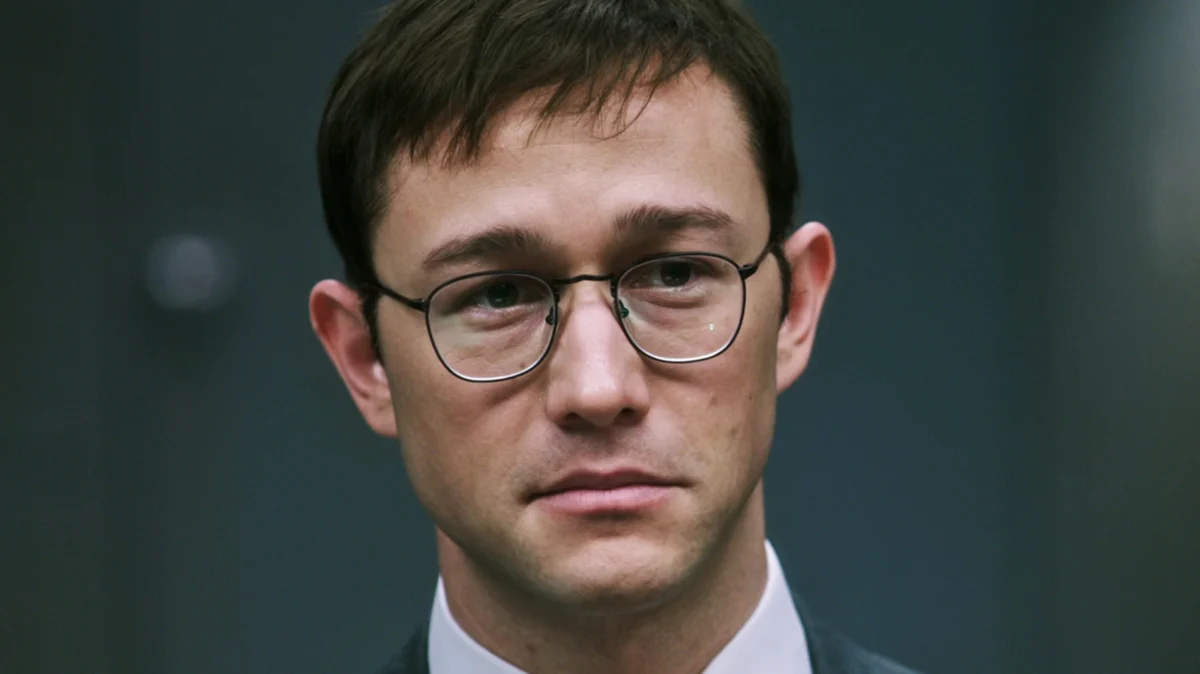
In the landscape of modern political cinema, few films have polarized audiences quite like Oliver Stone’s 2016 biographical thriller, Snowden. Despite featuring a powerhouse performance by Joseph Gordon-Levitt and a narrative ripped from the most significant national security breach in American history, the film struggled to find its footing at the global box office. However, with its recent arrival on Netflix, a new generation of viewers is being invited to re-examine a story that—far from being a relic of the mid-2010s—feels increasingly prescient in an era of deepening digital surveillance and eroding privacy.
The Genesis of a Whistleblower Narrative
The film tracks the evolution of Edward Snowden from a bright-eyed, conservative-leaning military recruit to a disillusioned intelligence operative. Based on Luke Harding’s The Snowden Files and Anatoly Kucherena’s Time of the Octopus, Stone’s screenplay—co-written with Kieran Fitzgerald—meticulously maps the psychological toll of a career spent behind a screen.
Joseph Gordon-Levitt’s portrayal is defined by a chillingly accurate transformation. He captures not just the voice and posture of the real-world whistleblower, but the internal conflict of a man who discovers that the apparatus he swore to protect is, in his view, actively undermining the democratic foundations of his country. The film’s narrative engine is fueled by the sheer audacity of the act: how a low-level subcontractor could circumvent the most sophisticated intelligence-gathering infrastructure on the planet to smuggle classified documents out of the NSA, often using nothing more complex than a hollowed-out Rubik’s Cube.
Chronology: From Soldier to Exile
To understand the gravity of Snowden, one must look at the timeline of the actual events that transpired in 2013, which the film reconstructs with dramatic tension.
- The Early Years: The film depicts Snowden’s service in the Army and his transition into the CIA and later the NSA. During these formative years, his belief in the necessity of American intelligence is absolute.
- The Breaking Point: The turning point arrives as Snowden gains access to programs like PRISM and XKeyscore. He witnesses the capability of the U.S. government to monitor the digital footprint of not just foreign adversaries, but ordinary, law-abiding citizens.
- The Leak: In May 2013, Snowden meets with journalists from The Guardian in a hotel room in Hong Kong. The ensuing fallout creates a global firestorm.
- The Exile: As the U.S. government moves to revoke his passport, Snowden’s attempt to reach Latin America is thwarted. He eventually secures asylum in Russia, where he remains to this day—a man effectively caught in the gears of a geopolitical machine.
The Economic and Critical Paradox
It is a common phenomenon in Hollywood for films of great cultural significance to underperform financially. Snowden is a textbook case of this irony. With a production budget of approximately $40 million, the film’s $37.3 million global box office return was a commercial disappointment.
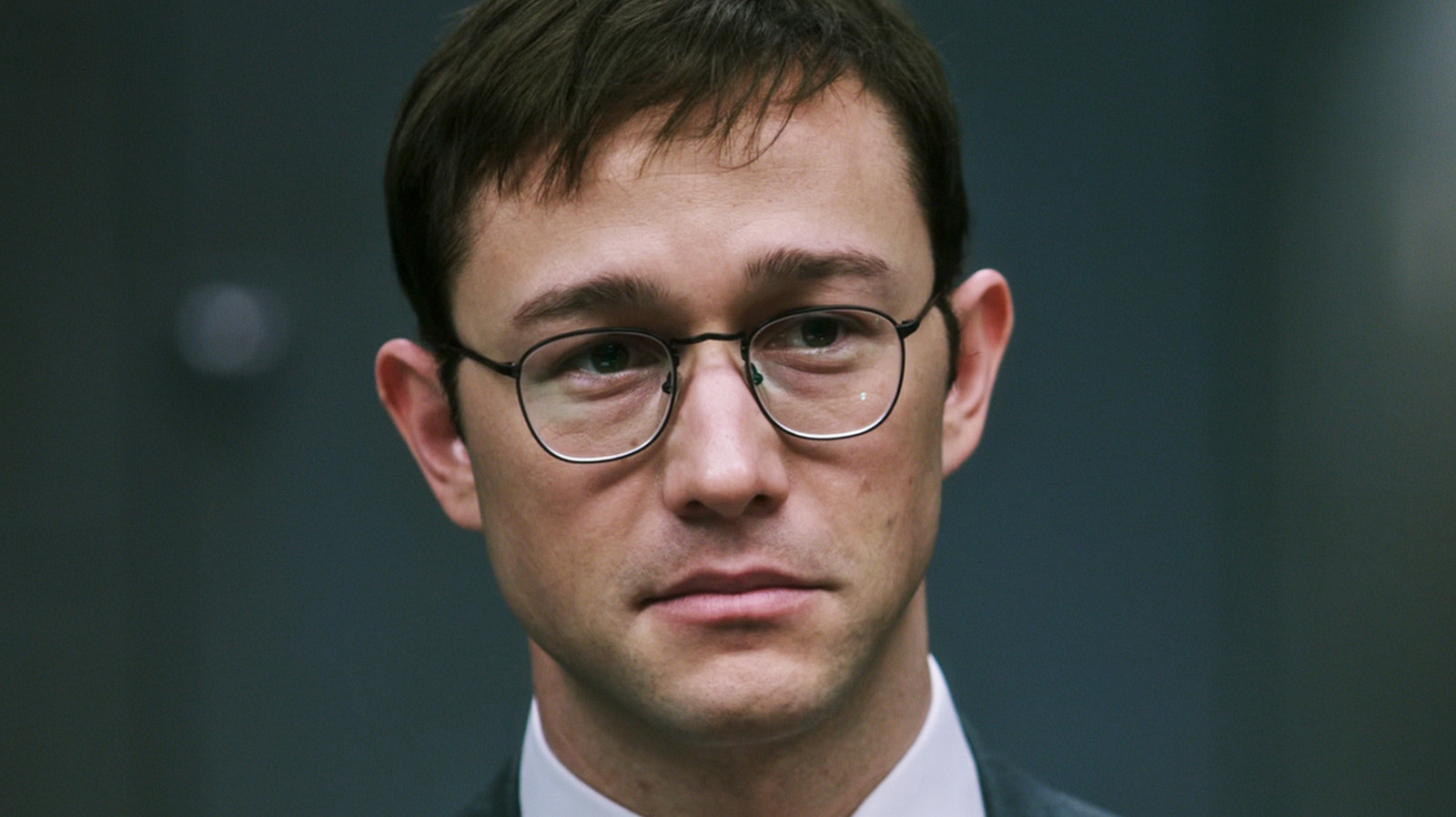
Critics, however, were far more nuanced. Holding a 61% rating on Rotten Tomatoes, the film was praised for its technical craftsmanship. The Washington Post’s Ann Hornaday described it as "a superbly crafted, engrossing film," while A.O. Scott of The New York Times noted that it was an "honorable and absorbing contribution to the imaginative record of our confusing times." The financial failure might be attributed to the "docudrama fatigue" of the era or the deep-seated political divisions that made the subject matter "too hot to handle" for casual moviegoers in 2016. Yet, seen through the lens of streaming, the film has found a second life, free from the immediate pressures of opening-weekend theater attendance.
The Ethical Core: Patriot or Traitor?
At the heart of the film lies the perennial debate regarding the role of the whistleblower. Oliver Stone, a director known for his unflinching look at American power structures, makes no attempt to remain neutral. He frames Snowden as a martyr for civil liberties—a man who sacrificed his career, his relationship with his partner Lindsay Mills (played with depth by Shailene Woodley), and his life in his home country to alert the public to what he considered an unconstitutional overreach.
Critics of the film argue that this perspective is one-sided, ignoring the potential damage done to national security and the intelligence-gathering capabilities required to combat modern terrorism. However, the film is arguably at its strongest when it asks the viewer to consider the trade-offs: How much privacy are we willing to surrender in the name of security? And who, ultimately, holds the watchers accountable?
The "Snowden" Effect: Implications for Today
When the film was released in 2016, the discourse around mass surveillance was dominated by the immediate shock of the revelations. Today, the conversation has shifted. With the rise of artificial intelligence, predictive policing, and the ubiquity of big data, the concerns raised by the film feel less like "spy movie" tropes and more like daily reality.
The quote by the legendary activist Abbie Hoffman, often cited in discussions surrounding this film—"You measure democracy by the freedom it gives its dissidents, not the freedom it gives its assimilated conformists"—rings with newfound urgency. In an age where digital footprints are permanent and state surveillance is increasingly integrated into the private sector, Snowden serves as a sobering reminder of the fragile boundary between protection and control.
Why Revisit the Film Now?
Streaming platforms like Netflix provide the perfect venue for re-evaluating historical dramas that were perhaps "too early" for their time. Snowden is not merely a biography; it is a time capsule of a pivotal moment in the 21st century. It captures the transition from a world where we believed our digital secrets were private to a world where we now understand they are, by default, public property.
For those who skipped the film in 2016, it offers a gripping, technically proficient thriller that excels in the "hacker" genre—a sub-genre that usually prioritizes style over substance but here opts for genuine intellectual inquiry. Joseph Gordon-Levitt’s performance is the anchor, grounded and restrained, preventing the film from sliding into the sensationalism that sometimes plagues political thrillers.
Conclusion: A Necessary Watch
As we look back at the last decade of technological evolution, Snowden stands as a vital piece of the puzzle. It reminds us that the debates we are having today—about data privacy, the power of tech giants, and the reach of the surveillance state—are not new. They are the same questions that were raised in that hotel room in Hong Kong, and they are questions that have yet to be fully answered.
Whether you view Edward Snowden as a heroic whistleblower or a compromised actor, the film provides the necessary context to understand the complexity of his choice. It is a movie that respects the audience’s intelligence, inviting us to weigh the cost of liberty against the comfort of security. For those seeking a film that challenges the status quo and forces a reflection on the intersection of technology and human rights, Snowden is not just worth a watch—it is essential viewing for the modern citizen. The film is currently available on Netflix, providing the perfect opportunity to engage with a narrative that has only grown more relevant with time.










