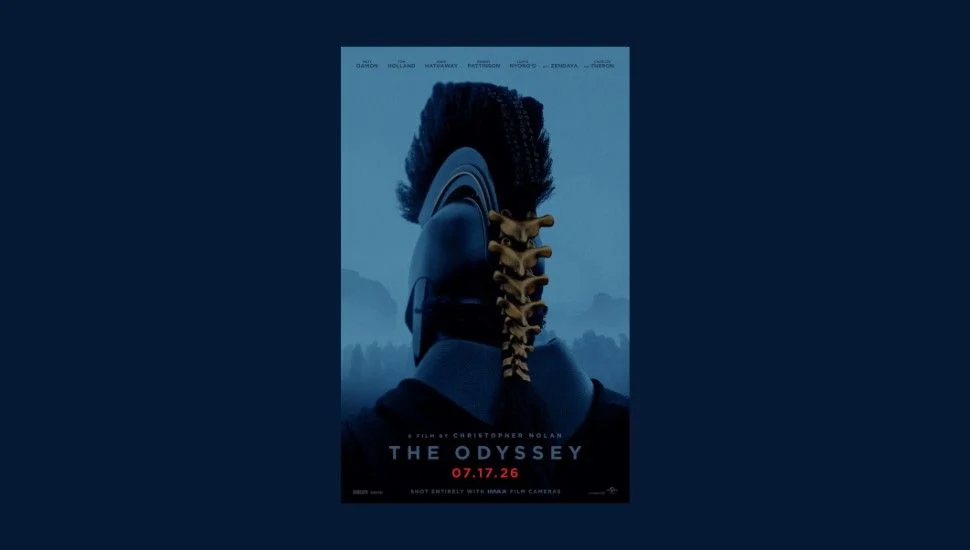
As the summer box office reaches its fever pitch, all eyes are turned toward the horizon. Tomorrow marks the wide release of Christopher Nolan’s The Odyssey, an adaptation of Homer’s foundational epic that has been shrouded in mystery, anticipation, and whispered rumors of production excess for the better part of three years. Early critical consensus suggests that the wait was more than justified: Nolan has not merely adapted a classic; he has reinvented the language of the modern blockbuster.
With a running time nearing three hours and a production scale that pushes the boundaries of IMAX technology, The Odyssey is already being hailed as a landmark achievement in film history. As the sun rises on what promises to be a transformative cinematic moment, we take a deep dive into the making, the reception, and the profound implications of this gargantuan undertaking.
The Main Facts: A Titan’s Return to Form
The Odyssey arrives in theaters with a weight of expectation rarely seen in the 21st century. Christopher Nolan, known for his obsession with time, scale, and the intersection of human emotion with grand spectacle, has turned his lens toward the oldest narrative in the Western canon.
The film follows Odysseus, the King of Ithaca, on his grueling, decade-long journey home following the fall of Troy. However, those expecting a straightforward historical retelling will be surprised. True to form, Nolan has integrated complex narrative structures—playing with the chronology of Odysseus’s memories and the subjectivity of his encounters with gods and monsters alike.
Initial reports from early screenings indicate that the film is not just an action-adventure, but a psychological exploration of trauma, leadership, and the fundamental human desire for "home." With a production budget reportedly exceeding $300 million, the film stands as one of the most expensive independent-style studio productions in history, signaling a bold bet by Warner Bros. on the viability of auteur-driven cinema.
A Chronology of Creation: From Concept to Screen
The journey to bring The Odyssey to the silver screen was almost as arduous as the hero’s own voyage.
- The Inception (2022): Following the global success of his previous projects, Nolan announced his intention to tackle "the quintessential story of the human condition." While rumors swirled about potential biopics or original sci-fi concepts, the director shocked the industry by confirming he would adapt Homer’s epic.
- The Production Phase (2023–2024): Filming took place across four continents. To capture the "truth" of the Mediterranean and the various mythical realms, Nolan insisted on practical effects over heavy CGI. The production team constructed full-scale ancient triremes and utilized remote, rugged coastal locations to mirror the harshness of the sea.
- The Post-Production Siege (2025): The final year was defined by intense editing. Insiders reported that Nolan and his long-time editor were obsessively refining the sound design—a hallmark of his films—to ensure that the roar of Poseidon’s oceans would feel visceral to the audience.
- The Premiere (July 2026): After a series of exclusive, high-security test screenings, the film made its debut at a gala premiere, where it received a standing ovation that reportedly lasted over ten minutes.
Critical Consensus: What the Critics Are Saying
The critical reception has been nothing short of rapturous. Critics have praised the film for its ability to balance massive, high-octane set pieces with quiet, intimate moments of existential reflection.
Guy Lodge of Variety highlighted the film’s relentless pace, noting, "A genuinely grand, gutsy vision, The Odyssey thrills generously for the bulk of its near three-hour running time: Every few minutes, it seems, it throws at its audience another mighty setpiece that, in almost any other summer studio spectacle, would be a climactic standout."
Hillary Busis, writing for Vanity Fair, focused on the intellectual depth of the film, suggesting that Nolan has managed to turn a household name into something fresh. "The craziest thing about The Odyssey is that Nolan’s interpretation absolutely sticks the landing, adding an unexpected dimension to one of our culture’s most told and retold sagas. This is a film stuffed with bravura set pieces and awesome effects; it’s also mature and thoughtful, a character study disguised as a blockbuster."
Perhaps the most glowing appraisal came from Manohla Dargis of The New York Times, who positioned the film as a necessary correction to the stagnation of modern franchise filmmaking: "Nolan employs beauty strategically… Nolan asks us to dream bigger. His Odyssey is a classic in every sense, a transporting affirmation of the art and a work of pure cinema."
Supporting Data: By the Numbers
To understand the sheer magnitude of The Odyssey, one must look at the data points underpinning its production:
- Runtime: 178 minutes (2 hours, 58 minutes), making it one of the longest mainstream releases of the decade.
- Practicality Index: Over 85% of the film’s effects were captured in-camera, setting a new bar for high-budget productions.
- Global Reach: The film has been localized into 42 languages and will be released on over 22,000 screens globally, the widest opening in Nolan’s career.
- Soundscapes: The score, composed by a frequent Nolan collaborator, utilizes experimental acoustic instrumentation to simulate the psychological distress of the protagonist’s crew.
Official Responses and Behind-the-Scenes Insights
While Christopher Nolan is famously private, his lead cast members have been vocal about the intensity of the shoot. During the press tour, the lead actor noted that "Nolan doesn’t just ask you to perform a scene; he asks you to exist within a set that is designed to make you feel as small as a mortal facing the wrath of the gods."
The production studio, meanwhile, has been quick to emphasize that this is a "theatrical-first" experience. In an era where streaming dominates, the marketing campaign for The Odyssey has leaned heavily into the argument that this film is "literally unwatchable" on a television or mobile device. This sentiment has resonated with theater chains, which are seeing record-breaking pre-sale numbers for IMAX and 70mm screenings.
The Implications: A New Era for Blockbusters?
The release of The Odyssey carries profound implications for the film industry. For years, the discourse has been dominated by the "death of the cinema" narrative, as audiences flocked to short-form content and bingeable series.
By delivering a three-hour, high-concept, non-franchise epic that commands critical respect and audience interest, Nolan is essentially providing a roadmap for the future of the blockbuster. If The Odyssey performs as expected, it will likely trigger a shift in studio spending. We may see a move away from the "infinite franchise" model and a renewed interest in "Event Cinema"—films that demand to be seen on the largest screen possible, not because of brand recognition, but because of the sheer mastery of their craft.
Moreover, the film’s success highlights a burgeoning interest in classical literature among younger audiences. By stripping away the "dusty" reputation of Homer and presenting the material as a high-stakes, visceral thriller, the film has sparked a surge in sales for original translations of the text. Whether or not this "Homer-mania" lasts, the film has undeniably cemented its place in the cultural conversation.
Conclusion: An Invitation to the Journey
As the world prepares for the wide release of The Odyssey, the message is clear: cinema is not dead; it has simply been waiting for a hero. Whether you are a student of history, a fan of blockbuster spectacles, or simply someone looking for an excuse to lose yourself in the dark of a theater for three hours, Nolan’s latest work offers a gateway to something ancient and eternal.
For those looking to brush up on the source material before heading to the cinema, the journey of Odysseus remains as relevant today as it was in antiquity. As we stand on the precipice of tomorrow’s premiere, the question is no longer whether The Odyssey will be a success, but how long it will take for it to be canonized alongside the greatest films of the century.
The dawn is here. The voyage begins. Will you be there to see it?