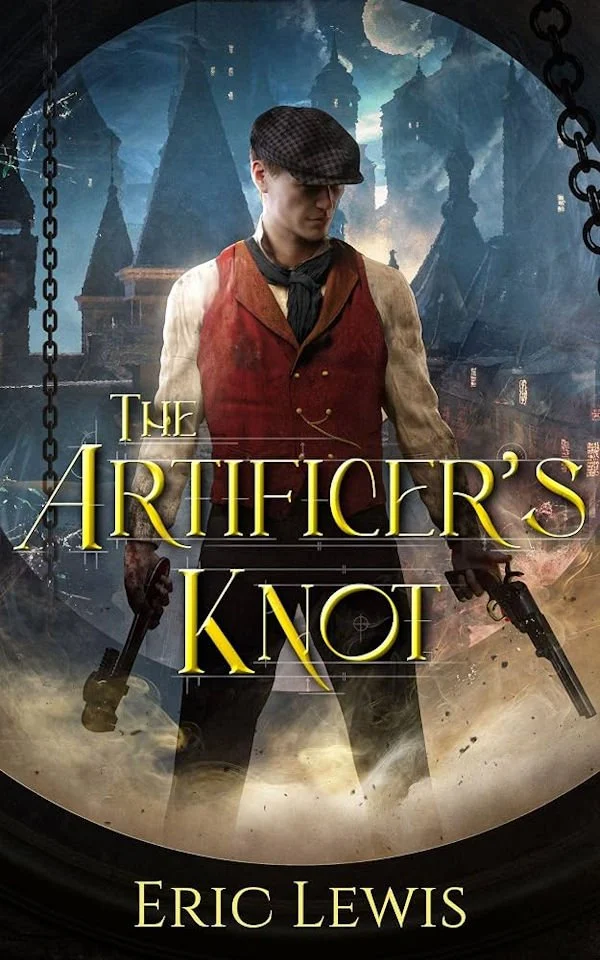
In the crowded landscape of independent fantasy literature, few sub-genres command the immediate, visceral attention of the "gaslamp" aesthetic—a blend of Victorian-era atmosphere, emerging industrial technology, and the shadows of moral ambiguity. The Artificer’s Knot has recently emerged as a standout contender in the 11th annual Self-Published Fantasy Blog-Off (SPFBO), capturing the interest of judges and readers alike. By weaving a narrative of energy monopolies, academic betrayal, and organized crime, the novel offers a sharp, uncomfortable mirror to our own contemporary struggles with resource control.
The Narrative Core: A Story of Innovation and Exile
The story follows Randyll Tephius, a brilliant young artificer whose academic future is incinerated before it begins. In a world powered by "Vril"—a mystical, highly energetic substance monopolized by an elite caste of Alchemists—Ran’s discovery of untapped oil deposits represents more than just a scientific breakthrough; it is a threat to the established order. Expelled from his university in disgrace, Ran finds himself destitute until he is recruited by Gouger Nebb, a seasoned mob boss looking to legitimize his criminal empire through technological innovation.
What follows is a dangerous dance of ethics and ingenuity. As Ran uses mob capital to fund his inventions, he must navigate a treacherous landscape of rival syndicates, aristocratic gatekeepers, and corrupt police forces. The central tension of the novel is not merely physical, but philosophical: as Ran maneuvers to expose the Alchemists who ruined him, he is faced with a Faustian bargain. The very antagonists who destroyed his career return to offer him wealth and redemption, provided he betrays the man who saved him.
Chronology: A Path to the SPFBO Semi-Finals
The Artificer’s Knot has traveled a significant road to reach its current status as an SPFBO semi-finalist. The progression of its reception highlights the divergent ways readers engage with "gritty" fantasy:
- Initial Entry: The novel was submitted to the 11th annual SPFBO, a prestigious competition designed to elevate self-published talent.
- The Screening Phase: Judges noted the book’s distinctive prose and world-building, which successfully avoided the "straightforward" fantasy tropes often found in the genre.
- The Semi-Finalist Round: After internal review, the panel of judges at Fantasy-Faction officially named the book a semi-finalist, marking it as one of the most compelling voices in this year’s contest.
- The Critical Evaluation: Throughout June 2026, a panel of judges provided in-depth analyses of the work, praising its atmosphere while debating the pacing and character tropes inherent in crime-fiction blends.
Supporting Data: The Anatomy of a Critique
The reception of The Artificer’s Knot has been notably complex, reflecting a split between admiration for the book’s craft and debate regarding its narrative structure.
The Prose and World-Building
Across the board, the judges praised the technical execution. The writing is described as "smooth" and "confident," with a unique voice for each character that elevates the dialogue above genre standards. The "gaslamp" setting is not merely cosmetic; it serves as a functional stage for a story about the intersection of scientific progress and socio-economic greed.
The Character Dynamics
Ran and Nebb serve as the narrative’s anchor. While some judges found the "brilliant student turned criminal" trope to be familiar, the chemistry between the two—a mix of opportunistic utility and unexpected loyalty—provided the emotional weight necessary to keep readers invested. Nebb, in particular, was singled out as a highlight: a "snarky" and "dangerous" figure whose pragmatic code of ethics offered a refreshing alternative to the typical "villainous mobster" caricature.
The Pacing Debate
Where the consensus fractures is in the plotting. Some judges, such as Eva Geraghty, felt the escalating drama became "predictable" and "underwhelming" as the story progressed, noting that by the 60% mark, the constant crises began to lose their impact. Conversely, other judges, such as Maureen Neuman, likened the experience to a "zip line above a fairground," celebrating the relentless pacing and the feeling that something was always at stake.
Official Responses: What the Judges Said
The SPFBO judging panel—comprised of industry professionals and seasoned reviewers—offered a spectrum of perspectives that define the book’s standing in the competition.
On the "Genre-Bending" Appeal:
Julia Kitvaria Sarene noted that the book’s greatest strength is its refusal to offer easy answers. "It asks sharp questions about what success costs, how power reshapes values, and who ultimately pays the price for progress," she observed. This sentiment was echoed by others who appreciated that the violence was treated as a "consequence of the world" rather than a stylistic indulgence.
On the "Relevance" of the Conflict:
The inclusion of petroleum as a catalyst for conflict was seen as a bold, if uncomfortable, choice. Kerry Smith highlighted that the narrative mirrors current real-world energy debates, forcing readers to confront the moral cost of transitioning from one power source to another. The consensus among the panel is that while the book features elements of crime fiction, its primary success lies in its political and scientific underpinnings.
Implications: The Future of the "Gaslamp" Genre
The success of The Artificer’s Knot suggests a broader trend in independent fantasy: a move away from high-fantasy epic tropes toward grounded, character-driven dramas that mirror contemporary societal anxieties.
Why This Matters for Readers
For readers who are weary of standard "chosen one" narratives, this book offers a reprieve. It treats its audience with the intelligence to handle moral ambiguity. When the antagonist offers the protagonist a seat at the table of power, the reader is not asked to judge the decision as simply "good" or "evil," but as a calculation of survival. This nuance is exactly what has propelled the book to the forefront of the SPFBO.
The "Over-Competent" Protagonist
A common critique raised by the judges was the protagonist’s high level of competence. Ran is rarely stumped by a technical problem, which occasionally lowers the stakes for the reader. However, as noted by the panel, this "over-competence" serves a specific purpose: it forces the tension to shift from whether Ran can solve a problem, to what he must sacrifice in the process. This shift in focus is a sophisticated narrative technique that distinguishes high-quality fiction from generic adventure.
Looking Ahead
As the SPFBO concludes its first round and prepares to announce finalists, The Artificer’s Knot remains a touchstone for what independent authors can achieve. It is a work that demands engagement, challenges assumptions about energy and morality, and proves that the "gaslamp" genre is far from exhausted.
Whether or not the book secures the ultimate prize in the competition, its place as a "structurally sound and well-polished" work of fiction is already cemented. For those looking for a story that moves with the speed of a crime thriller but holds the intellectual depth of a political drama, Randyll Tephius’s journey through the smog-filled streets of his world is a mandatory read.
For further information on the 11th Annual SPFBO and to follow the final stages of the competition, visit the official website or follow the updates through the Fantasy-Faction community portals.