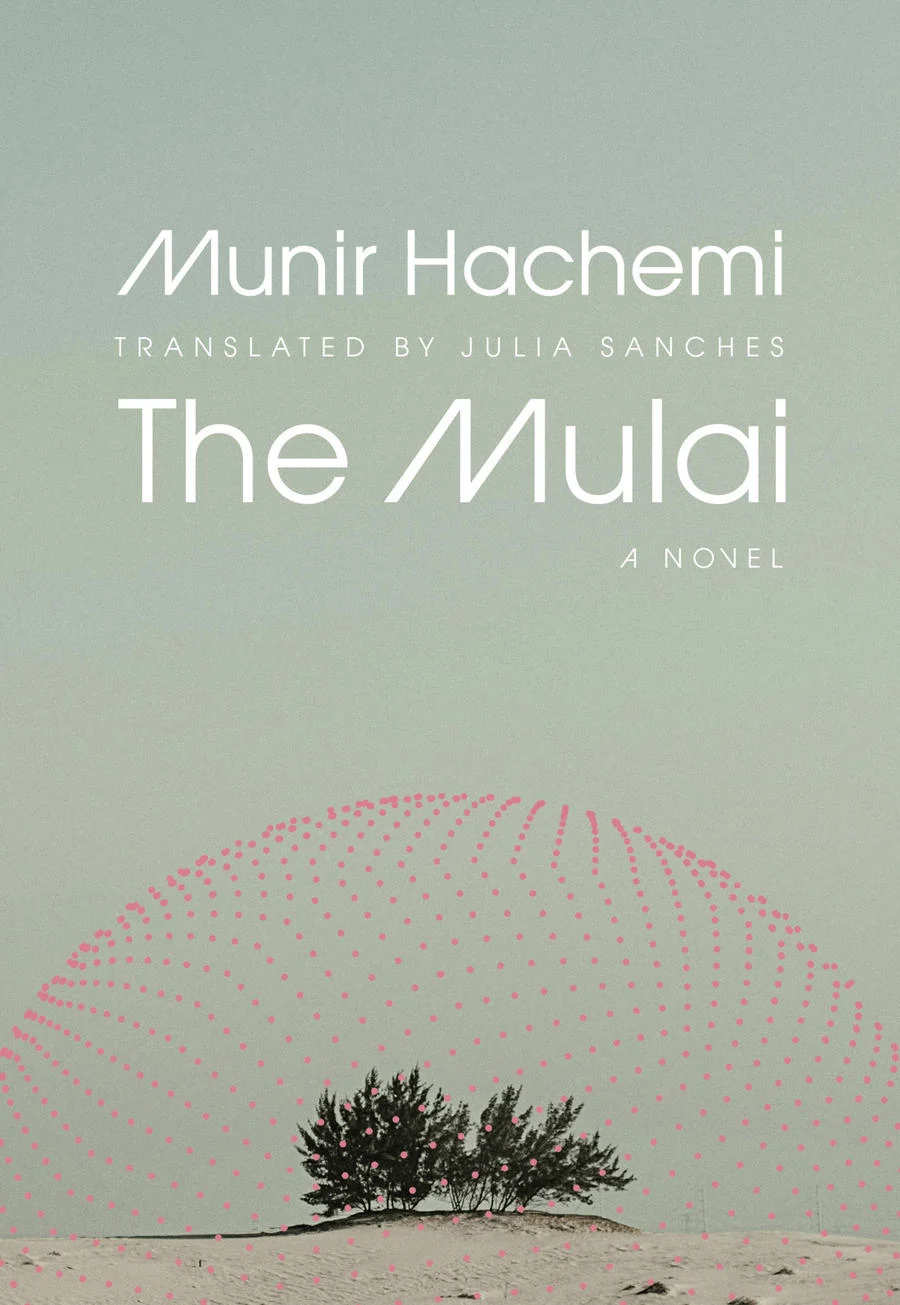
In the landscape of contemporary speculative fiction, few works challenge the reader’s cognitive architecture as aggressively as the newly released The Mulai. A dense, hyper-intellectual exploration of anthropological science fiction, the novel functions as a meta-textual puzzle, concerned less with the mechanics of space travel and more with the existential instability of language itself.
For the English-speaking reader, The Mulai arrives as a multi-layered artifact. Originally penned with deep roots in Spanish-language nuance, the work is translated by Julia Sanches, whose interventionist approach—sprinkling footnotes regarding homophony and wordplay throughout the narrative—serves as a constant reminder that we are witnessing a mediation of a mediation. Critics have already begun drawing parallels to Italo Calvino’s Invisible Cities (1972), noting that the novel requires a certain level of literary stamina. Indeed, one might consider an acquaintance with Calvino’s labyrinthine prose a prerequisite for navigating the shifting sands of this text.
The Chronology of a Lost Colony
The premise of The Mulai sits comfortably within the classic science-fiction framework of a "lost colony" rediscovered by a progenitor civilization. However, the novel subverts the genre’s tropes by focusing on the sheer distance—cultural, linguistic, and temporal—that has grown between the inhabitants of the planet and their Earth-bound ancestors.
The Era of Containers
The colony’s history is anchored by the "a.C." designation, or "after containers," marking the period after regular supply drops from Earth abruptly ceased. This rupture in the supply chain forced the colonists to adapt to a hostile, terraformed environment. According to the internal lore of the Mulai, a pivotal figure named Flukeh made a transformative journey from the central "Dome" to a remote structure known as the "Temple."
During this pilgrimage in the year zero a.C., Flukeh experienced revelations concerning a deity or divine force known as "Dog." In Mulai cosmology, the linguistic structure does not inflect for the plural, rendering the nature of Dog both singular and omnipresent. Flukeh’s subsequent pronouncements, recorded as The Teachings of Flukeh—or the First Amendment to the Libertarian Codex—form the bedrock of modern Mulai society. Her words, such as "At times we are grateful for something that no one has done; the object of that gratitude is Dog," encapsulate a culture that finds meaning in the voids left by missing infrastructure.
Supporting Data: The Ecology of the Dome
The Mulai exist within a precarious ecosystem, confined largely to a "habitable zone" where terraforming efforts have met with partial, if erratic, success. The environment is one of extreme contrasts: outside the controlled climate of the Dome, temperatures plummet to sixty degrees below zero. Within the zone, four seasons cycle with an unpredictable frequency that defies agricultural planning.
Technological Dependency and "Wolves"
The Mulai coexist with decaying, self-sustaining technological systems. Machinery in the Dome and the scattered, often non-functional "domelets" is maintained by autonomous service robots the inhabitants refer to as "wolves." Notably, the Mulai make no ontological distinction between these metallic entities and the biological threats of the desert, such as scorpions and snakes.
While these desert creatures are technically edible, the Mulai harbor a strange, persistent cultural preference for the long-expired food found in the colony’s original, rationed supply cans. This dependency on remnants of the "Home World" contrasts sharply with their evolution away from other Earth-normative behaviors. The Mulai have rejected the nuclear family in favor of the "trinomial"—a stable three-person relationship unit—and have abolished modern taboos regarding bodily functions, viewing public urination, defecation, and sexual acts as standard, unremarkable facets of communal life.
The Anthropologist’s Lens: Dr. Nahum Cordovero
The narrative engine of the novel is triggered when a stray, linguistically bizarre transmission reaches Earth. Lacking any institutional memory of the colonial mission, Earth dispatches a contingent to investigate. Among them is Dr. Nahum Cordovero, who ultimately chooses to remain behind to study the Mulai.
The "Chagnon" Controversy
Cordovero is a polarizing figure. Often referred to as "The Archaeologist," his methods are distinctly anthropological, yet they invite immediate scrutiny. His eagerness to integrate into the sexual and pharmacological rituals of the Mulai echoes the controversial practices of real-world anthropologist Napoleon Chagnon.
The reader is forced to contend with the fact that the entire text is filtered through Cordovero’s subjective, potentially unreliable perspective. The structure of the book—alternating between formal mission reports, private journal entries, and sections supposedly authored by the Mulai themselves—highlights the tension between objective observation and the inherent bias of the observer. Cordovero’s notes reveal a man who is not merely studying a culture but is being fundamentally unmade by it.
Official Perspectives: The Fluidity of Language
The central conflict of the novel lies in the Mulai’s approach to written text. Unlike Earth’s rigid, linear interpretation of literature, the Mulai treat text as a living, breathing entity.
In a striking passage, Cordovero observes:
"I wrote the first Mulai dictionary. Their language is frenetic… It doesn’t change from generation to generation but from one hour to the next. It doesn’t bother the Mulai when they don’t understand what is written. To them, what’s written can always be understood. By the time a Mulai rereads a text they’ve authored, what they read is no longer what they originally wrote."
This radical linguistic flexibility extends to the physical format of their books. Pages are unbound and frequently rearranged by readers into new, ephemeral sequences. A signature—a personal glyph—is often added, meaning that every reader is simultaneously a co-author. This concept of "creolized" truth, where the Libertarian Codex has been hollowed out and repurposed as a collection of disjointed chants, serves as a sobering mirror for the reader.
One must ask: how many of our own societal institutions are based on similarly misinterpreted, out-of-context "transmissions" from our past?
Implications: The Mirror of Ethnography
Ultimately, The Mulai is an act of meta-fiction that posits all ethnography as a form of auto-ethnography. By documenting the "other," we are merely cataloging the limitations and biases of our own internal maps.
The parallel to Calvino’s Invisible Cities is not merely stylistic; it is thematic. Just as Marco Polo’s descriptions of distant cities are veiled descriptions of Venice—a city he is simultaneously preserving and losing through the act of narration—Cordovero’s account of the Mulai is an attempt to define the human condition by pushing it to its furthest, most alien extreme.
The Impossibility of Translation
The novel argues that translation is an impossible act. To translate a culture, or even a single word, is to transform it, and in that transformation, the original essence is inevitably lost. The translator, therefore, is an inherently impossible person, caught in a cycle of approximating a truth that refuses to sit still.
For the prospective reader, The Mulai is a demanding, rewarding experience. It does not offer the comfort of a resolved plot or a stable setting. Instead, it offers the opportunity to witness the self as a construct of language. As you turn the pages—or perhaps, as you consider rearranging them—you are invited to see your own cultural foundations not as bedrock, but as shifting, fragile, and utterly human. Read, then, and be prepared to find that the only thing you have truly decoded is yourself.