

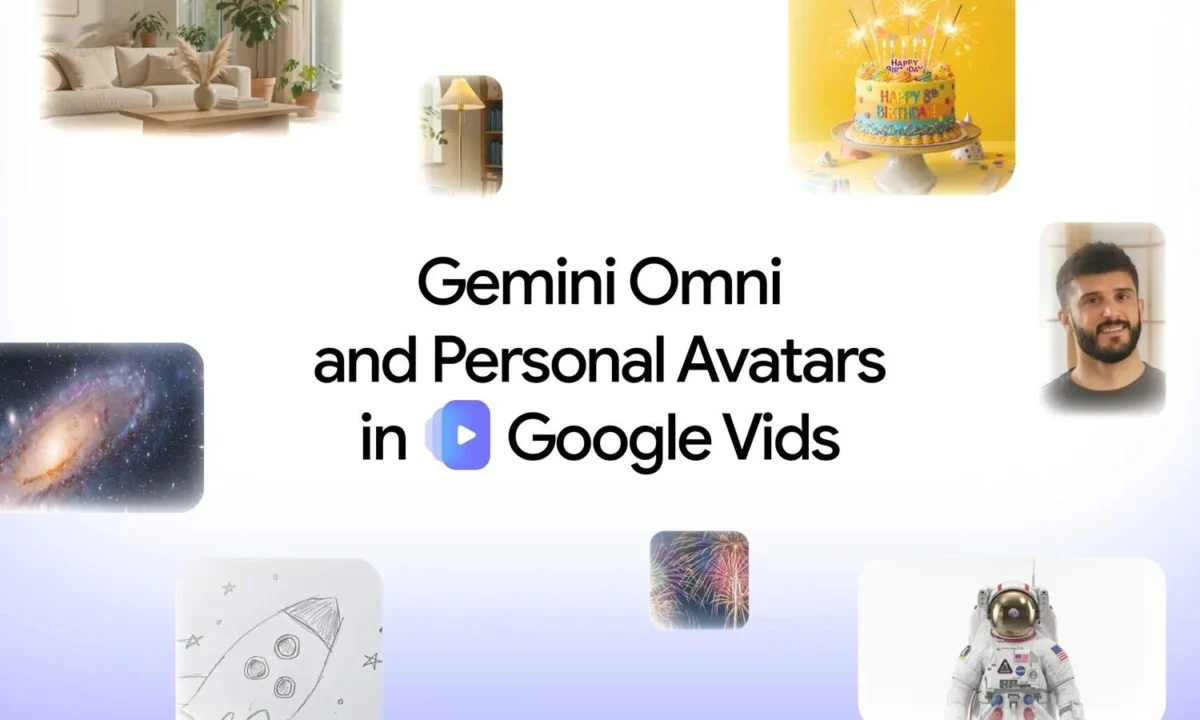
In the rapidly shifting landscape of generative AI, Google is once again raising the stakes. The company has officially announced the integration of its advanced multimodal model, Gemini Omni, into its collaborative video creation platform, Google Vids. This move, which also introduces hyper-realistic personal avatars, represents a significant departure from traditional non-linear editing workflows, pushing the industry toward a conversational, prompt-based paradigm. For creators, business professionals, and educators, the implications are profound: the barrier to entry for high-quality video production has been lowered to the speed of a simple text prompt.
Main Facts: A New Era for Google Vids
Google Vids, initially introduced as a streamlined tool for workplace video communication, is evolving from a simple slideshow-to-video converter into a full-fledged AI studio. The integration of Gemini Omni acts as the "brain" of the operation. Unlike previous iterations of AI video tools that required users to render, review, and restart after every edit, Gemini Omni allows for a fluid, iterative dialogue.
Key highlights of the update include:
- Conversational Editing: Users can modify lighting, change backgrounds, adjust pacing, or alter the mood of a video simply by speaking or typing instructions to the AI.
- Personal Digital Avatars: Subscribers can now generate an AI-powered digital twin. By providing a short voice recording and a selfie, users can create a lifelike avatar that articulates their custom scripts, ideal for remote corporate communications or training modules.
- Multimodal Versatility: Gemini Omni’s ability to process text, audio, sketches, and reference imagery simultaneously allows for a cohesive creative process that maintains stylistic consistency across long-form projects.
- Safety First: In line with Google’s commitment to responsible AI, every video generated through these new tools will include an embedded, invisible SynthID watermark to ensure transparency in digital content creation.
A Chronological Look at the Rise of AI Video
The journey to this moment began long before the recent July 2026 announcement. The trajectory of Google’s video ambitions can be traced through several critical milestones:
Early 2024: The Foundations of Vids
Google first socialized the concept of a workplace-focused video editor designed to replace the clunkiness of traditional software like Premiere Pro or DaVinci Resolve for internal communications. At this stage, the platform was focused on turning Google Slides presentations into narratable, professional-looking clips.
May 2026: The I/O Breakthrough
At Google I/O 2026, the company pulled back the curtain on Gemini Omni. Described as an "all-purpose content generator," the model demonstrated an unprecedented ability to reason across different media types in real-time. It was here that the potential for a conversational editing interface was first hinted at by the engineering team.
July 2026: The Integration Phase
Following the I/O showcase, Google moved quickly to integrate Omni into its ecosystem. The July 16 announcement serves as the public rollout for paid subscribers, marking the transition of Vids from a niche utility to a primary production tool for enterprise Workspace users.
Supporting Data: Why Conversational Editing Matters
The traditional video production lifecycle is notoriously friction-heavy. According to recent industry surveys, a professional-grade corporate video takes an average of 12 to 18 hours of human labor to produce, from script to final render. By utilizing Gemini Omni, Google aims to reduce this time by up to 70%.

The "conversational advantage" is the core metric here. In legacy software, changing the background of a subject requires masking, color grading, and re-rendering—a process that often leads to "generation drift," where the subject’s likeness or the scene’s aesthetic shifts slightly with every edit. Gemini Omni’s architecture, however, is designed to "remember" the context of the entire project. When a user tells the AI to "make the background more professional for a board meeting," the model maintains the subject’s lighting and consistency while swapping the background, effectively eliminating the need for manual, frame-by-frame adjustments.
Furthermore, the personal avatar feature is poised to address a significant "camera shyness" or logistics hurdle. For a multinational corporation with 50,000 employees, the cost and time of filming a CEO for every regional update are prohibitive. With personal avatars, a user can record a single 30-second clip, and the AI can then generate hours of content in multiple languages, all while maintaining the user’s vocal cadence and facial expressions.
Official Responses and Strategic Context
Google’s positioning of these tools is clear: they are targeting the "Professional Creator" market. By limiting these advanced features to Google AI Pro and Ultra subscribers, Google is effectively creating a tiered ecosystem that prioritizes business security and high-fidelity output.
In a recent press briefing, a Google spokesperson noted: "Our goal with Gemini Omni in Vids is to remove the technical ‘how-to’ from the creative ‘what-if.’ We want our users to focus on the narrative arc of their story, while our models handle the technical heavy lifting of color, composition, and audio sync."
Industry analysts have praised the move as a logical step in Google’s strategy to prevent users from migrating to third-party AI platforms. By building the studio directly into the browser—where the user’s files, slides, and data already live—Google creates a "sticky" ecosystem that is difficult to leave.
The Implications: What This Means for the Industry
The introduction of these features signals a seismic shift in how we conceive of digital content.
1. The Death of the "Technical Barrier"
For decades, video editing was a skill gatekept by expensive hardware and steep learning curves. Gemini Omni democratizes high-end editing. If a user can describe a vision, they can now execute it. This will likely lead to an explosion in video content within corporate settings—everything from personalized sales pitches to dynamic, interactive employee handbooks.
2. The Rise of the Synthetic Executive
Personal avatars bring a new layer of complexity to corporate identity. While highly efficient, this technology raises questions about authenticity. Google is proactively managing these concerns by restricting avatar generation to the account holder’s own likeness and employing SynthID to mark content as AI-generated. This creates a "verified" pipeline that differentiates professional enterprise content from the flood of unverified AI content circulating on the web.

3. A Challenge to Traditional Creative Suites
Software titans like Adobe and Blackmagic Design are now facing a reality where the "platform" (Google) is becoming the "studio." If a user can achieve 90% of their desired quality within their web browser without ever leaving the Google Workspace environment, the incentive to pay for and learn complex desktop software decreases. While high-end cinema production will remain in the domain of traditional software, the "prosumer" and corporate markets are clearly shifting toward the AI-first model.
4. Ethical and Legal Considerations
The use of digital likenesses is a sensitive area. By requiring adult verification and tying the avatar strictly to the account holder’s identity, Google is attempting to circumvent the "deepfake" problem. However, as these tools become more accessible, the industry will need to establish new norms regarding the disclosure of synthetic presence in professional settings.
Conclusion: The Future is Conversational
Google’s integration of Gemini Omni into Vids is more than a feature update; it is a fundamental shift in the relationship between human intent and machine execution. By moving the creative process into a dialogue, Google has transformed the computer from a tool that must be operated into a partner that can be coached.
As we look toward the remainder of 2026, the question is no longer whether AI can create video, but rather what we will choose to say now that the technical labor has been removed from the equation. For businesses, the opportunity to scale communication is unprecedented. For the creative industry, the bar has been raised, and the race to define the "new normal" of visual storytelling has officially begun. Whether this leads to a renaissance of accessible content or a saturated digital landscape remains to be seen, but one thing is certain: the era of the manual edit is coming to a close.











