

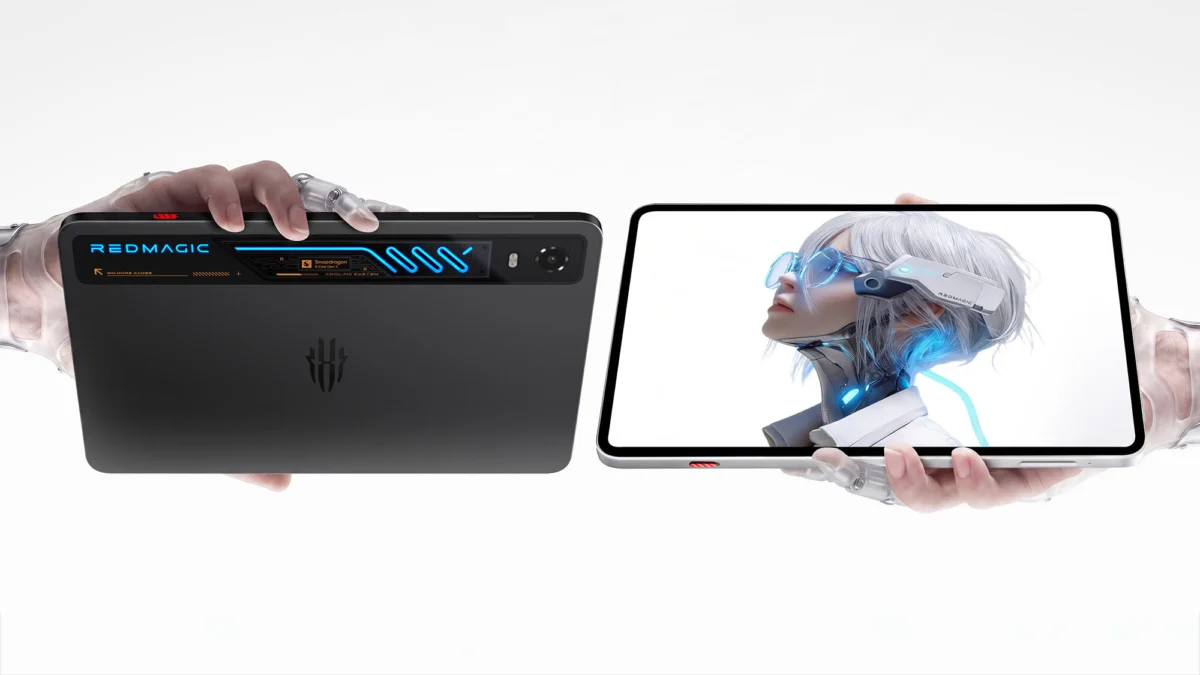
The landscape of mobile gaming is undergoing a seismic shift. As the lines between high-end smartphone performance and portable console capability continue to blur, REDMAGIC—a brand synonymous with pushing thermal limits—has officially pulled the curtain back on its most ambitious project to date: the Astra 2 gaming tablet. Following months of speculation and teasers, the device is set to bring liquid-cooled, desktop-grade emulation to the palms of gamers worldwide.
With a design language that leans heavily into futuristic aesthetics and a hardware stack headlined by the Snapdragon 8 Elite Gen 5, the Astra 2 is not merely an iterative update; it is a declaration of intent. REDMAGIC aims to challenge the dominance of established portable gaming hardware by offering a device that is as much a visual statement as it is a performance powerhouse.
Main Facts: A New Tier of Mobile Gaming Hardware
The REDMAGIC Astra 2 is engineered for the enthusiast who demands uncompromising performance. At its core lies the Snapdragon 8 Elite Gen 5, Qualcomm’s latest silicon masterpiece, which is paired with the proprietary RedCore R4 gaming chip. This secondary processor is dedicated to offloading intensive gaming tasks, providing real-time touch optimization, and enabling advanced features such as frame interpolation and low-latency rendering.
Key Specifications:
- Processor: Snapdragon 8 Elite Gen 5 + RedCore R4 gaming chip.
- Thermal Management: Innovative liquid-cooling system (operating range: -60°C to 125°C).
- Display: 9-inch OLED panel, 185Hz refresh rate, 2.4K resolution, integrated Synaptics touch-response controller.
- Memory & Storage: 12GB/256GB base model; 16GB/512GB premium model.
- Battery & Charging: 8,300mAh dual-cell architecture; 80W wired USB-PD fast charging.
- Connectivity: Dual USB-C ports (USB 3.2 Gen 2) with DisplayPort output.
- Software: REDMAGIC OS 11 (Android 16).
The most striking feature of the device remains its visual design. The back glass reveals a mesmerizing blue-hued liquid-cooling circuit, illuminated by customizable RGB lighting that pulses in synchronization with gameplay. Despite the absence of a physical cooling fan—a staple in previous REDMAGIC handsets—the liquid-cooling mechanism is designed to handle extreme thermal fluctuations, ensuring the device remains comfortable to hold even under heavy load.
Chronology: From Concept to Global Launch
The journey of the Astra 2 reflects the aggressive pace of the Chinese consumer electronics market.
- Early July 2026: REDMAGIC begins teasing the "Astra" series, signaling a move into a more premium, aesthetic-focused gaming tablet segment. Initial leaks suggest a focus on advanced thermal management.
- Late July 2026: Official announcements confirm the "Astra 2" moniker and provide the first concrete look at the liquid-cooled back panel.
- August 2026 (Mid-Month): The brand announces the launch window for early-bird vouchers, establishing a direct bridge between the announcement and the final consumer release.
- Late August 2026: Global pre-orders commence.
- September 2026 (Anticipated): Official retail availability begins for international markets, with units shipping to early adopters.
The strategy here is deliberate. By staggering the announcement and the pre-order phase, REDMAGIC is building a community-driven momentum, allowing users to secure early-bird incentives before the hardware hits the mass market.
Supporting Data: Benchmarking the Future
The Astra 2 is built to handle the most demanding workloads available on Android today, including native PC game emulation. While typical tablets struggle with thermal throttling during extended sessions of titles like Genshin Impact or emulation suites for classic consoles, the Astra 2’s liquid-cooling system is theoretically capable of maintaining peak performance frequencies for longer durations.
The inclusion of dual USB-C ports is a significant hardware choice that speaks to the needs of professional gamers and streamers. By allowing for simultaneous charging and external display output (DisplayPort), users can transform the Astra 2 into a docked console experience. Furthermore, the 185Hz refresh rate on the 9-inch OLED display sets a new industry standard for tablets, moving past the 144Hz ceiling that has defined the category for the past two years.
The choice of an 8,300mAh battery split into two cells is also calculated. By utilizing dual-cell technology, REDMAGIC manages the thermal heat generated during 80W charging, allowing the device to regain a full charge significantly faster than single-cell alternatives without compromising the long-term health of the battery chemistry.
Official Responses and Brand Philosophy
In briefings regarding the launch, REDMAGIC representatives have emphasized that the Astra 2 is designed for "the power user who refuses to compromise." The brand has moved away from the "industrial-rugged" aesthetic seen in its earlier gaming phones, opting instead for a "Black Eclipse" and "Silver Starfrost" finish that feels more at home in a high-end workstation or a professional esports arena.
Regarding the software, REDMAGIC OS 11 (Android 16) is designed with a "gaming-first" architecture. It strips away unnecessary background processes that typically plague generic Android tablets. However, the company has been notably quiet regarding long-term software support. While the device ships with the latest version of Android, the absence of a clearly defined roadmap for OS updates is a point of concern for potential long-term buyers. This aligns with the brand’s historically "disposable" approach to gaming hardware, where the focus is on raw performance and hardware longevity over software longevity.
Implications: Changing the Mobile Gaming Paradigm
The launch of the Astra 2 signals a potential turning point for the Android tablet market. For years, tablets have been viewed primarily as media consumption devices or productivity tools. REDMAGIC is challenging this by positioning the tablet as a dedicated gaming console.
1. The Death of the "Mobile" Limitation
With native PC game emulation and the raw power of the Snapdragon 8 Elite Gen 5, the Astra 2 effectively bridges the gap between handheld gaming consoles like the Steam Deck and traditional tablets. The ability to output to an external monitor via USB-C makes this a viable "desktop" for mobile gamers.
2. The Aesthetics of Thermal Management
By showcasing the liquid-cooling system through the rear glass, REDMAGIC is turning an internal utility into a marketing asset. This suggests that future gaming devices may follow suit, moving away from purely functional designs toward "showcase" hardware that celebrates the engineering beneath the hood.
3. The Price Point Challenge
Starting at $749 and scaling to $849, the Astra 2 enters the market at a price point that puts it in direct competition with premium tablets from Apple and Samsung. However, these competitors lack the specialized gaming-focused thermal architecture and touch-response optimization of the Astra 2. The question for consumers is whether the specialized gaming features are enough to outweigh the ecosystem benefits provided by tablets from more established, mainstream manufacturers.
Conclusion: Is the Astra 2 Worth the Investment?
The REDMAGIC Astra 2 is a bold entry into a niche but rapidly expanding market. It offers hardware specs that, on paper, outperform almost every other tablet currently available. For the competitive mobile gamer, the combination of a 185Hz OLED display, liquid cooling, and the Snapdragon 8 Elite Gen 5 is an enticing proposition that justifies the premium price.
However, the lack of a commitment to software updates and the reliance on a niche OS layer may deter casual users who expect their tablets to last for half a decade. For those who prioritize raw performance, aesthetic flair, and a device that can handle the most taxing gaming scenarios, the Astra 2 is likely the new benchmark.
As pre-orders open in late August, the global gaming community will soon discover if REDMAGIC has managed to successfully convert its reputation for gaming phones into a dominant position in the tablet market. One thing is certain: the competition is on notice. The Astra 2 is not just playing the game; it is attempting to rewrite the rules of mobile performance entirely.











