

Andrew Haigh has long been cinema’s most compassionate observer of the human fracture. Across a career defined by intimacy, he has specialized in capturing the precise, often agonizing moments when lives—and the relationships holding them together—begin to splinter. Yet, it is within this very wreckage that Haigh consistently unearths a profound, almost spiritual grace.
At the 53rd Telluride Film Festival, that sensibility was formally recognized as Haigh was presented with the Silver Medallion, the festival’s prestigious career tribute. He accepted the honor alongside fellow cinematic luminaries Sandra Hüller and John Malkovich, marking a milestone in a career built on the slow, deliberate accumulation of mastery rather than the flash of a singular breakout hit. The tribute served as a poignant backdrop for the world premiere of his latest feature, A Long Winter, a project that represents the culmination of a two-decade-long creative odyssey.
The Architect of Rhythms: A Chronology of Craft
Standing onstage in the serene atmosphere of Colorado, Haigh appeared characteristically humble, even faintly astonished by the trajectory of his career. When prompted to reflect on the moment he first envisioned himself as a filmmaker, he admitted that such a professional identity still feels surreal.
"I never thought it would be possible," Haigh confessed to the audience. "I grew up far removed from the creative industries. It never felt like a realistic path. But then, step by step, I started thinking about it more seriously and trying to make it work."
His journey was far from traditional. Haigh cut his teeth in the editing room, working as an assistant editor—a role he initially secured for financial stability, but which evolved into an intensive masterclass in narrative construction. "It was a great place to understand how films are actually put together," he noted. "It allowed me to work out the rhythms I wanted to employ and how I wanted to tell my stories."
That instinct for rhythm became the heartbeat of his later work. A career retrospective reel shown at the festival highlighted the potent, unvarnished emotionality of films like Weekend, Lean on Pete, and the critically adored HBO series Looking. Haigh’s approach to performance is rooted in a fundamental prerequisite: he must fall in love with his actors before he can place them in front of the lens.
"Once I’ve fallen in love with them, you care about them deeply, and you want to show them for their brilliance," he explained. His rehearsal process is famously unconventional—light on blocking, heavy on conversation. He prefers to talk around a script rather than drilling it, hoping to capture those "flickers of vulnerability" that performers instinctively conceal under the pressure of a camera.
The Anatomy of the Fractured Family
For Haigh, this preoccupation with human fragility is deeply autobiographical. When asked about his recurring cinematic theme of families coming apart at the seams, he pointed directly to his own childhood.
"My family fractured when I was very young. I was nine years old," he said. "I’m fascinated by what people do when things crumble. Can we be resilient? Can we find a way to cope?"
This fascination with intimacy and the necessity of connection has been the lodestar of his work since his 2009 debut, Greek Pete. Produced on a shoestring budget of just a few thousand pounds, the docudrama offered a raw, unflinching look at a London escort. Watching his subjects navigate the complexities of desire and the persistent, human need for connection fundamentally reshaped Haigh’s understanding of the scope of cinema.
From the quiet, transformative weekend of his 2011 breakout film to the decades-spanning marital tension in 45 Years, sex in a Haigh film is never merely physical. It is a conduit for identity. "It’s a way for you to understand yourself as much as it is connecting with somebody else," he explained.
The Long Winter: A Creative Endpoint
A Long Winter serves as the convergence point for these decades of exploration. Haigh first encountered Colm Tóibín’s short story around its 2006 publication, long before he had helmed his first feature film. He immediately recognized it as a vessel for everything he wanted to express.

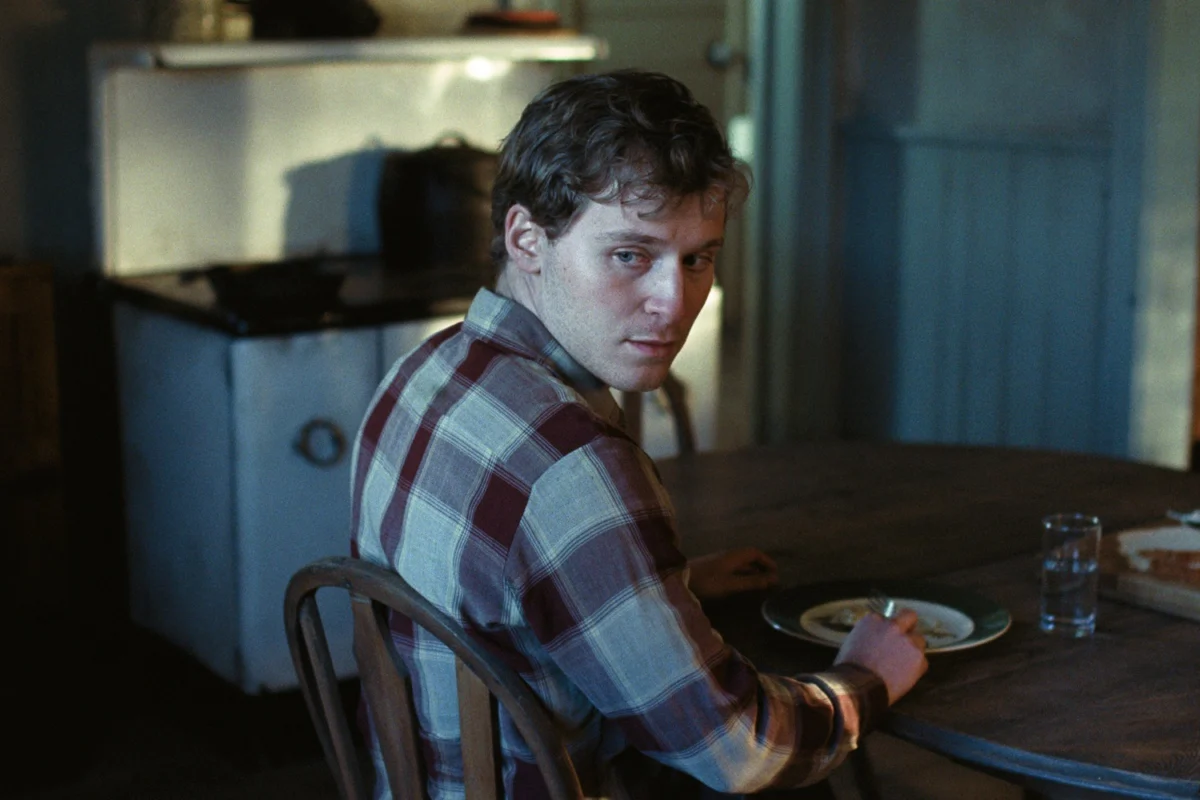
After securing the rights, Haigh spent nearly twenty years attempting to bring the story to the screen. The script underwent various iterations—at one point, it was set in the original location of the Spanish Pyrenees. However, the final film relocates the narrative to the stark, unforgiving American West of the 1950s. The film follows a family—portrayed by Fred Hechinger, Caitriona Balfe, Ebon Moss-Bachrach, and Kit Connor—bracing for a brutal winter. When the mother vanishes into a snowstorm, the son’s desperate search becomes the film’s driving force.
Haigh has jokingly referred to the film as his version of The Revenant, a wilderness passion project that mirrors the endurance required to survive such a landscape. Yet, beneath the self-deprecating humor lies a deeper sentiment: he views the film as an "endpoint" for a specific phase of his career—a final address to a younger, sadder version of himself.
"You’ll see the film and go, ‘What the fuck is he talking about?’" he joked, drawing appreciative laughter from the Telluride crowd.
In truth, the film functions as a synthesis of his stylistic influences, channeling the emotional weight of This Boy’s Life through the mythic, melancholy lens of The Assassination of Jesse James by the Coward Robert Ford. It is a coming-of-age wound set against a pitiless frontier, patient enough to let the vast, indifferent landscape carry the emotional burden of the characters.
Critical Acclaim and the Awards Conversation
The film’s performances are already generating significant buzz. Fred Hechinger delivers a performance of raw nerve that cements his status as a major star, while Caitriona Balfe provides a haunting, ghostly presence as the vanished mother. Ebon Moss-Bachrach, fresh off his Emmy-winning turn in The Bear, brings a grizzled, heartbreaking ballast to the father figure.
The central question now facing the industry is whether the Academy is prepared to fully embrace Haigh, a filmmaker it has admired from a distance for years. Despite the critical fervor surrounding All of Us Strangers—which garnered six BAFTA nominations—the film was notably omitted from the Oscar lineup, a move widely considered one of the biggest snubs of the year.
However, the landscape for A Long Winter feels different. The film is backed by Mubi, a distributor that has evolved into a formidable awards contender following the success of The Substance. With a growing campaign infrastructure and a proven ability to push challenging, high-art cinema into the Oscar conversation, Mubi is positioning A Long Winter for a robust run through the Telluride-Toronto-New York festival circuit.
The clearest path for the film lies in the screenplay and acting categories. Tóibín’s spare, psychologically loaded source material provides a strong foundation for an adapted screenplay nod, while the performances of Balfe, Moss-Bachrach, and Hechinger are poised to make waves in a competitive field.
A New Horizon
At 53, Haigh seems ready to leave behind the stories of fractured families and unclaimed grief that have defined his first two decades of work. He spoke during the festival about looking toward the future, with new projects on the horizon, including a film centered on environmental themes and a television project set against the backdrop of 1980s New York.
"I’m very different than when I started making movies," Haigh reflected. "I always want the film to speak to where I’m at in my life."
For an audience that has grown up alongside his work, the transition feels earned. Andrew Haigh has spent his career proving that there is beauty in the breakdown. As he moves into this new chapter, his audience remains eager to see how his unique, rhythmic grace will illuminate the next set of stories he chooses to tell. Whether or not the Academy finally grants him the golden statue he has so long eluded is almost secondary to the fact that, at 53, Haigh has reached a level of artistic autonomy that few directors ever achieve: the ability to make exactly the films he wants, exactly when he is ready to make them.










