Laily UPN
For a decade, the entertainment industry has engaged in a collective, silent obsession: trying to reverse-engineer the "A24 magic." How did a boutique studio, built on the principles of taste and restraint, evolve into a cultural monolith capable of producing everything from the absurdist, Oscar-sweeping Everything Everywhere All At Once to the viral, internet-native horror of Backrooms?
For years, A24 executives remained notoriously opaque, guarding their "secret sauce" with a discipline that only added to their mystique. Meanwhile, the A24 brand transcended the screen. It became a lifestyle, complete with robust merchandise, high-end dining, and the ultimate badge of modern cinephile loyalty: the A24 tattoo. To a specific generation of film fans, "A24" is no longer just a studio name—it is a shorthand for a cultural seal of approval, a signifier that a film is "cool" by default.
But on Monday, the veil was lifted—or, more accurately, purchased. Google DeepMind announced a $75 million investment in A24. This isn’t merely a cash injection; it is a strategic research partnership that grants the tech giant unprecedented access to the very workflow that has turned A24 into a modern media powerhouse.
Chronology: From Indie Darling to Tech-Adjacent Titan
To understand the significance of this deal, one must look at the trajectory of A24’s ascent. Founded in 2012 by Daniel Katz, David Fenkel, and John Hodges, the company initially focused on distributing offbeat, low-budget indie projects. Their early strategy was simple: curate films that felt authentic, edgy, and distinct.
- 2012–2015: The "Discovery Phase." A24 establishes its brand identity with critical darlings like Spring Breakers and Ex Machina, proving that high-concept indie cinema could find a passionate, digitally native audience.
- 2016–2019: The "Prestige Phase." With Moonlight winning Best Picture, A24 cements its place in the Hollywood establishment, proving that "taste" can yield massive industry awards without sacrificing creative autonomy.
- 2020–2023: The "Expansion Phase." A24 begins to monetize its brand. It expands into television, theatrical exhibition, and lifestyle products, cementing its status as a brand-first entity.
- 2024–2025: The "Platform Phase." The success of Kane Parsons’ Backrooms—a film birthed from YouTube memes—signals a shift in how A24 views content. It is no longer just a studio; it is an incubator for digital-first creators.
- 2026: The "DeepMind Inflection." A24 accepts a $75 million partnership with Google DeepMind, signaling the professionalization of its creative workflow through AI-driven infrastructure.
Workflow as Intellectual Property
The core of the DeepMind deal is not the A24 film library, but rather the A24 "thinking." By embedding themselves within the studio’s production pipeline, Google isn’t just looking at the finished product; they are looking at the decision-making process.
The agreement is defined as a "non-exclusive research partnership." In exchange for providing A24 with advanced AI infrastructure and proprietary development tools, Google gains a seat at the table. While both parties have been careful to emphasize that this is a "responsible AI" collaboration, the implications are profound. This is the first time a studio has formally commodified its creative intuition as a technical asset.

For the tech industry, A24 represents the holy grail: a workflow that consistently defies the odds. If Google can extract the logic that goes into selecting, nurturing, and marketing an A24 project, they can effectively codify the "indie spirit" into an algorithm.
Official Responses and the "Creative Rot" Paradox
The optics of the deal are fraught with tension. A24 partner Scott Belsky, speaking to the Wall Street Journal, attempted to preempt the inevitable backlash from purists. He insisted that the tools being developed "won’t look anything like the prompted generation type of AI that people feel uncomfortable with."
Belsky’s assertion highlights the industry’s desperate need to frame AI as a "co-pilot" rather than a "replacement." The goal, he claims, is to "preserve creative control and support risk-taking."
However, the irony is palpable when compared to the recent comments of Kane Parsons, the director behind Backrooms, arguably A24’s biggest recent success. In a recent interview, Parsons explicitly distanced himself from generative AI, labeling it a potential source of "creative rot." For a studio that has built its reputation on the singular, human-driven vision of its filmmakers, the marriage to an AI giant creates a jarring contradiction. If the technology becomes "load-bearing"—as it inevitably does in any production pipeline—can the human element truly remain the primary driver?
The Implications: A New Era of Filmmaking
The immediate implication of this deal is that the "A24 model"—the argument that creative authority and taste are, in themselves, a distribution strategy—is now a research asset.
1. The Death of the "Black Box" Workflow
For decades, the "creative process" was the final bastion of human mystery in Hollywood. By allowing Google to observe, categorize, and potentially optimize this process, A24 is inviting the "black box" of AI into the room where the next Moonlight is made.

2. The Standardization of "Indie"
If AI tools for storyboarding, pre-visualization, and post-production editing move from optional to standard, the barrier to entry for high-quality production will lower. However, this may also lead to a homogenization of "indie" aesthetics, where the specific, quirky edges of a filmmaker’s vision are smoothed over by an algorithm designed to maximize engagement.
3. The Filmmaker’s Dilemma
Filmmakers who view A24 as the last champion of the filmmaker-first model are now forced to confront a reality where their creative process is inextricably linked to Silicon Valley infrastructure. Does this mean they will be forced to use these tools? Or will they be the beneficiaries of a system that makes their jobs easier?
Future of Filmmaking: Weekly Industry Insights
As we navigate this shifting landscape, the lessons from the past week serve as a reminder that the industry is in a state of rapid flux. Managing Editor Christian Zilko offers these five essential reads for those trying to make sense of the current climate:
- The Unglamorous Financial Realities of Five Indie Filmmakers (Hershal Pandya, Vulture): A sobering, necessary breakdown of the math behind the art. It serves as a stark counter-narrative to the "A24 success story," reminding us that for every hit, thousands of filmmakers struggle to keep the lights on.
- You Don’t Need to Be an Influencer. You Do Need to Think Like A Creator (Christie Marchese, Kinema): A vital read on digital marketing. Marchese argues that while you don’t need to sell your soul to TikTok, you must adopt the agility and audience-awareness of digital creators.
- The $100,000 Confession That Changed How I See Filmmaking (Sophie Katsali, Ted Hope Substack): A brilliant, candid look at the "failure" that isn’t discussed enough in indie circles. Katsali challenges the auteur-mythos and argues for more transparency about the disasters that happen on set.
- Are You the Best Distributor for Your Film? (Jeanie Finlay, Kinema): A deep dive into the nuances of self-distribution. Before you decide to go it alone, this guide provides the granular, specific advice necessary to evaluate whether your film has the legs for a grassroots campaign.
- The One Trick That Will Get You the Most Success as a Screenwriter (Spyder Dobrofsky, Hollywood Screenwriter): A practical, grounding piece of advice: sometimes, your individual artistry must serve the project’s larger, collaborative needs. A lesson in humility that remains relevant regardless of how much AI enters the room.
Final Thoughts: The House That Taste Built
A24 has spent a decade proving that they are the exception to the Hollywood rule. They have successfully bet that they can take the capital and the infrastructure of the tech world without ceding the judgment that makes them, well, A24.
But as the lines between "human vision" and "AI-assisted production" blur, the industry will be watching closely. Martin Scorsese’s recent forays into AI-assisted storyboarding and this $75 million DeepMind deal indicate that the future is no longer knocking at the door—it is calling from inside the house. Whether this results in a new golden age of creative output or a sterile, algorithmic imitation of art remains to be seen. One thing is certain: the era of the "mysterious studio" is officially over. The data is in, and the machine is learning.

 Azzam Bilal Chamdy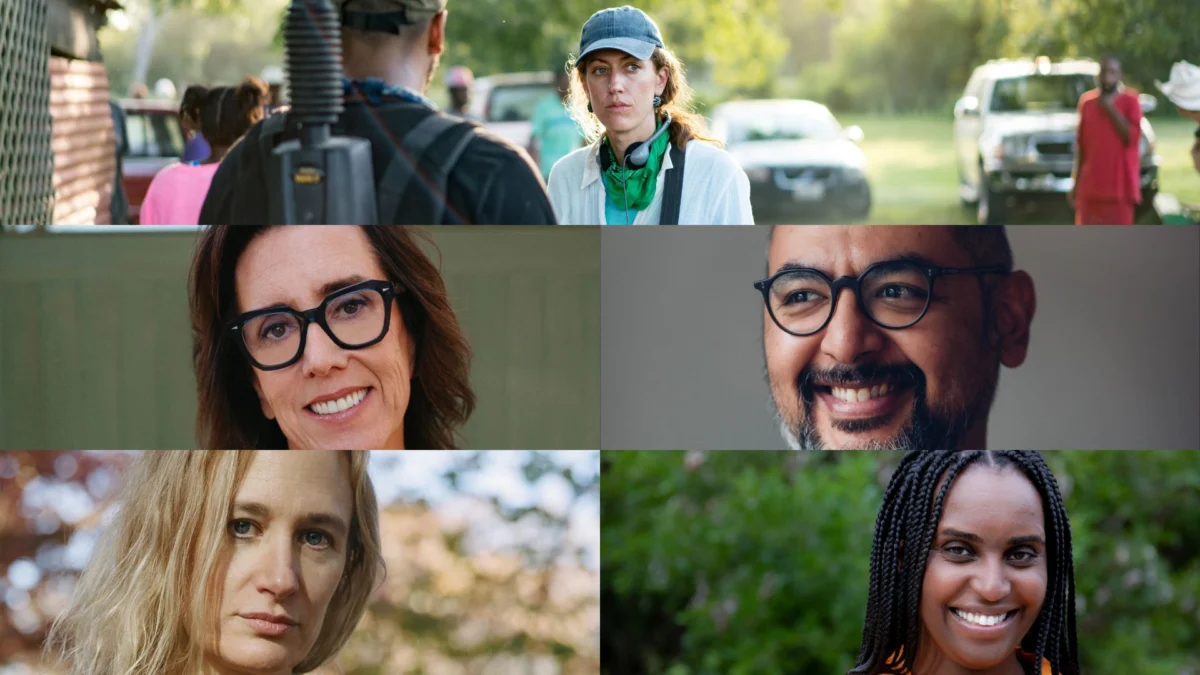
 Reynand Wu