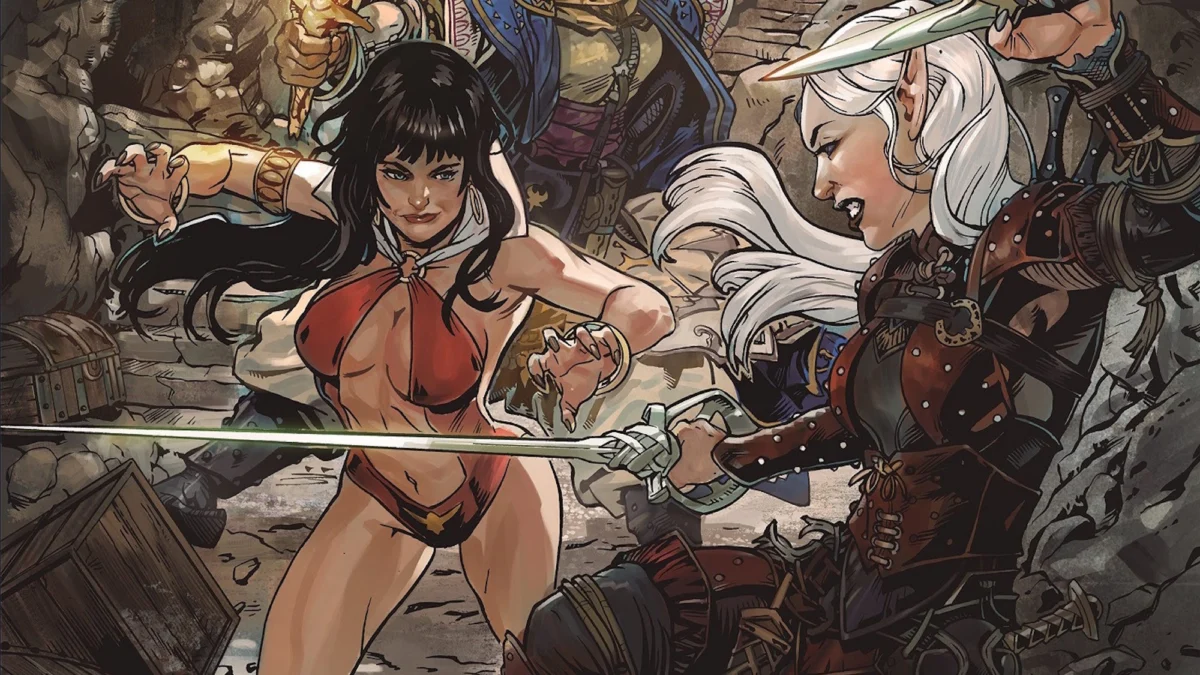
In a monumental announcement that has sent shockwaves through both the tabletop gaming community and the comic book industry, Dynamite Entertainment and Paizo Inc. have confirmed a crossover event nearly fifteen years in the making. This October 2026, the raven-haired icon of horror, Vampirella, will step out of the shadows of Drakulon and into the sprawling, high-fantasy realm of Golarion in Pathfinder/Vampirella: Blade of Darkness.
This limited series promises to merge the gothic, supernatural sensibilities of Vampirella with the complex, tactical, and high-stakes environment of the Pathfinder RPG. With a creative team spearheaded by writer Erik Burnham and artist Federico Dallocchio, the project is being positioned as a flagship release for the autumn season.

The Genesis of a Crossover: How Two Titans Met
The partnership between Dynamite Entertainment and Paizo is a well-established one, having flourished for over a decade. However, bringing a character as distinct as Vampirella—a sci-fi/horror hybrid—into the rigid, sword-and-sorcery framework of Pathfinder required a delicate narrative balance.
According to Nick Barrucci, CEO and owner of Dynamite Entertainment, the idea had been percolating within the editorial offices for a long time. "This is historic and huge," Barrucci stated. "Vampirella is one of the most iconic female characters in comics, designed by Trina Robbins with the first magazine painting by Frank Frazetta! And Pathfinder is one of the most popular RPGs in the world today. We needed the right creative team to pull this off, and in Erik and Federico, we found the perfect architects for this collision of worlds."
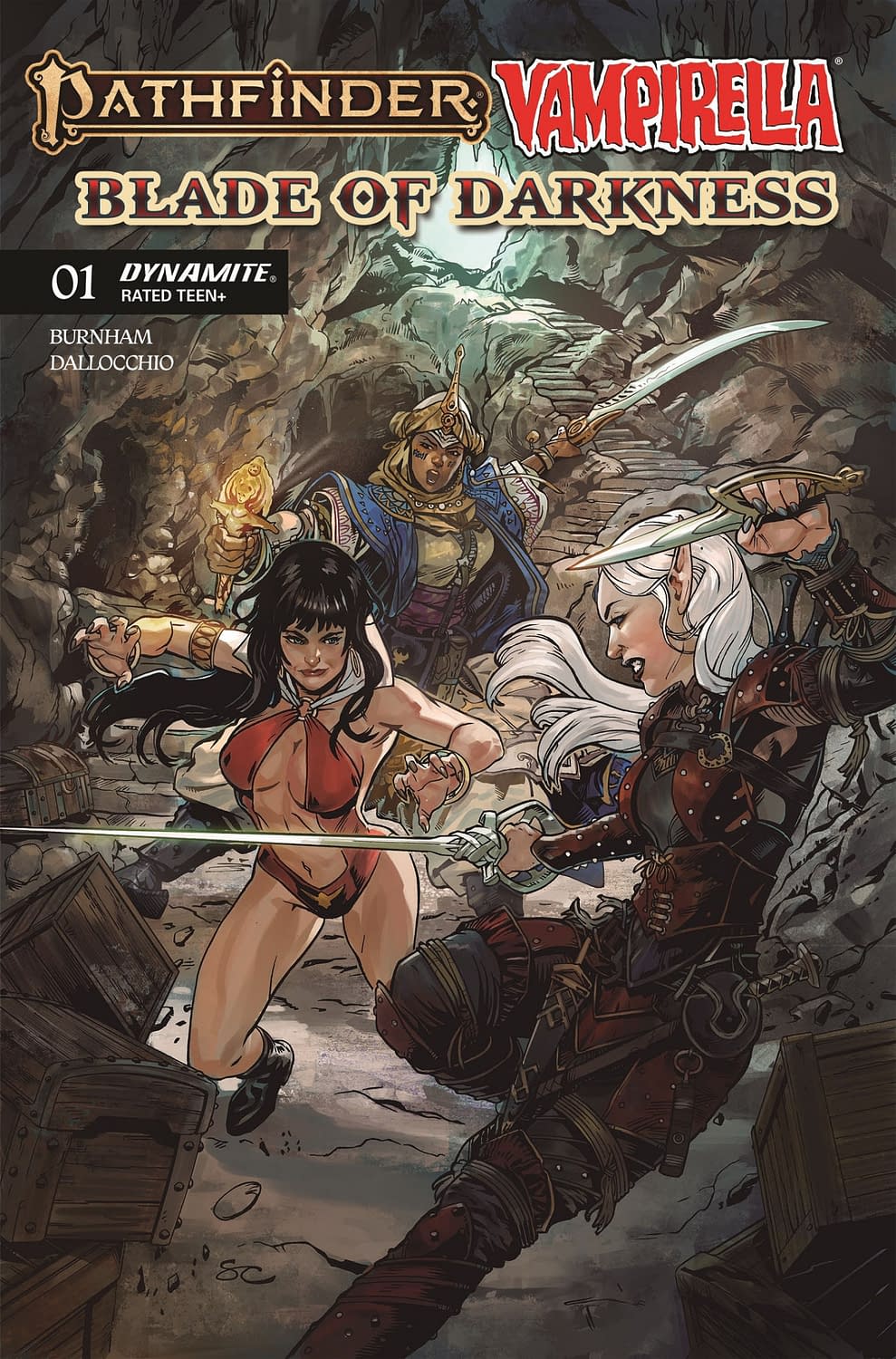
Chronology and Narrative Setup
The story begins with a ritual gone wrong. In the deep, treacherous corners of Golarion, a powerful vampire lord named Zaloch seeks to bolster his influence against the various factions of adventurers and monster hunters that threaten the undead hegemony. He initiates a dark, forbidden ritual intended to summon a demonic entity—a figure of pure terror capable of turning the tide of war in favor of the vampires.
However, the planar energies are fickle. Instead of a mindless demon, the ritual pulls an entirely different kind of predator into the fray: Vampirella.
The immediate aftermath of this summoning is the catalyst for the series’ narrative engine. As Vampirella attempts to navigate her new, unfamiliar surroundings, she is thrust into an environment where she is an outsider, surrounded by gods, monsters, and heroes who are fundamentally different from those she encounters in her native reality. As she enters the fray, the chaos attracts local attention, bringing legendary Pathfinder stalwarts—specifically the iconic duo of Kyra, the Sarenite cleric, and Merisiel, the elven rogue—into the heart of the conflict.
The Creative Force: Erik Burnham and Federico Dallocchio
The selection of the creative team is crucial to the series’ success. Erik Burnham, a writer whose pedigree includes celebrated runs on Red Sonja, Ghostbusters, and Teenage Mutant Ninja Turtles, is no stranger to the delicate art of the crossover. His previous work on the Vampirella/Dejah Thoris team-up established his ability to handle disparate mythologies with grace and humor.
"Golarion is a fantastic sandbox to play in, and the only complaint I’ve had so far is that I only have so many pages to explore it!" Burnham remarked. "Not only has introducing Vampirella into a new world full of gods, monsters, and heroes been a treat for me, so has getting to write those gods, monsters, and heroes for the first time—and knock on wood, not the last!"
Burnham is paired with artist Federico Dallocchio, a visionary who has previously left his mark on the industry with significant contributions to DC’s Suicide Squad, as well as high-profile work for the Star Wars and Starcraft franchises. Dallocchio’s style, known for its kinetic energy and sharp, atmospheric character work, is expected to bring a visceral, gritty aesthetic to the Pathfinder setting, grounding the magical elements in a tangible, dangerous reality.

Supporting Data: A Multi-Layered Publishing Strategy
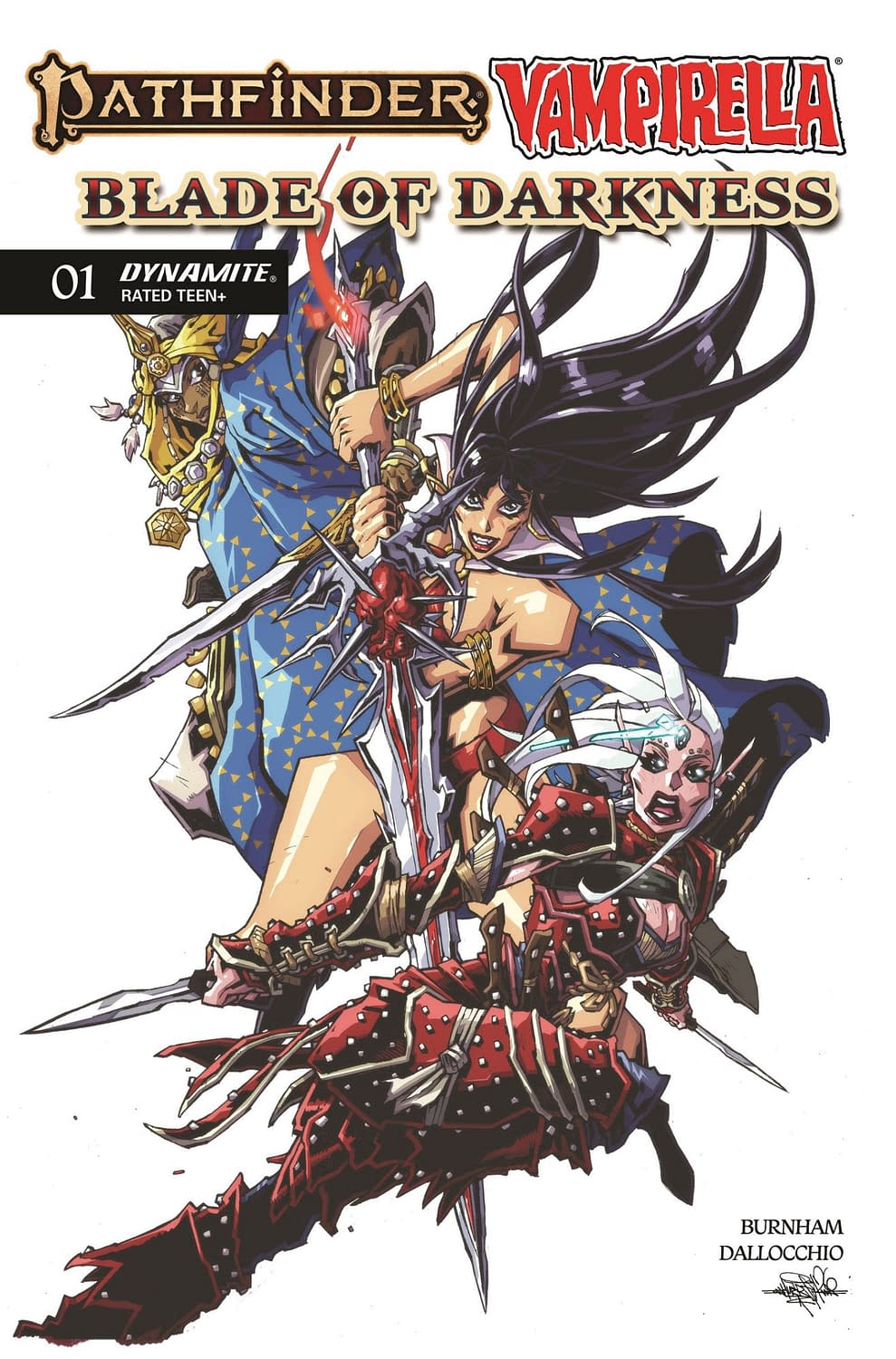
Dynamite is pulling out all the stops for the release, ensuring that Blade of Darkness serves as a collector’s item for both comic fans and RPG enthusiasts. The series will feature an array of covers designed to appeal to different segments of the fan base.
Confirmed cover artists include:
- Steven Cummings: Known for his dynamic work on previous Pathfinder comic adaptations.
- Andrew Huerta: A veteran of the Pathfinder visual aesthetic who brings continuity to the character designs.
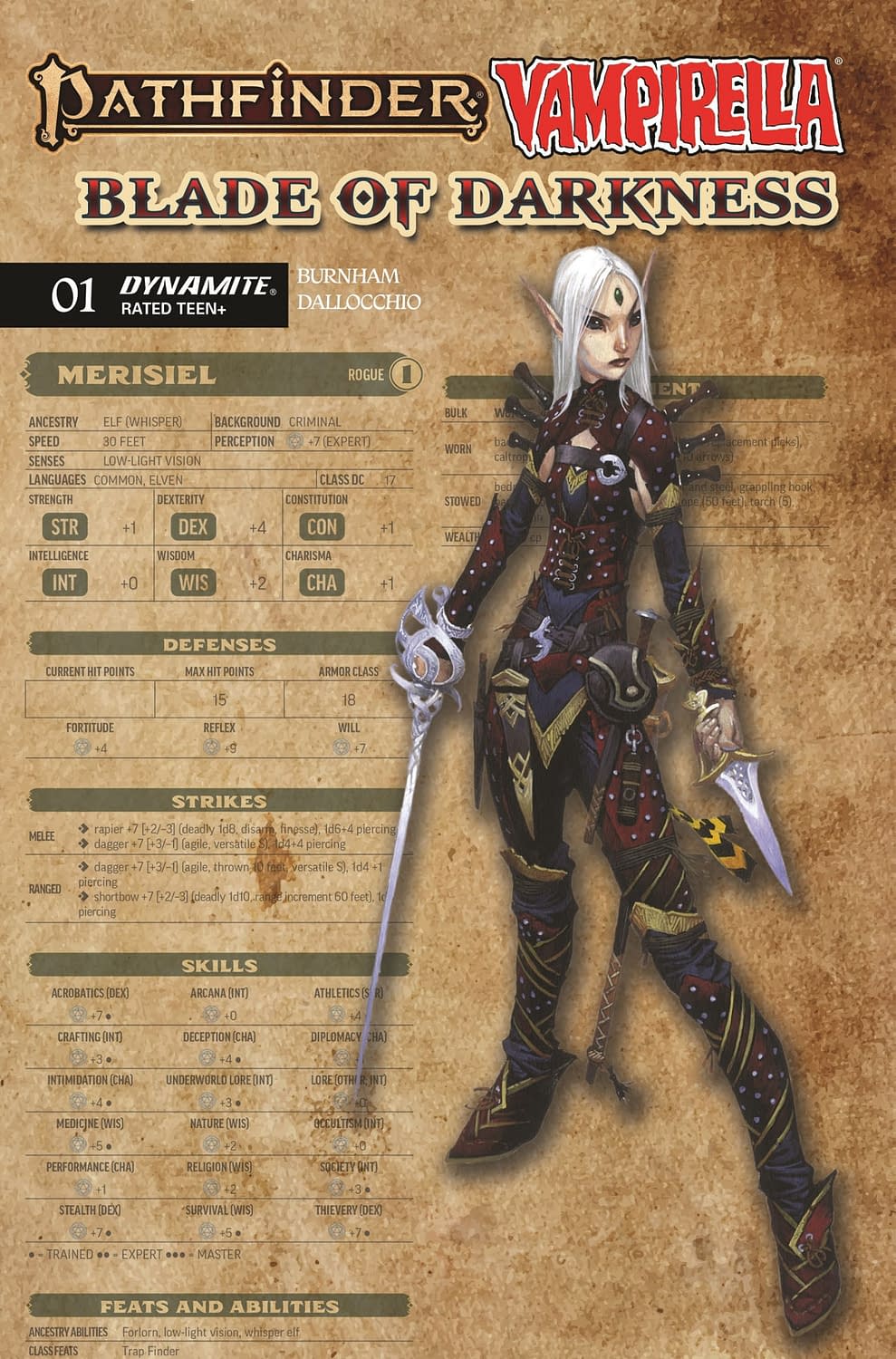
- Wayne Reynolds: A luminary in the RPG art world, Reynolds will be contributing specialized "character sheet" covers, which are expected to be highly sought after by those who play the tabletop game.
Furthermore, the publisher has teased the inclusion of "blind bags" and additional chase variants, a staple of modern comic marketing designed to drive engagement and provide an incentive for local comic shop visits.
Implications for the Pathfinder Universe
The implications of this crossover extend beyond a simple "what if" scenario. By integrating a character as established as Vampirella into the official Pathfinder lore, even temporarily, it opens the door for further exploration of Golarion’s planar boundaries. The Pathfinder setting is renowned for its depth—incorporating everything from Lovecraftian horror to high-fantasy politics—and adding an interdimensional vampire antihero provides a new lens through which to examine these themes.
For fans of the Pathfinder RPG, this series serves as a bridge, potentially drawing in comic readers who have never rolled a twenty-sided die, while simultaneously providing veteran players with a fresh, unexpected narrative twist on their favorite setting.
The Cultural Impact of the Crossover
Crossovers in the medium of comic books often struggle with tonal consistency, but the pairing of these two properties feels surprisingly organic. Both brands rely on a foundation of "monsters and magic." While Pathfinder is rooted in the tradition of the tabletop adventure, its lore is rich with dark, mature themes that align well with the pulp-horror roots of Vampirella.
The choice to feature Kyra and Merisiel is also a strategic move. As some of the most recognizable faces in the Pathfinder brand, their inclusion ensures that the story remains anchored in the core identity of the RPG, even as the narrative veers into the surreal. Their dynamic—the light-focused, disciplined cleric and the shadow-dwelling, impulsive rogue—creates a perfect foil for the morally complex Vampirella, setting the stage for character-driven drama amidst the sword-swinging action.
Looking Toward October 2026
As the release date approaches, the anticipation continues to build. The industry is currently in a phase where "prestige crossovers" are becoming increasingly common, but Pathfinder/Vampirella: Blade of Darkness stands out due to the sheer pedigree of its creators and the strength of the two franchises involved.
For Dynamite, the goal is clear: to solidify its position as the premier publisher for licensed crossovers that respect the source material while pushing characters into uncharted territories. For Paizo, it represents an opportunity to showcase the vitality of the Pathfinder brand outside of the gaming table, proving that the world of Golarion is as effective in panels as it is in play.
As fans await the arrival of the first issue, one thing is certain: when the Daughter of Drakulon meets the heroes of the Inner Sea, the resulting clash will leave a permanent mark on both the pages of the comic and the history of the RPG. October 2026 is poised to be a pivotal month for comic shops and gaming stores alike. Whether you are a long-time reader of Vampirella or a seasoned Dungeon Master, the promise of this "Blade of Darkness" is simply too compelling to ignore.