Lina Hope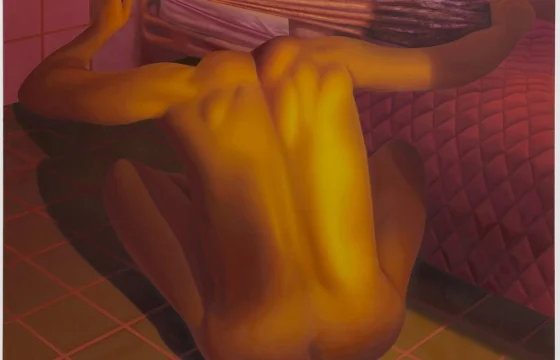
New York’s contemporary art scene has long grappled with the representation of the human form, but rarely with the raw, biological intensity found in the latest exhibition at Lyles & King. The gallery’s project space is currently hosting a compelling suite of new paintings by Los Angeles-based artist Kate Meissner, an exhibition that invites viewers to confront the profound, often unsettling, elasticity of the mammalian body. On view through April 4, the collection serves as a poignant intersection between fine art and the visceral reality of pregnancy and childbirth.
Main Facts: A Meditation on Biological Fluidity
The exhibition, which marks a significant moment in Meissner’s burgeoning career, centers on the concept of metamorphosis. For Meissner, the human body is not a static vessel but a dynamic, changing landscape. Her work navigates the boundary between the clinical reality of physiology and the abstract, emotional weight of maternal experience.
At the core of these paintings is the artist’s own recent experience: the birth of her first child last year. This personal milestone has served as the catalyst for a series that eschews traditional, idealized depictions of maternity in favor of a more "animalistic" and "mammalian" perspective. The works are characterized by a sense of movement and distortion, suggesting a body that is constantly expanding, shifting, and reconfiguring itself to accommodate new life.
"These works are an exploration of the human body’s elasticity and capacity to metamorphose," Meissner states in her artist’s notes. By focusing on the underlying biological nature of the human form, Meissner strips away the societal expectations placed upon the pregnant body, presenting it instead as a primal site of transformation.
Chronology: From Yale to the International Stage
To understand the weight of Meissner’s current work, one must look at the trajectory of her career, which has been defined by a rapid ascent and a consistent focus on the materiality of the body.
Early Foundations and Education
Born in Sacramento, California, in 1995, Meissner demonstrated an early interest in the intersection of form and psychological narrative. Her formal training culminated at the Yale School of Art, where she earned her Master of Fine Arts. The rigor of the Yale program is often cited as a turning point for her practice, allowing her to refine her technical approach to paint while deepening her conceptual exploration of figuration.
Professional Rise
Following her graduation, Meissner relocated to Los Angeles, a city whose sprawling landscape and complex relationship with the body have deeply influenced her work. Since then, she has transitioned from an emerging talent to a significant presence in the global contemporary art market.
Her work has been acquired by several prestigious institutions, signaling a broad consensus on the importance of her contribution to contemporary discourse. These include:
- The Denver Art Museum (Denver, CO): A major institutional anchor for her work in the United States.
- The Xiao Museum of Contemporary Art (Rizhao, CN): Expanding her reach into the Asian contemporary art market.
- The Mer Collection (Madrid, ES): Establishing her footprint within the European private collector circuit.
- Abroms-Engel Institute for the Visual Arts (Birmingham, US): Cementing her reputation as an artist with significant institutional backing.
Her representation by Lyles & King in New York serves as the current nexus for her career, providing a platform that emphasizes the intellectual and emotional depth of her recent paintings.
Supporting Data: The Anatomy of Transformation
In the context of contemporary art history, the "maternal body" is a subject that has historically been fraught with domestic sentimentality. Meissner’s work represents a departure from this trope. Her paintings function as a visual record of physiological data—the literal stretching of skin, the redistribution of weight, and the internal shift of organs.
The "animalistic" quality mentioned in her artist statement is reflected in her application of paint. Her strokes are often layered and dense, mirroring the complex biological processes that accompany gestation. By abstracting the body, Meissner allows the viewer to focus on the universality of the experience—the body as a site of biological necessity rather than mere aesthetic subject matter.
The exhibition at Lyles & King is not merely a display of finished canvases; it is a clinical and emotional document. It invites observers to view the pregnancy not as a static condition, but as a period of intense, chaotic change. This focus on "elasticity" is both a physical observation and a metaphorical one, speaking to the mental flexibility required during the transition into motherhood.
Official Responses and Critical Reception
While the exhibition is in its early stages, the discourse surrounding Meissner’s work at Lyles & King has already begun to crystallize. Critics have noted the courage required to present such an intimate, vulnerable subject matter with such clinical precision.
"Meissner manages to bypass the saccharine trap of maternal art," noted one gallery observer during the opening week. "Instead, she presents the body as a site of conflict and awe. It is as if she is mapping the terrain of her own transformation in real-time."
Lyles & King has positioned this exhibition as a highlight of their spring calendar. The decision to feature these works in their project space—an area typically reserved for more experimental or focused bodies of work—underscores the gallery’s commitment to Meissner’s evolving vision. By providing a dedicated space for this series, the gallery invites a more intimate, reflective viewing experience, perfectly suited to the themes of birth and biological metamorphosis.
Implications: The Future of the Maternal Gaze
The success of this exhibition suggests a broader shift in the art world toward a more honest, visceral exploration of the female experience. For decades, the "maternal gaze" has been filtered through the lens of external observers—often male, often focusing on the aesthetic of the "mother." Meissner represents a new generation of artists who are reclaiming the narrative from the inside out.
Redefining Femininity in Art
By emphasizing the "mammalian" nature of the body, Meissner is essentially de-centering the human ego. She reminds the viewer that, beneath the complexities of modern identity, there exists a biological mandate that is raw, messy, and fundamentally transformative. This has significant implications for how we define "feminist art" in the 21st century. It is no longer enough to argue for equality; there is a growing need to document the actual physical toll and triumph of biological existence.
Impact on the Contemporary Market
The inclusion of Meissner’s work in major international collections, such as the Xiao Museum and the Mer Collection, demonstrates that there is a global appetite for this kind of rigorous, emotionally honest work. Collectors are increasingly moving away from purely decorative art and toward pieces that challenge, provoke, and document the human condition in all its complexity.
A Legacy in the Making
As the exhibition moves toward its April 4 conclusion, the long-term impact of these paintings remains to be seen. However, given the trajectory of Meissner’s career—from her formative years at Yale to her current institutional presence—it is clear that she is carving out a niche that is both deeply personal and universally resonant.
The paintings currently on view at Lyles & King act as a threshold. They bridge the gap between the private, often invisible work of childbirth and the public, often superficial world of the art gallery. In doing so, Meissner does not just present paintings; she presents a new way of looking at the body—as a living, breathing, and forever-changing organism.
Conclusion
The exhibition of Kate Meissner’s work at Lyles & King is more than just a gallery show; it is an act of documentation. Through her exploration of the body’s elasticity and the profound metamorphosis of the maternal experience, Meissner has invited the public to witness a fundamental biological truth. In an art world that often prioritizes the intellectual over the visceral, Meissner’s work stands as a stark, necessary reminder of our shared mammalian nature. As the exhibition continues through April 4, visitors are encouraged to look past the surface of the paint and engage with the complex, living narrative that Meissner has so masterfully rendered.
Whether one views these works through the lens of feminist critique, biological inquiry, or simple aesthetic appreciation, the result is the same: a profound recognition of the body as a site of wonder and, above all, transformation.


 Dwi Wanna
 Asro
Asro