In the pantheon of pop culture, the superhero genre has long been dominated by the duopoly of DC and Marvel. From the brooding streets of Gotham to the cosmic stakes of the Marvel Cinematic Universe, these titans have set the standard for what a hero looks like. However, a surprising new contender has emerged on the high seas. Royal Caribbean (RC), the global cruise line giant, has quietly launched its own original superhero universe: The Effectors.
While the concept of a "cruise ship hero" might sound like a kitschy novelty at first glance, The Effectors represents a sophisticated, high-budget, and strategically clever maneuver in the world of experiential entertainment. By crafting an entirely original IP rather than licensing established characters, Royal Caribbean has not only bypassed the logistical nightmares of corporate red tape but has also created a bespoke narrative universe that belongs exclusively to its fleet.
Challenging the Cruise Ship Stigma
To understand the significance of The Effectors, one must first acknowledge the lingering skepticism surrounding the cruise industry. For many travelers, particularly the younger demographic and those accustomed to independent travel, the very word "cruise" can evoke images of stuffy, elderly-dominated itineraries or, more recently, the dystopian portrayals found in viral Netflix documentaries about being "trapped with strangers" on the open ocean.
However, the experience of a modern cruise—especially on a vessel equipped with the high-octane production values of The Effectors—is far from the "gluttony as punishment" narrative. For the seasoned traveler who has spent years meticulously planning solo treks across Africa, Asia, and Europe, the appeal here is the surrender of control. Royal Caribbean effectively acts as a "mental task rabbit," handling the logistics of travel, dining, and lodging, allowing the guest to simply exist within a curated, high-entertainment environment.

The Chronology of a Floating Universe
Royal Caribbean’s leap into the superhero space was not an overnight decision. It was the culmination of years of experimentation with intellectual properties. Over the past decade, the cruise line has successfully mounted productions of Back to the Future, Mamma Mia!, and Cats, often under the guidance of creative director Racky Plews, a veteran of Disney+ programming.
These successes provided the framework for the company to move beyond adaptations. The creation of The Effectors marks a shift from "licensee" to "creator." By designing characters specifically for the cruise experience, the production team, led by VP of Entertainment Christi Coachman, was able to tailor every digital effect, laser sequence, and aerial stunt to the unique architecture of their ship theaters.
While Comic Con International (CCI) has previously attempted to bring the convention experience to the sea, the reception was reportedly lukewarm, with attendees noting a lack of proper mapping and inadequate programming. Royal Caribbean, however, has learned from these missteps. They aren’t trying to bring the convention to the boat; they are bringing the narrative to the boat.
The Mechanics of Control: Why Not DC or Marvel?
When asked why Royal Caribbean opted for an original property rather than shelling out the massive licensing fees required for a DC or Marvel collaboration, the reasoning becomes clear through the lens of corporate autonomy.

In the world of intellectual property, the "Big Two" come with strings attached. Bringing a franchise like Star Wars or The Avengers to a cruise stage would require satisfying a labyrinthine hierarchy of executives—from the cruise line’s internal team to Disney, Marvel, and Lucasfilm. The creative restrictions, brand guidelines, and approval processes are often suffocating.
By developing The Effectors, Royal Caribbean retains absolute creative and legal control. This allows them to pivot, expand, or modify their characters in real-time based on audience feedback, without needing to submit a request to a corporate board in Burbank. It is a classic business strategy: when you cannot own the market, you build your own.
The Heroes of the High Seas
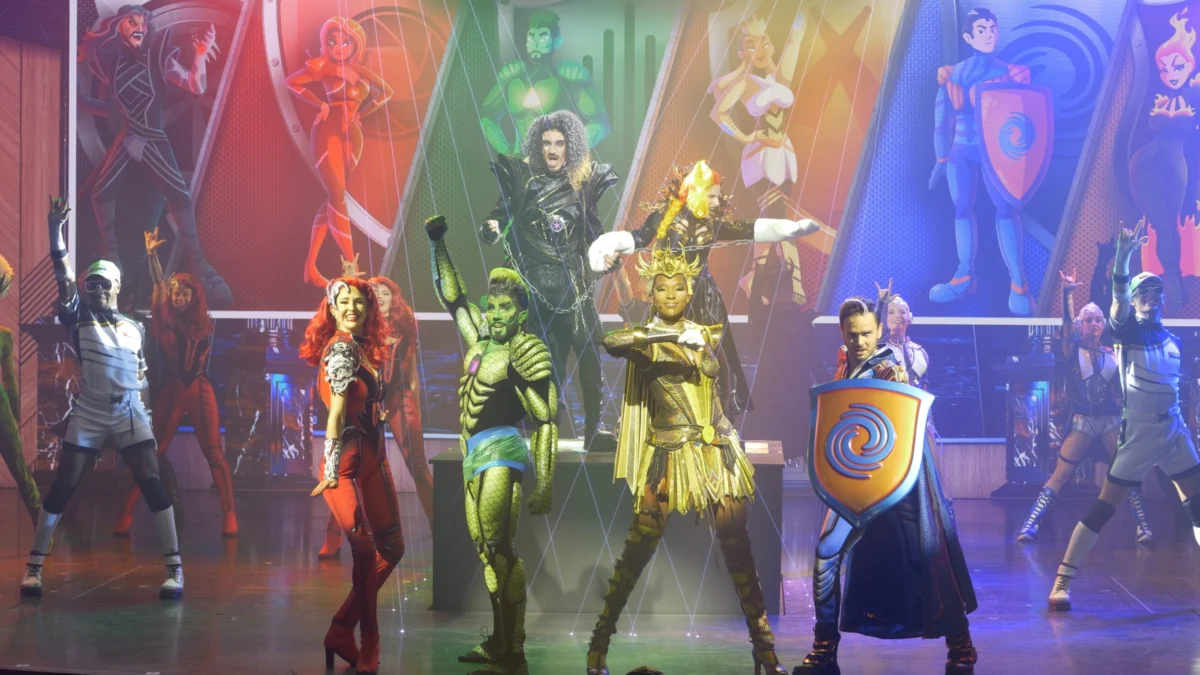
The core of the The Effectors universe consists of four primary heroes, each representing a "creative power" that mirrors the production elements of the show itself:
- Captain Wave: The leader, possessing the power of command and the ability to manipulate the environment.
- Lullaby: Utilizing the power of sound and emotion to influence the narrative.
- Viz: The visual specialist, capable of creating illusions and controlling the light.
- Pixel: A tech-savvy powerhouse, manipulating digital realities and drones.
These characters serve as the protagonists in an ongoing saga, battling their arch-nemesis, "Crash," a villain who utilizes an army of airborne Drone Soldiers and henchmen to attempt global takeover. The show is described as a "lighter rendition of The Avengers," designed to be accessible to a wide audience while maintaining the high-stakes drama required for a compelling stage performance.

Hidden Layers: Easter Eggs and Lore
For the hardcore comic book fan, the show offers more than just pyrotechnics. The creative team has woven in subtle "Easter Eggs" that signal their deep appreciation for the medium.
One notable inclusion is a character referred to as a "Level Zero Effector." This is a direct, albeit dark, homage to the "Level 0 Laborer" from DC’s Absolute Superman (AS) multiverse. In the AS comics, the Level 0 laborers are the lowest class of the Brainiac Collective, often portrayed as tragic, insane clones. Including such a niche reference suggests that the writers behind The Effectors are not merely casual fans, but are actively engaging with the current discourse in the comic book industry.
Technical Marvels and Production Value
The production value of The Effectors is perhaps the most shocking aspect for first-time viewers. In an era where audiences are jaded by the overuse of CGI in film, the tangible, visceral nature of a live stage show feels like a breath of fresh air.
"All Royal Caribbean productions utilize cutting-edge technology and are led and managed by incredibly talented crew members," says Christi Coachman. "The Effectors productions feature digital video effects, drone and laser technology, aerial acrobatics, and immersive LED lighting alongside our incredibly talented singers and dancers who are driving the character arcs."

This level of immersion is what distinguishes the show from a simple musical theater performance. The integration of live human performance with drone technology creates a sense of scale that is rarely found outside of major metropolitan theaters. It is, quite literally, a Broadway-level production in the middle of the Atlantic.
The Broader Implications for Experiential Media
What does the existence of The Effectors mean for the future of entertainment? It signals a trend of "Brand-Owned Universes." As licensing costs for established franchises continue to skyrocket, other corporations—resorts, theme parks, and cruise lines—may follow Royal Caribbean’s lead.
If a company can build a compelling, multi-episode saga that keeps guests engaged throughout their trip, they have successfully increased the value of their product without relying on the volatility of external partnerships. It is a smart, effective way to "test the waters" of long-form storytelling.
However, a word of caution to the prospective traveler: The Effectors is, by design, a cruise show. While it is impressive, it is still a piece of the larger cruise experience. For those who harbor a deep-seated hatred for the idea of a cruise, the spectacle of a superhero show alone is unlikely to be the sole deciding factor for a booking.

Conclusion: A New Frontier
Whether The Effectors will ever expand beyond the theater—perhaps into a series of actual comic books, animated shorts, or streaming content—remains to be seen. For now, it stands as a unique, ambitious, and surprisingly well-executed example of a company taking control of its own creative destiny.
In a world where we are constantly bombarded by the same three or four superhero franchises, there is something refreshingly honest about a brand creating something entirely its own. It is bold, it is occasionally cheesy, and it is entirely self-contained. For the fans of the genre looking for something different, it might just be time to set sail.