The quest for the "holy grail" of PC building—a high-performance, completely silent gaming machine—has long been hampered by the laws of thermodynamics. Traditionally, high-wattage components like top-tier CPUs and GPUs require aggressive airflow to dissipate heat. However, French boutique manufacturer MonsterLabo is challenging this paradigm with a refined iteration of its flagship chassis, "The Beast." Having officially launched an updated design via Indiegogo, the company is betting that enthusiasts are ready to trade fans for sheer, unadulterated thermal mass.
Main Facts: A Masterclass in Passive Engineering
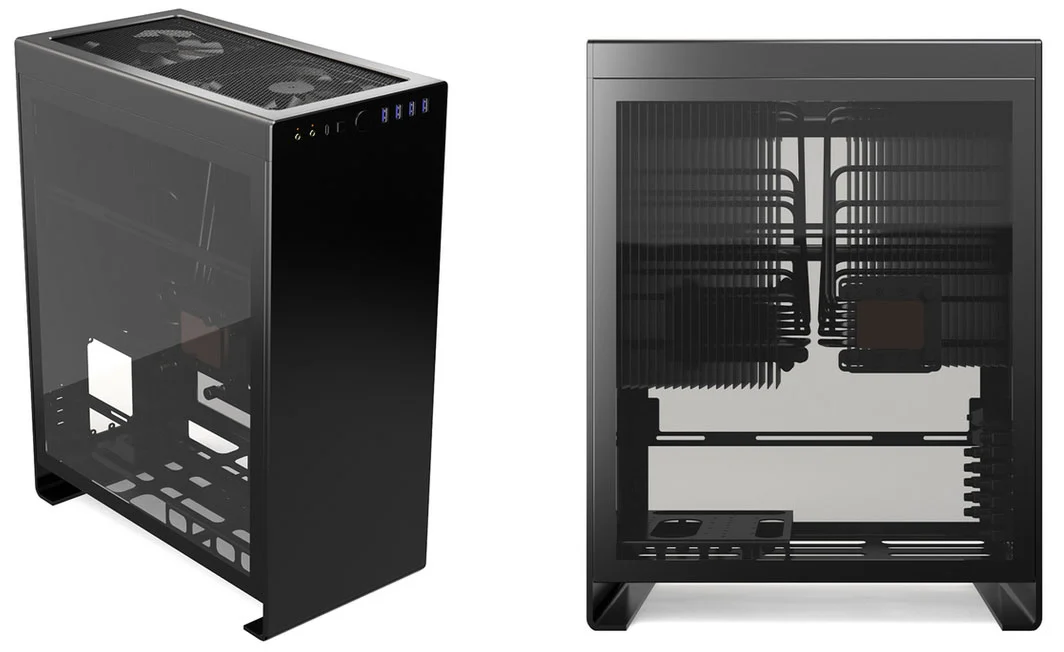
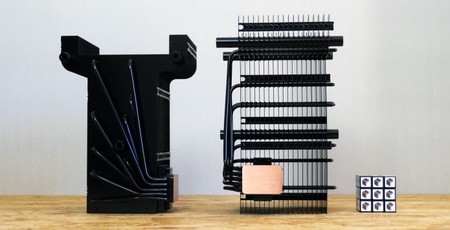
At its core, The Beast is not merely a computer case; it is a thermal management system. The chassis is defined by "The Heart²," a massive, dual-section heatsink that occupies approximately 50% of the internal volume. This cooling block is split into two distinct segments: one dedicated to the CPU and the other to the GPU. By utilizing the chassis itself as a giant radiator, MonsterLabo achieves a state of "passive magic," where heat is transferred through heat pipes directly into the aluminum structure.
The updated iteration brings several key refinements, most notably an expanded compatibility list for modern graphics cards. While the original version impressed reviewers by cooling an AMD Ryzen 3800X and an Nvidia GeForce RTX 3080 during taxing sessions of Microsoft Flight Simulator 2020, the new model aims to cater to a broader range of hardware configurations.
MonsterLabo has also leaned into the boutique aspect of the build, offering Indiegogo-exclusive customization options. Backers can now opt for custom paint finishes and personalized logo engravings, moving the product away from a standard industrial chassis toward a bespoke piece of hardware. Furthermore, the company has introduced a pre-built service, where their own technicians assemble the system—including specialized "fanless optimization"—starting at €2,850.
Chronological Evolution: From Prototype to Product
The journey of The Beast has been one of iterative perfection. In March, the system made headlines when it demonstrated its thermal stability in a real-world gaming environment. During these early trials, the system maintained a CPU temperature of 75°C and a GPU temperature of 65°C while running at 1440p on an ultrawide display—a feat that seemed impossible for a fanless system just a few years ago.
Following this, the feedback loop between the manufacturer and the early adopter community led to the "The Heart²" designation. While the underlying physics of the heatsink remain largely similar to its predecessor, the designation implies optimizations in mounting, contact surface area, or heat pipe configuration designed to better handle the increased thermal output of the latest generation of silicon.
The Indiegogo campaign marks the next major milestone. By moving to a crowdfunding model, MonsterLabo is attempting to scale its production capacity while gauging demand for its premium, high-maintenance offerings. With shipping targets set for Christmas for the earliest backers and April 2022 for the broader batches, the company is positioning itself as a leader in the niche but growing market of ultra-silent computing.
Supporting Data: The Thermodynamics of Silence
To understand the feasibility of The Beast, one must look at the data provided by independent testers. A recent deep-dive by Optimum Tech pushed the updated chassis to its absolute limits by installing an Intel Core i9-10900K. The results were telling: the 10-core powerhouse ran at 4.5GHz at 1.13V, stabilizing at 89°C. While this is certainly toasty by traditional liquid-cooled standards, it is remarkably safe for a passive configuration.
The GPU performance was equally impressive. By utilizing MSI Afterburner to apply a slight undervolt and a 150-200MHz reduction in base clock speed, the RTX 3080 remained stable under 80°C.
Critical Components for the Silent Build
For those attempting to replicate these results, the hardware selection is critical. The following factors are essential to the success of a "Beast" build:
- The Motherboard: MonsterLabo strongly recommends motherboards with overspecced VRM sections and robust, pre-installed heatsinks. Because there is no case fan to move air over the motherboard components, the board must be able to shed heat efficiently on its own.
- The PSU: The choice of power supply is paramount. Optimum Tech utilized the SilverStone NightJar, a fanless power supply, to ensure the build remained 100% silent.
- Thermal Interface: A pivotal recent improvement is the collaboration with EKWB. MonsterLabo now integrates custom heatspreaders for memory and for GPUs with a TDP exceeding 220W. This partnership addresses the primary point of failure in passive builds: heat buildup in non-primary components.
Official Responses and Strategic Shifts
MonsterLabo’s shift toward offering pre-built machines is a strategic acknowledgment of the difficulty inherent in building a passive system. "We will take care of the painting," the company noted regarding their new customization services, signaling a desire to elevate the customer experience. By offering assembly services with "fanless optimization," the company is effectively removing the barrier to entry for users who want the silence of The Beast but lack the technical expertise to perform the necessary undervolting and thermal tuning.
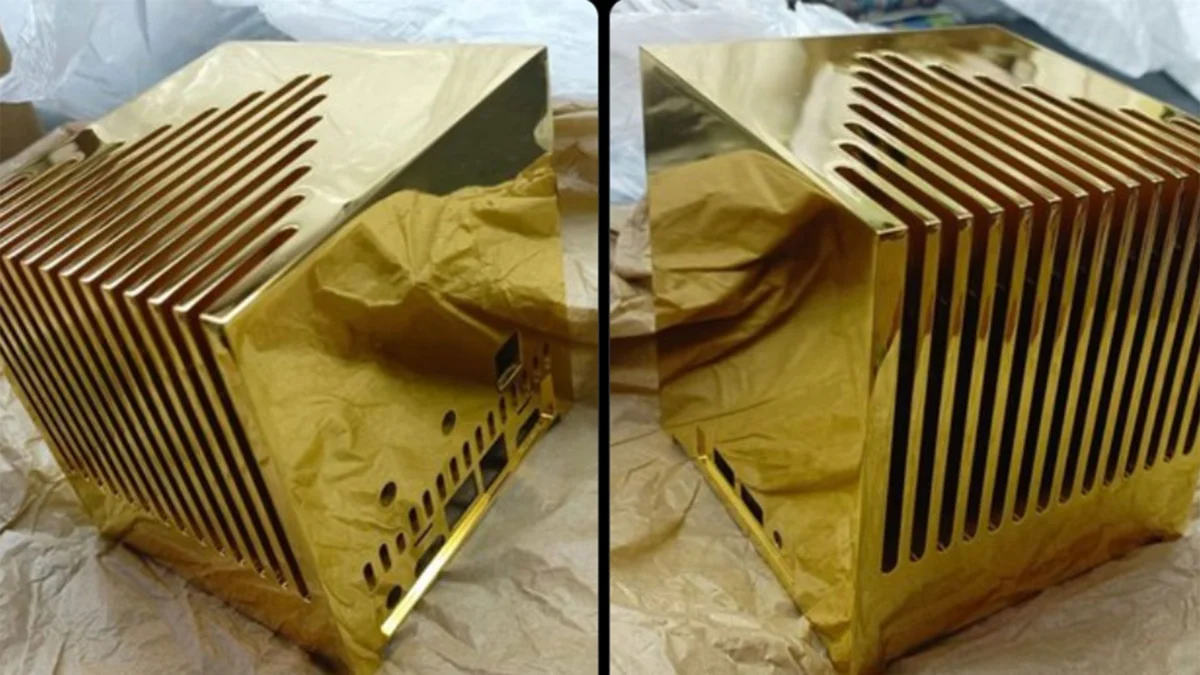
The introduction of the "Brass Edition" suggests that MonsterLabo is also viewing their chassis as a design object. By offering aesthetic flourishes—like custom engravings and the serial numbering already found on the rear of the chassis—the company is building a brand identity based on exclusivity and luxury, rather than just raw performance.
Implications: The Future of Silent Computing
What does The Beast mean for the wider PC market? Historically, the "fanless" label was reserved for low-power, entry-level office machines or specialized industrial equipment. MonsterLabo has effectively proven that modern, high-TDP hardware can exist in a state of silence if the chassis is treated as a component of the cooling loop rather than just a container.
However, the implications are not entirely positive for the casual user. The system requires a level of patience and thermal management knowledge—such as undervolting—that the average consumer is not expected to have. Furthermore, the reliance on high-end components means that a "Beast" build is inherently expensive, with entry prices well into the high-four-figure range.
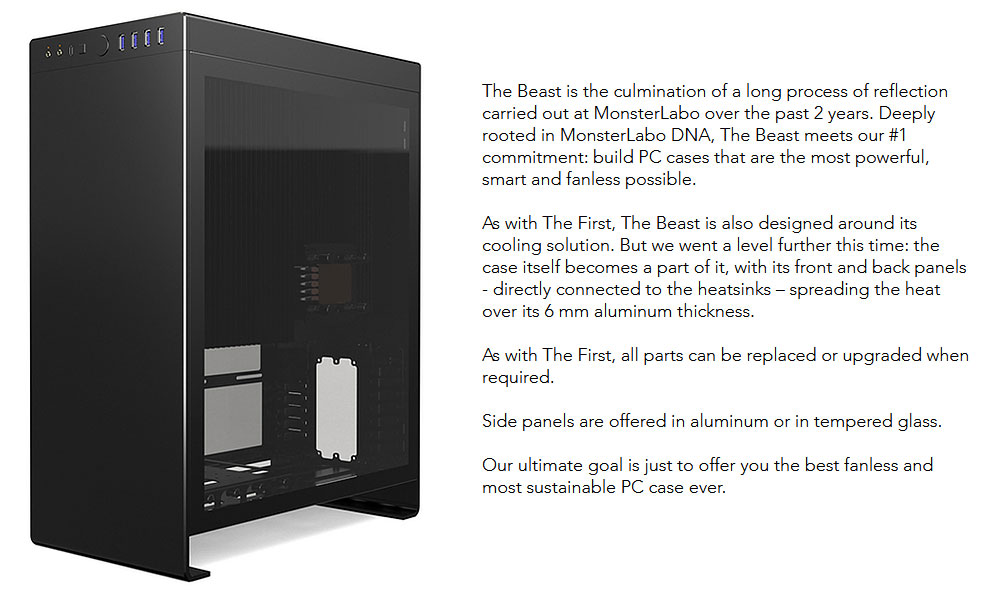
The "Brass Edition" and the custom color services indicate that MonsterLabo is moving toward the "luxe-tech" market. This is a smart move. When competing with standard air-cooled cases that cost a fraction of the price, the value proposition cannot be solely on cooling performance. It must be on the "experience" of silence, the aesthetic appeal of the industrial design, and the rarity of the build.
Challenges on the Horizon
Despite the success of the Indiegogo campaign, MonsterLabo faces significant hurdles. As CPUs and GPUs continue to push power limits higher, the thermal headroom in a passive system will only shrink. If a future RTX 40-series or 50-series card demands 450W of power, a passive solution may become physically impossible without significantly increasing the footprint of the case.
Furthermore, the supply chain issues currently plaguing the electronics industry pose a threat to boutique manufacturers. Shipping delays are already a factor, with the company balancing the Easter 2022 release for the next batch of units. For those waiting for their Brass Edition or custom-painted units, the wait will test their loyalty.
Conclusion
The Beast is a polarizing, ambitious, and undeniably impressive piece of engineering. It represents a "purist" approach to computing that rejects the trend of RGB-lit fans and noisy liquid coolers in favor of massive aluminum radiators and carefully tuned power states. While it may not be the most practical solution for a competitive gamer seeking the absolute highest frame rates, it is an unparalleled choice for the audiophile or professional who values a silent work environment above all else.
As the Indiegogo campaign progresses, the success of The Beast will likely serve as a litmus test for the viability of high-performance passive computing. If MonsterLabo can continue to iterate on the design and successfully navigate the complexities of manufacturing, they may well set the standard for the next generation of silent, high-end workstations. For now, The Beast remains a testament to what happens when engineering prowess meets the uncompromising pursuit of silence.