For the uninitiated, the audiophile hobby can appear as a baffling, hermetically sealed world of five-figure price tags, esoteric cable materials, and technical jargon that borders on the occult. Yet, for those who have spent time "burrowing down the rabbit hole," as I have for the past year, it is a pursuit of sonic perfection—a quest to capture the elusive "truth" of a recording.
This past weekend, I attended my very first CanJam in London, the premier personal audio trade show. It is a unique ecosystem where ultra-budget "bang-for-your-buck" champions share table space with unattainable, $5,200 flagship monitors. My goal was simple: to listen to the gear I had only ever read about in digital forums or seen in breathless YouTube reviews. What I walked away with, however, was far more than a collection of impressions. I gained a series of disruptive realizations that have fundamentally altered how I intend to approach the evaluation of personal audio equipment moving forward.
The Subjective Reality: Why We Can’t Agree on Sound
The most significant takeaway from the weekend originated from a seminar hosted by the team at Headphones.com. Griffin Silver (known in the community as "Listener") and Cameron Oatley ("GoldenSound") presented a session titled, Why Can’t We Just Agree What a Headphone Sounds Like?
The presentation served as a necessary reality check. We often treat frequency response graphs as the absolute "law" of audio quality. However, the reality is far more fluid. As Silver and Oatley illustrated, our individual anatomy—the shape of our outer ears (pinna), the length of our ear canals, and even the tension of our jaw muscles—drastically alters how sound waves reach our eardrums.
Furthermore, headphones are not static instruments. A pair of headphones will produce a physically different sound depending on the user due to variations in clamping pressure, the quality of the ear pad seal, and the interaction between the driver and the user’s unique head shape. When you factor in individual tonal preferences, it becomes clear why two people can listen to the exact same flagship headphone and walk away with diametrically opposed opinions.
The Empowerment of Disagreement
For the newcomer to the hobby, this is a liberating realization. It suggests that there is no single "objective" best headphone. If a high-profile reviewer or a loud voice in a Discord server dismisses your favorite gear, you no longer need to doubt your own ears. You are literally hearing a different experience. This perspective is vital for the health of the hobby; it encourages inclusivity and validates the experiences of those who may not be chasing the most expensive gear, but who are nevertheless finding deep enjoyment in their own personal listening journey.
The Great Leveler: Comfort vs. Prestige
One of the most anticipated moments of my weekend was the opportunity to audition the Subtonic Storm. Priced at $5,200, this In-Ear Monitor (IEM) has been lauded by esteemed reviewers like Theo Lee (Precogvision) as arguably the best IEM in the world.
However, my encounter with the Storm provided a stark lesson in the "law of diminishing returns" and the hierarchy of needs in audio. While the build quality was undoubtedly premium, the experience was marred by a lack of proper venting. The pressure build-up within my ear canal made the listening experience physically uncomfortable, forcing me to shift my jaw constantly to alleviate the strain.
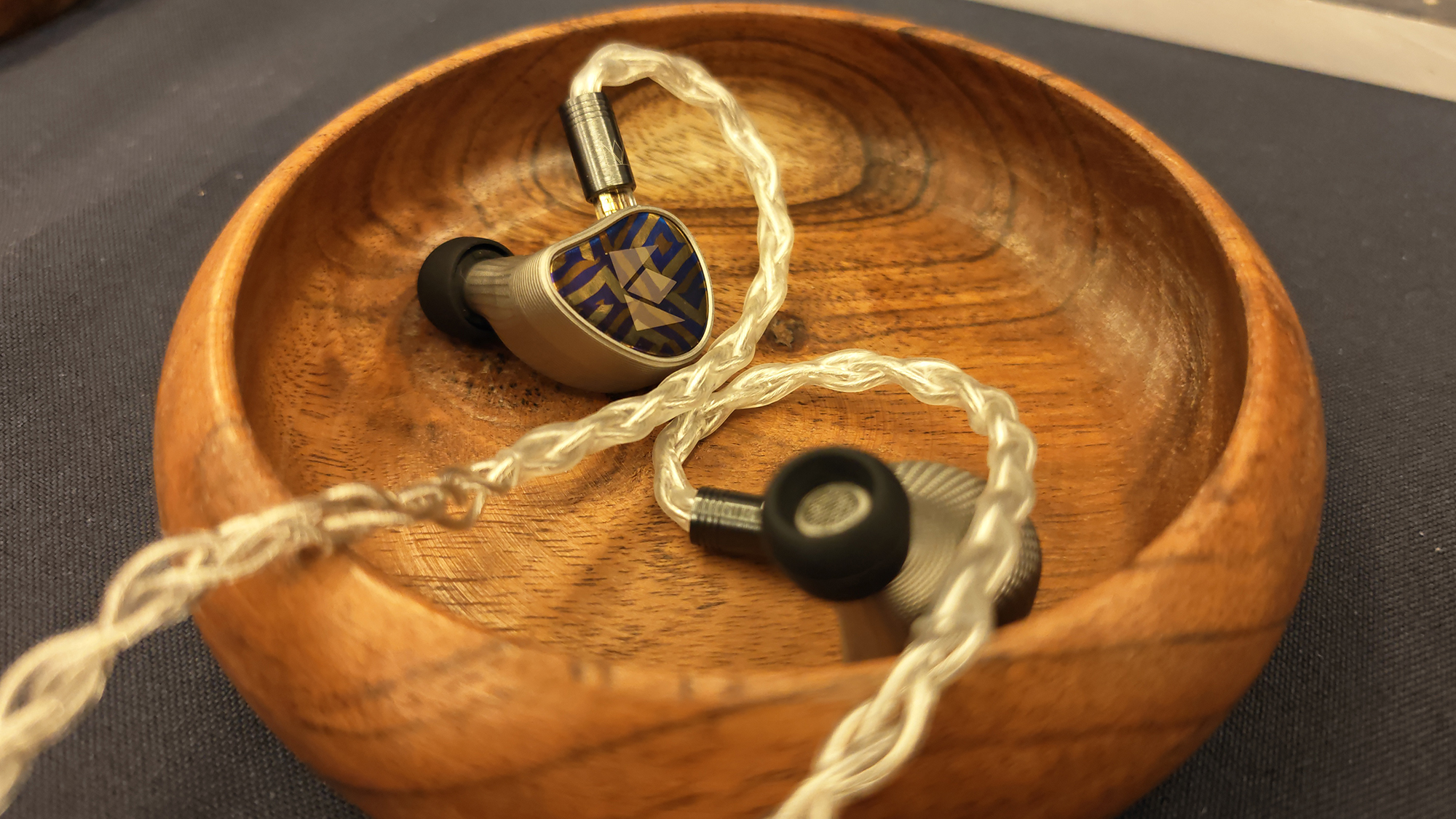
Despite the technical prowess of the drivers, I found myself unable to focus on the sonic nuance. In contrast, I spent time with the $100 Final E4000—an unassuming, budget-friendly pair of IEMs that offered elite comfort. While I am not suggesting the E4000 can match the technical resolution of a $5,000 monitor, the experience reinforced a golden rule: "magic sauce" means nothing if the gear is too uncomfortable to wear for more than a few minutes.
The Shift Toward Radical Neutrality
If there is a prevailing trend in 2026, it is the industry’s move toward "neutrality." For years, manufacturers have relied on "fun" tuning—artificial treble boosts to simulate detail, or mid-bass scoops to provide a sense of punch. While these colorations can be exciting, they often mask the artist’s true intent.
Recent releases, such as the CrinEar Reference, the HEDD D1 headphones, and the newly released Status Pro X GoldenSound Edition, are prioritizing a more honest, uncolored reproduction. The Pro X, in particular, is a fascinating case study in modern engineering. Cameron Oatley and the Headphones.com team, in collaboration with Imperial College London, utilized advanced measurement techniques to map their own head-related transfer functions (HRTF). By comparing these to the acoustic profile of the Brühl & Kjær 5128 simulator, they derived a "true" neutral target.
The result is a wireless earphone that sounds clean, balanced, and remarkably realistic. Instruments occupy their own space, and vocals possess a lifelike texture that is often lost in "V-shaped" sound signatures. This trend toward neutrality is a positive development; it provides a reliable baseline for listeners and helps strip away the marketing gimmicks that have plagued the industry for years.

The Price-to-Performance Paradox
As I navigated the various stalls, the juxtaposition of pricing became increasingly apparent. At the Noble Audio booth, I auditioned the $325 Vanguard and the $699 Iris. The Vanguard, with its aggressive upper-midrange peak, was a difficult listen for me. Yet, stepping up to the $4,500 Noble Kronos was a revelation.
The Kronos managed to balance warmth and detail in a way that truly captivated me. I found myself hearing micro-details in familiar test tracks that I hadn’t noticed earlier in the day. But this brings us to the most difficult question in the audiophile space: Can you really justify a $4,500 price tag for a subjective experience?
While the engineering and R&D costs behind such flagships are undeniably massive, the value proposition remains elusive. I am planning a future, more in-depth exploration into the economics of sound, but for now, I find myself standing on a middle ground. Personal audio is at its absolute best when it is accessible, inviting, and community-focused. The Kronos was undoubtedly the "best" thing I heard at CanJam, but it is an aspirational product—a pinnacle of engineering that serves as a reminder of what is possible, even if it remains out of reach for the vast majority of enthusiasts.
Implications for the Future of Reviews
My weekend at CanJam has recalibrated my internal compass for reviewing audio gear. Here is how my approach will evolve:

- Prioritizing Ergonomics: If a device is uncomfortable, it is a failed product, regardless of its frequency response. Comfort will now be a primary pillar of my scoring system.
- Contextualizing the "Neutral" Target: I will be more critical of how manufacturers define their "target." As we’ve learned, the 5128 simulator is a tool, but it is not the end-all-be-all of the human experience.
- Encouraging Personal Discovery: I intend to write less about what gear is "objectively" better and more about who a specific sound profile is for.
- Challenging the Luxury Ceiling: I will continue to hold high-end manufacturers accountable for their pricing. If a $4,500 product offers a marginal improvement over a $700 product, that needs to be stated clearly.
CanJam London 2026 was not just a showroom for the latest hardware; it was a seminar on the nature of perception. It served as a reminder that while the technology changes—from planar magnetic drivers to complex, HRTF-tuned wireless systems—the goal remains the same: to connect the listener to the music in a way that feels intimate and real. Whether you are listening on a $100 pair of earbuds or a $5,000 reference system, the only truth that matters is the one you hear.