


After years of fervent community anticipation, a successful crowdfunding campaign, and a highly publicized development cycle, Paralives has finally arrived in Early Access. Developed and published by Paralives Studio, this ambitious life simulation title aims to revitalize a genre that has long been dominated by a singular titan. While the game currently stands as a "work in progress," its initial release offers a tantalizing glimpse into a world that is deeply customizable, mechanically rich, and—perhaps most importantly—reminiscent of the golden age of life simulations.
The Arrival: A Long-Awaited Debut
The journey to Paralives’ Early Access launch on May 25, 2026, was not without its challenges. Following a series of development delays and the industry-wide shock caused by the cancellation of competitors like Life by You, the pressure on the independent team at Paralives Studio was immense. The community, hungry for a viable alternative to The Sims franchise, approached the release with a mixture of skepticism and hope.
Upon booting the game, the immediate impression is one of familiarity. For those who grew up playing the mid-2000s classics, the UI and the general "vibe" of Paralives feel like a warm homecoming. However, players must approach this version with the clear understanding that it is an Early Access product. Performance hitches, graphical anomalies, and missing features are not just possibilities—they are guaranteed components of the current experience.

A Chronology of Development
To understand the current state of Paralives, one must look at its trajectory:
- Initial Reveal (2019): Paralives Studio teased a "dream project" that promised advanced build modes and deep character customization, setting the stage for a new standard in the genre.
- Crowdfunding & Community Building: Throughout the early 2020s, the developers maintained an unprecedented level of transparency, sharing dev-logs, art assets, and gameplay snippets, fostering a dedicated, cult-like following.
- The "Life by You" Void: The cancellation of other high-profile life sims left a vacuum in the market, further increasing the scrutiny and anticipation surrounding Paralives.
- May 25, 2026: The official launch into Early Access, marking the first time the public could experience the simulation mechanics firsthand.
- The Roadmap: Post-launch, the development team has shifted focus to a steady cadence of updates, with community feedback serving as the primary compass for upcoming features.
Mechanics: Deep Customization and Player Agency
One of the most significant selling points of Paralives is its refusal to hand-hold the player. The game introduces a sophisticated difficulty scaling system that can be adjusted on the fly. This addresses a common grievance among veteran players: the "passive observer" syndrome, where simulation games become too easy or predictable.
In Paralives, your actions have tangible consequences. Fulfilling the "wants" of your Paras—the game’s central characters—is not just a checklist activity; it actively shapes their personality development. While the personality system is still technically marked as "in-progress," the framework for deep, reactive character growth is clearly visible.

The build mode, in particular, stands out as a technological marvel compared to its contemporaries. The ability to manipulate furniture, walls, and architectural elements with such granular control provides a level of creative freedom that feels truly next-generation. It is the antithesis of the "grid-locked" building systems of the past, allowing players to create spaces that feel lived-in and bespoke.
Visuals and Atmosphere: The Cozy Aesthetic
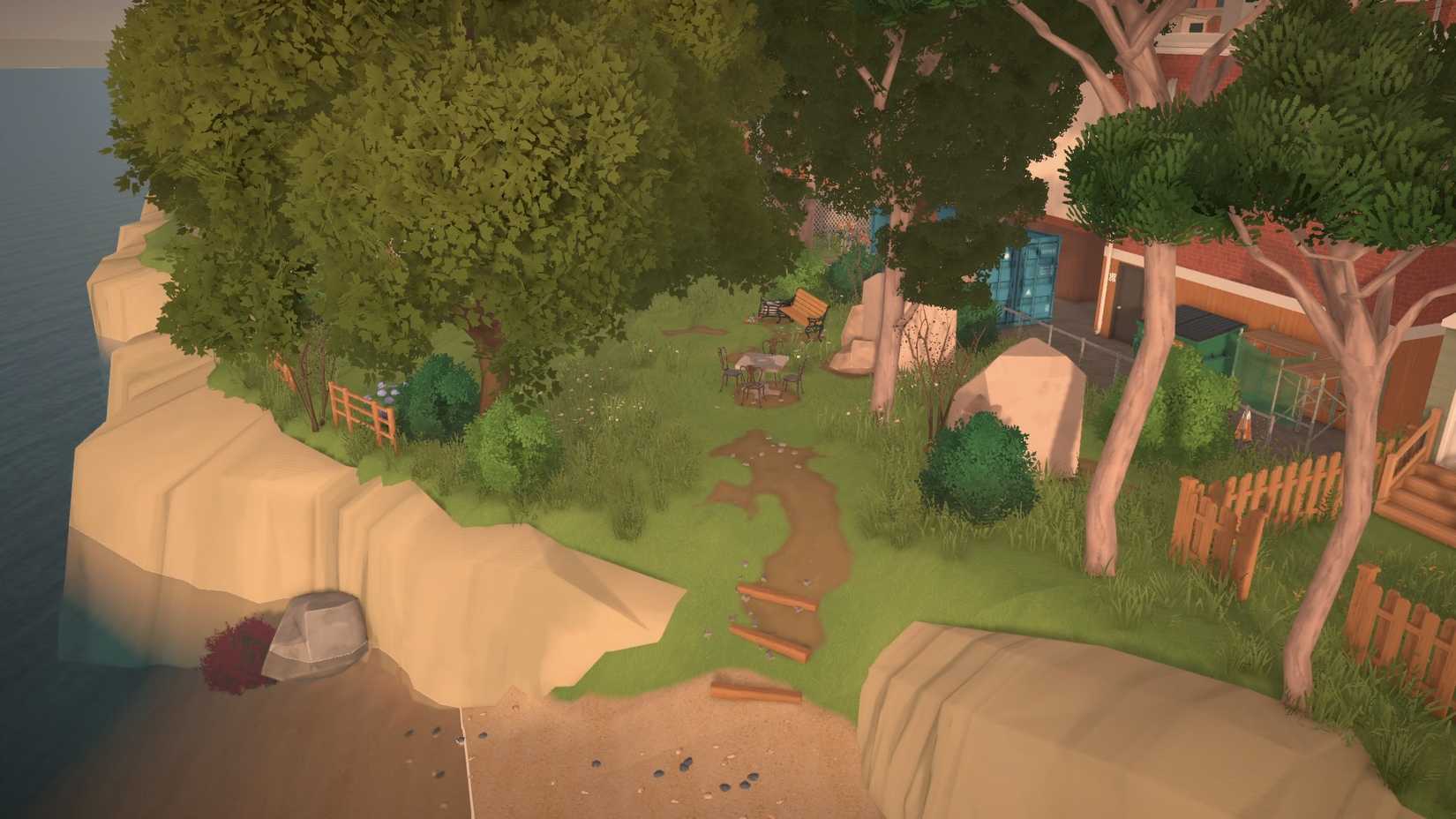
Visually, Paralives strikes a delicate balance between stylized charm and functional clarity. It avoids the uncanny valley of hyper-realism while steering clear of the overly simplistic "mobile game" aesthetic that has plagued some recent releases. The result is a cohesive, cozy visual language that feels intentional.
However, the current build is not without its technical scars. Users have reported significant stuttering, flickering textures, and object-clipping issues. In one instance, a wall texture was observed cycling rapidly through a white-out state, indicative of the engine’s struggle to render assets under certain conditions. The developers have acknowledged these graphical regressions, citing them as high-priority items for the upcoming patch cycle.

On the audio front, the experience is surprisingly polished. The soundtrack in the build and buy modes opts for soothing, melodic soundscapes that prevent the "sonic fatigue" common in games with repetitive loops. The tactile sound effects, especially when selling items or interacting with objects, provide a satisfying weight to every action.
Official Responses and Developer Transparency
Perhaps the most reassuring aspect of the Paralives experience is the studio’s communication strategy. Unlike larger corporate entities that often hide behind PR boilerplate, the team at Paralives Studio has maintained an open channel on Steam and social media.
By explicitly stating that they are aware of the major bugs—such as Paras becoming trapped in wall geometry—they have managed to keep community sentiment largely positive despite the technical flaws. Their commitment to free DLC is another pillar of their community-first philosophy, a move that starkly contrasts with the "pay-to-play" expansions that define the current landscape of the genre.
Implications for the Life Sim Genre
The release of Paralives into Early Access signals a shift in power dynamics within the simulation market. It proves that a small, independent studio can successfully capture the attention of a massive audience, provided they prioritize depth and player agency over graphical fidelity or massive launch-day content dumps.
The implications are twofold:
- For Consumers: It signals a return to a more "old-school" simulation philosophy where the game is a blank canvas for the player’s stories, rather than a guided experience.
- For Developers: It sets a high bar for transparency. Players now expect to be part of the development journey, and the success or failure of Paralives will likely be determined by how well the studio continues to iterate based on the data they are currently gathering from early adopters.
Looking Toward the Future
Is Paralives ready for the mainstream? If you are a casual player who expects a bug-free, content-complete experience, the answer is no. You will encounter glitches, you will have to restart your game, and you will find that many systems—like seasonal changes and pets—are currently missing.

However, if you are a fan of the genre who values the potential of a project, Paralives is a must-play. It is a foundation built on the right principles. The roadmap is ambitious, the core loop is addictive, and the "soul" of the game is undeniably present. We are currently watching the birth of what could potentially become the new industry standard.
While the "Unstuck" button currently serves as a frequent necessity, it is also a reminder that the game is growing. As the developers continue to refine the code and implement the planned features, it is highly probable that Paralives will evolve into a title that consumes hundreds, if not thousands, of hours of player time. For now, we wait, we test, and we build, watching as the world of the Paras slowly, but surely, comes to life.












No comments yet. Be the first to join the conversation!