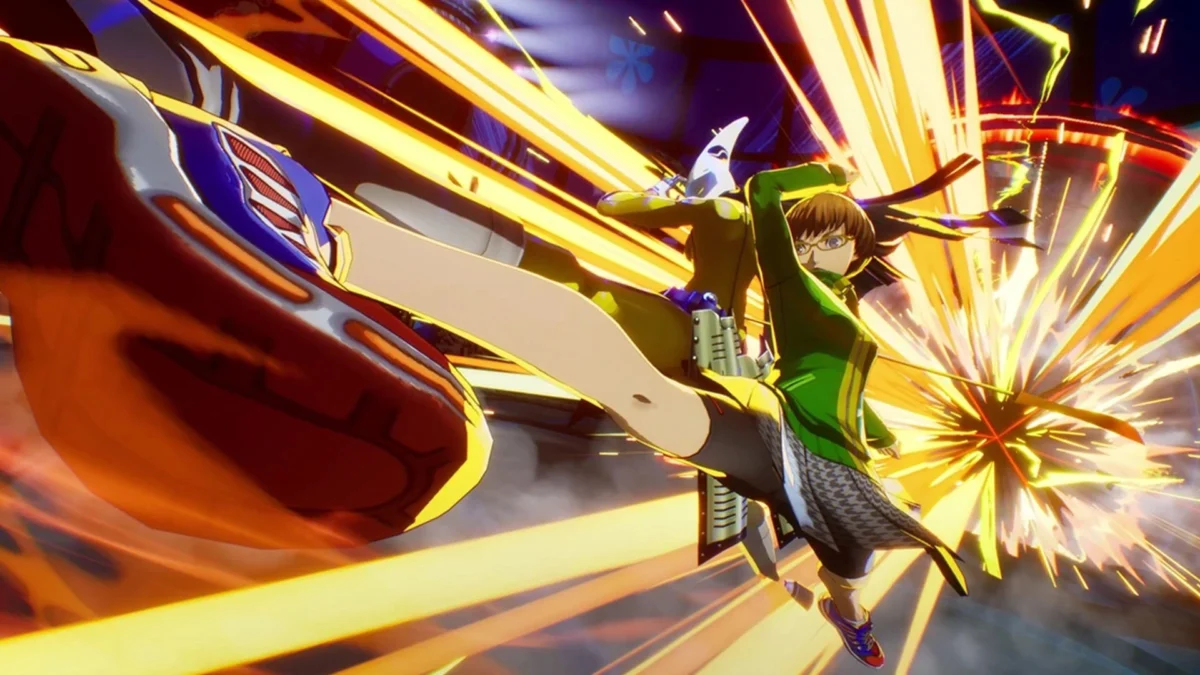
TOKYO, JAPAN – [Current Date] – ATLUS, the renowned Japanese video game developer and publisher, has ignited anticipation among fans worldwide with the release of a dynamic new character trailer for their upcoming title, Persona 4 Revival. The spotlight of this latest reveal shines brightly on Chie Satonaka, the spirited and justice-driven high school student, offering an in-depth look at her personality, combat prowess, and pivotal role within the game’s unfolding mystery. This strategic character showcase not only reintroduces a beloved figure but also reinforces the ambitious scope of what ATLUS promises to be a comprehensive reimagining of one of its most cherished RPGs.
The trailer, available in both English and Japanese, provides a vibrant glimpse into Chie’s character model, updated animations, and her signature Persona, Tomoe. Her character description, sourced from the game’s official website, paints a vivid picture: "An energetic and sociable girl who sits next to the protagonist in class. As an avid kung-fu movie- and meat-lover, she won’t hesitate to act upon her strong sense of justice. Her Persona is Tomoe." This blend of endearing quirks and unwavering moral conviction has long made Chie a fan favorite, and her enhanced portrayal in Persona 4 Revival is expected to resonate deeply with both long-time enthusiasts and newcomers alike.
Persona 4 Revival is slated for a global release on February 18, 2027, and will be available across a wide array of modern platforms, including PlayStation 5, Xbox Series X|S, and PC via Steam and the Microsoft Store. In a move poised to significantly expand its player base, ATLUS has also confirmed that the title will be available through Xbox Game Pass on day one. This multi-platform and subscription service strategy underscores a broader industry trend towards accessibility and a commitment to bringing classic experiences to a contemporary audience in the most expansive way possible.
Main Facts: A Beloved Character Returns with a Modern Flair
The core of ATLUS’s recent announcement centers on the reintroduction of Chie Satonaka, a character whose infectious enthusiasm and earnest desire to protect her friends have endeared her to millions. The newly released trailer serves as a meticulously crafted character spotlight, designed to not only refresh the memories of existing fans but also to introduce Chie to a new generation of players who might be experiencing the world of Inaba for the first time.
The Latest Reveal: Chie Satonaka
Chie Satonaka, voiced by Anne Yatco in English and Yui Horie in Japanese, is presented with a vibrancy that showcases the graphical enhancements expected in Persona 4 Revival. Her character design, while faithful to the original, appears to benefit from modern rendering techniques, allowing for more expressive animations and detailed environments. The trailer highlights her athletic fighting style, which is deeply influenced by her passion for kung-fu movies, portraying her as a fast-paced, physical damage dealer in combat. Beyond her combat role, the trailer subtly hints at her "strong sense of justice," a defining trait that often places her at the forefront of the Investigation Team’s efforts to uncover the truth behind the mysterious murders plaguing Inaba. Her Persona, Tomoe, a powerful mythological warrior, is also showcased, emphasizing the bond between Chie’s inner self and her supernatural abilities.
"Persona 4 Revival": A New Era for a Classic
The very title, Persona 4 Revival, suggests more than a mere remaster. While ATLUS has yet to fully detail the extent of the "revival" – whether it entails a full remake from the ground up or a significantly enhanced remaster – the anticipation is that it will go beyond simple graphical upgrades. Fans are hopeful for quality-of-life improvements, potentially expanded story elements, re-recorded dialogue, and updated gameplay mechanics that align with modern RPG standards while preserving the unique charm and narrative integrity of the original. The game’s release date of February 18, 2027, positions it as a major title in ATLUS’s future lineup, indicating a substantial development cycle dedicated to ensuring a high-quality experience.
Key Details and Release Information
The confirmed platforms — PlayStation 5, Xbox Series X|S, and PC (via Steam and Microsoft Store) — signify a commitment from ATLUS to a broad market reach. This multi-platform approach contrasts with some of ATLUS’s earlier, more console-exclusive releases, reflecting a strategic shift to maximize audience engagement. The inclusion in Xbox Game Pass on launch day is a particularly noteworthy decision, potentially introducing Persona 4 Revival to millions of subscribers who might not otherwise purchase the game outright. This move aligns with Microsoft’s aggressive push for Game Pass as a primary distribution channel for new releases and ATLUS’s apparent willingness to embrace new business models to expand its footprint.
Voice Talent Bringing Chie to Life
The announcement of Anne Yatco as the English voice for Chie Satonaka and Yui Horie for the Japanese counterpart highlights the crucial role of voice acting in the Persona series. Yatco, known for her diverse roles, brings a fresh interpretation to Chie while aiming to capture the essence of her established personality. Yui Horie, a veteran voice actress revered for her extensive career and iconic roles, reprises her role, providing a comforting continuity for Japanese-speaking fans. The careful selection and announcement of voice talent underscore ATLUS’s understanding of how integral these performances are to the emotional connection players form with the characters.
Chronology: Tracing the Legacy of Persona 4
The journey of Persona 4 is a testament to its enduring appeal and critical acclaim. From its humble beginnings on a last-generation console to its various expansions and re-releases, the game has consistently captivated audiences with its unique blend of social simulation, dungeon crawling, and psychological narrative. Persona 4 Revival marks the latest, and arguably most significant, chapter in this storied history.
The Original Masterpiece: Persona 4 (PS2)
Persona 4 first launched on the PlayStation 2 in Japan in July 2008, and in North America in December 2008. Developed by ATLUS’s P-Studio, it followed the runaway success of Persona 3, building upon its established formula while introducing its own distinct atmosphere, character archetypes, and narrative themes. Set in the rural town of Inaba, the game tasked players with solving a series of mysterious murders tied to a supernatural "Midnight Channel" broadcast. Its innovative blend of daily life simulation, where players forged social bonds (Social Links) with various characters, and turn-based dungeon crawling, where they battled "Shadows" using Personas, earned it widespread critical praise and a dedicated fanbase. The game’s vibrant art style, memorable soundtrack by Shoji Meguro, and deeply philosophical story exploring themes of truth, identity, and accepting one’s shadow self, cemented its status as a JRPG classic.
Expanding the Universe: Persona 4 Golden (PS Vita, PC, Modern Consoles)
In 2012, ATLUS released Persona 4 Golden for the PlayStation Vita. This enhanced port was not merely a graphical upgrade; it introduced substantial new content, including an extended story arc, new characters (most notably Marie), additional Personas, new events, costumes, and quality-of-life improvements. Golden became the definitive version of Persona 4, expanding its narrative depth and enriching the overall experience. Its success on the Vita further solidified the game’s legacy. Years later, in 2020, ATLUS surprised fans by releasing Persona 4 Golden on PC via Steam, which proved to be an overwhelming commercial success, demonstrating the game’s timeless appeal and the eagerness of a new generation of players to experience it. This PC release was followed by ports to modern consoles (PlayStation 4, Xbox One, Nintendo Switch) in 2023, making Persona 4 Golden accessible on virtually every contemporary platform.
From Remaster to "Revival": What’s in a Name?
The nomenclature "Revival" for the upcoming game is particularly intriguing, especially in light of the numerous remasters and re-releases Persona 4 has already received. Typically, a "remaster" involves updating existing assets for higher resolutions and frame rates, while a "remake" implies building the game from the ground up with new engines and assets, often incorporating significant design changes. The term "Revival" could suggest something in between, or perhaps an even more ambitious undertaking than a standard remake. It implies breathing new life into the game, potentially through significant narrative expansions, entirely new gameplay systems, or a complete overhaul of the game’s presentation while meticulously preserving its core identity. This choice of wording has fueled considerable speculation within the community, with many hoping for a treatment akin to Final Fantasy VII Remake in terms of scope, albeit within the distinct Persona framework.
ATLUS’s Recent Reinvigorations: A Pattern of Success
Persona 4 Revival is not an isolated incident but rather fits into a broader pattern observed in ATLUS’s recent strategy. The success of Persona 3 Reload, a full remake of Persona 3, demonstrated the immense potential and demand for modern interpretations of classic Persona titles. Persona 3 Reload garnered critical acclaim for its faithful yet modernized approach, setting a high bar for future revivals. Furthermore, ATLUS has also seen success with various spin-offs and new entries like Persona 5 Royal and Persona 5 Strikers, continually expanding the franchise’s reach. The decision to invest in a "Revival" for Persona 4 signals ATLUS’s confidence in the enduring appeal of the Inaba cast and storyline, as well as a strategic move to ensure that this seminal entry remains graphically and mechanically relevant for contemporary audiences.
Supporting Data: Diving Deeper into Chie and the Revival’s Scope
To understand the full impact of Persona 4 Revival and the significance of Chie Satonaka’s reveal, it’s essential to delve into the character’s multifaceted nature and the potential technical and artistic ambitions behind this ambitious project.
Chie Satonaka: The Gal with a Golden Heart and Fists of Fury
Chie Satonaka stands out in the Persona 4 cast not just for her energetic personality but for her complex character arc and unique role within the Investigation Team.
- Her Persona: Tomoe and its Significance: Chie’s initial Persona, Tomoe Gozen, is a legendary female samurai warrior, celebrated for her strength and courage. This choice perfectly reflects Chie’s desire to protect her friends and her strong sense of justice. As her Social Link progresses, Tomoe evolves into Suzuka Gongen, a powerful warrior deity, symbolizing Chie’s growth beyond her initial insecurities and her full acceptance of her own strength and independence. Her Persona’s offensive capabilities, focusing on physical attacks and later ice magic, complement her direct and straightforward personality.
- Combat Role and Archetype: In combat, Chie typically functions as a primary physical damage dealer, often boasting high Strength and Agility stats. Her skillset, inspired by her love for kung-fu, allows her to deliver devastating blows to single targets or groups of enemies. Later in the game, she gains access to powerful ice-based spells, adding a strategic element to her combat repertoire. Her archetype is the "fighter with a heart of gold," providing reliable offensive output while embodying the team’s moral compass in many situations.
- Social Link Dynamics and Character Arc: Chie’s Social Link, representing the Chariot Arcana, is a journey of self-discovery and confronting her own insecurities, particularly her reliance on and jealousy towards her best friend, Yukiko Amagi. Through her interactions with the protagonist, Chie learns to appreciate her unique strengths, overcome her competitive tendencies, and solidify her identity as a strong, independent individual. Her arc is deeply resonant, touching on themes of friendship, self-worth, and the challenges of growing up. A "Revival" offers the opportunity to potentially expand on these narrative beats, adding more depth to her interactions and character development.
The Technical and Artistic Vision of "Persona 4 Revival"
The term "Revival" carries significant implications for the game’s technical and artistic direction.
- Enhanced Graphics and Modern Engine: The most immediate expectation for a "Revival" is a complete overhaul of the game’s visual presentation. This would likely involve rebuilding the game in a modern engine, such as Unreal Engine 5, which ATLUS has used for Persona 3 Reload. Such an upgrade would bring Persona 4‘s distinct art style into the contemporary era, with high-resolution character models, detailed environments, advanced lighting, and more fluid animations. The rural town of Inaba, the vibrant Junes department store, and the surreal TV World dungeons would all benefit from this visual fidelity, enhancing immersion.
- Potential Gameplay Enhancements and QoL Features: Beyond visuals, a "Revival" offers the chance to refine gameplay. This could include updated combat mechanics, a more intuitive UI, improved dungeon layouts, or new traversal options. Quality-of-life (QoL) features, such as faster travel options, customizable difficulty settings, or a more streamlined Social Link management system, could significantly enhance the player experience without detracting from the original’s challenge. Persona 3 Reload introduced several QoL improvements, setting a precedent for what fans might expect here.
- Sound Design and Re-recorded Dialogue: The original Persona 4 boasts an iconic soundtrack, and a "Revival" would likely see a meticulously re-arranged and re-recorded score, potentially with new tracks or extended versions of beloved themes. Furthermore, a full "Revival" often entails re-recording all character dialogue, offering voice actors the chance to revisit their roles with years of experience and potentially adapt to new script nuances. The announcement of both English and Japanese voice actors for Chie reinforces this likelihood, suggesting a full voice-over production.
Multi-Platform Launch and Game Pass Integration
The strategic decision to launch Persona 4 Revival across PlayStation, Xbox, and PC, alongside its inclusion in Game Pass, is a pivotal aspect of its release strategy.
- Strategic Reach: PS5, Xbox Series, PC: By targeting all major current-generation platforms, ATLUS ensures the broadest possible audience reach. This move acknowledges the diverse gaming ecosystems and aims to capture players regardless of their preferred hardware. It also signals a more platform-agnostic approach from ATLUS, moving away from the historically PlayStation-centric releases of the Persona series.
- The Game Pass Advantage: The day-one availability on Xbox Game Pass is a significant game-changer. For Microsoft, it’s a major win, adding a highly anticipated JRPG to its subscription service, further enhancing its value proposition. For ATLUS, it means immediate access to millions of subscribers, potentially boosting player numbers exponentially. This model can introduce Persona 4 Revival to players who might be hesitant to purchase a full-price game, especially one based on an older title, but are willing to try it through their subscription. This strategy was highly successful for Persona 3 Reload, proving its efficacy in expanding the franchise’s reach.
Official Responses: ATLUS’s Vision and Fan Engagement
While no direct quotes from ATLUS officials were provided in the initial snippet, the actions and announcements surrounding Persona 4 Revival speak volumes about the company’s strategy and its understanding of the Persona fanbase.
The Importance of Character Spotlights
The sequential release of character trailers, with Chie Satonaka being the latest, is a deliberate marketing strategy. It serves to build anticipation, reintroduce the core cast one by one, and highlight the visual and auditory enhancements of each character. This phased approach allows ATLUS to maintain a consistent buzz around the game in the lead-up to its release. Each trailer acts as a mini-event, generating discussion and reminding fans of the distinct personalities that make up the beloved Investigation Team. It also provides an opportunity to showcase the new voice acting performances and graphical fidelity in focused segments.
Balancing Fidelity with Innovation
ATLUS’s approach to "revivals" like Persona 3 Reload and now Persona 4 Revival appears to be a delicate balance between respecting the original material and introducing modern innovations. Industry observers suggest that ATLUS aims to deliver an experience that feels both familiar and fresh. This means preserving the iconic story, characters, and thematic depth that made the original so special, while simultaneously updating the gameplay mechanics, graphics, and overall presentation to meet contemporary standards. The term "Revival" itself suggests a commitment to not just replicate, but to elevate the experience for both veteran fans and newcomers.
Engaging a Global Audience
The simultaneous release of English and Japanese trailers, along with the confirmation of dual-language voice acting, underscores ATLUS’s commitment to its global fanbase. The Persona series has a massive international following, and providing high-quality localization from day one is crucial for satisfying this diverse audience. This strategy ensures that players worldwide can experience the game in their preferred language, fostering a more inclusive and engaging experience. The wide platform availability further supports this global outreach, ensuring that players in various regions and with different console preferences can access the game.
The Role of Voice Actors in Character Identity
The prominent listing of voice actors, Anne Yatco and Yui Horie, in the character description and trailer, highlights the critical role these artists play in shaping character identity. For many fans, the voice is inseparable from the character. ATLUS understands this deep connection and invests significantly in casting and directing voice talent to ensure authentic and impactful performances. The decision to bring back original Japanese voice actors, while carefully selecting new English talent, reflects a nuanced approach to respecting the franchise’s legacy while also embracing new interpretations for different markets.
Implications: What ‘Persona 4 Revival’ Means for the Franchise and Industry
The announcement and ongoing reveals for Persona 4 Revival carry significant implications for the Persona franchise, ATLUS as a developer, and the broader video game industry’s approach to classic titles.
Rekindling the Spark for Veteran Fans
For long-time fans of Persona 4, this "Revival" represents a deeply nostalgic and exciting prospect. Many have fond memories of their time in Inaba on the PS2 or Vita, and the opportunity to revisit this beloved world with modern graphics and potentially enhanced gameplay is a dream come true. It offers a chance to experience the emotional highs and lows of the story, the charm of the characters, and the mystery of the Midnight Channel with fresh eyes, or perhaps to share it with friends and family who missed out on the original. The careful character reveals, like Chie’s, serve to rekindle that spark and reinforce the deep emotional connection players have with the game’s cast.
Welcoming a New Generation of Players
Crucially, Persona 4 Revival is poised to introduce the compelling narrative and unique gameplay of Persona 4 to a whole new generation of players. Many younger gamers entered the Persona series through Persona 5, and while Persona 4 Golden has seen modern ports, a full "Revival" provides an even more accessible and contemporary entry point. The multi-platform release and Game Pass inclusion significantly lower the barrier to entry, potentially expanding the Persona fanbase to unprecedented numbers. This strategy is vital for the long-term health and growth of the franchise, ensuring that its rich history is not lost to time but continually revitalized for new audiences.
Setting a New Standard for Revivals in JRPGs
Following the success of Persona 3 Reload, Persona 4 Revival has the potential to further solidify ATLUS’s reputation as a leader in faithfully yet innovatively "reviving" classic JRPGs. The meticulous attention to detail, commitment to quality, and strategic updates demonstrated in their previous efforts could set a new benchmark for how other developers approach their own legacy titles. In an industry increasingly populated by remakes and remasters, ATLUS’s "Revival" philosophy emphasizes more than just a fresh coat of paint; it’s about re-engineering the experience for a modern context while preserving the soul of the original.
The Future of ATLUS and the Persona Series
The investment in Persona 4 Revival underscores ATLUS’s long-term vision for the Persona franchise. It suggests a strategy of not only developing new mainline titles (like the highly anticipated Persona 6) but also meticulously preserving and enhancing its existing masterpieces. This dual approach ensures that the franchise remains vibrant, attracting new players with cutting-edge experiences while satisfying the desire for renewed classics. The success of Persona 4 Revival will undoubtedly influence future decisions regarding other ATLUS titles, potentially paving the way for "revivals" of other beloved games within their extensive catalog. It solidifies ATLUS’s position as a premier RPG developer capable of blending tradition with innovation.
Watch the Trailers
For those eager to witness Chie Satonaka in action and get a taste of Persona 4 Revival‘s updated presentation, the official character trailers are available below: