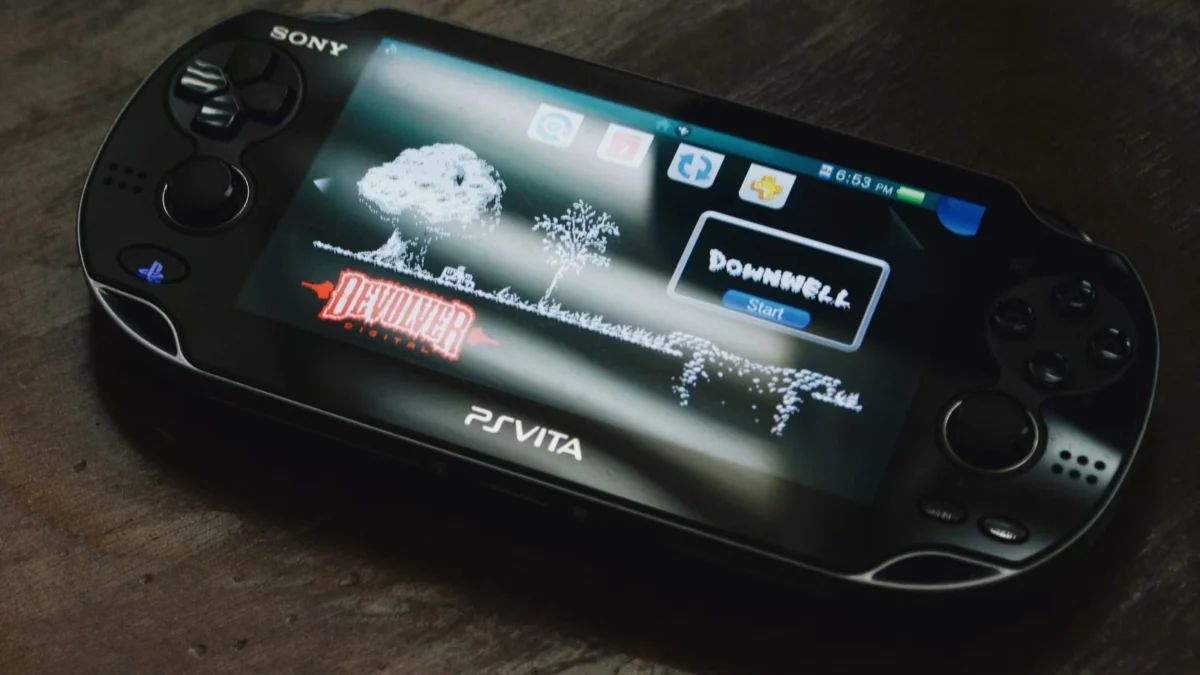
In an era where the gaming industry is defined by high-fidelity hardware and rapid iteration, the PlayStation Vita—Sony’s ill-fated but beloved handheld released in 2011—has found a second life. A remarkable new homebrew application, GreenVita, has emerged, effectively transforming the decade-old device into a portable terminal for Microsoft’s Xbox Cloud Gaming ecosystem. This development marks a significant milestone in the preservation and functional evolution of legacy hardware, proving that even as Sony abandons its handheld legacy, the dedicated community of developers continues to push the boundaries of what is possible.
The Technical Breakthrough: Native Streaming on Legacy Silicon
The arrival of GreenVita represents a departure from the clunky, browser-based workarounds that have historically plagued handheld streaming solutions. Developed by a homebrew creator, the application is a native PlayStation Vita binary, built from the ground up to interface directly with Microsoft’s Xbox Cloud Gaming infrastructure.
At the heart of the app’s success is its sophisticated utilization of the Vita’s internal architecture. Unlike software-based solutions that force the handheld’s aging ARM-based CPU to handle the heavy lifting of video decompression—a process that would quickly overwhelm the device—GreenVita leverages the Vita’s dedicated hardware H.264 video decoder. By offloading the stream processing to silicon specifically designed for multimedia playback, the application achieves a level of performance stability that was previously thought unattainable on the platform.
The authentication process is equally refined. Rather than forcing users to type complex Microsoft account credentials onto the Vita’s cramped virtual keyboard, GreenVita utilizes the standard device code system. Users simply input a short alphanumeric string on a secondary device—such as a smartphone or PC—to authorize the connection, mirroring the seamless experience seen on modern consoles and smart TVs.
A Chronology of Innovation: From Obscurity to Portable Power
The journey of the Vita from a "dead" console to a functional cloud-gaming client is a testament to the persistent ingenuity of the homebrew scene.
- 2011–2012: The PlayStation Vita launches with high expectations, boasting hardware that, for the time, was cutting-edge. However, despite its powerful internals, it struggles to find a foothold against the rise of mobile gaming.
- 2019–2021: As Sony shifts its focus entirely to the PlayStation 4 and 5, the Vita enters a period of quiet retirement. Simultaneously, the homebrew community matures, developing the HENkaku exploit and VitaShell, which allow users to run unauthorized, unsigned code on their devices.
- Early 2026: Microsoft aggressively expands the reach of Xbox Cloud Gaming, prompting independent developers to investigate whether the service’s web-based API can be tapped into by older hardware.
- July 2026: The developer behind the GitHub repository "GreenVita" releases version 0.1.4. This release marks the first time the public can effectively stream the Xbox Game Pass Ultimate catalog directly to a modified PlayStation Vita, triggering a wave of excitement across retro-gaming forums and social media platforms like X (formerly Twitter).
Supporting Data: Infrastructure and Constraints
While the technical achievement of GreenVita is impressive, it does not exist in a vacuum. The user experience is heavily contingent on a complex interplay of network stability and the limitations of 15-year-old hardware.
Network Requirements
Because the Vita was built during the nascent stages of widespread high-speed wireless, its onboard Wi-Fi chip is limited to 2.4GHz frequencies. This poses a significant hurdle for cloud gaming, which thrives on the low latency and high bandwidth of 5GHz or Wi-Fi 6 connections. Users have reported that while the stream is functional, it is highly sensitive to packet loss and interference. Optimal performance requires a robust local network environment and, preferably, a router capable of prioritizing traffic for the Vita.
Display and Control Discrepancies
The Vita’s screen resolution of 960 x 544 pixels presents a unique challenge for modern Xbox titles. Many games developed for the Xbox Series X/S are optimized for 4K displays; consequently, on-screen text and UI elements on the Vita’s screen can be microscopic, rendering some text-heavy RPGs or strategy games nearly unplayable.
Furthermore, there is the issue of parity in input. The Xbox controller features two bumpers, two triggers, and an extra set of buttons (Menu and View) that the Vita lacks. GreenVita addresses this through remapping, but the physical absence of the full Xbox button array remains a hurdle for complex titles that rely on the entire controller layout.

Implications for the Homebrew and Preservation Scene
The existence of GreenVita poses profound questions regarding the lifecycle of consumer electronics. As manufacturers sunset their support for older devices, the community has increasingly stepped in to fill the void.
This is not the first time the community has defied the limitations of aging hardware. Earlier in 2026, developers successfully ported a playable version of Mario Kart into a browser-based format using YouTube’s 360-degree video feature. These projects, including GreenVita, suggest a shift in how we approach "obsolete" technology. Instead of viewing a device as a static object that eventually becomes a paperweight, the homebrew community treats it as an open-ended platform that can be continuously updated to support modern paradigms like cloud streaming.
Legal and Ethical Considerations
It is important to note that GreenVita does not circumvent the need for a subscription. Users are still required to hold an active Xbox Game Pass Ultimate membership. Furthermore, the application is strictly for modified (jailbroken) systems. This creates a clear delineation: the developers are not facilitating piracy, but rather expanding the utility of hardware that is no longer supported by the original manufacturer.
However, the "unsafe" nature of these modifications—requiring the disabling of certain system security features to run the app—remains a barrier for the average consumer. For those willing to navigate the complexities of HENkaku and VPK installations, the reward is a uniquely capable, pocketable Xbox terminal.
The Future: Where Does GreenVita Go From Here?
Currently, GreenVita is in its infancy. Version 0.1.4 is a proof-of-concept, and the developer has been clear that the project is subject to frequent updates, bug fixes, and compatibility issues. The roadmap for the application likely involves optimizing the stream resolution to better suit the Vita’s display, improving input latency, and perhaps eventually adding support for local console streaming (remote play from a physical Xbox).
The broader industry has yet to respond to these developments, and it is unlikely that Microsoft or Sony will offer official support for such a niche endeavor. Nonetheless, the community interest is undeniable. By transforming the Vita into a gateway for Game Pass, developers have effectively "future-proofed" the handheld, allowing it to play the latest AAA titles without requiring the internal processing power to render them.
Conclusion: A New Lease on Life
The PlayStation Vita may have been a commercial failure for Sony, but it has become a triumph for the modding community. GreenVita is more than just an app; it is a bridge between the past and the future of gaming. It demonstrates that the value of a console is not defined by its launch year, but by the creativity of the users who refuse to let it go obsolete. As cloud gaming continues to mature, the Vita stands as a surprising, tactile, and highly functional monument to the endurance of classic hardware.
For those curious enough to venture into the world of homebrew, the instructions are clear: a modified system, a stable internet connection, and a Game Pass subscription are all that stand between the Vita and a library of hundreds of modern games. In a world of disposable tech, the Vita’s second act is a welcome reminder of the power of open-source innovation.