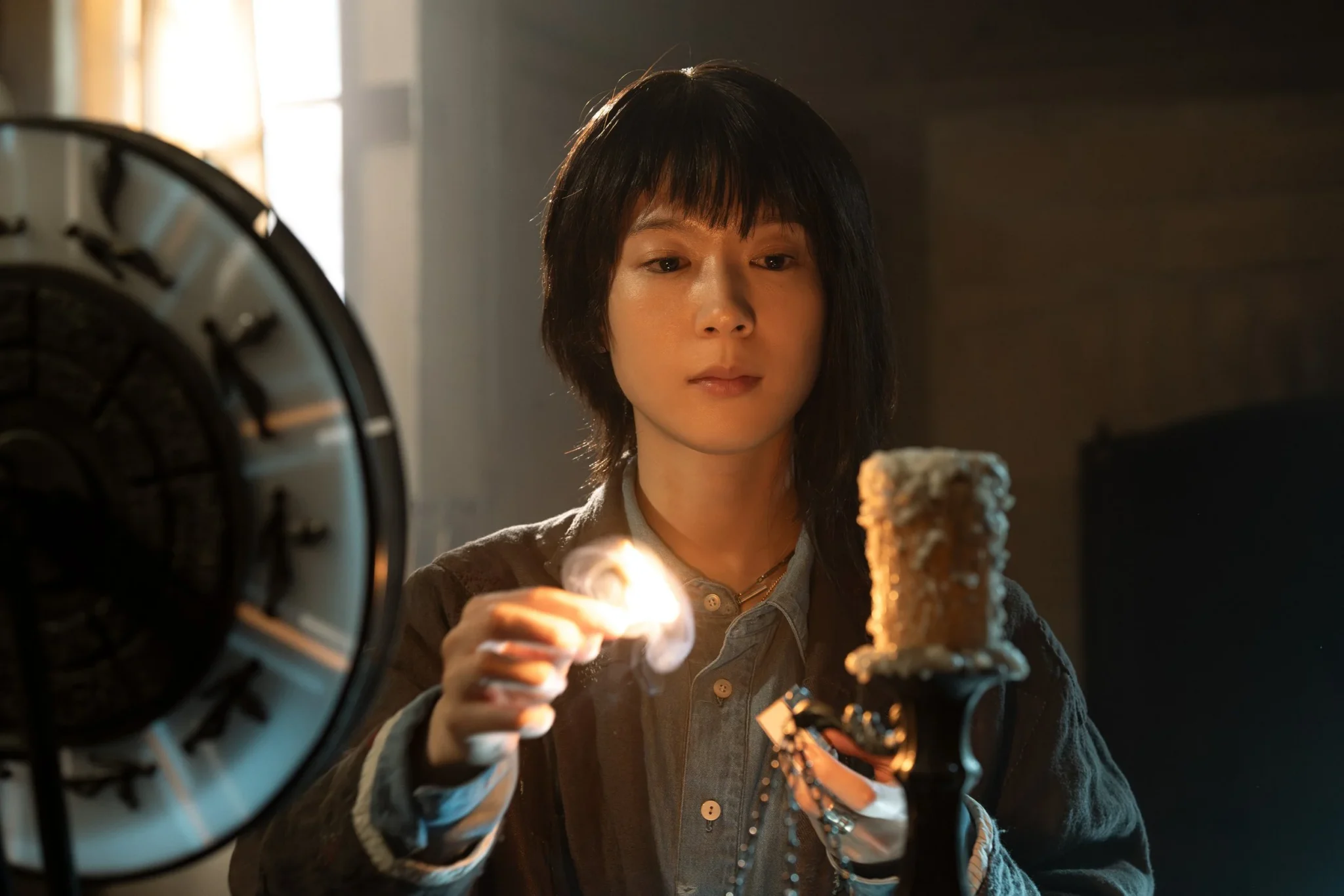
The U.S.S. Enterprise has officially returned to the final frontier, and for fans of the Star Trek franchise, the debut of Strange New Worlds’ fourth season feels like a homecoming in every sense of the word. After a third season that many critics described as a narrative rollercoaster—alternating between high-concept brilliance and uneven pacing—the premiere episode, "Valles Marineris," signals a confident, revitalized direction for the series.
The episode is not merely a return to the screen; it is a return to the core ethos of Star Trek: exploration, ethical complexity, and the triumph of diplomacy over brute force. By shedding the reliance on recursive fan service that hampered previous outings, Strange New Worlds has reminded its audience why the Enterprise remains the most iconic vessel in television history.
The Mission: A Scientific Enigma
"Valles Marineris" opens with a classic "space-mystery" premise that feels plucked from the golden age of The Original Series. The Enterprise is tasked with investigating an interstellar squall—a rare, volatile phenomenon appearing near a star with no discernible origin. Spock, ever the voice of logical caution, notes that such occurrences are typically transient, making this particular anomaly a high-priority target for scientific study.
The episode features a brief, tongue-in-cheek moment involving Pelia, who suggests she may have encountered such a phenomenon while inside a "phone box." While this serves as a wink to the Doctor Who fanbase, it is one of the few instances where the show dips into meta-referential humor. For the remainder of its runtime, the episode remains firmly grounded in the tension of a ship trapped in an impossible situation.

The plot thickens when the Enterprise discovers a distress buoy, leading the crew into the heart of the expanding squall. The resulting power failure leaves the ship drifting, crippled, and dangerously isolated. With the warp drive offline and antimatter reserves depleted, Captain Christopher Pike is forced to split his resources: a landing party—comprising Una Chin-Riley, Erica Ortegas, and La’an Noonien-Singh—is dispatched to a nearby M-class planet to harvest uridium, while Pike stays behind to manage a volatile first-contact scenario.
Chronology and The Prehistoric Twist
As the narrative unfolds, the show’s writers deliver a masterclass in tension, cutting between the high-stakes diplomacy on the Enterprise and the survival-horror elements on the planet below.
The turning point occurs when Spock confirms the crew’s true location: they are not merely in a different sector of space, but in the Sol system 65 million years in the past. The "landing party" discovers that the planet they are scavenging is, in fact, Earth during the late Cretaceous period. The "large creature" they are attempting to evade is a Tyrannosaur, forcing the crew into a desperate game of hide-and-seek where they must avoid disturbing the timeline.
The sequences on Earth are handled with a refreshing mix of humor and reverence. The landing party’s adherence to the "butterfly effect" logic—an unspoken nod to Ray Bradbury’s A Sound of Thunder—adds a layer of existential dread to their physical peril. The scenes demonstrate the crew’s resourcefulness, utilizing phasers on stun and tactical hand-to-hand combat to fend off prehistoric predators without permanently altering the course of terrestrial evolution.
Supporting Data: Diplomacy and Destruction
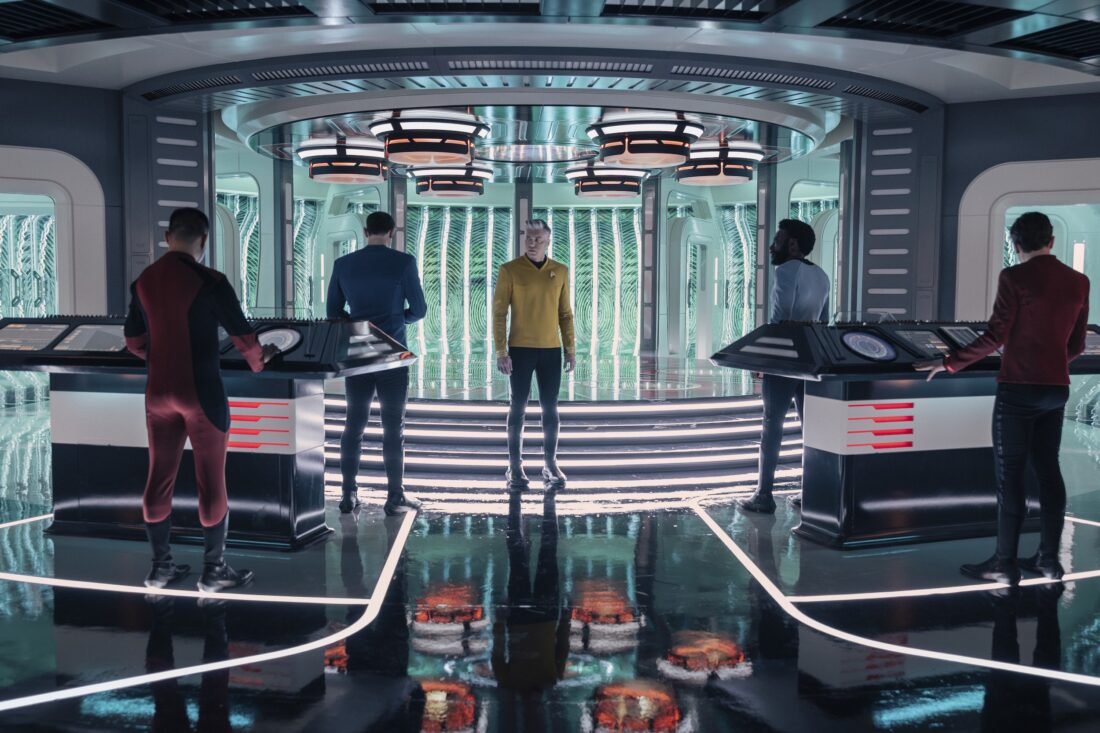
While the landing party faces dinosaurs, Captain Pike is engaged in a psychological battle of wits with Battle Commander Cassell, portrayed with searing gravitas by Saffron Burrows. Cassell leads a fleet of Vulcanoid scavengers who have no understanding of faster-than-light travel but possess terrifying phasing technology.
The conflict reveals that Cassell’s people are locked in an ancient, brutal war with the Dol’Drm, an insectoid species from a neighboring planet. Pike’s attempts to facilitate a peace treaty represent the quintessential Star Trek ethos: he argues for communication, empathy, and understanding.
However, the episode takes a dark, inevitable turn when it is revealed that the Enterprise’s presence in the past is inextricably linked to the history of the solar system. The "Valles Marineris" crater on Mars, a site of monumental proportions, is discovered to be the result of a devastating weapon fired by the Dol’Drm in this era. Pike is forced to grapple with the "inevitability of history"—a common, yet expertly handled, trope in Star Trek lore. He discovers that to return to his own time, he must allow a catastrophic event to occur: the destruction of the Dol’Drm home planet, which will ultimately form the asteroid belt that exists in the 23rd century.
Implications: The Burden of Command
The emotional climax of "Valles Marineris" rests on Captain Pike’s shoulders. The decision to stand down and allow an entire civilization to be wiped out is the antithesis of his character, yet it is framed as the only path to survival. The script, credited to Akiva Goldsman and Henry Alonso Myers, does not shy away from the moral weight of this choice.

The implication here is profound: Pike’s heroism is not defined by his ability to save everyone, but by his capacity to bear the burden of the impossible. The visual of the Enterprise crew watching the destruction of a world is one of the most haunting sequences in the series to date. It underscores the fragility of life and the cold reality of the timeline that Pike knows he cannot change.
The episode concludes with the Enterprise returning to the 23rd century, leaving behind a solar system irrevocably altered. The debris from the destruction causes the extinction-level event that wipes out the dinosaurs on Earth—a dark, necessary sacrifice that keeps the timeline intact.
Continuity and Future Trajectories
Beyond the central plot, "Valles Marineris" offers several noteworthy developments:
- Character Evolution: The show continues to effectively illustrate the transition of its characters into the archetypes seen in the 1960s series. Scotty’s conservative, safety-first approach to engineering provides a charming contrast to the more reckless, experienced version of the character fans know.
- The Vulcan Connection: M’Benga’s discovery that the DNA of the Martians matches various Alpha Quadrant species provides a clever nod to the Original Series episode "Return to Tomorrow," deepening the franchise’s lore regarding the origins of humanoid life.
- Promotions and Mentorship: While the "refusing a promotion" trope remains a stale staple of Trek narratives, the promotion of Una to full commander provides a well-earned win for the character. Meanwhile, the friction between Uhura and a condescending Vulcan cadet suggests a subplot involving inter-species tension that will likely be explored throughout the season.
Conclusion: A Stellar Comeback
"Valles Marineris" succeeds because it balances high-concept science fiction with the intimate character beats that made Strange New Worlds a hit in its first two seasons. By focusing on the Enterprise as a vessel of discovery—and occasionally, a witness to tragedy—the writers have stripped away the baggage of heavy-handed fan service.

The episode is a reminder that when Star Trek is at its best, it acts as a mirror to our own moral quandaries. It asks what we would do if we had the power to change history, and whether we have the strength to accept the things we cannot. As the Enterprise continues its mission, one thing is clear: the fourth season is poised to be an exploration of the highest order, both of space and of the human (and Vulcan) spirit. If this premiere is any indication, the Enterprise has never been in better hands.