Layla Zulfa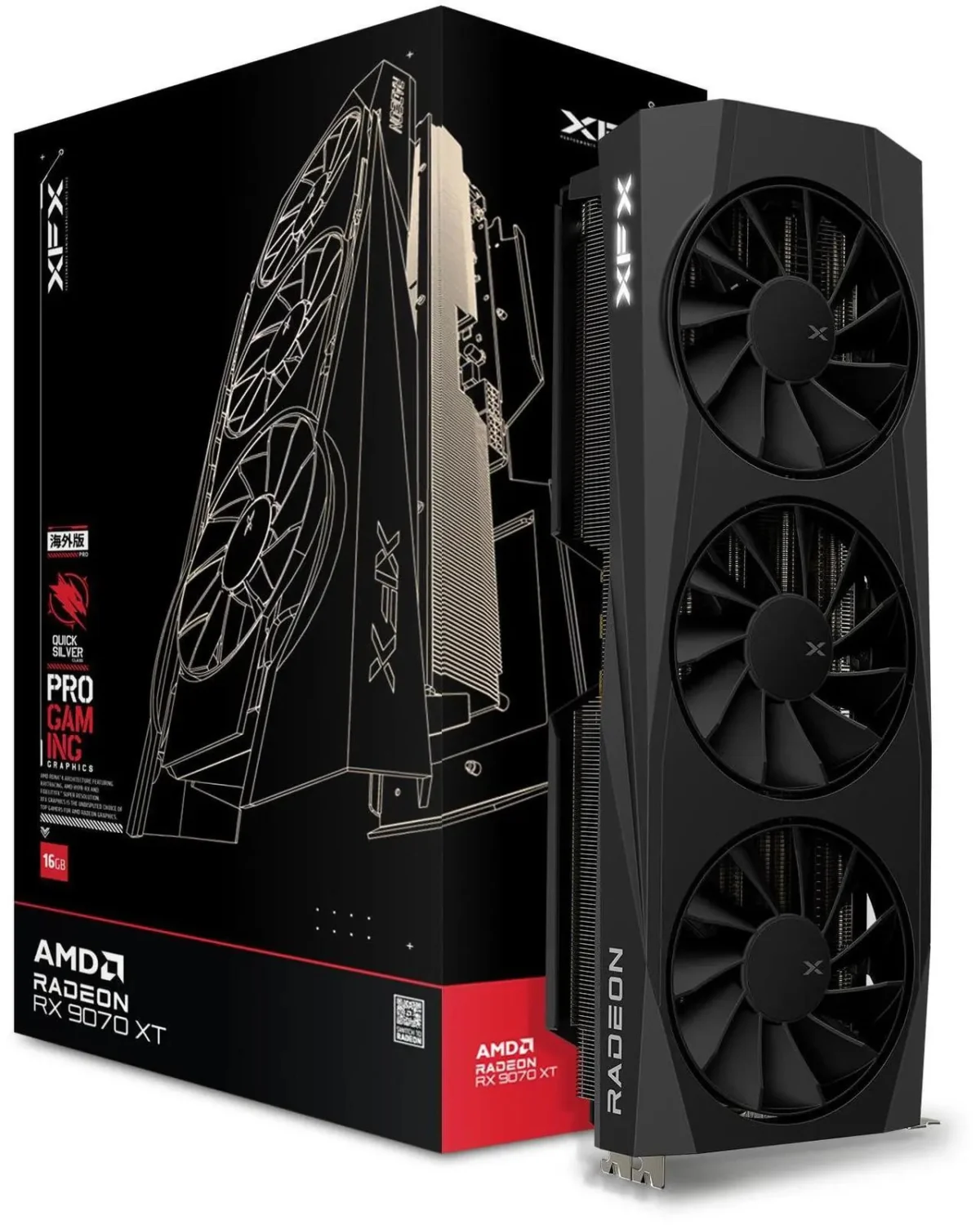
In an era where the cost of high-performance PC components often feels prohibitively high, finding a meaningful discount on a flagship-tier graphics card is a rarity that enthusiasts rarely ignore. Currently, the XFX Quicksilver AMD Radeon RX 9070 XT Gaming Edition has emerged as a standout value proposition, with a significant price reduction at Newegg that brings the card down to $699.99—a $90 savings from its standard list price of $789.99.
While the GPU market has been characterized by stagnant pricing and high premiums over the last few fiscal quarters, this movement suggests a softening in demand or a strategic inventory clearing, providing a timely opportunity for builders targeting mid-to-high-end gaming rigs.
Main Facts: The XFX Quicksilver Advantage
The XFX Quicksilver RX 9070 XT is not merely a reference card with a badge; it is a meticulously engineered piece of hardware designed for the modern enthusiast. Its standout feature is its aesthetic—a minimalist, stealth-inspired all-black shroud that integrates seamlessly into monochromatic or "murdered-out" PC builds.
Beyond aesthetics, the card is built for longevity and thermal stability. It employs a robust cooling solution centered around a nickel-plated copper cold plate, which interfaces directly with the GPU die and memory modules. This is augmented by a trio of double-ball-bearing fans designed to minimize mechanical wear over time. The 3.5-slot architecture provides ample surface area for heat dissipation, supported by a series of 6mm heatpipes that effectively move thermal energy away from the core components. Furthermore, the inclusion of a full-coverage backplate not only provides structural rigidity—essential for preventing GPU sag in heavy builds—but also acts as a secondary heatsink to dissipate heat from the rear of the PCB.
Chronology: The Evolution of the RX 9070 XT
The Radeon RX 9070 XT arrived as the cornerstone of AMD’s current-generation RDNA 4 architecture, a lineup tasked with bridging the gap between high-fidelity 1440p gaming and accessible 4K performance.
- Launch Phase: When the card originally debuted, it carried a Manufacturer’s Suggested Retail Price (MSRP) of $599. At the time, it was positioned as a high-value disruptor, intended to force the market toward better price-to-performance ratios.
- The "Street Price" Era: In the months following its launch, supply chain constraints and market demand pushed the "street price" significantly higher than the initial MSRP. Many retailers were selling the card in the $750–$800 range, making it a difficult recommendation for budget-conscious buyers.
- The Current Correction: As of this week, the $699.99 price point marks one of the most aggressive downward trends observed for the 9070 XT since its release. While it remains roughly $100 above the original MSRP, it represents a substantial improvement over the inflated prices that have plagued the segment for most of 2026.
Supporting Data: Technical Specifications
To understand why the RX 9070 XT remains a top-tier contender for the best gaming graphics cards of 2026, one must look at the underlying silicon and memory architecture.
Key Technical Specifications:
- Architecture: RDNA 4
- VRAM: 16GB GDDR6 on a 256-bit memory bus
- Stream Processors: 4,906
- Compute Units: 64
- Boost Clock: Up to 2,970 MHz
The 16GB of VRAM is a critical specification. As modern titles continue to push the boundaries of texture quality and ray-traced assets, 16GB is rapidly becoming the "sweet spot" for 1440p gaming and entry-level 4K gaming. The 256-bit memory bus ensures that the card does not suffer from bandwidth bottlenecks, a common issue in lower-tier cards attempting to process high-resolution textures.
In our internal testing, the RX 9070 XT demonstrates strong rasterization performance, often outpacing its rivals in traditional rendering workloads. While it concedes some ground to the Nvidia RTX 5070 Ti in hardware-accelerated ray tracing, it makes up for this with raw frame-rate output in titles that prioritize sheer horsepower over complex lighting simulations.
Official Responses and Market Positioning
While AMD has maintained a relatively quiet stance on individual retailer pricing, the broader strategy remains clear: provide a competitive alternative to Nvidia’s dominance. Industry analysts note that AMD’s decision to prioritize high-VRAM configurations across their current-gen stack is a direct response to consumer complaints regarding memory limitations in previous generations.
Retailers like Newegg, in collaboration with AIB (Add-in-Board) partners like XFX, appear to be using these discounts to maintain volume during a period where consumer spending on luxury tech is tightening. By bringing the "premium" Quicksilver model closer to the sub-$700 mark, XFX is effectively capturing the segment of the market that finds the $800+ tier unjustifiable but requires more performance than a mid-range card can provide.
Implications for PC Builders
For the average consumer, this price drop carries several implications for the near future of PC building:
1. The Death of the "Entry-Level" Myth
The fact that a high-end card is seeing a $90 discount suggests that manufacturers are beginning to acknowledge the "sticker shock" that has kept many builders on the sidelines. If this trend continues, we may see further normalization of pricing as the 2026 holiday season approaches.
2. 1440p vs. 4K Strategy
If you are a 1440p gamer, the RX 9070 XT at $699 is likely the last GPU you will need for the next three to four years. Its ability to maintain high refresh rates at 1440p is unmatched in this price bracket. For those eyeing 4K, the card is capable, though it requires a nuanced approach to settings—specifically utilizing upscaling technologies like FSR (FidelityFX Super Resolution) to maintain a smooth 60 FPS in more demanding titles.
3. The Competitive Landscape
The primary rival to the 9070 XT remains the RTX 5070 Ti. When comparing the two, the decision often boils down to a choice between Nvidia’s superior ray-tracing suite and DLSS capabilities versus AMD’s superior raw rasterization and memory buffer size. At the current $699.99 price, the XFX card offers a compelling argument for those who prefer pure gaming performance over proprietary feature sets.
Conclusion
The XFX Quicksilver AMD Radeon RX 9070 XT is a testament to the fact that high-quality, enthusiast-grade hardware can still be found at a discount if you know where to look. While it is not quite the $599 MSRP we all hoped for at launch, the current $699.99 price point at Newegg is a rare, tangible opportunity to secure a high-performance card without paying the "early adopter" or "supply-constrained" premium.
For builders currently assembling a new rig or looking to replace an aging GPU from the previous generation, this card represents a balanced, high-performance, and aesthetically pleasing choice that fits perfectly into a modern high-end gaming system. As always, for those still hunting for the absolute best deals, it is worth keeping a close eye on retail shifts across the broader component market, as pricing volatility remains the norm in the high-performance graphics space.

 Nana Muazin
 Nana Wu