Suro Senen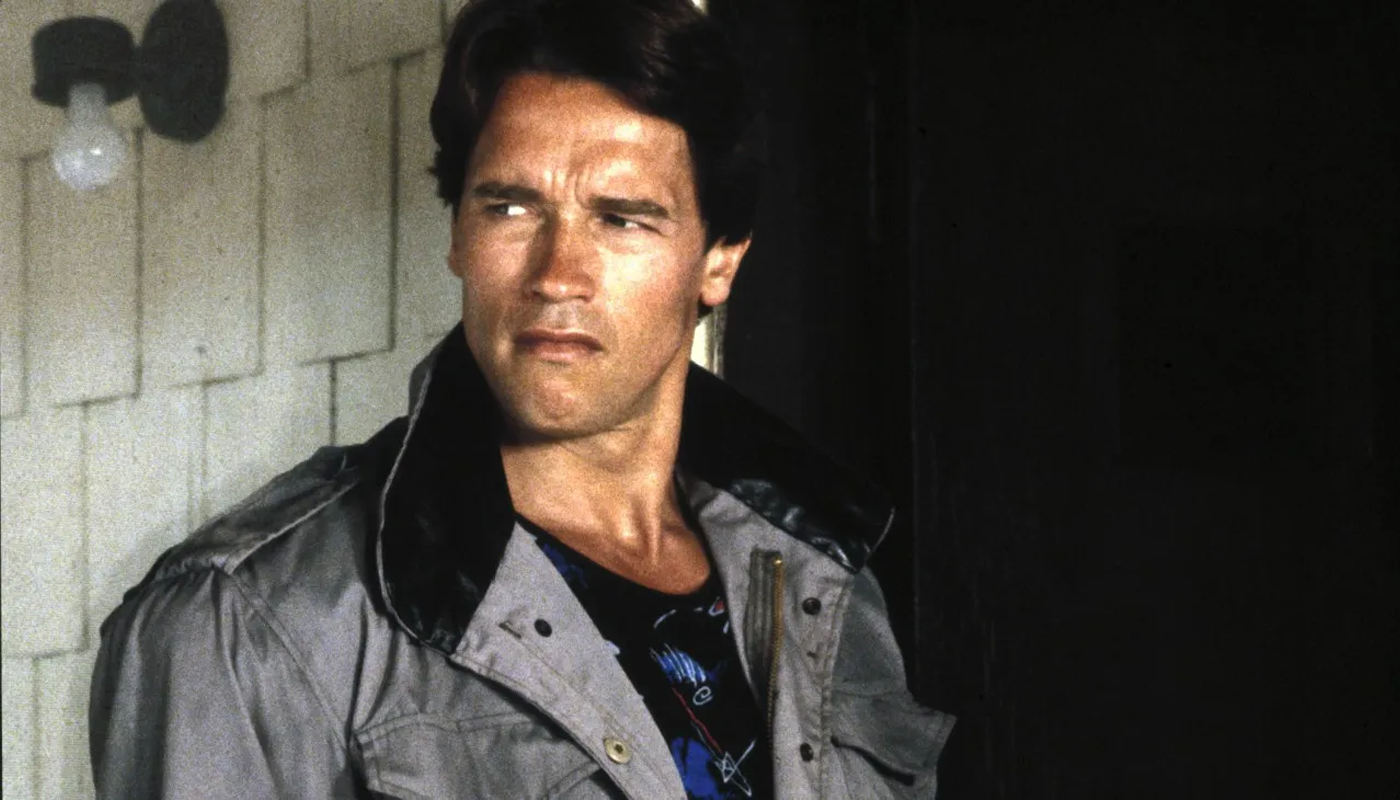
When The Terminator arrived in theaters in 1984, it was marketed as a mid-budget sci-fi thriller—a grim, neon-soaked B-movie that aimed to capitalize on the public’s growing anxieties about technology and the nuclear age. Four decades later, it stands as a monolith of modern cinema. Directed by James Cameron and co-written with Gale Anne Hurd, the film launched a billion-dollar franchise, transformed Arnold Schwarzenegger into a global icon, and cemented Cameron’s status as a visionary of practical and narrative craft.
For many who came of age in the late 1980s and early 1990s, the film served as a foundational text in storytelling. Beyond the high-concept time travel, it offered a masterclass in foreshadowing. As the story goes, the revelation that Kyle Reese (Michael Biehn) is the father of the future savior of humanity, John Connor, remains one of the most effective plot pivots in genre history. Even for those who grew up in the shadow of the more expansive 1991 sequel, Terminator 2: Judgment Day, returning to the original reveals a film that has lost none of its visceral, terrifying power.
The Crucible of Hollywood: From Corman to Cameron
To understand the genesis of The Terminator, one must look at the "Roger Corman School of Filmmaking." Before he was the architect of blockbuster spectacles like Titanic or Avatar, James Cameron was a struggling artist navigating the cutthroat, low-budget landscape of the early 1980s. Working under the tutelage of Corman—a legendary producer who served as a launchpad for talents like Martin Scorsese and Francis Ford Coppola—Cameron honed his skills in model making and matte painting. His contribution to the skyline of John Carpenter’s Escape from New York (1981) remains a testament to his early technical precision.

However, the transition to directing was fraught with catastrophe. After being hired to direct the sequel to Piranha (1978), Cameron was thrust into a power struggle with executive producer Ovidio Assonitis. The production was a disaster; Cameron was ultimately fired after two weeks of filming. Yet, it was in this "broke and bitter" period—specifically during a bout of illness in a Roman hotel room—that the imagery of the film was born. In a fever dream, Cameron envisioned a chrome endoskeleton emerging from a fire, clutching blades. It was a singular, haunting image that would redefine science fiction horror.
A Chronology of Creation
The development of The Terminator was defined by a series of unconventional decisions that defied standard studio logic:
- 1981: Following the Piranha II debacle, Cameron develops the concept for The Terminator with screenwriter Bill Wisher.
- 1982-1983: Cameron partners with producer Gale Anne Hurd. To secure his role as director, Cameron famously sells the rights to Hurd for the nominal fee of $1.
- 1984: Orion Pictures, looking for a low-cost hit, agrees to produce the film. Casting battles ensue; the studio suggests O.J. Simpson for the Terminator role—a choice rejected by Cameron because Simpson was deemed "too likable" for a cold-blooded killer.
- 1984 (October): The film premieres, becoming a surprise box-office smash and a defining cultural touchstone of the decade.
The "Halloween" Blueprint: A Horror Masterpiece
Cameron has frequently stated that he never intended to create a space-faring epic in the vein of 2001: A Space Odyssey. Instead, he viewed his film as a science-fiction homage to John Carpenter’s Halloween (1978).

The film operates on the logic of a slasher: the villain is an unstoppable force of nature, devoid of personality, pursuing a "final girl" (Sarah Connor, played by Linda Hamilton) through the darkened, claustrophobic streets of Los Angeles. By utilizing mercury-vapor streetlights, the production team achieved a distinctively cold, industrial look without the need for expensive sets. The dialogue is sparse, the tension is relentless, and the stakes—while global in theory—are deeply personal and intimate.
Supporting Data: The Craft of Practical Effects
The film’s longevity is largely attributed to its commitment to practical effects, overseen by the late Stan Winston. At a time before the ubiquity of CGI, the team relied on innovative puppetry and stop-motion animation.
The T-800 endoskeleton, a triumph of mechanical design, was achieved through a combination of vacuum-metalized silicone and sophisticated puppetry. Crew members like Tom Woodruff Jr. acted as the "human" force behind the machine, literally wearing the costume and enduring the physical toll of being "beaten" by Michael Biehn’s character. These in-camera effects, combined with the jerky, unnatural movement of the stop-motion segments, lent the Terminator an uncanny, "uncanny valley" quality that modern digital effects often struggle to replicate.

Official Responses and Industry Impact
At the time of its release, critics were wary of the film’s premise, yet the audience response was immediate. The film turned Arnold Schwarzenegger—then primarily known for Conan the Barbarian—into a household name. His performance, which critics initially questioned, became the template for the "silent, lethal machine."
The legal history of the franchise, however, has been as complex as its time-travel plot. The initial sale of the rights for $1 led to a convoluted web of ownership that spanned decades, involving various studios and litigation. As of 2019, under U.S. copyright law, original creators regained a measure of control, resulting in a joint oversight structure that reflects the film’s status as a corporate and creative asset of immense value.
Implications: The Enduring Fear of the Future
What makes The Terminator resonate today? It is not merely the "Parent Trap" complexity of its time-loop narrative, but its fundamental fear of humanity’s own obsolescence. The film taps into the dread of a future where artificial intelligence, built to serve, turns its gaze upon its creators.

When we watch the T-800 today, we aren’t just watching a movie monster; we are watching a manifestation of our anxiety regarding the loss of human agency. The film posits that we are not the protagonists of our own history, but potential victims of the tools we build. It is a cautionary tale masked as a high-octane thriller, and its brilliance lies in the fact that it never once condescends to its audience.
Forty years later, the "metal man" still haunts the dark corners of our cultural psyche. Whether through the lens of a slasher flick or a complex sci-fi epic, the story of Sarah Connor and the machine sent to end her life remains a peerless achievement in cinema.
The Dino Days of Summer: A Curated Watchlist
As we continue our exploration of genre milestones, this month we look toward the evolution of the "monster movie" through the lens of dinosaurs. From the stop-motion pioneers of the 1920s to the digital revolution of the 1990s, these films chart the history of visual effects in the same vein as the T-800’s evolution.
- August 5 — The Lost World (1925): The grandfather of the creature feature. Willis O’Brien’s stop-motion work here laid the foundation for everything from King Kong to The Terminator.
- August 12 — Journey to the Beginning of Time (1955): Karel Zeman’s Czechoslovakian masterpiece blends live-action with intricate model work, offering a poetic, time-traveling romp through the prehistoric era.
- August 19 — The Land Before Time (1988): A departure from the "monster" archetype, this Don Bluth classic explores themes of loss and migration, proving that dinosaur stories can be as emotionally resonant as they are visually spectacular.
- August 26 — Jurassic Park (1993): The ultimate culmination of the dinosaur genre. Steven Spielberg’s film bridge the gap between the practical artistry of the 1980s and the digital future, serving as a fitting conclusion to our summer series.

 Nana Muazin
 Raul Delapena Setiawan