Rifan Muazin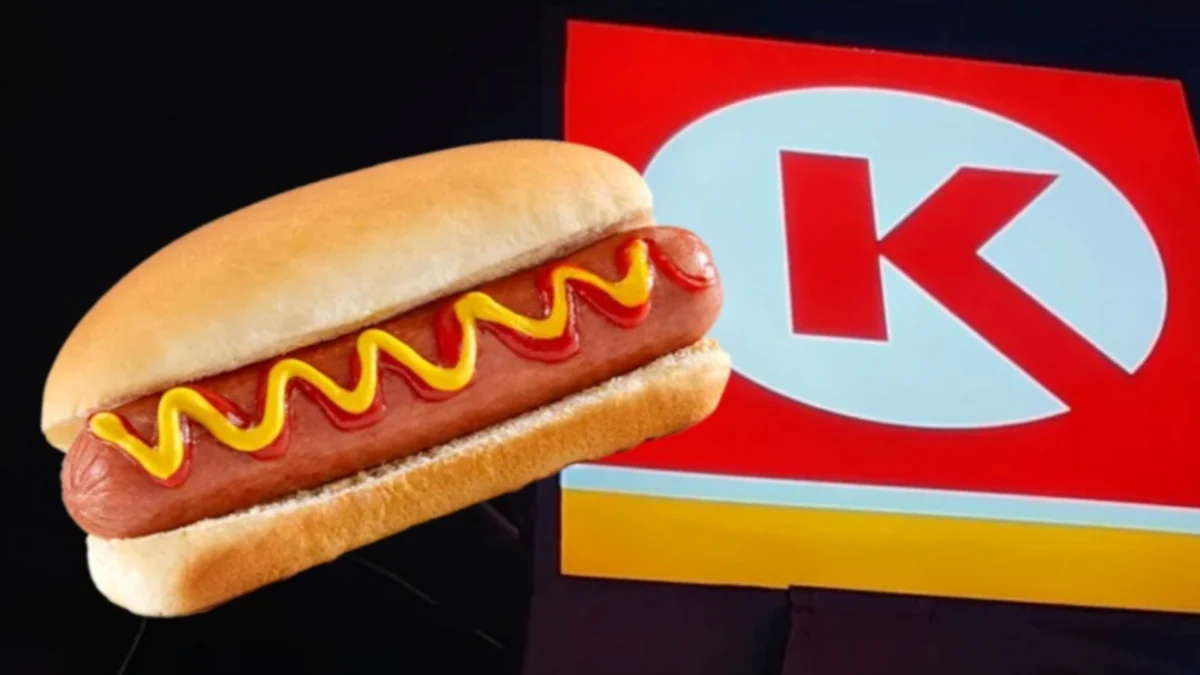
In an era defined by the rapid integration of artificial intelligence into the mundane rhythms of daily life, a startling incident at a local Circle K convenience store has become a viral cautionary tale. A customer, simply seeking a quick snack, found themselves staring at a digital total that exceeded the GDP of several small nations: an $8.5 billion charge for a hot dog and a few bottles of Gatorade. The incident, which has since ignited a firestorm of discussion across social media platforms, highlights the growing pains—and potential absurdities—of relying on computer vision for retail transactions.
The Incident: An Unplanned Act of Extreme Philanthropy
The shopper, who chronicled their experience on Reddit, arrived at their local Circle K with the modest goal of purchasing a hot dog. Finding the store’s singular human attendant preoccupied with other duties, the customer turned to the store’s newly installed AI-powered self-checkout kiosk. These systems, designed to streamline the shopping experience, utilize sophisticated camera arrays and computer vision to identify products in real-time, theoretically eliminating the need for manual barcode scanning.
However, the experience quickly devolved from a routine errand into a digital farce. As the customer placed their items on the sensor pad, the screen flickered, and a line item appeared that was as staggering as it was unexpected: an $8.5 billion donation to the American Red Cross.
"I just wanted a hot dog," the shopper wrote in their Reddit post, which quickly amassed thousands of comments. "Yesterday, though, it threw this little gem in, thinking I wouldn’t notice an $8.5 billion donation to the Red Cross. Don’t get me wrong, I like what they do and all, but this is a bit much."
The customer noted that this was not their first encounter with the finicky nature of the AI. They reported having previously observed the machine incorrectly identifying items, adding random lighters and other merchandise that were not even within the scanning radius. In this instance, the irony was palpable: the system had seemingly decided that the customer was in a position to fund a global humanitarian relief effort, despite the modest nature of their purchase. The customer, understandably, did not finalize the transaction, sharing a laugh with the store employee who was reportedly as "astonished" by the display as the shopper themselves.
The Technology Behind the Kiosk: Mashgin and the Vision for Retail
To understand how such a massive error could occur, one must look at the technology powering these kiosks. Circle K began a massive overhaul of its checkout infrastructure in 2022, partnering with Mashgin, a company specializing in computer vision-based self-checkout systems. The ambitious rollout involved installing more than 10,000 systems across 7,000 stores worldwide.
The promise of Mashgin technology is speed. By utilizing multiple high-resolution cameras to "see" items from various angles, the system is designed to process an entire basket of goods in as little as ten seconds—a process the company claims is eight times faster than traditional self-checkout lanes that require individual barcode scans.

The system relies on deep learning models trained to recognize thousands of products. When an object is placed on the counter, the AI compares the visual data against its database to identify the item and calculate the price. While the technology is largely effective, the $8.5 billion glitch suggests a significant vulnerability in how these machines handle numerical input or, more likely, how they interpret user interaction with the interface.
Analyzing the Glitch: Technical Failure or User Error?
While the internet has largely treated the incident as a humorous "AI fail," the tech community has begun to dissect the potential causes behind the astronomical figure.
The Phone Number Theory
One of the most compelling explanations circulating among tech-savvy Reddit users is that the $8.5 billion figure was not an AI "hallucination," but rather a data entry error.
"Looks more like someone put their phone number into the donation screen rather than the membership screen," one user suggested. This theory posits that the kiosk’s software interface may have been poorly designed, allowing a user to input a 10-digit phone number into a field intended for a donation amount. If a user were to type their phone number (e.g., 850-XXX-XXXX) into a box that the system interpreted as a dollar amount, the result would be a billion-dollar charge. This points to a failure in User Experience (UX) design, where the system fails to differentiate between a loyalty program entry and a charitable contribution input.
The AI Hallucination Theory
Alternatively, some argue that the AI itself may have experienced a logic error. In machine learning, "hallucinations" occur when a system generates outputs that are nonsensical or ungrounded in reality. If the visual recognition software misidentified the items—perhaps confusing a beverage bottle with a donation button or an obscure SKU—it could have triggered a cascade effect in the pricing engine. While less likely to result in such a specific, high-value number, it remains a possibility in the eyes of critics who argue that AI deployment in retail is outpacing safety protocols.
The Broader Implications for Automated Retail
The $8.5 billion donation incident is merely the latest in a series of frustrations reported by customers regarding self-service kiosks. From fast-food chains asking for tips on automated screens to grocery store scales misidentifying produce, the transition to a "cashier-less" future has been anything but smooth.
The Trust Gap
There is a growing "trust gap" between retailers and consumers. Shoppers are increasingly wary of automated systems that seem to prioritize corporate efficiency over user experience. When a machine makes an error, the burden of proof falls on the consumer, who must wait for a human employee to intervene. This negates the primary benefit of the technology: speed.

The Labor Question
The incident also reignites the debate regarding the role of labor in retail. As companies like Circle K lean further into automation, the reduction of human staff in stores often leaves kiosks unmonitored. When a glitch occurs, the lack of immediate human oversight can turn a simple transaction into a stressful, prolonged event. The fact that the Circle K employee was present and able to laugh along with the customer is a testament to the importance of the human element in service industries—a factor that cannot be easily replicated by an algorithm.
Official Silence and Future Outlook
As of this writing, Circle K has not provided a formal, public statement regarding the specific nature of the $8.5 billion charge. The company’s silence is typical of large retail chains when dealing with software bugs; they likely view it as a localized, anecdotal issue rather than a systemic failure. However, the viral nature of the story serves as a stark reminder of the potential for brand damage when technology is deployed without adequate fail-safes.
For now, the story serves as a lighthearted, if slightly dystopian, footnote in the history of retail technology. As one Reddit user quipped: "Would you like to round up to the nearest billion for charity?"
In the meantime, consumers remain skeptical. The contrast between the high-tech, multi-billion-dollar AI kiosks and the consistent, low-tech reliability of options like the Costco $1.50 hot dog combo—which has famously remained price-locked for decades—offers a clear message to retailers: customers value reliability and predictability far more than they value "innovation" that threatens to bankrupt them at the register.
As the retail industry continues to push for full automation, the $8.5 billion hot dog will likely serve as a cautionary case study in AI implementation. It is a reminder that while machines may be fast, they lack the common sense to distinguish between a purchase and a national debt-sized donation. Until these systems can guarantee accuracy, the human element—and a watchful eye at the checkout screen—remains the best defense against the absurdity of our automated future.


 Sagoh
Sagoh
 Evan Lee Salim