The cinematic landscape of 2024 has seen a curious trend: the attempt to reconcile the analog, tactile wonder of mid-20th-century children’s literature with the hyper-digital, screen-saturated reality of the 21st century. Nowhere is this collision more apparent—or more chaotic—than in The Magic Faraway Tree, a bold, visually arresting, and structurally uneven adaptation of Enid Blyton’s beloved series. Directed by Ben Gregor with a screenplay by Simon Farnaby, the film acts as both a heartfelt homage to classic fantasy and a frantic, modern-day cautionary tale about the erosion of childhood.
Main Facts: A Modern Reimagining of Blyton
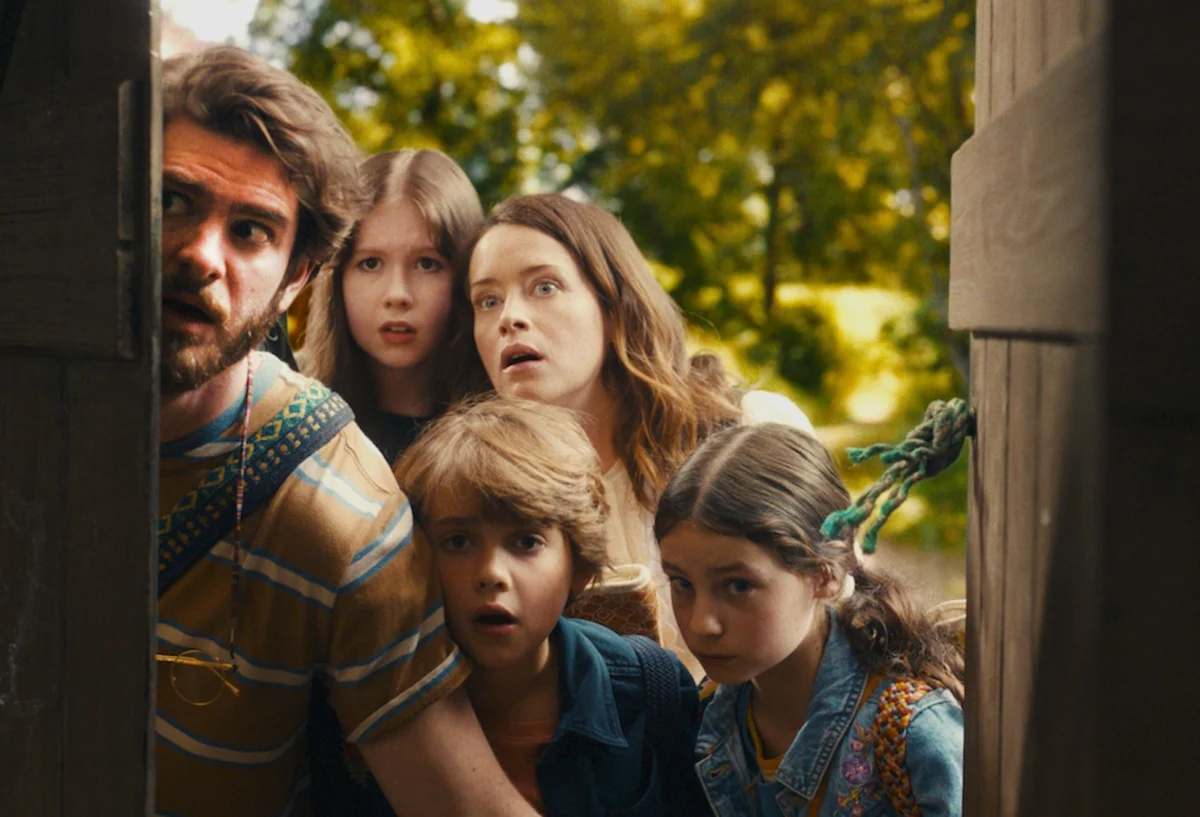
The Magic Faraway Tree centers on the Thompson family: Tim (Andrew Garfield) and Polly (Claire Foy), two parents grappling with the existential exhaustion of contemporary life. Their children—Beth (Delilah Bennett-Cardy), an aspiring influencer; Joe (Phoenix Laroche), a dedicated gamer; and the selectively mute Franny (Billie Gadsdon)—serve as proxies for the modern "screen-addled" generation.
When Polly discovers her corporate employers have embedded spyware into a smart appliance she designed, she impulsively quits her tech career. The family moves to a ramshackle, dilapidated barn in the countryside, hoping to reclaim a life that is, as the film posits, "more lived in." It is here, amidst the rust and rural decay, that the children discover the titular tree—a conduit to a shifting, kaleidoscopic world of magic.
The ensemble cast features a parade of fantastical characters: Silky (Nicola Coughlan), the golden-haired fairy; the misanthropic Moonface (Nonso Anozie); the fastidious Dame Washalot (Jessica Gunning); the volatile Angry Pixie (Hiran Abeysekera); and the hard-of-hearing Saucepan Man (Dustin Demri-Burns). Produced with a high-budget sheen, the film aims to be a definitive family classic, though it remains tethered to the complexities of its source material’s controversial legacy.
Chronological Development: From Grey Steel to Technicolor Wonder
The film’s aesthetic trajectory is one of its most striking elements. The narrative begins in a cold, monochromatic urban environment—a world of steel and chrome that reflects the family’s disconnect. As the narrative progresses to the countryside, the film undergoes a radical visual transformation.
- The Escape: The first act establishes the "siren call of the screen." The family’s move is framed as a desperate, unrefined pivot. The barn, lacking basic utilities, is the crucible where their new, chaotic life begins.
- The Discovery: Franny’s silent encounter with a faerie serves as the catalyst. The Tree is introduced not as a static location, but as a living, breathing ecosystem that changes daily.
- The Ascent: The middle act introduces the "Lands"—floating pockets of reality that park atop the tree. Each day, a wheel of fortune determines whether the children will visit the Land of Goodies or the Land of Know-Alls.
- The Conflict: Parallel to the magical escapades, the "real world" tension intensifies. Tim attempts to launch a tomato sauce business, while the family struggles with the predatory influence of Polly’s tyrannical mother (Jennifer Saunders) and the antagonist Dame Snap (Rebecca Ferguson).
- The Climax: The narrative converges when the domestic and magical threats collide, forcing the family to choose between their digital past and their newfound, unpredictable reality.
Supporting Data: The Performative Weight
While the film’s structure often buckles under the weight of its eleven distinct plot engines, the performances provide the necessary grounding to keep the audience invested.
Delilah Bennett-Cardy’s portrayal of Beth is a standout. Navigating a difficult transition from a status-obsessed teen to a child rediscovering wonder, her arc provides the most tangible emotional payoff. Similarly, Billie Gadsdon’s Franny, the heart of the film, avoids the pitfalls of saccharine sentimentality.
The villains are equally compelling. Jennifer Saunders and Rebecca Ferguson inject a necessary, sharp-edged cynicism into the film. Ferguson’s Dame Snap, in particular, is a fascinating update to the original text. By removing the overt physical abuse present in Blyton’s books and replacing it with a cold, psychological malice, the film successfully modernizes a dated character archetype.
Official Responses and Critical Reception
The film has been met with a polarized, yet generally warm, reception. Critics have praised the visual ambition—noting that in an era of "dishwater-tinted" cinematography, the film’s vibrant palette feels like a genuine gift to the eyes. However, the pacing has been a frequent point of contention.
"The film suffers from the ‘Streaming Era’ syndrome," notes one industry analyst. "It feels the need to state a problem, demonstrate it, and resolve it within a five-minute window, effectively stripping away the tension that defines great children’s cinema."
Simon Farnaby, whose pedigree includes the lauded Paddington 2, has defended the film’s structure, suggesting that the "whimsy" is intentionally dialed up to capture the mercurial nature of childhood imagination. "We wanted the tree to feel like it was spilling over with ideas," a representative for the production stated. "If it feels a little too much, it is only because that is how a child feels when they are discovering something entirely new."
Implications: The Future of "Whimsy-Core"
The primary implication of The Magic Faraway Tree is its contribution to a new sub-genre of "anti-digital" fantasy. The film posits that the only way to save the family unit is to disconnect from the modern, surveilled world. However, the film’s own reliance on heavy CGI and rapid-fire editing suggests a paradoxical relationship with its subject matter.
The "Sequel" Potential:
The producers have already greenlit sequels, which may be the film’s salvation. The current iteration suffers from a lack of "breathing room"—a consequence of trying to introduce an entire universe, six primary magical denizens, and a family drama in under two hours. With the groundwork laid, subsequent entries have the opportunity to delve deeper into the backstories of characters like Moonface and Silky, whose arcs were left frustratingly truncated in this first installment.
A Call for Narrative Risk:
Perhaps the most significant takeaway is the contrast between The Magic Faraway Tree and the Paddington films. The latter succeeds because it trusts its audience. It allows tension to sit, evolve, and sometimes feel genuinely dangerous. The Magic Faraway Tree is afraid of the dark. It is terrified of losing its younger viewers, which results in a film that is constantly "checking in" on its own plot points.
If the sequels are to succeed as modern classics, they must adopt the courage of films like The Neverending Story. They must acknowledge that for a child to feel the magic, they must also feel the stakes. A child needs to see characters fail, struggle, and pick themselves up, not just see them visit a neon-lit Land of Birthdays.
Conclusion: A Hug in a Harsh Time
Ultimately, The Magic Faraway Tree is a beautiful, deeply flawed, and undeniably charming experience. While it occasionally trips over its own "bucket of whimsy," it provides a necessary escape. It is a film that values color over greyscale, connection over connection-speed, and imagination over algorithms.
It is not yet the masterpiece it aspires to be, but it is a vital, beating heart of a movie. In a world that often feels like it is being viewed through a screen, it offers a fleeting, precious opportunity to look up at the branches of a tree and believe, if only for a moment, that the world is much bigger, weirder, and kinder than we are told. If the filmmakers can find the discipline to slow down, let the tension simmer, and lean into the strange, the upcoming sequels could define a generation of fantasy. For now, we have a film that is, at the very least, a warm, bright, and welcome hug.