

In a week defined by the intersections of high-stakes corporate drama, the preservation of cultural history, and the evolution of space exploration, the global news cycle has touched upon themes that resonate across both industry and imagination. From the grim conclusion of a murder case involving the rights to a modern sci-fi masterpiece to the painstaking recovery of space-age artifacts, these stories underscore the profound impact of individual actions on collective legacy.
1. Justice Served in the Yoozoo Games Tragedy
The narrative surrounding the 2020 murder of Chinese gaming tycoon Lin Qi reached a definitive, if somber, conclusion this week. Xu Yao, the former executive at Yoozoo Games, has been executed following his conviction for the poisoning of his employer.
The Mechanism of a Corporate Killing
Reports from the Associated Press and local Chinese media have detailed the chilling methodology employed by Xu. Driven by professional grievances after being sidelined—despite his instrumental role in securing a high-profile Netflix production deal for the Three-Body Problem—Xu reportedly spent tens of thousands of dollars to procure lethal substances online. These included alpha-amanitin, a potent toxin derived from poisonous mushrooms.
In a calculated campaign of domestic terror, Xu disguised the toxins within probiotic pills, coffee capsules, and water bottles, which he then distributed among his colleagues. Lin Qi, only 39 years old at the time, fell ill in December 2020 and passed away shortly thereafter. Several other employees were also poisoned but survived.
Official Responses and Implications
In a formal statement released on Tuesday, Yoozoo Games confirmed the execution took place on May 21, 2024. The company stated that “justice has ultimately been served,” while extending condolences to the Lin family. The tragedy has cast a long shadow over the international adaptation of Cixin Liu’s celebrated science fiction trilogy, a project that had been a crowning achievement for Lin’s tenure. The case serves as a harrowing reminder of the volatility inherent in high-pressure corporate environments where intellectual property rights and personal professional standing collide.

2. Archival Preservation: Trek, Dylan, and the Dustjacket Wars
As the world looks toward the future, historians and pop-culture enthusiasts are doubling down on efforts to preserve the artifacts of the past.
The Roddenberry Archive
The 60th anniversary of Star Trek is being marked by an unprecedented level of transparency from the Roddenberry Archive. Led by Rod Roddenberry, the son of the series creator, the organization has launched a new video series, Inside the Roddenberry Archive, aimed at opening the vault to the public.
The debut features a deep dive into the 34-inch USS Enterprise model, originally constructed in 1964 for the pilot episode "The Cage." After vanishing for decades, the model was recovered in 2024. This series promises to provide fans and scholars with an intimate look at never-before-seen memorabilia, documenting the creation of one of television’s most influential franchises.
The "Book Blinder" Controversy
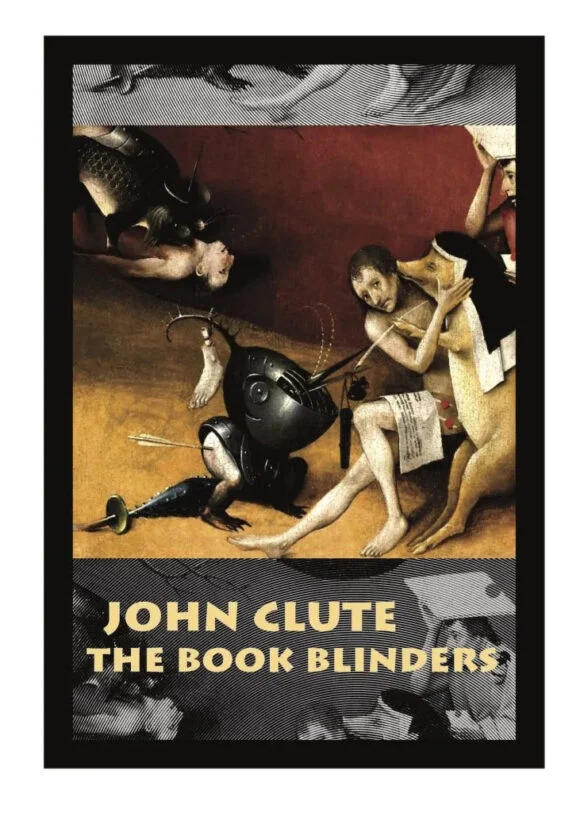
In a starkly different archival battle, John Clute, writing for the Science Fiction Encyclopedia, has sounded the alarm on the destruction of dustjackets by the British Library. His critique, Burning Mappemonde To The Ground, argues that the systematic disposal of millions of dustjackets—which functioned as "theatres of arrival" for literature—constitutes a profound act of cultural vandalism. Clute contends that these covers were essential context for the world-building within, and their loss represents a permanent erasure of the "mapping of the story of the world."
Celebrating a Legend: 85 Years of Bob Dylan
In a lighter vein, Brian Cronin at CBR.com has updated his long-running project, "85 Bob Dylan Comic Book References." Commencing on Dylan’s 85th birthday, the project has evolved from a simple annual addition to a comprehensive database of how Dylan’s music has permeated the medium of comic books. From G.I. Joe to indie graphic novels, the list serves as a testament to the enduring cross-pollination of music and sequential art.

3. The New Space Race: Ambition and Resilience
The history of space exploration continues to inform the present, as China announces a major reorganization of its lunar efforts.
Chronology of Ingenuity: Apollo 13
Reflecting on the grit of the Apollo era, Space Daily recently revisited the harrowing 1970 return of the Apollo 13 crew. With the guidance computer shut down to preserve power, the astronauts famously used a wristwatch and the "terminator"—the line separating day and night on Earth—to navigate their manual reentry. It remains one of the most remarkable examples of analog problem-solving in the history of human flight.
China’s Lunar Roadmap
Drawing on that same spirit of exploration, China has signaled a shift in its trajectory toward the Moon. Zhang Jingbo, spokesman for the China Manned Space Agency (CMSA), announced a strategic integration of the country’s robotic Chang’e lunar probes and its human spaceflight program. The goal is clear: landing astronauts on the lunar surface by 2030.
By unifying resources and mission teams, China is positioning itself to be a dominant force in lunar exploration. "We will spare no effort to strive for the goal," Zhang stated at a press conference, signaling that the next decade of space competition will be defined by institutional scale and national focus.
4. Retrospective: The Legacy of Vincent Price and Philip K. Dick
The week also saw tributes to two titans of genre fiction: actor Vincent Price and author Philip K. Dick.

The Voice of Horror
May 27 marked the anniversary of the birth of Vincent Price (1911–1993). In a moving tribute, Paul Weimer recalls Price not just as an actor, but as the quintessential "voice of horror." From his roles in Roger Corman films to his iconic narration on Michael Jackson’s Thriller, Price defined a generation’s experience of the uncanny. His ability to inhabit roles ranging from the campy Dr. Egghead in the Batman television series to the tragic protagonist of The Fly highlights his immense versatility and his status as a permanent fixture in the cultural psyche.
The "Media Death Cult" and P.K. Dick
Finally, the world of literary adaptation was examined through the lens of Moid Moidelhoff, host of the Media Death Cult channel. Moid, a dedicated fan of Philip K. Dick, has completed a marathon review of every cinematic adaptation of the author’s work.
His critical ranking of these films—ranging from Blade Runner to Minority Report—offers a modern perspective on how Dick’s paranoid, speculative visions have been translated for the screen. By bypassing the big-budget TV series and focusing on the evolution of Dick’s SF novels in film, Moid provides a unique service to the community of fans who continue to grapple with the author’s complex legacy.
Implications for the Future
As we synthesize these disparate stories, a clear pattern emerges: our present is deeply tethered to our past. Whether it is the tragic loss of a visionary businessman like Lin Qi, the struggle to preserve the physical history of books, or the reliance on 1970s navigational ingenuity to propel 2030 lunar ambitions, the common thread is the value we place on legacy.
The execution of Xu Yao marks a somber end to a corporate scandal, but it also prompts questions about the ethics of intellectual property in a globalized market. Similarly, the efforts by the Roddenberry Archive and critics like John Clute remind us that without intentional preservation, the "theatres" of our collective imagination are at risk of being dismantled. As China accelerates toward the Moon, it does so by synthesizing its past lessons, proving that the future is rarely a clean break from what came before, but rather an evolution of the narratives we choose to carry forward.











No comments yet. Be the first to join the conversation!