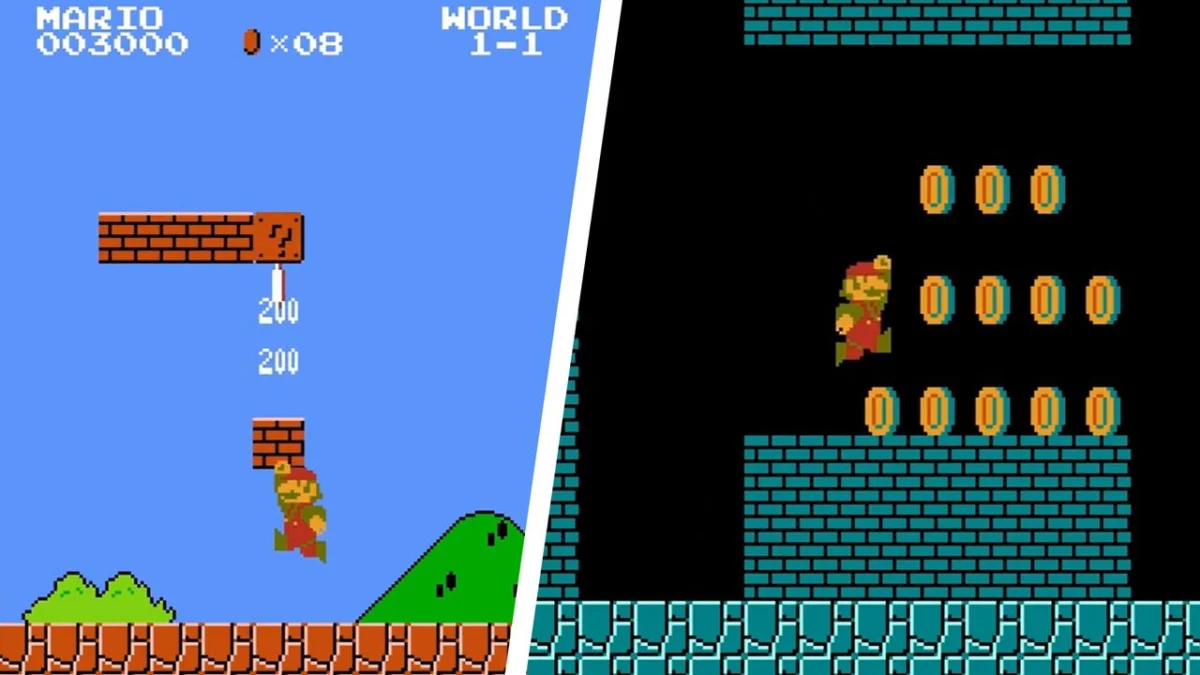
For decades, Super Mario Bros. has served as the "Hello World" of the gaming industry—a benchmark for design, physics, and sheer joy. From high-fidelity Unreal Engine 5 reimaginings that push modern hardware to their limits, to intentionally "cursed" low-fi Photoshop experiments, Nintendo’s plumber remains the ultimate muse for aspiring developers.
The latest entry into this long tradition of fan-made tributes is a remarkably faithful recreation of World 1-1, built entirely within the open-source Godot Engine. Created by Reddit user devellopsomedonkus69, the project serves as a compelling case study on the value of iterative learning and the profound respect developers gain for the pioneers of the 8-bit era.
The Genesis of a Classic: Project Background
The motivation behind this project was not a desire to infringe on intellectual property, but rather a structured educational pursuit. The developer was participating in the "20 Games Challenge," a widely respected, self-paced framework designed to take absolute beginners through the process of building twenty classic video games of increasing complexity.
The goal of the challenge is to force developers to confront common programming hurdles—collision detection, state machines, movement physics, and asset management—by tackling titles that have already solved these problems elegantly. While most participants might create a functional, minimalist version of Mario to satisfy the challenge requirements, this developer chose to aim for total authenticity.
A 45-Day Odyssey: The Development Chronology
The project was far from a weekend hackathon. Spanning 45 days, from late March through early May, the development process was a deep dive into the nuances of the original NES code.
- Late March: The project begins with the foundation. The developer focuses on setting up the Godot environment and importing basic assets.
- Early April: The "pixel-perfect" phase. Rather than pulling pre-made sprites from the internet, the developer manually recreated the art, copying the original 8-bit sprites pixel by pixel. This labor-intensive process was intended to help the developer understand the limitations and aesthetic choices of the original NES hardware.
- Mid-April: The "Physics Grind." Implementing the "feel" of Mario is notoriously difficult. The inertia, jump height, and gravity that make Mario feel responsive were rebuilt from scratch within Godot’s node system.
- Late April: Burnout sets in. As the developer notes, the ambition of the project began to clash with the reality of learning a new engine. To maintain sanity and reach a playable state, the developer made the executive decision to cut scope, removing complex power-ups like the Fire Flower and Star Power.
- Early May: The "Gold Master." The level was polished, bugs were squashed, and the project was finalized and uploaded to Itch.io for the public to experience.
The Technical Breakdown: Why Godot?
The choice of the Godot Engine is significant. As the industry grapples with the complexities of Unreal Engine 5 and the licensing shifts of Unity, Godot has emerged as the premier choice for indie developers. Its lightweight footprint, node-based architecture, and commitment to being free and open-source make it an ideal "classroom" for learning the mechanics of game design.
By recreating Super Mario Bros., the developer had to learn how to manipulate Godot’s scripting language (GDScript) to handle:
- Tilemaps: Handling the grid-based layout of the level.
- State Machines: Defining Mario’s states (idle, running, jumping, falling, dying).
- Camera Logic: Implementing the classic side-scrolling follow camera that never looks back.
The developer’s decision to build from scratch—excluding the audio—allowed them to internalize the logic of game architecture. "It gave me a lot of confidence and a better understanding of how to break down a game into small problems that can more easily be solved," the developer reflected.
The Developer’s Dilemma: Perfection vs. Progress
One of the most valuable insights provided by this project is the psychological aspect of the "20 Games Challenge." Beginners often fall into the trap of "scope creep," where the desire to make a project perfect leads to frustration and, ultimately, abandonment.
The developer admitted that they reached a point of exhaustion near the end of the project. This is a critical lesson for any student of game design: the most important skill is not coding perfectly, but finishing a project. By choosing to cut the Fire Flower and Star Power, the developer successfully pivoted from an "impossible" project to a "completed" one. This act of prioritization is perhaps the most professional skill they acquired during the process.
The Broader Implications for Indie Development
The resurgence of interest in retro-remakes is not merely nostalgia; it is a pedagogical trend. As game engines become more complex, the distance between a beginner and a finished product grows. By looking backward at simpler architectures, developers are finding a faster route to understanding the fundamentals of game loop design.
Furthermore, these projects serve as a vital documentation of design history. When a modern developer sits down to replicate the jump physics of a 1985 game, they are essentially performing a form of digital archaeology. They are uncovering the "invisible" work—the hitboxes, the input buffering, and the frame-perfect timing—that made the original Super Mario Bros. a masterpiece.
Industry Outlook: The Future of the "20 Games Challenge"
As the community of indie developers continues to grow, initiatives like the 20 Games Challenge are becoming the standard entry point for the next generation of designers. The success of this specific project—which is currently available to play on Itch.io—proves that high-quality, educational content can be produced with nothing more than passion, patience, and free software.
While this project is "incomplete" by the standards of the original commercial game, it is complete by the standards of the challenge. It stands as a testament to the fact that you do not need a triple-A studio budget or a team of fifty people to understand what makes a game "fun." Sometimes, all you need is a blocky sprite, a bit of gravity, and a willingness to learn.
Lessons Learned: Advice for Aspiring Creators
For those looking to follow in these footsteps, the developer offers sage advice: "I definitely didn’t need to go this in-depth to learn game development, and maybe I shouldn’t have, but right now I’m glad I did."
Their experience underscores a vital truth: game development is a marathon, not a sprint. The "awful" blocky Mario remakes and the "cheeky" EA-style demos that circulate on the web aren’t just jokes; they are the artifacts of a learning process. Whether you are building a 3D environment in Unreal Engine 5 or a pixel-perfect 2D clone in Godot, the goal is the same: to pull back the curtain on how magic is made.
Conclusion
The recreation of World 1-1 in Godot is a perfect microcosm of the modern developer’s journey. It highlights the tension between the desire for perfection and the necessity of completion. It demonstrates that the best way to understand the history of gaming is to try and replicate it yourself. And, perhaps most importantly, it reminds us that while the tools of the trade—from the NES hardware of 1985 to the Godot Engine of today—may change, the fundamental joy of guiding a character through a level remains the beating heart of the industry.
As the industry moves toward more complex technologies and AI-assisted workflows, the act of manually placing every pixel and every block becomes an act of defiance. It is a reminder that in game development, as in life, there is no shortcut to mastery. You have to build it yourself, brick by brick, jump by jump.
For those interested in exploring the world of retro-inspired game development, consider checking out the various retro gaming consoles and handheld devices available today, which provide the perfect reference points for your own projects. Whether you are a seasoned coder or a total beginner, the lessons found in the classics are timeless.