

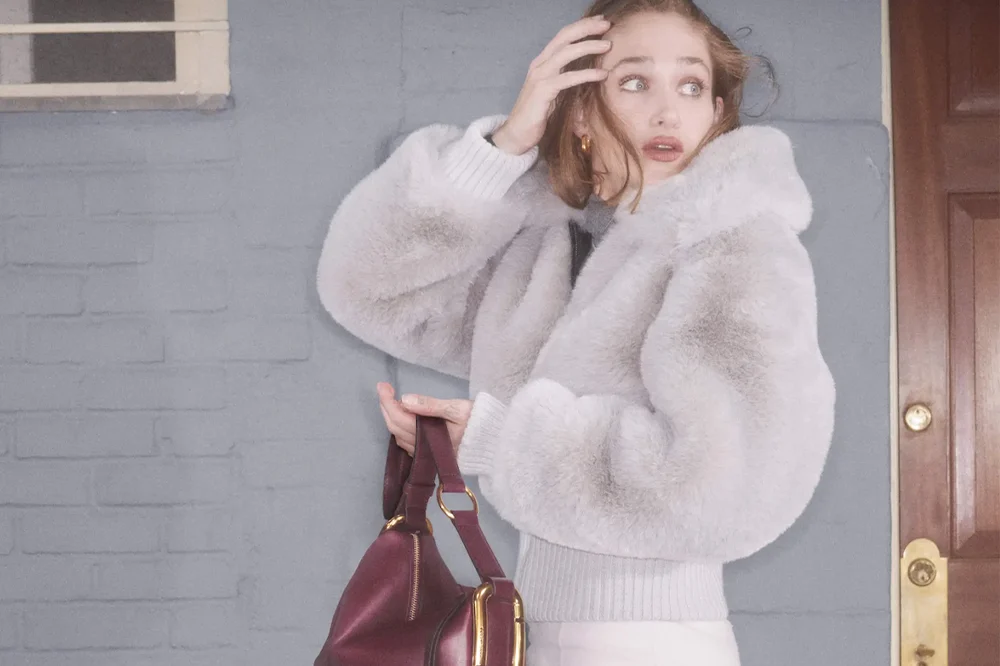
The landscape of high fashion is undergoing a profound metamorphosis. No longer satisfied with the traditional constraints of the runway or the static nature of lookbooks, heritage houses are increasingly pivoting toward long-form, narrative-driven entertainment. Leading this charge is Marc Jacobs, whose latest project, “The Swap,” serves as the newest installment in the brand’s “Question Marc” series—a strategic endeavor to blur the lines between luxury retail and prestige television.
The Main Facts: A Tale of Two Handbags
Marc Jacobs has officially unveiled its Fall 2026 campaign, a scripted micro-drama that pushes the brand further into the realm of cinema. Starring actors Jemima Kirke and Rowan Blanchard, the short film centers on a whimsical yet frantic narrative: after attending a Marc Jacobs runway show, the two leads—who happen to be carrying identical “Scene Bags”—accidentally swap their belongings.
What follows is an urban odyssey through the streets of New York City, as the protagonists rifle through each other’s possessions, discovering the intimate, idiosyncratic items that define the other’s life. The film also features a notable cameo by playwright and actor Jeremy O. Harris, further cementing the brand’s alignment with the worlds of theater and indie film. This project follows the success of April’s “The Scene,” a short directed by and starring Rachel Sennott, which set the tone for this experimental marketing direction.
Chronology: From Runway to Reality
The development of “The Swap” marks a sophisticated evolution in the “Question Marc” series. The project’s timeline highlights a deliberate push toward high-concept storytelling:
- Early 2026: Marc Jacobs launches the “Question Marc” initiative, signaling a commitment to episodic storytelling rather than traditional advertising.
- April 2026: The debut of “The Scene,” starring Rachel Sennott, receives critical acclaim for its witty, Manhattan-centric narrative, proving that consumers are hungry for fashion content that functions as entertainment.
- Late Summer 2026: Production on “The Swap” concludes. The film is designed to feel like a narrative short rather than a commercial, emphasizing character development over product placement.
- August 2026: The global release of “The Swap.” The film begins its rollout across Marc Jacobs’ social media channels, with additional vignettes expected to drop throughout the autumn season.
Supporting Data: The Anatomy of a Bag
At the heart of the narrative is the “Scene Bag,” a core product for the label. In an exclusive conversation with Variety, Jemima Kirke offered a rare glimpse into the "contents" of her own life, contrasting them with the fictional, curated contents of her character’s bag.
Kirke, who describes her personal packing habits as a "ritual of comfort," notes that she carries a consistent, albeit perhaps unnecessary, inventory. "I’ve always carried the same things with me," she admits. "What’s changed is that I no longer need most of this stuff. Other than lipstick and candy. There’s nothing that my phone can’t handle, but I do it anyway out of habit and ritual."
Her typical carry includes:
- A physical notebook and a collection of pens.
- A dedicated calendar book.
- Lipstick and assorted candies.
- A book for downtime.
- Hand cream and keys.
- A "massive wallet" that anchors the weight of the bag.
This level of detail—the "massive wallet" vs. the "essential phone"—highlights the brand’s intent: to make the product feel lived-in and indispensable, shifting the focus from the bag as a mere accessory to the bag as a vessel for personal history.
The "Girls" Factor: Style vs. Substance
Inevitably, any discussion involving Jemima Kirke circles back to her iconic role as Jessa Johansson in HBO’s Girls. Jessa’s bohemian, vintage-heavy aesthetic became a cornerstone of mid-2010s fashion discourse. However, when asked if she maintains any of that character’s sartorial sensibilities, Kirke is characteristically direct.
"No, not at all," she says, debunking the idea that she carries her professional legacy into her personal closet. "Jessa’s look doesn’t appeal to me personally."
This distinction between the actor and the archetype is essential to the Marc Jacobs brand identity. By casting performers who have distinct, often gritty reputations, the brand moves away from the "model-as-mannequin" trope and toward "actor-as-personality."

Official Anecdotes: Chaos in Paris
If the premise of “The Swap” feels chaotic, it is perhaps because it mirrors the genuine, unscripted chaos of the fashion world—a world Kirke knows intimately. In a candid reflection on the nature of "Fashion Week" experiences, Kirke shared a story that sounds more like a scene from a thriller than a standard celebrity anecdote.
Recalling a 2014 trip to Paris for a Chanel show, she recounts: "I wasn’t ‘a model’ per se, although still modeling the latest fashions as part of the performance. My cousin and I had gone to a party the night before and had helped ourselves to a drink from someone else’s table. Maybe more than one. The people whose table it was caught us, I guess, and we got in a fight. One of them got dirty and came at me with a broken bottle."
The incident, which resulted in a minor scratch, serves as a testament to the unpredictable energy that Marc Jacobs seeks to capture. It is this "real-life grit" that the brand is attempting to translate into its digital campaigns, moving away from the polished, airbrushed reality of the early 2000s in favor of something more visceral.
Implications: The Future of Luxury Marketing
The broader implications of “The Swap” suggest a shift in how luxury houses compete for attention. In an era where digital saturation is at an all-time high, the "fashion film" has become the primary vehicle for brand loyalty.
1. The Death of the Traditional Ad
Marc Jacobs is not selling a handbag in the traditional sense; they are selling a narrative. By partnering with figures like Jeremy O. Harris—a playwright known for his sharp, provocative work—the brand is signaling that its target demographic is the "cultural consumer." These viewers are less likely to respond to a billboard and more likely to engage with a micro-drama that offers a compelling story.
2. The Blurring of "Influencer" and "Creator"
By allowing talent like Rachel Sennott and Jemima Kirke to have a hand in the creative process, the house ensures authenticity. This is not a paid spokesperson reading a script; it is a collaboration between the house and the artist. The result is a piece of content that feels "earned" by the audience rather than "imposed" upon them.
3. The "Retail-tainment" Synergy
The integration of direct shopping links within the narrative flow of the film is a masterclass in modern e-commerce. By watching the characters interact with the product, the viewer is subconsciously invited to see the item as part of their own daily "ritual." The "Question Marc" series is effectively building a bridge between the aspirational (the short film) and the accessible (the product link).
4. Cultural Cachet
Finally, the project underscores the importance of being "in on the joke." By creating a film that is slightly self-aware and meta—referencing the chaos of fashion weeks and the absurdity of accidental mix-ups—Marc Jacobs positions itself as a brand that is both aware of its industry’s flaws and capable of finding humor in them.
Conclusion: A New Standard
As the fashion industry continues to navigate the complexities of a digital-first marketplace, the “Question Marc” series stands as a benchmark for how luxury houses can maintain relevance. By prioritizing storytelling, casting talent with authentic voices, and leaning into the inherent drama of the fashion world, Marc Jacobs has managed to turn a marketing campaign into a cultural moment.
Whether “The Swap” will lead to a permanent change in how we consume fashion remains to be seen. However, one thing is certain: for the Fall 2026 season, Marc Jacobs has successfully shifted the conversation from what is in the bag to who is carrying it—and more importantly, why. As audiences continue to demand more from the brands they support, the synthesis of high fashion and high-concept entertainment will likely become the new gold standard for the industry at large.
The full collection is currently available for purchase online, but for the discerning fan, the real value lies in the narrative—the story of a lost bag, a New York City chase, and the quiet, persistent rituals of the women who carry them.










