Neng Nana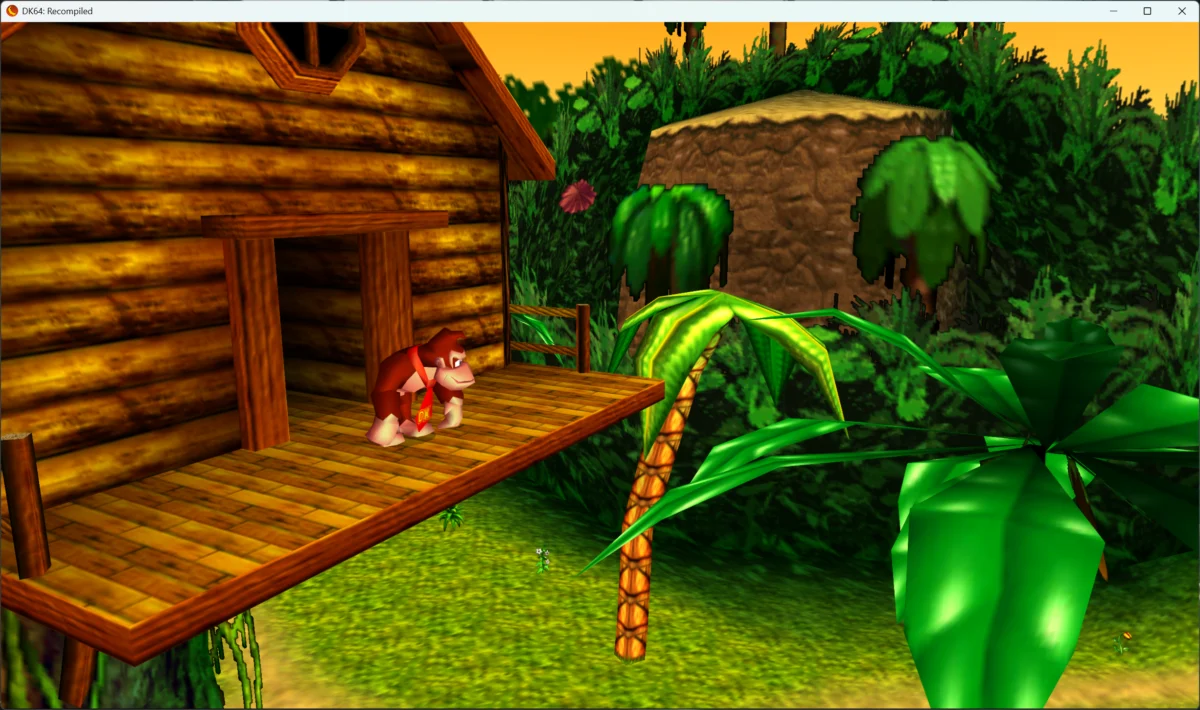
In the rapidly evolving landscape of video game preservation, a new milestone has been reached. A dedicated team of veteran developers—comprising Rainchus, Ballaam, Killklli, 2dos, and Umedtakes—has successfully achieved what many once considered a monumental, if not impossible, task: the full, native porting of the Nintendo 64 classic Donkey Kong 64 to modern hardware.
Dubbed DK64: ReKONGpiled, this project represents a significant departure from traditional emulation. By reverse-engineering the original N64 machine code and recompiling it into C, the team has enabled the game to run natively on x86 and ARM-based architectures. This allows Donkey Kong 64 to function as a modern PC application, bypassing the overhead, latency, and hardware constraints typically associated with emulators.
The Core Achievement: Native Execution vs. Emulation
To understand the gravity of this achievement, one must distinguish between "emulation" and "recompilation." Emulators simulate the original N64 hardware on a modern computer, which often requires significant processing power to translate instructions and manage timing, frequently resulting in inaccuracies or "hiccups."
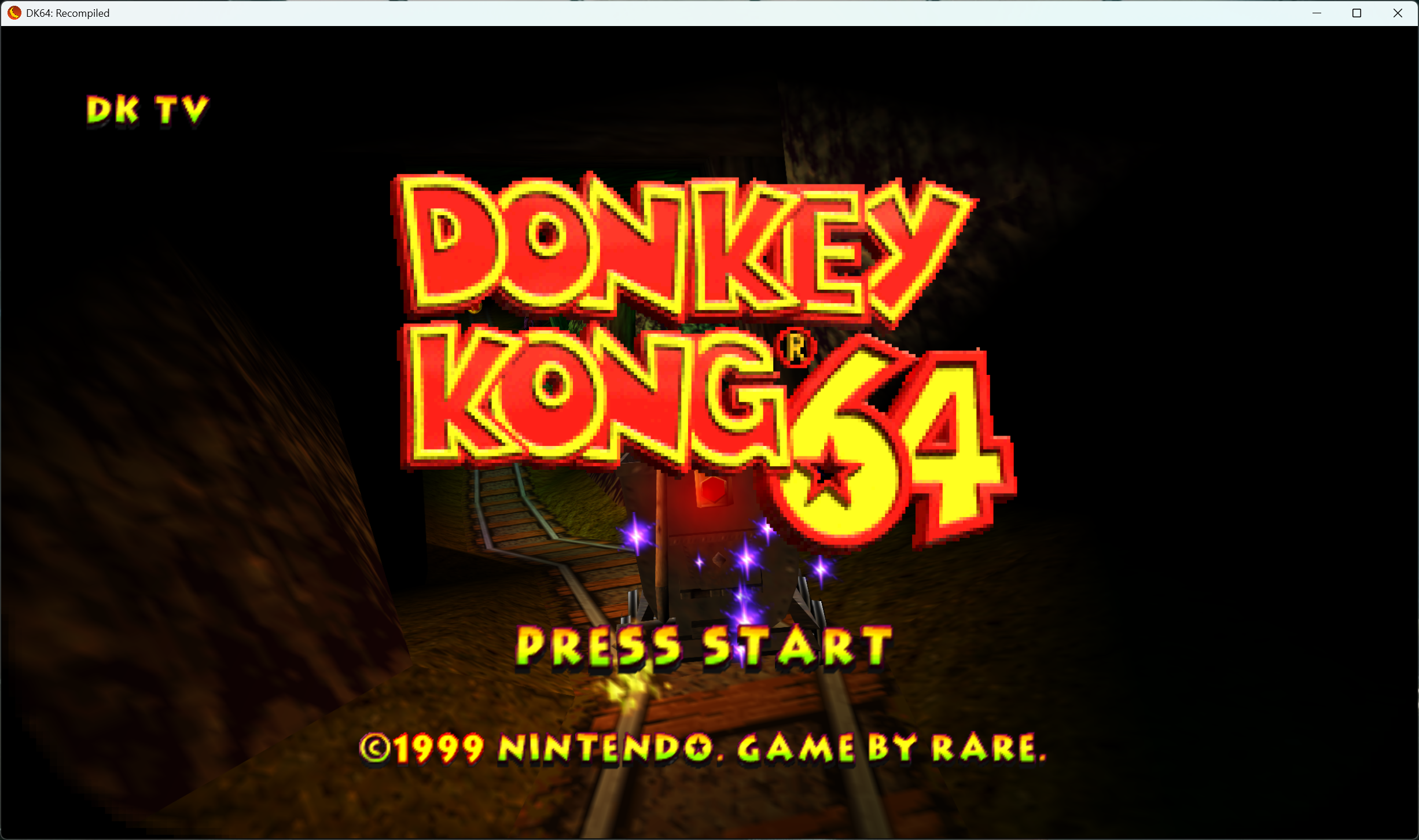
DK64: Recompiled takes a different, far more labor-intensive route. By utilizing the open-source "N64: Recompiled" framework created by developer Wiseguy and leveraging the RT64 rendering engine, the team has effectively "translated" the game’s assembly code into a language that modern CPUs can execute natively. The result is an experience that feels indistinguishable from a modern PC title. The game runs with near-zero latency, near-instantaneous load times, and a level of stability that emulators often struggle to replicate.
A Chronology of the Project
The journey to ReKONGpiled was not a singular event but the culmination of years of community-driven research and development.
- Foundation Phase: The core team, having previously cut their teeth on the highly successful Donkey Kong 64 Randomizer project, established the necessary expertise in the game’s complex internal engine.
- Reverse Engineering: Throughout the development cycle, the team systematically deconstructed the original machine code. This process involved identifying how the game managed memory, graphics calls, and audio processing on the N64’s proprietary hardware.
- Implementation of RT64: The integration of the RT64 renderer allowed the team to inject modern graphics features—such as high-resolution textures, improved draw distances, and widescreen support—without altering the game’s core geometry or "feel."
- Refinement: The final months were dedicated to debugging and ensuring that the game’s logic remained intact during the transition to C. This included ensuring that the game’s infamous "speed-up" issues—often a side effect of running N64 games at higher frame rates—were successfully mitigated through precise engine-level control.
- The Launch: Following rigorous internal testing, the project was released to the public, inviting users to provide their own legally acquired ROMs to initiate the compilation process.
Technical Specifications and Modern Enhancements
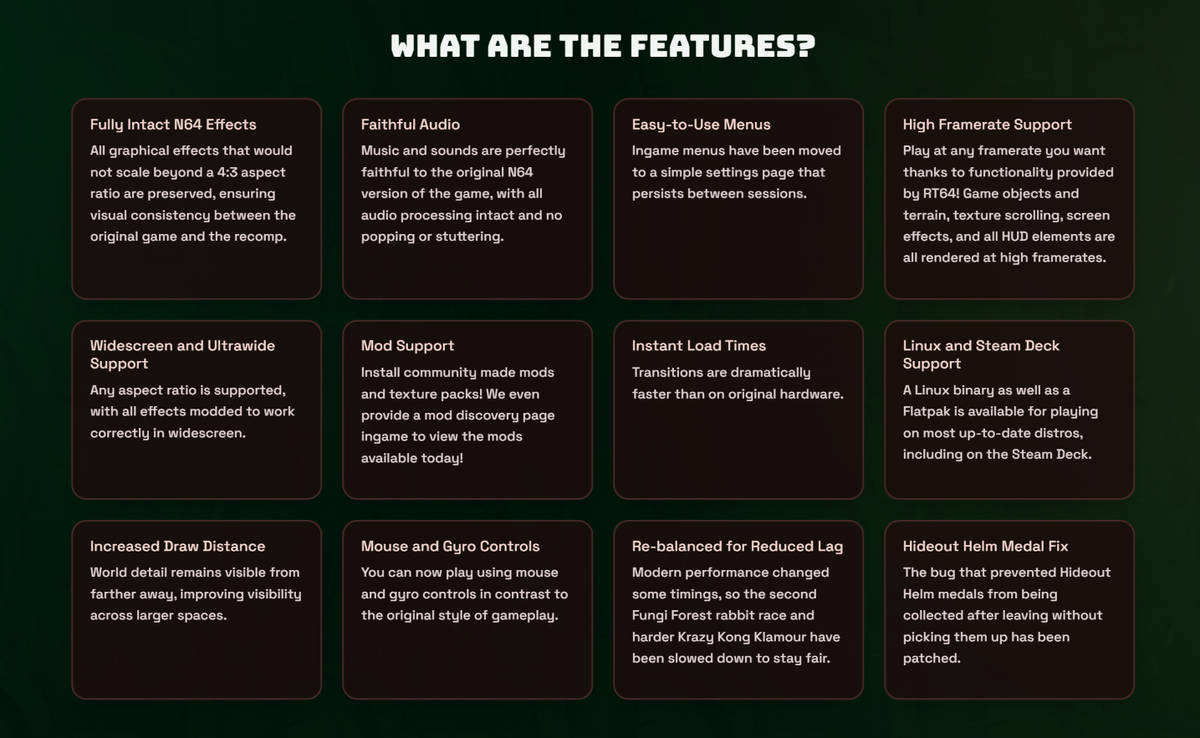
The primary appeal of DK64: Recompiled lies in its ability to bridge the gap between 1999 hardware and 2024 expectations. The project offers a suite of "Quality of Life" (QoL) improvements that transform the playability of the game.
Performance and Visuals
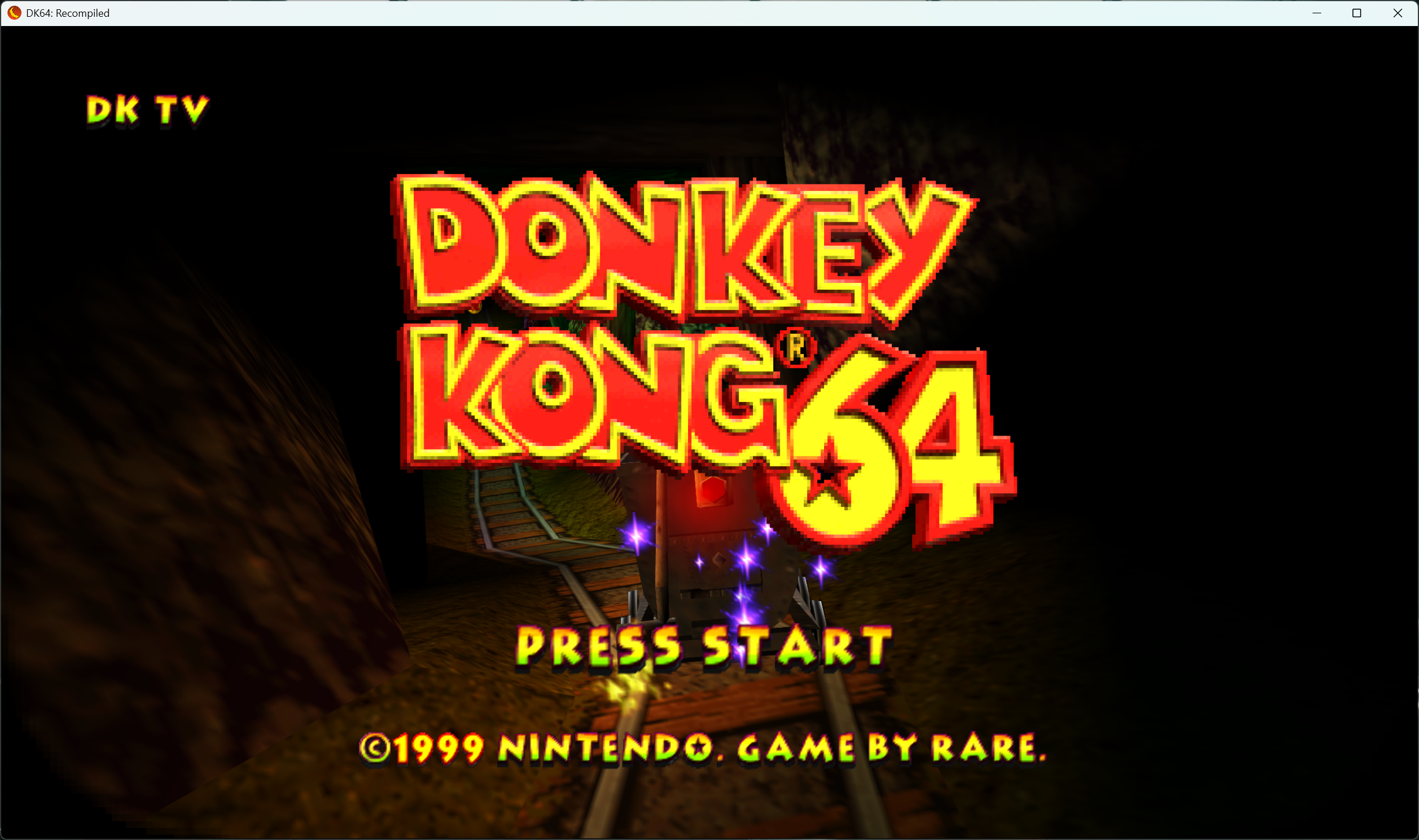
The game now supports true high-resolution output, including native ultrawide support. Players can experience the sprawling environments of DK Island without the visual constraints of the original 4:3 aspect ratio. Furthermore, the framerate is no longer capped at the N64’s standard 20–30 FPS; it can be uncapped, providing a fluid experience that was previously impossible.
Control Flexibility
The developers have implemented comprehensive input mapping. Players can now use modern keyboards and mice, or connect virtually any modern controller via Bluetooth or USB. The responsiveness is vastly superior to that of an emulator, as the native code allows for direct input polling.
Gameplay Tweaks
Beyond aesthetics, the project introduces:
- Character Switching: The option to swap between the five Kongs on the fly, reducing the back-and-forth travel time that characterized the original game’s progression.
- Cutscene Skipping: A feature long requested by speedrunners and casual players alike.
- Improved Camera Controls: A modernized camera system that allows for better navigation in tight, platform-heavy sections.
The Anti-AI Stance in Retro Development
In an era where "vibecoding" and generative AI are increasingly utilized to automate software development, the team behind DK64: Recompiled has taken a staunch, vocal stance in favor of human craftsmanship.
The developers have explicitly stated that their project was built entirely through manual reverse engineering and human-written code. They argue that relying on generative AI for such complex, low-level tasks would lead to unmaintainable, "brittle" code that lacks the soul and precision of a handcrafted port. By rejecting the shortcuts offered by modern LLMs, the team has ensured that the project remains modular, stable, and easy to maintain for future updates or community-created mods. This focus on "human ingenuity over AI slop" serves as a manifesto for a sector of the modding community that values the longevity and integrity of their work above the speed of production.
Implications for the Future of Preservation
The success of DK64: Recompiled sets a precedent for the future of game preservation. As the N64 era becomes more difficult to support on aging hardware, projects like this offer a viable blueprint for keeping classic games accessible.
Legal and Ethical Considerations
It is important to note that the project provides the engine and the tools for recompilation but contains no game assets. Users must provide their own "legally acquired" ROMs, a standard requirement that allows the project to navigate the complex legal waters of intellectual property. This approach mirrors other successful projects like Super Mario 64 PC, which have flourished precisely because they require the user to own the original software.
The Role of Open Source
The use of the "N64: Recompiled" framework highlights the importance of open-source collaboration. By building upon the work of others—and by making their own progress open to the community—these developers are fostering an ecosystem where retro titles can be continuously updated, modded, and improved upon indefinitely.
Community Impact
The immediate reaction from the gaming community has been overwhelmingly positive. Speedrunners, content creators, and casual fans have praised the project for its stability and the faithfulness of its enhancements. By keeping the art style and gameplay loop untouched, the team has managed to preserve the "vibe" of the original title while removing the frustrations that time has made more apparent.
Conclusion
Donkey Kong 64: Recompiled is more than just a mod or a port; it is a masterclass in software engineering and a love letter to a bygone era of gaming. By shunning the allure of automated AI tools in favor of rigorous, human-led development, the team has crafted an experience that honors the original developers at Rare while providing a playground for modern hardware.
As we look toward the future of game preservation, this project serves as a compelling reminder that the best way to keep a game alive is not merely to emulate its past, but to empower its future through native, optimized, and community-driven development. For those interested in experiencing the definitive version of this 90s classic, the project remains available via GitHub, standing as a testament to what a small, dedicated group of human programmers can achieve when they set their minds to the impossible.

 Lina Hope
 Muslim