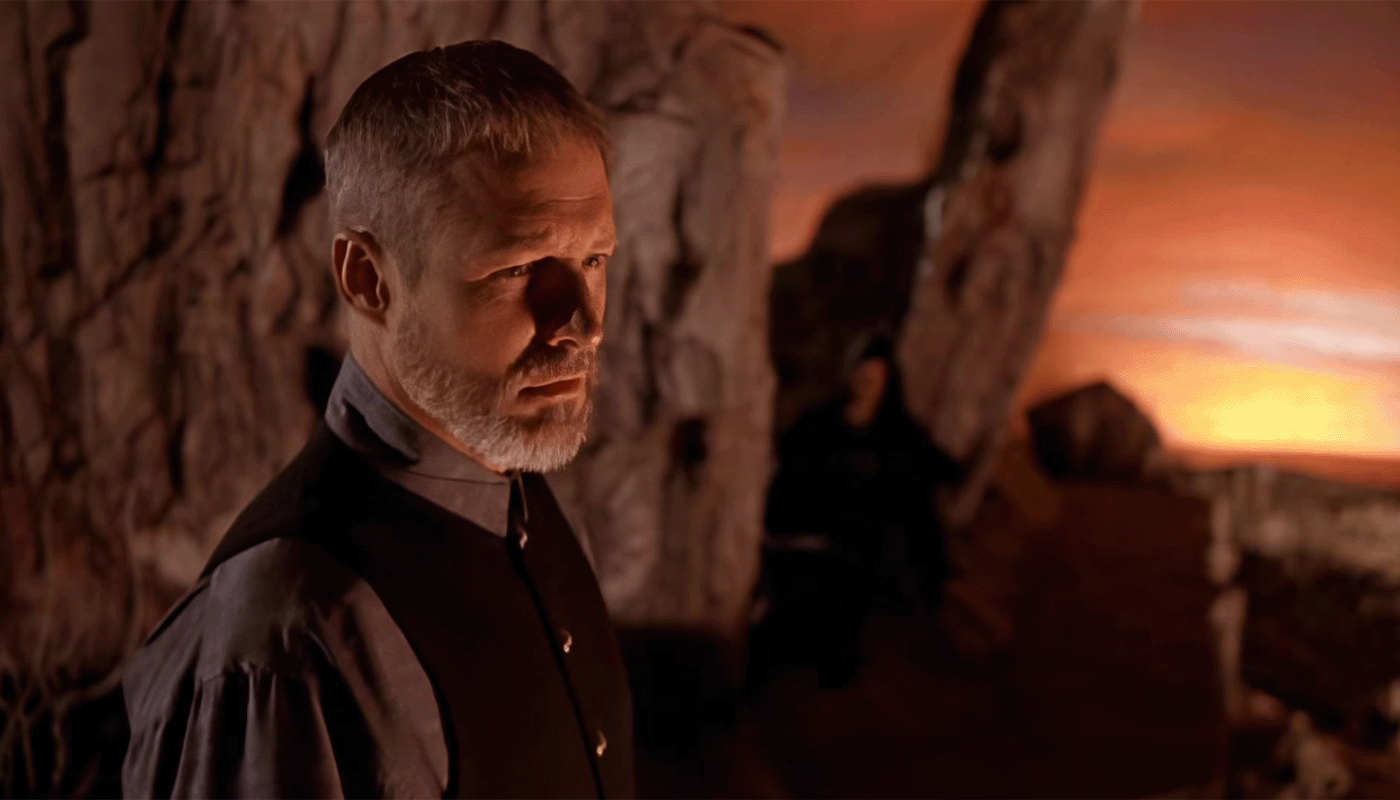
Original Air Date: January 3, 1999
Production Number: TNTCF4
Directed by: Michael Vejar
Written by: J. Michael Straczynski
The year 2266 marked a pivotal transition in the history of the Interstellar Alliance. As the galaxy celebrated the fifth anniversary of the organization, the fragile peace was shattered by the discovery of an existential threat. What began as a routine technical assessment of the cutting-edge Victory-class prototype vessels quickly devolved into a desperate, last-minute military operation to prevent the annihilation of Earth. This retrospective examines the events of the "A Call to Arms" crisis, the emergence of the mysterious techno-mages, and the subsequent dawn of the Drakh plague.
Main Facts: The Excalibur Initiative
The Interstellar Alliance, under the leadership of President John Sheridan, sought to secure the future of the member worlds by commissioning a new class of warship. The Excalibur and the Victory were designed as the pinnacle of military engineering, incorporating a hybrid synthesis of Human, Minbari, and Vorlon technology.
Overseen by Michael Garibaldi, now heading the civilian-industrial efforts of Edgars Industries, the project was intended to act as the primary defense against potential incursions following the dissolution of the Shadow threat. However, the project was compromised by internal sabotage. The site supervisor, Drake, proved to be an operative working against the interests of the Alliance, intentionally delaying construction and awaiting a signal to betray the fleet.
Chronology of the Crisis
The Precursor: Visions and Omens
The crisis was preceded by a series of unsettling, shared hallucinations. President Sheridan, the thief Dureena Nafeel, and EarthForce Captain Leonard Anderson all experienced identical, cryptic visitations from the techno-mage Galen. These visions depicted the desolate, ruined world of Daltron VII—a planet destroyed in a weapons test. Galen’s role in these events remains a subject of debate among historians; while the techno-mages had ostensibly withdrawn from galactic affairs during the Shadow War, Galen clearly defied this mandate to warn of the impending Drakh assault.
The Gathering at Daltron VII
Acting on these visions, Sheridan commandeered the two prototype vessels. Joined by Nafeel and Captain Anderson of the EAS Charon, the group traveled to Daltron VII. There, they uncovered the body of a Drazi operative, who had also been guided by the visions. A data crystal recovered from the Drazi confirmed the horrific truth: the Drakh, survivors of the Shadow War, had secured a remaining Shadow "planet-killer" weapon.
The Siege of Earth
Upon returning to the proximity of Earth, the Excalibur and Victory were met by a massive, hostile Drakh fleet. The battle that ensued proved to be one of the most significant naval engagements of the late 23rd century. Dureena Nafeel’s intimate knowledge of tactical infiltration proved decisive; she identified the command node of the planet-killer within the Drakh formation. Captain Anderson executed a daring suicide ramming maneuver with the Victory, successfully destroying the weapon and saving Earth from total incineration.
Supporting Data: Technological and Tactical Analysis
The Prototype Capabilities
The Excalibur-class vessels represented a quantum leap in defensive technology. While their primary energy weapons mirrored the efficiency of the established White Star fleet, their secondary "level two" weaponry provided an overwhelming surge of firepower. However, this power output came at a significant cost: a total, albeit temporary, loss of ship-wide power for sixty seconds following activation—a vulnerability that could have proved fatal had the tactical situation not been managed with extreme precision.
The Role of the Thieves Guild
The integration of Dureena Nafeel into the mission highlights the unconventional nature of the Alliance’s intelligence gathering at the time. Her affiliation with the Thieves Guild—a secretive, underground network operating on Babylon 5—provided the necessary unconventional tactics to identify the Drakh weak point. Her presence underscored the reality that the formal military structures of the Interstellar Alliance were often insufficient to counter the remnants of the Shadow menace.
Official Responses and Political Fallout
The Telepath War and Earth’s Isolation
It is essential to note that these events occurred in the wake of the "Telepath War," a conflict that remains shrouded in administrative ambiguity. The political climate of Earth was highly volatile, with internal factions still reeling from the civil war against President Clark. Captain Anderson, having previously supported the Clark administration, viewed his involvement in this crisis as a necessary redemption for his past loyalties.
The Drakh Plague: A New Front
The defeat of the planet-killer was not a total victory. In a final, vindictive act of asymmetric warfare, the Drakh released a bio-engineered plague specifically designed to target the human genome. Earth was placed under immediate, indefinite quarantine. The prognosis was dire: without a cure, the entire human population of Earth would face extinction within five years.
This development shifted the entire focus of the Interstellar Alliance. The Excalibur, now the sole remaining vessel of its class, was reassigned from a combat role to a scientific and exploratory mission. Its primary objective became the search for a cure, marking the beginning of the crusade that would define the final years of the 23rd century.
Implications: The Legacy of "A Call to Arms"
The crisis surrounding the Excalibur and the subsequent infection of Earth fundamentally altered the power structure of the Interstellar Alliance. Several key implications have been identified by contemporary scholars:
- The Failure of Traditional Intelligence: The fact that the Drakh threat was identified through the dreams of a techno-mage, rather than through standard EarthForce or Alliance deep-space reconnaissance, highlighted a critical failure in military intelligence.
- The Shift to Biological Warfare: The Drakh plague represented a pivot from the overt, massive destruction favored by the Shadows to the subtle, slow-motion annihilation of a species. This forced the Alliance to prioritize medical and xenobiological research over conventional fleet expansion.
- The End of the "White Star" Era: While the White Star fleet remained the backbone of the Alliance, the loss of the Victory and the modification of the Excalibur into a mobile research facility signaled that the era of total war had been replaced by a more complex, investigative era of statecraft.
A Final Note on Command
The transition of Michael Garibaldi from his role at Edgars Industries back to his roots in security and field operations served as a microcosm for the Alliance itself: when faced with the "one" that threatens all, the administrative layers of government fall away, leaving only those willing to stand on the front lines. The actions of Sheridan, Anderson, and their crew during the defense of Earth remain the foundational mythos of the post-war era. As we look back on the events of 2266, it is clear that "A Call to Arms" was not merely a military victory; it was the prologue to a struggle that would determine whether humanity would survive or fade into the silence of a dead world.
Historical Footnote: This retrospective acknowledges the contributions of the late Tony Todd (Captain Anderson) and Jerry Doyle (Michael Garibaldi), whose performances during this critical historical juncture remain etched in the collective memory of the Interstellar Alliance.