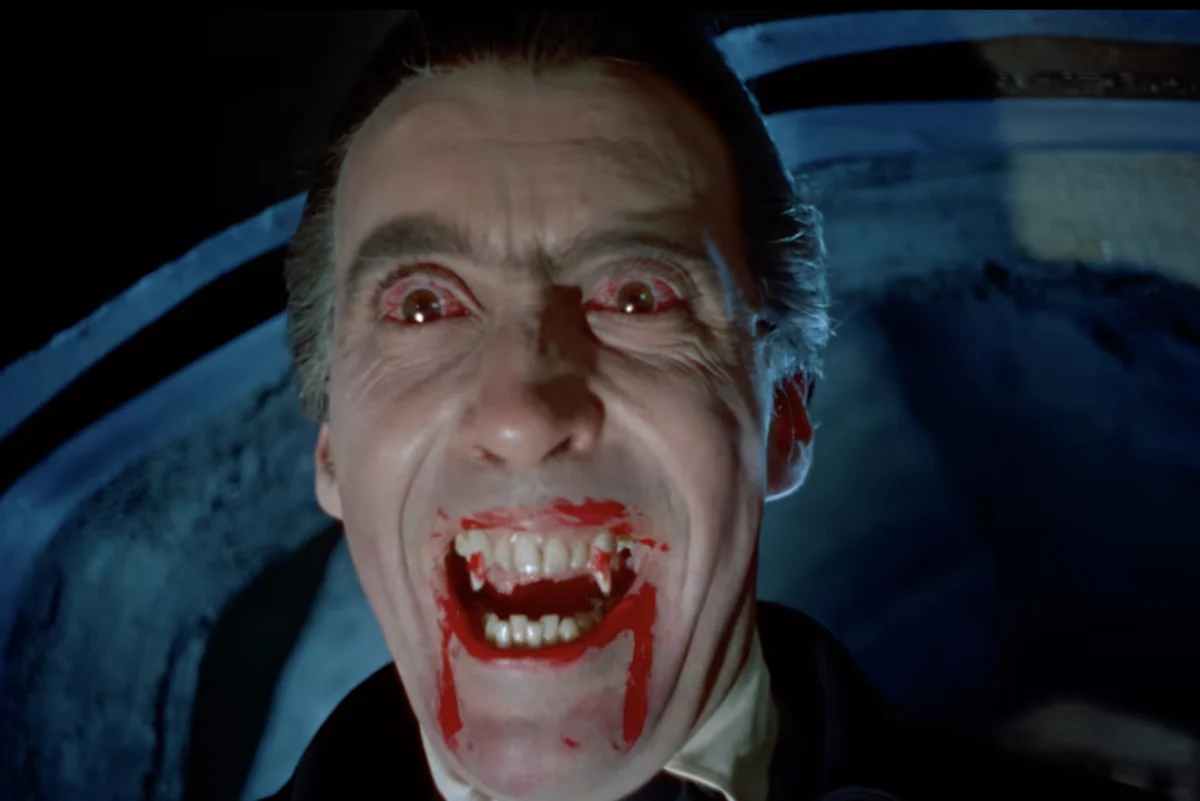
In the annals of cinematic history, few films have cast a shadow as long—or as sharp—as Terence Fisher’s 1958 masterpiece, Horror of Dracula. Starring the legendary duo of Christopher Lee as the titular Count and Peter Cushing as the relentless Dr. Van Helsing, the film did more than just retell a Bram Stoker classic; it fundamentally redefined the Gothic horror genre for a new generation. Now, over six decades later, Hammer Films has announced an unprecedented cinematic event: the release of a 4K remastered edition that finally restores the film to its complete, original director’s cut, incorporating footage that has remained unseen by Western audiences for over 60 years.
Main Facts: The Return of the Complete Count
The announcement, which has sent waves of excitement through the horror community, confirms that the upcoming 4K release will include approximately three minutes of footage previously excised by censors and distributors upon the film’s initial U.S. and U.K. release. During the mid-20th century, the British Board of Film Censors (BBFC) and various international distribution boards were notoriously stringent, often demanding cuts to scenes deemed too risqué, violent, or morally transgressive.
While domestic audiences were forced to settle for a sanitized version of Fisher’s vision, Japan famously received the original, unedited cut in 1958. For decades, film archivists and enthusiasts believed the specific segments removed from the Western version were lost to time. However, a recent discovery in a Warner Bros. warehouse has brought these "pristine reels" back into the light. This definitive version, meticulously restored, promises to offer a seamless experience of the film as it was intended to be seen by Terence Fisher, Jack Asher, and the entire Hammer production team.
A Chronology of Censorship and Recovery
To understand the magnitude of this release, one must look back at the cultural climate of the late 1950s. Hammer Films was operating on the cutting edge of visceral horror, moving away from the more restrained, atmospheric Universal Monsters style toward a more vibrant, blood-soaked aesthetic.
- 1958 (The Original Vision): Terence Fisher directs Horror of Dracula with a focus on intensity and color-rich cinematography. The director’s cut is completed and shipped to various international markets, including Japan.
- 1958 (The Scissors of Censure): Upon arriving in the U.K. and the U.S., the film faces pressure from conservative distribution boards. Approximately three minutes of footage—focusing on specific character interactions and the more "improper" displays of supernatural menace—are removed.
- 1959–2023 (The Lost Years): The edited version becomes the standard for all home media releases, including VHS, DVD, and early Blu-ray formats. The missing footage is presumed destroyed or permanently sequestered in studio vaults.
- 2024 (The Discovery): Archivists working with Hammer Films discover the original, uncut reels in a Warner Bros. archive. The restoration process begins, utilizing high-dynamic-range (HDR) scanning to ensure the 4K transfer matches the original aesthetic of the 35mm film stock.
- September 2024 (Pre-orders): Hammer Films opens pre-orders for the limited edition physical media release.
- October 2024 (The Premiere): The 4K restored director’s cut is scheduled for wide release, marking the first time in over 60 years that the complete film is available to the public.
Supporting Data: The Technical Marvel of Restoration
The restoration process has been a labor of love, overseen by Steve Rogers, who manages the extensive Hammer film archives. In a recent Q&A session, Rogers emphasized that this is not merely an "upscale" of the existing print, but a full-scale digital reconstruction from the best possible source material.
"Jack Asher’s cinematography has been graded to the same color palette that he used in The Curse of Frankenstein," Rogers explained. "It runs to the full and complete length that Terence Fisher created in 1958. It’s an order of magnitude better-looking than previous releases, and the definitive version of this groundbreaking classic."
The technical specifications of the release are particularly noteworthy. By utilizing the original color palette as a reference, the restoration team has avoided the "teal and orange" tinting common in modern digital color grading, instead opting for the rich, deep reds and saturated blues that defined Hammer’s unique look. The inclusion of the "lost" three minutes required the team to perform frame-by-frame cleaning, color matching, and digital grain management to ensure that the previously cut scenes transition seamlessly into the existing footage.
Official Responses and Industry Impact
The announcement has garnered support from both film preservationists and industry professionals. The decision by Warner Bros. to allow Hammer Films access to these archives signifies a growing trend in corporate stewardship, where historical film preservation is increasingly prioritized over commercial expediency.
Hammer Films has marketed the release not just as a product, but as a cultural correction. By reinstating the director’s cut, the studio is effectively apologizing to history for the compromise of artistic vision that took place in 1958. Industry analysts suggest that this could set a precedent for other studios, encouraging them to audit their own vaults for "missing" footage of classic films that were victims of mid-century censorship.
"We aren’t just releasing a movie," a representative from the restoration team noted. "We are restoring a piece of British cinematic heritage. When you see these three minutes, you aren’t just seeing ‘more’ footage; you are seeing the character dynamics and the pacing that Terence Fisher fought to keep on screen."
Implications: Why This Matters to Horror History
The cultural impact of Horror of Dracula cannot be overstated. It was the film that solidified Christopher Lee as the definitive Dracula for the modern era and showcased Peter Cushing’s ability to anchor a horror film with intellectual gravitas. The missing three minutes are not mere "gory shots"; they contain crucial moments of character development, tension building, and the specific narrative beats that connect the film’s climax to the rest of the story.
By finally viewing the director’s cut, film historians and fans alike will be able to re-evaluate the film’s narrative structure. Critics have long argued that the pacing of the original 1958 cut felt slightly disjointed in the final act—a common side effect of heavy-handed editing. With the return of the missing footage, the film’s internal logic and the arc of Van Helsing’s pursuit of the Count are expected to be much tighter, potentially shifting the critical consensus on the film from "classic horror" to "perfected cinematic craft."
Furthermore, this release serves as a reminder of the vital importance of physical media. In an era dominated by streaming platforms, where films can be edited, censored, or removed entirely at the whim of corporate licensing agreements, this 4K restoration stands as a permanent, tangible artifact. It ensures that no matter what the digital landscape looks like in the future, the true vision of Terence Fisher will remain preserved for posterity.
For those eager to witness this piece of history, pre-orders are currently live via the official Hammer Films website. As the October release date approaches, the excitement continues to build, proving that even after sixty years, the bite of Dracula still has the power to thrill. This is not just a trip down memory lane; it is a return to the source, a correction of a historical wrong, and the final, definitive word on a film that helped build the very foundation of modern horror cinema.