

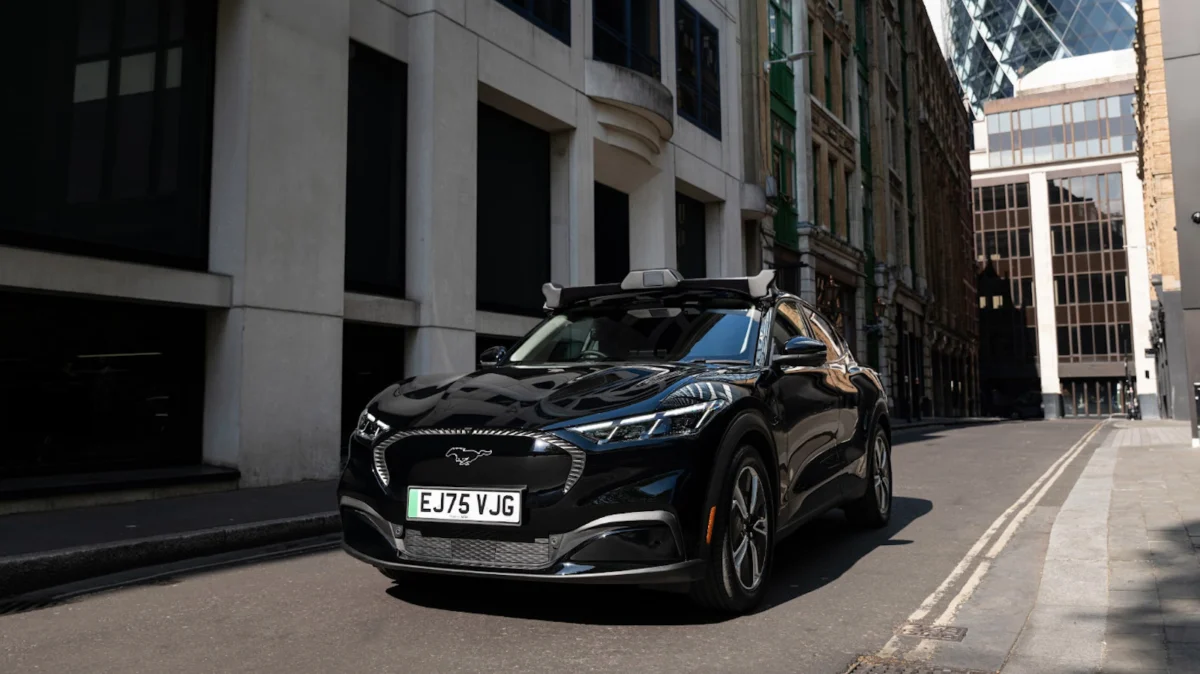
The streets of London, a complex labyrinth of historical architecture and notoriously congested traffic, have officially entered a new era of urban mobility. In a landmark development for the United Kingdom’s transport sector, Uber has officially launched its autonomous vehicle (AV) ride-hailing service in the capital. This initiative, realized through a strategic partnership with the British artificial intelligence and self-driving technology firm Wayve, marks the first time that Londoners can hail a robotaxi via the ubiquitous Uber application.
This move signals a major shift in how one of the world’s most regulated cities is approaching the integration of high-stakes automation into public life. As Uber attempts to replicate the success of its autonomous programs in the United States, the London rollout serves as both a technological showcase and a test of regulatory patience.
The Core Partnership: Uber Meets Wayve
The collaboration leverages Uber’s massive, globally recognized platform and Wayve’s "AV 2.0" approach. Unlike traditional self-driving models that rely heavily on pre-mapped high-definition routes, Wayve utilizes end-to-end deep learning. This allows their vehicles to interpret complex urban environments—such as London’s unpredictable intersections and high-density pedestrian zones—by "learning" rather than merely following a set of static rules.
Passengers requesting an UberX, Uber Comfort, or Uber Electric ride in select parts of London may now be matched with a Ford Mustang Mach-E equipped with Wayve’s proprietary sensor suite and software. The user experience is designed to be seamless: upon requesting a ride, the application alerts the passenger that their assigned vehicle is an autonomous unit. This notification acts as a crucial "opt-in" mechanism, ensuring that those who prefer a traditional human-driven vehicle retain the choice to decline the autonomous option.
Regulatory Hurdles and the "Human-in-the-Loop" Mandate
The path to this launch was anything but straightforward. Last month, Uber successfully secured its license to operate autonomous vehicle trials in London, a milestone that followed years of lobbying and rigorous safety assessments by the UK’s Department for Transport and local regulators.
However, this authorization comes with a significant caveat: the "human-in-the-loop" requirement. For the foreseeable future, every autonomous Uber in London will carry a safety driver behind the wheel. This supervisor is tasked with monitoring the vehicle’s performance and is prepared to take manual control should the AI encounter a scenario that exceeds its current operational parameters.
This regulatory stance reflects the cautious optimism of the UK government, which is eager to foster innovation in AI while maintaining stringent safety protocols. While proponents of AVs argue that human intervention is a temporary necessity, industry experts suggest it could be years before regulators permit "driverless" operations—where no human is present in the front seat—within the confines of the city’s dense center.
Chronology: From Concept to London Streets
The journey to this launch has been a decade in the making, defined by both technological breakthroughs and significant setbacks:
- 2017–2019: The Foundation: Wayve begins intensive testing of its end-to-end AI models in the UK, focusing on the ability of vehicles to generalize driving behaviors in unpredictable conditions.
- 2023: The Strategic Pivot: Uber begins expanding its AV footprint across the US, signing deals with companies like Waymo, Aurora, and Motional to diversify its autonomous offerings.
- August 2024: The Regulatory Breakthrough: Uber is granted the official license to test autonomous vehicle technology in London, setting the stage for the Wayve partnership.
- September 2024: Official Launch: The first Wayve-powered Ford Mustang Mach-Es begin accepting passenger requests in central London.
- Future Outlook (2025 and beyond): Plans are already underway to expand the fleet and eventually move toward Level 4 autonomy, pending further data collection and safety reviews.
Economic Implications: Pricing and Labor
One of the most frequent questions surrounding the integration of robotaxis is the impact on the existing ride-hailing economy. Uber has confirmed that for the duration of this pilot program, the pricing for its AV rides will mirror that of traditional, human-operated vehicles.
A notable nuance in the user experience is the tipping policy. Despite the presence of a human safety driver in the vehicle, the Uber app will not prompt passengers to provide a tip upon the conclusion of an autonomous trip. Uber has clarified that while the feature is disabled by default to emphasize the "autonomous" nature of the service, passengers who wish to express gratitude to the safety supervisor can still do so by manually navigating to their "Trip History" page.
This policy reflects the complex transition period the company is navigating. While the end goal of an autonomous fleet is to significantly lower operational costs, the current reality involves high overheads for safety drivers and the continuous R&D investment required to maintain the technology.
Global Context: Uber’s Expanding Autonomous Footprint
London is merely the latest chapter in Uber’s aggressive global strategy to corner the robotaxi market. The company’s autonomous portfolio has expanded rapidly across North America:
- Dallas, Las Vegas, and Austin: Uber has successfully integrated AV services into its ecosystem in these cities, utilizing partnerships with players like Waymo and Aurora.
- Atlanta: The company is currently building out its AV infrastructure to serve one of the largest transit hubs in the United States.
- The West Coast: Expansion plans for Los Angeles and the San Francisco Bay Area—the "cradle" of the AV industry—are currently in the final stages of planning and development.
- Tokyo: Looking beyond the Western market, Uber and Wayve have already announced plans to collaborate on a pilot in Tokyo, aiming to deploy Nissan autonomous vehicles to navigate the unique challenges of the Japanese capital’s infrastructure.
Official Responses and Industry Outlook
The industry reception to the London launch has been largely positive, albeit tempered by the acknowledgment of the immense engineering challenge that remains.
"Our partnership with Wayve is a testament to our commitment to safe, sustainable, and innovative urban transit," said a spokesperson for Uber. "By integrating Wayve’s AI into the Uber platform, we are not just providing a ride; we are stress-testing the future of mobility in one of the most demanding driving environments in the world."
Wayve’s leadership has echoed this sentiment, emphasizing that their AI-first approach is the only way to scale autonomy safely. "We aren’t just teaching a car to stay in a lane," the company stated in a recent press release. "We are teaching it to understand the nuances of human behavior, the intricacies of London’s traffic, and the dynamic nature of a living city."
Critics, however, remain vocal about the challenges ahead. Transport advocates and labor unions have raised concerns regarding the long-term impact on driver livelihoods and the potential for increased congestion if robotaxis are not properly integrated into the city’s broader public transport strategy. Furthermore, safety experts emphasize that the transition from "human-supervised" to "fully autonomous" is not a linear path but a massive technological leap that will require years of additional, incident-free data collection.
Implications for the Future of Urban Transit
The launch of Uber-Wayve robotaxis in London is more than a novelty; it is a signal of the inevitable convergence of AI and infrastructure. As these vehicles begin to navigate the streets, they will collect terabytes of data, effectively "mapping" the collective intelligence required to navigate urban chaos.
If the pilot proves successful, it could force a paradigm shift in how urban planning is conducted. Governments may eventually need to redesign traffic signaling, curb space management, and passenger pick-up/drop-off zones to accommodate a fleet of vehicles that behave differently than human-driven cars.
For the London commuter, the sight of a Ford Mustang Mach-E with sensors spinning on its roof is no longer a futuristic vision; it is a practical reality. While the human supervisor in the driver’s seat serves as a reminder that we are still in the early stages of this transition, the presence of these vehicles suggests that the era of the robotaxi has officially arrived. The next few years will determine whether this technology can truly live up to its promise of safer, more efficient, and more accessible transportation for all.











