

Whether you are lounging by a resort pool, trekking through a humid rainforest, or simply looking for a reliable soundtrack for your morning shower, the modern Bluetooth speaker has become an essential travel companion. Its portability is its greatest strength, but that same mobility exposes sensitive internal electronics to the elements. As consumers increasingly demand ruggedized gear, the market has become saturated with claims of "waterproof" and "water-resistant" capabilities. However, these terms are often used loosely in marketing materials. Understanding the true durability of your audio gear requires looking past the branding and into the technical reality of Ingress Protection (IP) ratings.
The Main Facts: Deciphering the IP Code
At the heart of every ruggedized gadget is the Ingress Protection rating system. Standardized by the International Electrotechnical Commission (IEC), the IP rating is a two-digit code designed to provide objective, verifiable data regarding a device’s resistance to external intrusion.
The first digit (ranging from 0 to 6) indicates protection against solid objects, such as dust, sand, and debris. A rating of 6 indicates that the device is "dust-tight," meaning no dust can enter under normal operating conditions. The second digit (ranging from 0 to 9) is the one that most consumers focus on: the liquid ingress protection. This scale measures how well a device keeps moisture out, ranging from simple dripping water to high-pressure, high-temperature jets.
When you see an "X" in a rating—such as IPX7—it does not mean the device has zero protection. Rather, it means the manufacturer has not formally tested or declared the dust-resistance rating. For many high-end audio manufacturers, the focus is almost exclusively on water, leading to the prevalence of the "IPX" nomenclature.
Chronology of Ruggedization: From Desktop to Adventure
The evolution of portable audio mirrors the evolution of our lifestyle. In the early 2000s, portable speakers were fragile, wired affairs that lived exclusively on desks. As Bluetooth technology matured and smartphone ubiquity rose, the demand for "anywhere" audio grew.
- The Early 2010s: The initial wave of portable speakers prioritized battery life and sound quality, with little thought given to environmental sealing. A single drop of rain was often a death sentence for a speaker.
- The Mid-2010s: Brands began to introduce "splash-proof" designs. These were rarely certified but offered basic rubber gaskets to protect ports from light humidity.
- The Late 2010s to Present: The market shifted toward formal certification. Consumers began demanding transparency. As the outdoor recreation market exploded, companies like JBL, Ultimate Ears, and Bose integrated standardized IP testing into their product development cycles, moving from "splash-proof" to "submersible."
Supporting Data: Understanding the Scale of Protection
To make an informed purchase, one must understand what these numbers actually permit. While the marketing might suggest invincibility, the reality is defined by specific testing parameters.
Understanding the Water-Resistance Spectrum
- IPX2: Offers protection against vertically falling water drops, such as light rain.
- IPX4: Protects against splashing water from any direction. This is sufficient for pool-side use where accidental splashes are common.
- IPX5: Capable of resisting sustained, low-pressure water jets.
- IPX6: Designed to withstand heavy seas or powerful jets of water.
- IPX7: The gold standard for most consumers. This indicates the device can survive immersion in up to one meter of water for 30 minutes.
- IPX8: Offers protection against long-term submersion at depths specified by the manufacturer (usually deeper than one meter).
- IPX9: The rarest of all, designed for high-pressure, high-temperature water jets. You will rarely, if ever, find this on a consumer Bluetooth speaker, as the internal seals required would drastically change the acoustic resonance of the device.
Official Responses and Industry Standards
Engineers in the audio industry often face a paradox: the more airtight a speaker is, the harder it is to achieve high-fidelity sound. A speaker requires air movement to create sound waves, and a completely sealed chamber can lead to "choking" the audio output.
Industry leaders like JBL have responded by developing sophisticated internal membranes that allow air to pass through while physically blocking water molecules. When representatives from major audio labs discuss their testing, they emphasize that an IP rating is a "snapshot" of a device’s state when it leaves the factory. They explicitly warn that gaskets degrade, rubber seals lose elasticity over time, and salt water—which is corrosive—can destroy internal seals that fresh water cannot.
Implications: The Myth of "Waterproof"
It is critical to distinguish between "water-resistant" and "waterproof." No electronic device is truly, permanently waterproof. The most common pitfall for consumers is the assumption that an IP67 rating allows for permanent underwater use.
The Saltwater Warning
Most IP testing is conducted in controlled, fresh-water environments. Salt water, however, is a different beast. The salt crystals can accumulate in the charging ports or around the speaker grille, and the ionic nature of saltwater can accelerate the corrosion of the circuit board once moisture penetrates the protective layer. If you take your speaker to the beach, the industry consensus is clear: rinse it with fresh water immediately after use to remove salt deposits.
The Impact of Physical Trauma
An IP rating is valid only as long as the device’s structural integrity remains intact. If you drop your speaker on a rock and the casing develops a hairline fracture, the IP rating is effectively void. The internal seals depend on a perfectly flush fit between the housing components.
Practical Guidance for Consumers
When shopping for your next portable speaker, apply the following rubric:
- Identify your primary use case: If you are strictly using it in the shower, IPX6 is more than enough. If you are taking it to the beach or kayaking, aim for IP67 or IP68.
- Check for "floating" capability: Some speakers are designed not just to be waterproof, but to float. This is a massive advantage if you are using the device on a lake or a pool.
- Inspect the ports: Even with a high IP rating, a device is vulnerable if the charging port is exposed. Look for models with integrated, high-quality rubberized covers for the USB-C or charging ports.
- Prioritize known brands: Because IP testing is expensive and labor-intensive, established brands are more likely to have rigorous quality control. Cheap, unbranded knock-offs often claim "waterproof" status without any actual testing or certification.
Conclusion
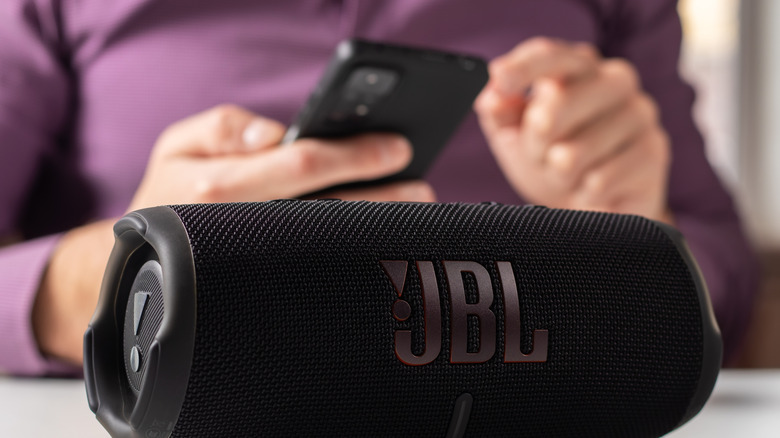
The pursuit of the perfect outdoor speaker is a balance between acoustic performance and physical resilience. While an IP68 rating, such as that found on the JBL Charge 6, represents the pinnacle of current consumer-grade durability, it should be treated as an insurance policy rather than a license to be reckless.
The "best" waterproof rating is the one that matches your lifestyle. By moving away from the marketing hype and focusing on the technical definitions of the IP scale, you can ensure your music keeps playing, whether you are facing a summer drizzle or a slip into the deep end. Remember: your speaker is a piece of precision engineering. Treat it with the respect its complexity deserves, and it will provide years of reliable service in even the most challenging environments.











