Suro Senen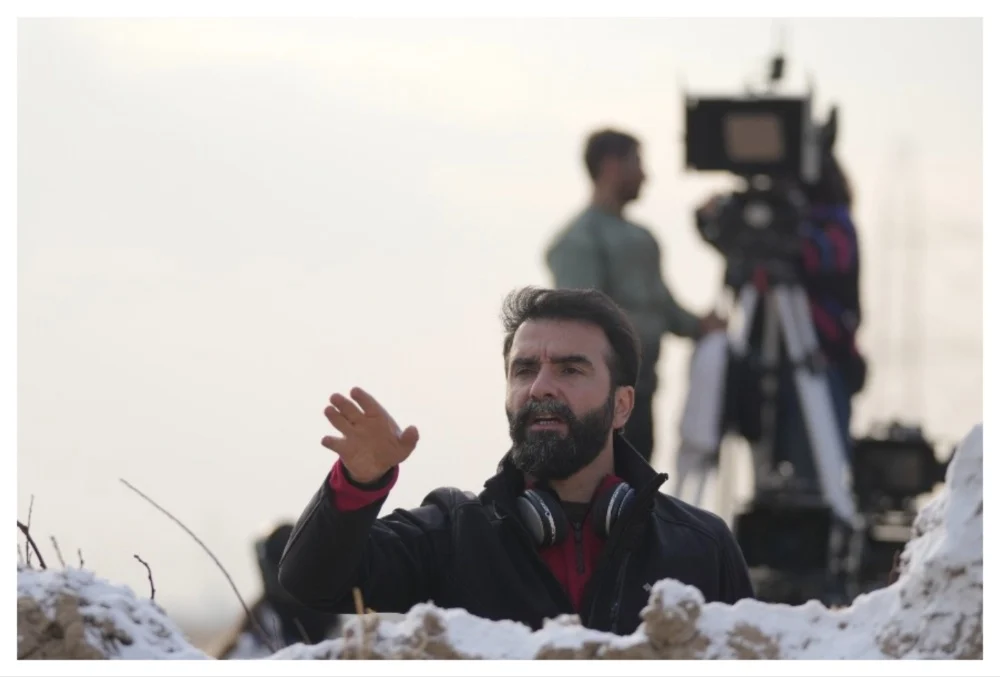
At the 81st Venice International Film Festival, the spotlight is firmly fixed on Iranian director Mohsen Gharaei. Following the world premiere of his poignant drama Falling House—which screened in the prestigious Orizzonti sidebar—Gharaei has turned his gaze toward a new, deeply personal project that promises to redefine his body of work. Titled Centrifugal Force, the upcoming film seeks to dissect the profound, often impossible dilemmas faced by contemporary Iranians, framing the current generational experience through the lens of forced migration and the disintegration of identity.
The Venice Premiere: A Prelude to Collapse
Falling House serves as a thematic bridge to Gharaei’s future work. The film, a stark and intimate portrayal of a family living on the periphery of Tehran, captures the vulnerability of the domestic sphere. The narrative follows Rashid, a patriarchal figure and prison guard, who finds himself caught in a tightening vice of conflicting pressures. As his family faces the imminent destruction of their home to make way for a massive urban redevelopment project, Rashid is simultaneously battling accusations of corruption.
The film has been hailed for its unflinching look at the precarity of life in modern Iran. By grounding the narrative in the physical destruction of a home, Gharaei mirrors the erosion of social stability, creating a microcosm of a society undergoing forced transformation. This tension between the "modest family" and the "vast redevelopment project" serves as a harrowing metaphor for the larger forces at play in the region—a theme that will be expanded upon in his next venture.
Centrifugal Force: A New Vision of Displacement
While Falling House focuses on the erosion of home from within, Centrifugal Force explores what happens when that home is irrevocably lost. The project, which is currently being presented to industry professionals at the Venice Production Bridge, is described by Gharaei as a "deeply human story about what happens when the home you love is no longer a place you can return to."
To be shot in an undisclosed location outside of Iran, the production will feature a bilingual script in Farsi and English. The casting process is currently underway, with producers seeking to assemble an ensemble of both Iranian and international talent.
The Philosophy of the Exile
In a profound and moving director’s statement, Gharaei, who is currently living in exile, reflected on the physical and psychological toll of his journey. "After finishing my latest film, I found myself on an unexpected journey from one geography to another," he wrote. "But migration is not simply a matter of moving from one place to another; it is a moment when a person is suddenly pushed out of the center of their own life. The journey becomes most painful when departure is not a choice, when all familiar paths close, one by one, and suddenly you have to leave a home that you still love."
Gharaei posits that the "centrifugal force" referenced in the title is the psychological mechanism that pulls an individual away from their core—the point of attachment—without the guarantee of a destination. It is a state of being "weightless as hay," stripped of the anchors of geography, memory, and habit.
The Geopolitical Context: Stability and Its Discontents
Centrifugal Force aims to chronicle the lives of a family that remained in Iran long after others had chosen to leave. They represent a demographic defined not by contentment, but by a stubborn, fragile hope that life could be constructed amidst systemic contradictions.
"They have held onto staying and created a sense of order for themselves within a system they believed to be stable," Gharaei notes. "But in a geography like Iran, where the line between simply surviving and truly living can shift without notice, no sense of order is ever completely safe."
The film intends to interrogate the moment of transition—the tipping point where the familiar rules of the "home" system fail to apply in a foreign environment. The director suggests that the trauma of migration is twofold: it is the physical loss of the country, and the subsequent "collapse" of the domestic order once the family unit is uprooted. The distance, he argues, does not just separate the family from their homeland; it exposes the fissures in their relationships, reopening old wounds and challenging the perceptions they held of one another.
Production Dynamics: A Transnational Effort
The ambitious scope of Centrifugal Force is being managed by a team that understands the weight of these themes firsthand. The film is produced by Milad Khosrav, an exiled Iranian producer operating out of Istanbul through his banner, Seven Springs Pictures. Khosrav’s collaboration with Academy Award-winning producer Odessa Rae—known for her impactful work on Navalny and The Voice of Hind Rajab—underscores the international significance of the project.
By leveraging the Venice Production Bridge, the producers are signaling that while the story is deeply rooted in the Iranian experience, its themes of displacement, the loss of home, and the search for belonging possess a universal resonance that transcends borders.
Implications: The Future of Iranian Cinema in Exile
The trajectory of Mohsen Gharaei’s career offers a compelling look at the evolving nature of Iranian cinema. As more filmmakers find themselves working outside of Iran, the thematic focus of their work is shifting. There is a move away from the traditional, localized dramas that defined the "Iranian New Wave" and toward a more diasporic perspective—one that grapples with the hyphenated identity of the exile.
The Question of Identity
The core inquiry of Centrifugal Force—what truly connects a family once the geography of home is removed?—is a question that many in the Iranian diaspora are currently forced to answer. Is it memory? Is it shared habit? Or is it something more ephemeral, something for which, as Gharaei notes, "they have no name"?
By bringing this story to the screen, Gharaei is not merely documenting a personal or political crisis; he is contributing to a growing archive of "exile literature" and cinema. This work challenges audiences to consider the cost of survival in a world where the center cannot hold.
Conclusion: A Witness to History
As Centrifugal Force moves into development, it stands as a testament to the resilience of the artistic spirit under duress. Mohsen Gharaei’s transition from the local struggles depicted in Falling House to the existential migration of his upcoming film mirrors the broader reality of a generation caught between the past they love and a future they are forced to invent.
The film promises to be a stark, unflinching look at the mechanics of loss. Whether it successfully captures the "impossible choices" facing Iranians today remains to be seen, but the intent is clear: to map the emotional geography of those who have been cast out of their own lives, and to find the humanity in the weightlessness that follows. In the halls of the Venice Film Festival, Gharaei has already succeeded in doing one thing: ensuring that these voices, and these questions, cannot be ignored.


 Jia Lissa
 Siti Muinah