

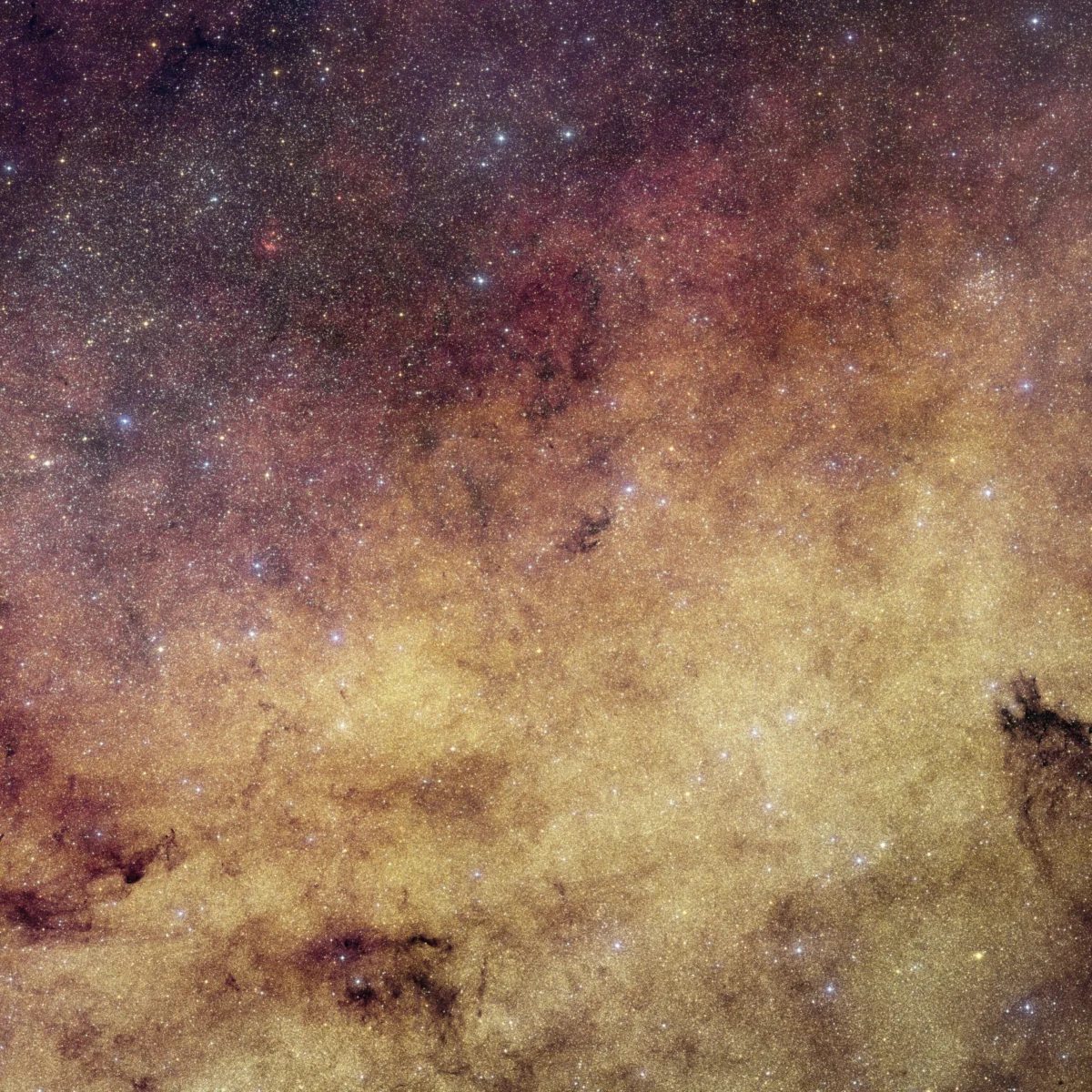
In a monumental achievement for modern astrophysics, the European Space Agency’s (ESA) Euclid space telescope has unveiled the most expansive and granular visible-light image ever captured of the Milky Way’s galactic bulge. This sprawling mosaic, a visual tapestry woven from over 60 million individual stars, nebulae, and dense star clusters, represents more than just a feat of photography; it provides an essential baseline for the next generation of exoplanetary research and galactic evolution studies.
By peering into the chaotic, light-saturated heart of our galaxy, Euclid has demonstrated that its capabilities extend far beyond its primary mission of mapping the dark universe. This endeavor has effectively turned the telescope into a high-precision celestial archive, offering scientists a "time capsule" of stellar positions that will be indispensable for future space missions.
The Power of Precision: A Technical Marvel
Euclid was engineered with a specific, Herculean task in mind: to observe billions of distant galaxies across vast stretches of time and space to better understand the dark matter and dark energy that dictate the structure of the cosmos. However, the mission’s visible-light camera has proven to be a versatile tool capable of handling the extreme environmental challenges of the galactic center.
The galactic bulge is one of the most densely populated and intensely luminous regions in the Milky Way. Traditionally, observing this area with high-resolution clarity has been difficult, as the sheer density of stars can overwhelm sensitive sensors, leading to "blooming" or loss of detail. Euclid, however, managed to resolve individual stars within this luminous maelstrom without being blinded by the brilliance of its subjects.
The resulting mosaic is a testament to the telescope’s efficiency. Composed of nine separate "pointings"—each covering an area of the sky significantly larger than the full moon—the image was captured in a remarkably short window of 26 hours. When compared to the capabilities of other world-class observatories, the disparity is stark: while the Hubble Space Telescope can match the quality of Euclid’s resolution, it would take exponentially longer to capture a field of view of this scale. In fact, estimations suggest that the Keck Observatory in Hawaii would require approximately 2,000 hours of continuous observation to produce a mosaic of equivalent breadth and detail.
Chronology: A 26-Hour Odyssey
The data collection process, which took place on March 23, 2025, was a masterclass in orbital choreography. The mission team carefully selected the galactic bulge as a target to maximize the scientific utility of the telescope’s sensitive instrumentation.
- Pre-Observation Phase: Scientific teams spent months calculating the optimal alignment for the nine pointings, ensuring that the overlap between each exposure would allow for a seamless, continuous mosaic.
- March 23, 2025: The Euclid telescope shifted its gaze toward the center of the galaxy. Over the course of 26 hours, the spacecraft executed a series of precise maneuvers, holding its position with sub-arcsecond stability to prevent motion blur across its wide-field camera.
- Data Processing: Following the capture, the raw telemetry was transmitted back to Earth, where supercomputers at the ESA’s European Space Astronomy Centre (ESAC) processed the multi-gigabyte data set to stitch together the 60-million-star mosaic.
- The Reveal: Following rigorous calibration and verification, the final image was released to the global scientific community, offering an unprecedented view of the galactic core.
Supporting Data: Why the Galactic Center Matters
The galactic center is a natural laboratory for gravitational microlensing—a phenomenon that occurs when a foreground object (a lens), such as a star or a planet, passes in front of a more distant star. As the lens moves, its gravity bends and magnifies the light of the background source.
"To catch microlensing, you need to observe parts of the sky that are crowded with stars, such as close to the centre of our galaxy," explains Jean-Philippe Beaulieu, the lead researcher for the observing campaign. The data provided by Euclid acts as a critical reference point for these events. By knowing exactly how these star fields appeared before a lensing event occurs, scientists can strip away noise and background interference, allowing them to calculate the mass of the lensing planet with a precision previously thought impossible.
To date, nearly 300 exoplanets have been discovered via ground-based microlensing. Euclid’s new image alone contains 51 known planetary systems, providing a "gold standard" reference that will facilitate the validation of these systems and the discovery of new ones as telescopes like the Nancy Grace Roman Space Telescope come online.
Implications for Future Missions
The impact of this observation is not limited to current research. Perhaps the most significant aspect of the Euclid project is its role as a precursor for the Roman Space Telescope, which is scheduled to launch later this year.
"In 24 hours, Euclid has already captured the stars involved in all the future microlensing events that the Roman space telescope will detect, but before the stars and planets involved have aligned," notes Natalia Rektsini, who led the publication of the data. This "pre-alignment" imagery is invaluable. Because microlensing events are transient—often lasting only a matter of weeks—having a permanent, high-resolution record of the "before" state allows researchers to isolate the gravitational effects of planets with much greater clarity.
By serving as a reference archive, Euclid is effectively de-risking future missions. It ensures that when the Roman telescope detects a flickering change in brightness in the crowded bulge, researchers can immediately consult the Euclid data to confirm the background star’s baseline state, thereby accelerating the confirmation process for new exoplanets.
Official Responses and Scientific Vision
The scientific community has lauded the project as a major milestone. ESA’s Euclid project scientist, Valeria Pettorino, emphasized the versatility of the data during the announcement. "In just 24 hours, Euclid has delivered unique data on the Milky Way’s center, with a large and sharp view of this region," she said.
Beyond exoplanets, the team expects the data to yield breakthroughs in several other areas of stellar astrophysics:
- Brown Dwarf Studies: The high sensitivity of the image allows for the detection of faint, substellar objects that are otherwise obscured by the glare of the galactic core.
- Binary Star Evolution: By observing the orbital movements of binary pairs within the bulge, astronomers can refine models of stellar mass transfer and evolution.
- Stellar Dynamics: The mosaic serves as a snapshot of stellar motion. By comparing this data with future observations, scientists will be able to map the complex "dance" of stars within the galaxy’s gravitational well.
- Galactic Dust Mapping: The high-resolution light data helps researchers model the distribution of interstellar dust, which often hides the true nature of the galactic bulge from traditional telescopes.
A New Era of Galactic Exploration
The success of this observation underscores a shift in how space agencies approach large-scale surveys. Instead of designing telescopes for a singular, narrow purpose, the modern trend—exemplified by Euclid—is to build multi-functional instruments that can serve as archives for the entire astronomical community.
As we look toward the future of space exploration, the collaboration between Euclid and the upcoming Roman Space Telescope marks the beginning of a "Golden Age" for exoplanetary science. By documenting the chaotic heart of the Milky Way with such meticulous detail, ESA has not only provided a stunning portrait for the public but has also laid the foundation for decades of discovery. The 60 million stars captured in this mosaic are no longer just points of light; they are individual targets in a grand quest to understand our place in the galaxy, the diversity of planetary systems, and the underlying mechanics of our universe.
In the years to come, as researchers continue to mine this treasure trove of data, the 26 hours spent by Euclid in March 2025 will likely be remembered as the moment we finally gained the clarity required to truly read the history of the Milky Way’s center.











