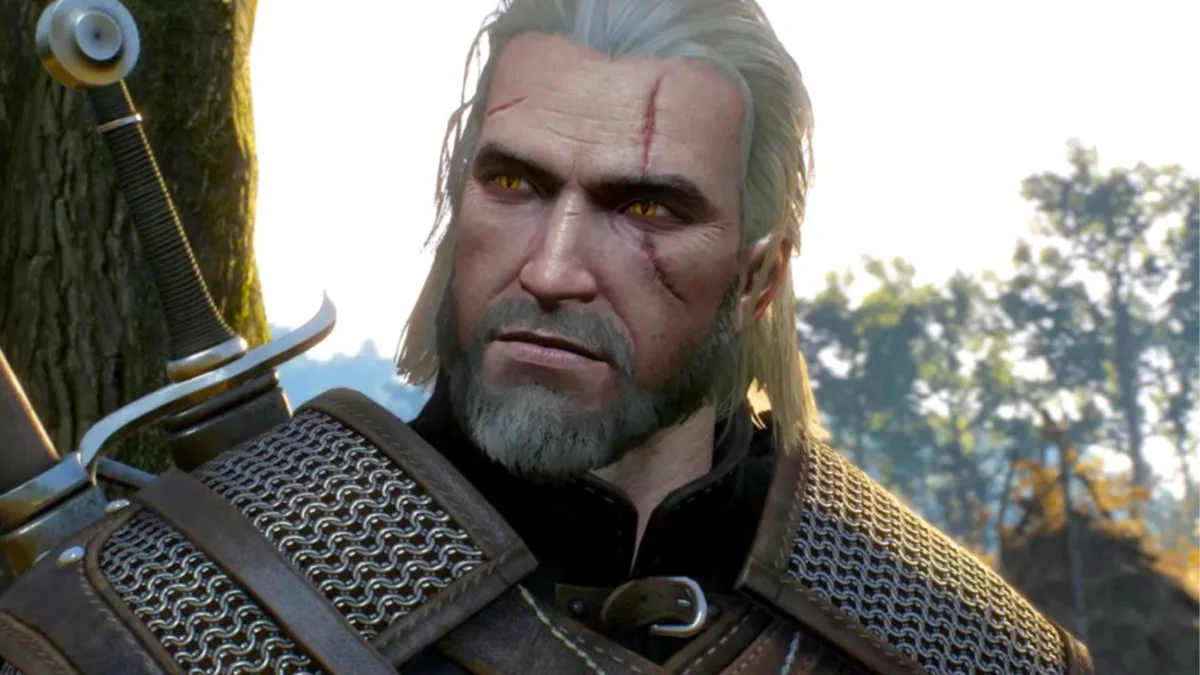
The highly anticipated ground-up remake of the 2007 classic The Witcher has hit a strategic roadblock. Fans who have been eagerly awaiting a modernized return to the origin story of Geralt of Rivia will have to temper their expectations, as development on the title has been effectively put on hold. According to recent disclosures, the project, helmed by Fool’s Theory under the stewardship of CD Projekt Red (CDPR), is tethered to the technological and procedural evolution of the upcoming The Witcher 4 (codenamed Project Polaris).
This development pause is not a sign of cancellation or a lack of commitment; rather, it is a calculated, albeit frustrating, side effect of CD Projekt Red’s new, integrated production model. As the studio shifts its entire architecture toward a unified engine and asset pipeline, the remake is currently waiting for the “parent” project to establish the technical foundation upon which it will be built.
The Strategic Interdependency: Why the Remake Must Wait
The core reason for this hiatus lies in the transition from CD Projekt Red’s proprietary REDengine to Unreal Engine 5. By choosing to standardize its future library on Epic Games’ industry-leading engine, CDPR has opted to share tools, assets, and pipelines across multiple projects.
For The Witcher Remake, this means it is not being developed in a vacuum. The game is essentially waiting for The Witcher 4 to finish the heavy lifting of establishing the "Witcher experience" in Unreal Engine 5. CD Projekt Red confirmed this in a recent statement to GameSpot, clarifying that the integration is a necessity of the production process.
“The Witcher Remake will be built on the foundation laid by The Witcher 4,” a CDPR representative noted. “We need to have the necessary assets, tools, and pipelines ready for efficient development.”
In essence, Fool’s Theory cannot build the house until CD Projekt Red has finished designing the blueprints, the specialized tools for construction, and the materials themselves. If they were to proceed independently, they would risk creating a product that is incompatible with the studio’s long-term technical standards or, worse, they would have to redo significant portions of the work once the core Witcher 4 tech is finalized.
A Chronology of the Project’s Evolution
To understand how we reached this point, we must look at the timeline of CD Projekt Red’s "multi-project" shift.
- 2022: The Announcement: In October 2022, CD Projekt Red officially unveiled Canis Majoris—the codename for the remake of the original The Witcher. The announcement shocked and delighted the community, as the 2007 title, while iconic, had become notoriously difficult to play due to its aging mechanics and outdated engine.
- The Partnership with Fool’s Theory: It was revealed that Fool’s Theory, a studio composed of veteran developers who worked on the original Witcher games, would be taking the lead. This was seen as a "safe pair of hands" approach, ensuring the soul of the original game remained intact.
- The Pivot to Multi-Project Development: Throughout 2023 and 2024, CDPR began consolidating its internal teams. They moved away from the "one game at a time" cycle that defined the Cyberpunk 2077 and Witcher 3 eras.
- 2025–2026: The Shift in Priorities: As The Witcher 4 entered full production, resources were pulled toward the flagship title. Simultaneously, Fool’s Theory was tasked with contributing to The Witcher 3: Songs of the Past—an expansion project—and supporting the Project Polaris team.
- The Present Day: Development on the remake is currently in a state of suspended animation, pending the maturation of the Polaris tech stack.
Supporting Data: Resource Allocation and Studio Focus
The current state of development is a reflection of the studio’s broader workload. Fool’s Theory is not sitting idle; their resources have been diverted toward two primary areas:
- The Witcher 3: Songs of the Past: A significant portion of the Fool’s Theory team is currently dedicated to this expansion. Given the massive, enduring popularity of The Witcher 3, this project serves as a crucial bridge for fans while the studio prepares for the next generation of games.
- Support for Project Polaris: A select group of developers from Fool’s Theory is actively embedded within the The Witcher 4 team. This is a deliberate "knowledge transfer" strategy. By having developers work on the main entry, they learn the intricacies of the new engine, which they will eventually carry back to the remake.
This distribution of talent ensures that no developer is "wasted," even if the primary goal of the remake is currently on the back burner. It is an investment in human capital that, in theory, should lead to a much smoother development cycle once the remake fully restarts.
Official Responses: Managing Expectations
The communication from CD Projekt Red has been transparent, if somewhat sobering for fans. The company is keen to avoid the narrative that the remake is in "development hell." By framing the delay as a "production process dependency," they are signaling that the pause is a logistical choice, not a creative one.

"Fool’s Theory team is focused mainly on the development of The Witcher 3: Songs of the Past, while a relatively small part of their team is supporting the development of The Witcher 4," the company stated. They emphasize that this integration is temporary. The goal remains to deliver a top-tier, high-fidelity experience that stands shoulder-to-shoulder with modern AAA titles, rather than a rushed "remaster" that cuts corners.
For the stakeholders and fans alike, this means the wait will be longer than initially expected, but the product is likely to be significantly more polished. The studio is betting that the quality of the final product will outweigh the frustration of the current silence.
Implications: The Future of the Franchise
The decision to link these two projects has several profound implications for the future of The Witcher franchise and CD Projekt Red as a whole.
1. Standardization as the New Norm
CDPR is moving toward a "Witcher Ecosystem." By ensuring the remake uses the same technical foundation as The Witcher 4, they are creating a consistency in visuals, combat mechanics, and world-building across the series. If a player jumps from the remake to The Witcher 4, the mechanical transition should feel seamless.
2. Risk Mitigation
The "wait and see" approach reduces the risk of technical failure. If the remake were to be developed in a separate, isolated engine or version of Unreal Engine 5, it would create "technical debt." By waiting for the Polaris team to build the core tools, Fool’s Theory inherits a battle-tested infrastructure.
3. The 2028 Horizon
With The Witcher 4 currently targeting a 2028 release, we can infer that the remake is unlikely to arrive before that date. This gives fans a clear, albeit distant, roadmap. The focus of The Witcher 4 on new locations like Kovir and Lan Exeter, and its inclusion of Ciri, sets the stage for a new era of the franchise. The remake will likely serve as the perfect "entry point" to the series once the new trilogy is underway, acting as a historical anchor for the modern engine.
4. Studio Morale and Stability
By keeping Fool’s Theory integrated into the larger CDPR machine, the studio is fostering a collaborative environment. It avoids the isolation that often plagues external studios working on licensed IPs. While the wait is frustrating for fans, it suggests a healthy, well-managed production schedule that prioritizes developer well-being over "crunch culture"—a welcome change for a studio that has faced criticism for its past working conditions.
Conclusion: A Patient Future
The news that The Witcher remake is on hold is not a death knell for the project; it is a signal of the immense scale of CD Projekt Red’s current ambitions. The studio is no longer just making games; they are building a technological platform that will host the next decade of Witcher content.
For the fans, the message is clear: patience is required. While we wait for the remake, the upcoming The Witcher 3: Songs of the Past and the eventual launch of The Witcher 4 will serve as the benchmarks for what we can expect. When Fool’s Theory finally returns to the original story of Geralt of Rivia, they will do so with the full weight of a modern, optimized, and unified development engine behind them.
The origin story of the White Wolf deserves the best treatment possible, and if waiting for the technological stars to align is the price of that quality, it is a price that most fans will be willing to pay. As the industry moves toward more complex, interconnected gaming experiences, CD Projekt Red is clearly aiming to lead that charge, ensuring that when the remake finally arrives, it will not just be a nostalgic trip down memory lane—it will be a definitive, modern classic.