In an era defined by the crushing convenience of the "instant answer," where the entirety of human knowledge is accessible via a glass rectangle in our pockets, we may have inadvertently hollowed out the act of discovery. There was a time—not so long ago—when the pursuit of information was a tactile, physical, and often arduous journey. It required pooling gas money, driving three towns over, and navigating the labyrinthine aisles of record stores or video archives to find an elusive piece of art.
The new "research thriller" Chronovisor, directed by the creative collective Cosmic Salon (Kevin Walker and Jack Auen), serves as both a meditation on this lost methodology and a gripping, albeit unconventional, piece of speculative cinema. The film posits that the act of research is, in itself, a form of high-adventure, echoing a time when truth was found in dusty filing cabinets, microfiche, and the crackle of a long-distance telephone call.
The Genesis of a Technological Myth
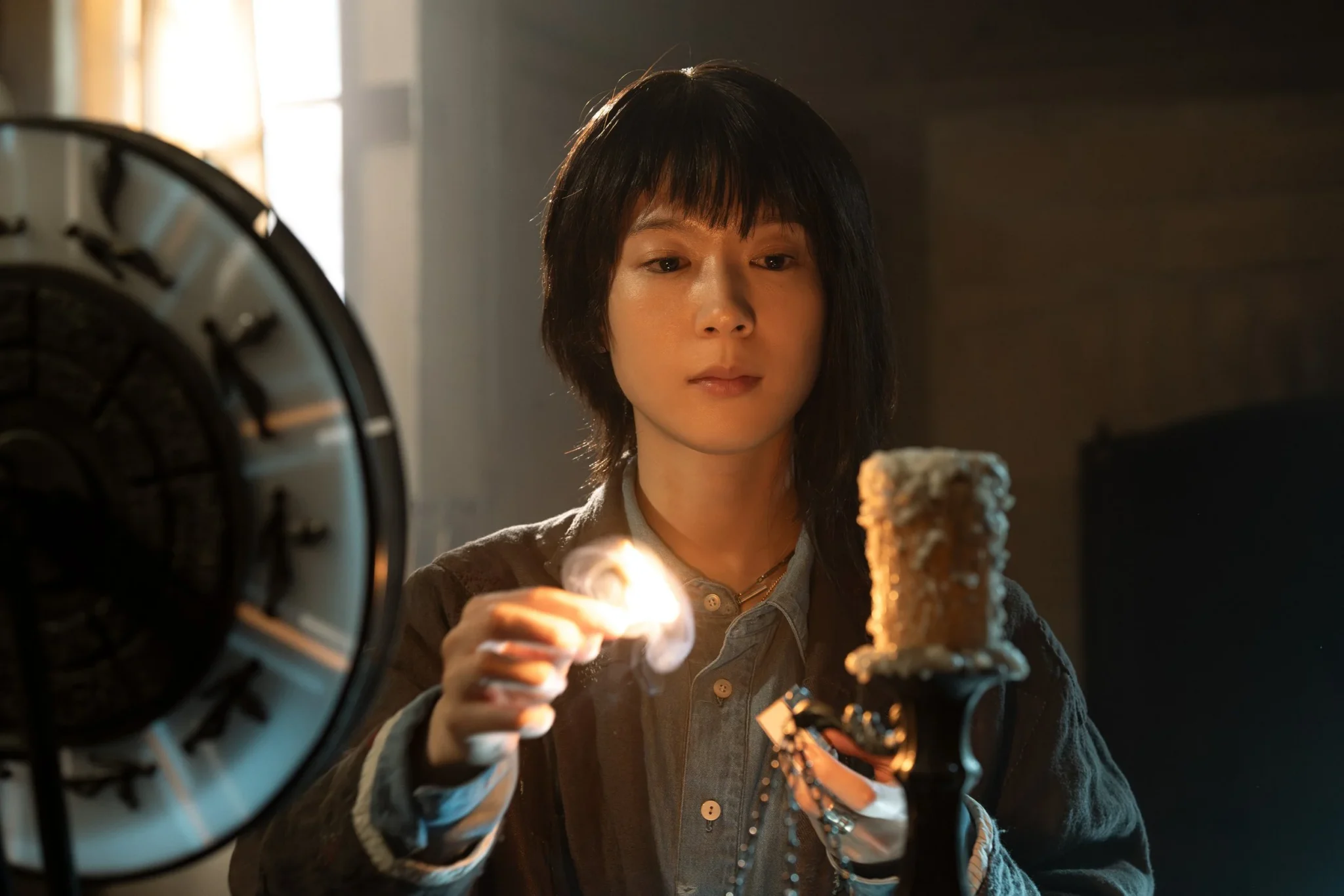
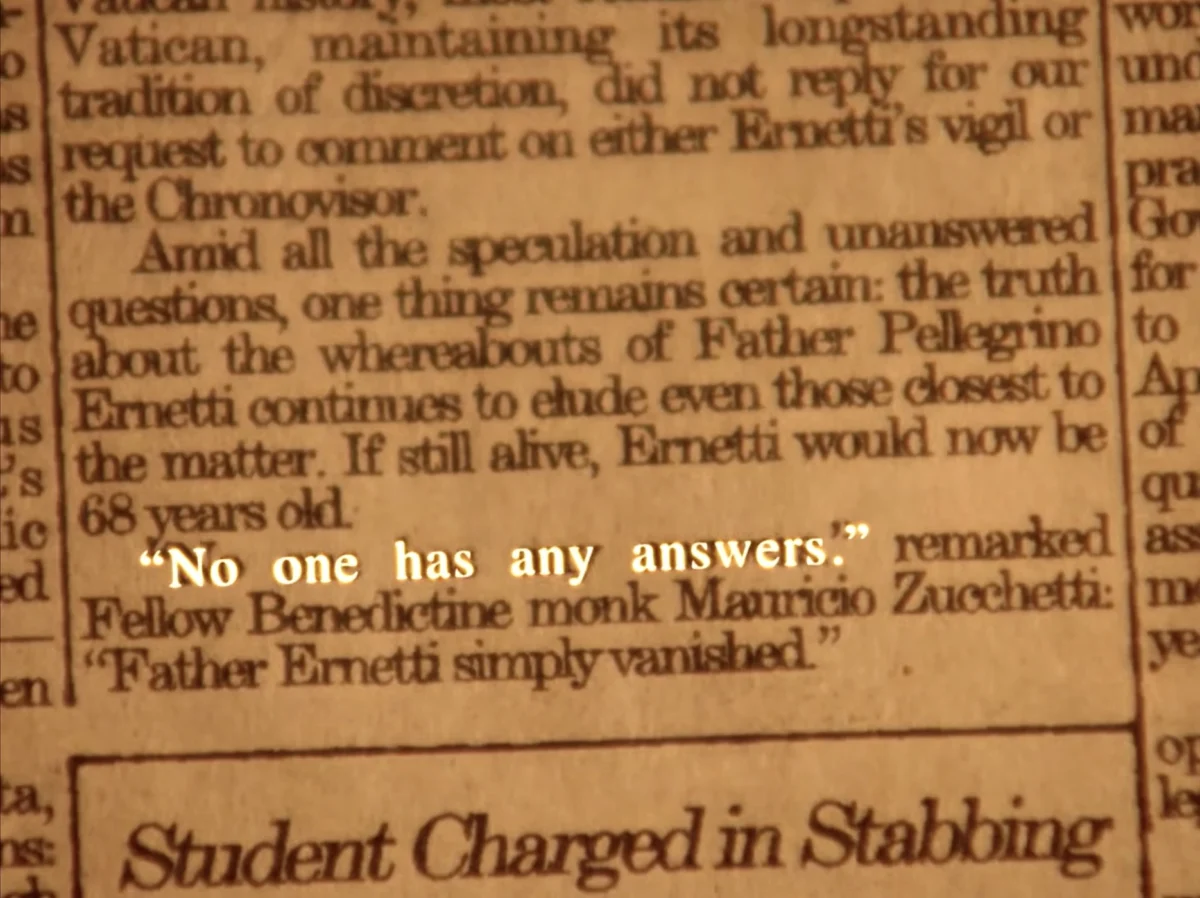
At the heart of Chronovisor lies a haunting premise: the existence of a device capable of tuning into the electromagnetic echoes of the past. The film follows Dr. Béatrice Courte, a Columbia University professor specializing in the mechanics of human memory. While conducting an unrelated study, she stumbles upon cryptic references to the "Chronovisor"—a device purportedly invented by the Benedictine priest Pellegrino Ernetti in the 1970s.
The film operates as a procedural, but one where the "crime scene" is the history of the 20th century. Dr. Courte’s investigation leads her on a tour of Manhattan’s most venerable research libraries. These settings are rendered with a sensory richness that feels almost defiant in the digital age; the air is thick with the scent of leather bindings, aging paper, and the sterile hum of old-school desk lamps.
The Chronology of the Ernetti Affair
The film draws heavily from the real-life controversy surrounding Father Pellegrino Ernetti, a Benedictine monk and exorcist who claimed in the 1970s to have participated in the creation of a machine that could view and hear past events. According to his claims, the device utilized a complex array of cathode-ray tubes (CRTs), oscilloscopes, and sensitive antennae to capture the "residue" of historical figures.
- 1972: Ernetti gives an interview to the Italian newspaper La Domenica del Corriere, claiming the device allowed him to witness events such as the founding of the Roman Empire and the Crucifixion of Christ.
- The Vatican Intervention: Following international scrutiny, Ernetti reportedly recanted his claims. The film Chronovisor builds upon the popular conspiracy theory that the Vatican seized the device and ordered it destroyed—or, perhaps more frighteningly, kept it for their own purposes.
- The Modern Investigation: Dr. Courte (played by real-life researcher Anne Laure Sellier) picks up these threads in the present day, finding that those who know the truth are terrified of the repercussions of speaking out.
The Aesthetics of Analog Discovery
One of the most striking aspects of Chronovisor is the filmmakers’ commitment to a bygone aesthetic. Shot on 16mm film, the visuals are grainy, warm, and deeply tactile. The light has a tangible weight, and the shadows are deep enough to suggest that something might be lurking within them.
The film is essentially a love letter to the "analog era." Dr. Courte is rarely seen with a smartphone or a laptop. Instead, she interacts with a world of physical books, vinyl records, and videotapes. This choice is intentional; it slows the audience down, forcing them to engage with the act of sifting through information. As the camera lingers on pages of Latin, German, or French text, the audience is invited to "fall down the rabbit hole" alongside the protagonist.

This approach aligns with the philosophical works of Jorge Luis Borges and Umberto Eco, thinkers who understood that the search for knowledge is never a linear path. It is a messy, circular process where footnotes become maps and accidental discoveries often outweigh the intended goal.
Supporting Data: Reality vs. Speculation
While the film is a work of fiction, its foundation in real-world academic anxiety is palpable. The "research thriller" subgenre typically relies on high-octane chases, but Chronovisor finds its tension in the quiet stillness of a library archive.
The film’s, and the device’s, core question is: What if our past never truly disappears? The scientific community, naturally, remains skeptical of the original Ernetti claims. Physicists point out that the energy required to "retrieve" light waves from centuries prior would violate the laws of thermodynamics. However, the film successfully pivots from the "how" to the "why."
Dr. Courte’s interactions with her colleagues offer a biting critique of modern academia. In many scenes, professors do not engage in the collaborative "beach ball" bouncing of ideas; they simply deliver monologues, waiting for their turn to speak. This isolation serves as a foil to the intimacy of the research process. The irony is that while Courte is searching for a machine that can communicate with the dead, she struggles to communicate with the living.
Implications: The Feedback Loop of History
As the investigation progresses, the tone of Chronovisor subtly shifts. It teeters on the edge of horror, not through jump scares, but through the accumulation of dread. When Dr. Courte dons her headphones to listen to archived sermons or recordings of Father Ernetti, the ambient sound design suggests a presence on the other side of the transmission.
The film poses a profound existential risk: if the Chronovisor is real, it creates a feedback loop where the past is constantly being consumed by the present. It turns history into a commodity, stripping it of its sanctity and turning the dead into a broadcast.
The filmmakers at Cosmic Salon appear to be meta-commentators on this phenomenon. By creating a film that is so compellingly "slow," they create their own version of the Chronovisor—a cinematic loop that viewers might want to revisit again and again.

Does it succeed as a Thriller?
Viewers expecting a taut, pulse-pounding thriller may find the pacing deliberate. The film eschews traditional action sequences, preferring to focus on the psychological weight of discovery. However, for those interested in the philosophy of time and the ethics of knowledge, the film is a masterclass in atmospheric storytelling.
The film concludes with a haunting suggestion: that the pursuit of the "Grail"—the ultimate truth—is a trap. By the time Dr. Courte approaches the potential location of the missing device, the audience is left to wonder if the machine is a tool for liberation or a prison for the human mind.
Conclusion: The Value of the Search
Chronovisor is a rare breed of film that demands patience and rewards curiosity. It reminds us that knowledge, when obtained instantly, is easily forgotten. When we have to work for it—when we have to drive three towns over, dig through dusty shelves, and translate faded texts—that knowledge becomes a part of us.
Whether the Chronovisor is a genuine artifact of 1970s fringe science or a collective hallucination of the academic community, the film makes a compelling case that our obsession with the past is a defining feature of the human condition. We are, all of us, looking for a way to watch the light of our own history, fanning out behind us like a wake on the sea.
As we continue to navigate a digital landscape that offers us everything and demands nothing, Chronovisor stands as a reminder that the most important part of the journey is not the destination, but the rabbit hole itself. Perhaps the real "truth" isn’t found in the machine, but in the exhaustion and exhilaration of the search.