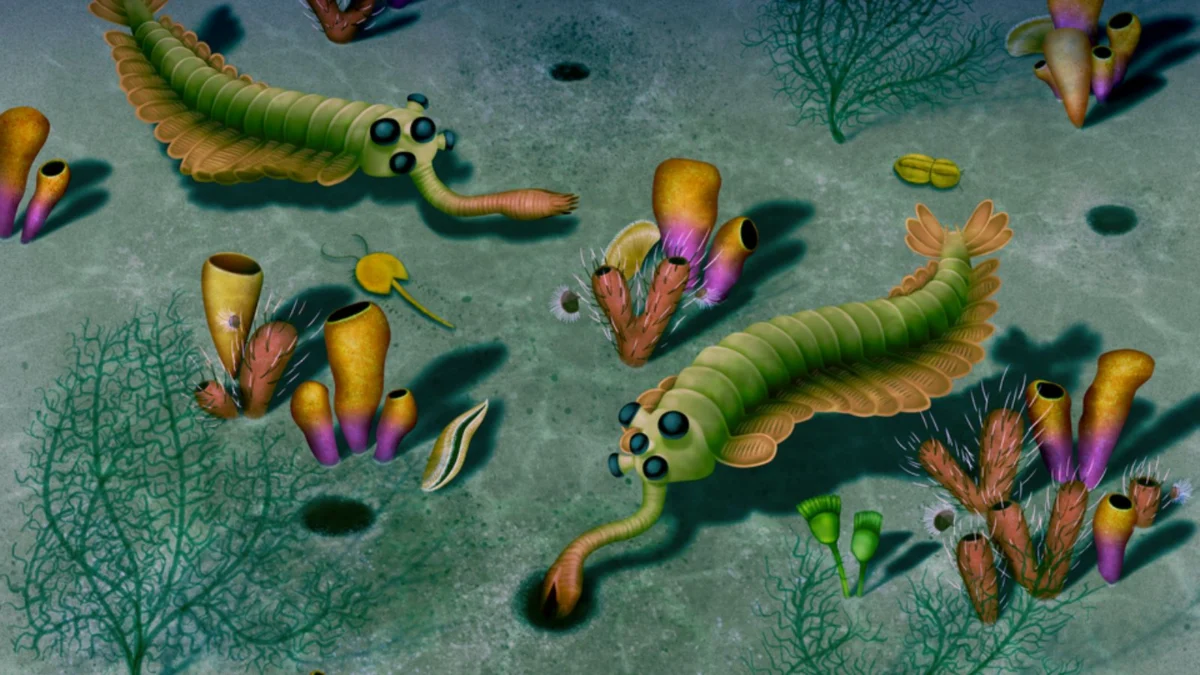
For decades, the “Cambrian Explosion”—the sudden, rapid diversification of complex animal life roughly 540 million years ago—has been framed by geologists and evolutionary biologists as a masterpiece of atmospheric and tectonic engineering. Traditional narratives point to a spike in atmospheric oxygen, the stabilization of the ozone layer, and the chemical weathering of continents as the primary catalysts that allowed life to break free from the microbial doldrums.
However, a groundbreaking study published in Trends in Ecology & Evolution suggests that the true engine of this biological revolution was far more visceral. According to an international research team led by Dr. Russell Bicknell, the evolution of the anus—and the subsequent, massive release of fossilized animal feces—acted as a fundamental biological "fertilizer" that permanently altered the chemistry of Earth’s oceans, effectively kickstarting the rise of complex ecosystems.
The Dawn of Digestive Efficiency: A Chronology of Change
To understand the magnitude of this discovery, one must look at the biological landscape of the Ediacaran period, which preceded the Cambrian. Before roughly 539 million years ago, marine life was, by and large, a simpler affair. Animals existed in a state of digestive bottleneck; they possessed rudimentary "blind-gut" systems. Much like modern-day cnidarians (such as anemones or jellyfish), these ancient creatures ingested food and expelled waste through the same singular opening.
This physiological constraint acted as a hard ceiling on biological complexity. Because these organisms had to fully process a meal and clear their systems before feeding again, their metabolic rates were sluggish, and their ability to cycle nutrients was virtually non-existent.
The chronology of this shift is now coming into sharper focus. Dr. Bicknell’s team analyzed coprolites—fossilized feces—from 35 distinct geological deposits worldwide, spanning the critical window from 600 million to 500 million years ago. The evidence is startling: there is a complete absence of confirmed fossilized feces prior to 538.8 million years ago.
This date aligns precisely with the dawn of the Cambrian period. As early arthropods and other ancestral bilaterians evolved the “through-gut”—a one-way digestive tract with a mouth at the entry and an anus at the exit—the fundamental rules of marine ecology shifted. Animals could now feed continuously, processing organic matter with unprecedented efficiency and, more importantly, discharging it as concentrated fecal pellets.
Supporting Data: The Fecal Pump and Nutrient Cycling
The "fecal pellet" is perhaps one of the most underrated engineering marvels in evolutionary history. When organisms evolved the ability to package waste into dense, compact pellets, they changed the physical behavior of organic matter in the ocean.
Unlike amorphous, slow-sinking waste particles that would decay or dissolve in the upper water column, fecal pellets are denser and sink rapidly. This process, known as the "biological pump," acted as a high-speed transport mechanism, delivering carbon, nitrogen, phosphorus, and iron from the nutrient-poor surface waters to the deep-sea floor.
"We have considered these ancient diets, increasingly sophisticated digestive systems, and trophic interactions as part of a much bigger picture," Dr. Bicknell noted in an interview. "It becomes clear in the fossil record that the evolution of feeding strategies aligns with the production and distribution of organic carbon and nutrients."
By raining down these essential building blocks of life into the depths, early animals created a self-sustaining nutrient cycle. This fertilization of the benthic (seafloor) environment provided the necessary energy surplus to support larger, more active, and more diverse organisms. The deep ocean, once a relative desert, became a dynamic, nutrient-rich landscape, allowing for the rapid evolution of complex, multi-layered food webs.
Official Perspectives: Rethinking the Cambrian Engine
The research conducted by Dr. Bicknell’s team—which included collaborators from Australia and Germany—challenges the long-standing anthropocentric view that only massive geophysical changes could drive evolution.
Historically, scientists have focused on exogenous factors: Isotopic evidence of oxygenation, shifts in tectonic plates creating shallow seas, and the geochemical weathering of rocks. While these factors were undoubtedly necessary, Dr. Bicknell argues they were not sufficient on their own.

"Next to rising oxygen levels and other contributing factors, the importance of feces in ancient ecosystems is often overlooked," Bicknell said. The team posits that while oxygen provided the potential for larger bodies, the anus provided the infrastructure for sustained growth.
This perspective has sent ripples through the paleontological community. If biological waste is a primary driver of ecosystem complexity, it implies that the "explosion" of life was as much a bottom-up process—driven by the internal evolution of animal anatomy—as it was a top-down response to environmental changes.
The Broader Implications: A Legacy of Fertilization
The findings published on August 4, 2026, suggest that the invention of the anus was a threshold event, comparable in importance to the evolution of photosynthesis or the emergence of multicellularity.
From the Cambrian to the Modern Era
The implications of this study extend far beyond the Cambrian period. By tracing the lineage of nutrient cycling back 539 million years, scientists are drawing a direct line between the first pooping organisms and the modern global food system.
"We are looking at the genesis of conditions we see in modern oceans," Bicknell explained. "And, by extension, we see the blueprint for land-based ecosystems where nutrient distribution is the cornerstone of life."
Essentially, the early Cambrian animals were the first global farmers. By sequestering nutrients and redistributing them across the ocean floor, they engineered an environment that could support biomass at scales previously impossible. This biological "fertilizer" allowed for the rapid expansion of trilobites, mollusks, and other foundational groups that define our understanding of prehistoric life.
Reassessing Evolutionary Models
This study necessitates a recalibration of how we model evolutionary transitions. For decades, the "Cambrian Explosion" was viewed primarily as a problem of oxygen titration. Researchers now have a new variable to plug into their models: the fecal flux rate.
By quantifying the rate of coprolite deposition in the fossil record, researchers can now estimate the metabolic output of ancient ecosystems. This allows for a more granular understanding of how much energy was actually circulating through these early communities. It suggests that the "explosion" was not merely a sudden appearance of new forms, but a metabolic boom that was fueled by the most basic of biological acts.
Conclusion: The Unsung Hero of Life’s Diversity
As we look back at the origins of complex life, it is humbling to realize that the grand tapestry of biological diversity may be anchored by such a humble, and often maligned, physiological development. The evolution of the anus was not merely an anatomical novelty; it was the mechanism that allowed the animal kingdom to break the limitations of its environment.
Dr. Bicknell’s team has provided a stark reminder that in the grand history of life on Earth, the most significant revolutions are often happening out of sight—or in this case, in the depths of the ancient sea. By turning the act of waste disposal into a critical engine of ecological distribution, early life paved the way for the sophisticated, interconnected, and highly successful biosphere we inhabit today.
The Cambrian Explosion, once thought to be a mystery of atmospheric gases and geological shifting, now appears to be, at its heart, a story about the power of the digestive tract. It is a testament to the fact that when it comes to the success of life on this planet, what goes in is only half the story—how it comes out may be the true secret to survival.