

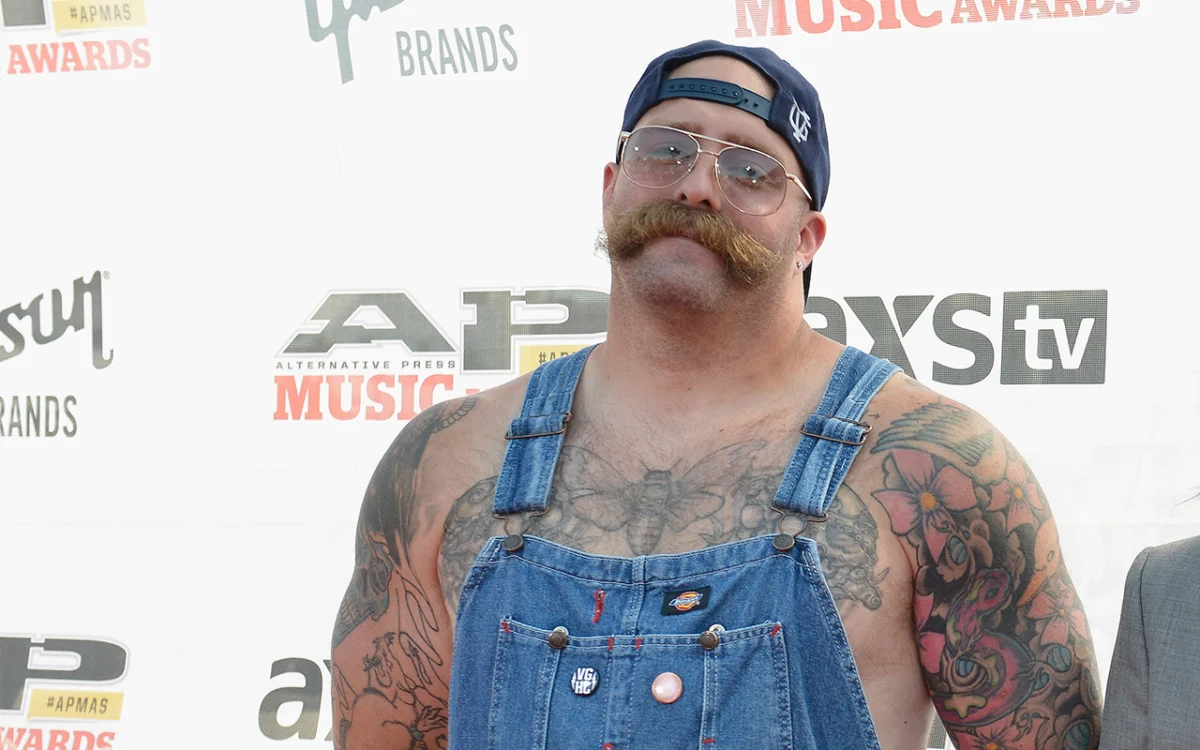
The world of professional wrestling and the heavy music community are in mourning following the tragic death of Andy Williams, a man who commanded stages and rings with equal intensity. Known to his legions of fans as “The Butcher,” Williams, 48, passed away late Saturday night after collapsing during a match in Millvale, Pennsylvania. The loss marks the end of an extraordinary dual-career trajectory that saw Williams achieve cult-hero status as both a pioneering metalcore guitarist and a formidable powerhouse in the professional wrestling ring.
The Tragic Final Performance: A Chronology of Events
The incident occurred during Enjoy Wrestling’s “Five Years” event, a milestone show that was intended to be a celebration of independent wrestling. Williams, who had recently returned to the independent circuit following the conclusion of his tenure with All Elite Wrestling (AEW), was competing in a tag-team match alongside his long-time partner and collaborator, Jesse Guilmette, known in the industry as “The Blade.”
According to witnesses at the scene, Williams was in the midst of the match when he suddenly collapsed. The atmosphere in the venue, previously electric with the energy of a sold-out crowd, shifted instantly to one of shock and concern. Emergency personnel were immediately summoned, and Williams was rushed to a nearby hospital. Despite the frantic efforts of medical professionals, he was pronounced dead shortly thereafter. In a move of profound respect and solemnity, the event organizers canceled the remainder of the card, ending the show prematurely as word of the tragedy began to circulate.
The timing of his death is particularly haunting. Earlier that same Saturday, Williams had taken to social media to express his profound optimism regarding his latest musical endeavor, the band Atomic Rule. Posting about the hard work the group had been investing, he wrote, “Update of the work we’ve been putting in! So stoked to share all this with you! We feel like we’ve finally found our feet planted to this beautiful earth and now we’re running full speed!” The post, intended to rally fans for an upcoming West Coast tour with heavy metal icons GWAR, now serves as a poignant epitaph for a man who lived his life with uncompromising velocity.
A Life Defined by Dual Passions: Supporting Data and Background
Andy Williams’ life was characterized by a rare ability to excel in two physically and emotionally demanding subcultures: the high-decibel world of metalcore and the high-impact world of professional wrestling.
The Metalcore Pioneer
Born in New York, Williams first rose to prominence in 1998 when he co-founded the Buffalo-based metalcore juggernaut Every Time I Die (ETID). For nearly a quarter-century, the band was a cornerstone of the underground music scene, celebrated for their frenetic energy, technical prowess, and an unmatched work ethic that kept them on the road for the better part of two decades. Over the course of nine studio albums, ETID evolved from local favorites to international icons, influencing an entire generation of musicians. When the band dissolved in 2022, Williams did not step away from the stage; instead, he pivoted to Atomic Rule, a project that promised to recapture the raw, visceral sound that had defined his career.
The Rise of “The Butcher”
While many musicians might have been content with the legacy of a band like ETID, Williams was driven by a lifelong obsession with professional wrestling. He began training for the ring in 2015 at the age of 37—an age at which most professional athletes are considering retirement. He approached the ring with the same intensity he brought to the stage, quickly establishing himself as a brutal, hard-hitting force on the independent circuit.
His breakout moment came in 2019 when he signed with All Elite Wrestling (AEW). Alongside Jesse Guilmette, he formed the tag team known as “The Butcher and The Blade.” Their aesthetic—gritty, uncompromising, and reminiscent of classic wrestling “heels”—made them instant fan favorites. Throughout their time in AEW, they engaged in high-profile feuds with some of the industry’s biggest names, including the Young Bucks and Cody Rhodes. Following the expiration of their AEW contracts in June, the duo had transitioned back to the independent scene, continuing to ply their trade with the same dedication that defined their mainstream tenure.
Official Responses and Industry Tributes
The news of Williams’ death triggered an immediate outpouring of grief from across the entertainment and sports industries. Organizations and peers alike have reached out to honor a man described by many as a "gentle giant" despite his intimidating on-screen persona.
In an official statement, All Elite Wrestling expressed the collective sorrow of the promotion: “All Elite Wrestling is saddened to learn of the passing of Andy Williams, aka The Butcher. A trailblazing musician with ETID and Atomic Rule, Williams made a successful transition into the world of professional wrestling and was incredibly respected by his peers both in and out of the ring. Our condolences go out to Williams’ family, friends, and fans.”
Beyond the corporate statements, social media became a repository for personal anecdotes. Fellow musicians, wrestlers, and fans shared stories of Williams’ generosity, his dry sense of humor, and his infectious passion for his work. For those who knew him, the shock of his passing is compounded by the knowledge that he was in a period of creative renewal, looking forward to the next chapter of his musical journey.
The Implications of a Sudden Loss
The death of Andy Williams raises difficult questions regarding the physical toll of independent wrestling and the lifestyle of touring musicians. While the specific cause of his collapse has not been disclosed, the suddenness of the event highlights the risks inherent in professional wrestling, a sport that demands elite athleticism even as competitors age.
The Fragility of the Performer’s Life
The death of a beloved figure mid-performance is a traumatic event for the wrestling community. It forces a reckoning with the safety protocols in place at smaller venues and the long-term health implications for performers who push their bodies to the limit. As the independent wrestling circuit grows in popularity, the spotlight on performer welfare—from mandatory medical screenings to the availability of immediate emergency care—is likely to intensify.
The Legacy of the "Renaissance Man"
Williams’ passing also invites a broader conversation about the nature of his career. In an era of hyper-specialization, Williams was a true anomaly. He proved that one could successfully navigate two distinct worlds of performance art, carrying the ethos of the DIY punk scene into the choreographed violence of the wrestling ring. His career serves as a blueprint for future performers who refuse to be defined by a single label.
His death leaves a void not only in the Buffalo music scene but in the hearts of wrestling fans who appreciated his ability to treat every match as if it were his first. He was a performer who understood that whether he was holding a guitar or locking up in a ring, the goal was the same: to provide an escape, a thrill, and an experience for those watching.
Final Reflections
As the dust settles in Millvale, the tributes continue to flow. For fans of Every Time I Die, Williams was the anchor of a sound that defined their youth. For wrestling fans, he was the Butcher—a character brought to life by a man who respected the history of the sport as much as he enjoyed breaking the rules within it.
The music of Atomic Rule, which Williams was so eager to share, will now stand as his final creative testament. As the world mourns his passing, the consensus remains that Andy Williams lived his 48 years with a level of passion that most never achieve in a lifetime. He leaves behind a legacy of resilience, creativity, and an unwavering commitment to his craft. He was, in every sense of the word, a professional until his very last moment.










