Lina Irawan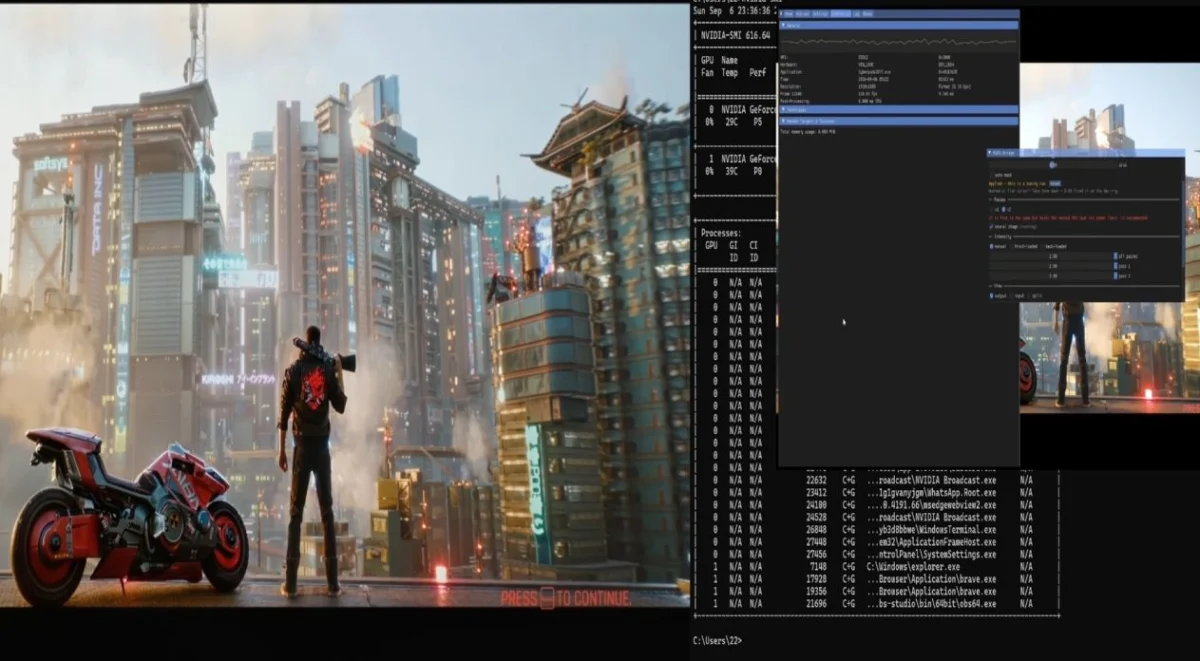
In the rapidly evolving landscape of PC gaming technology, few innovations have captured the imagination of hardware enthusiasts quite like Nvidia’s DLSS (Deep Learning Super Sampling). With the recent rollout of DLSS 5 Neural Rendering, the industry has shifted its focus toward AI-driven frame reconstruction. Now, a groundbreaking technical project by developer Marcelo Guibout has pushed these boundaries even further, demonstrating a novel "offloading" technique that utilizes a secondary GPU to handle the heavy lifting of neural post-processing. This development, while unofficial and experimental, offers a tantalizing glimpse into a potential future where multi-GPU configurations—long thought to be a relic of the SLI era—might find new, specialized utility.
The Technical Breakthrough: Uncoupling Neural Rendering
At the heart of Guibout’s project is the "MGPU Bridge," a ReShade-based add-on that fundamentally changes how a PC processes frames. Traditionally, when a game utilizes DLSS, the primary graphics card is responsible for both the base rendering of the game world and the subsequent AI-driven upscaling and frame generation. This creates a computational bottleneck, as the GPU must juggle traditional rasterization or ray tracing alongside complex neural inference tasks.
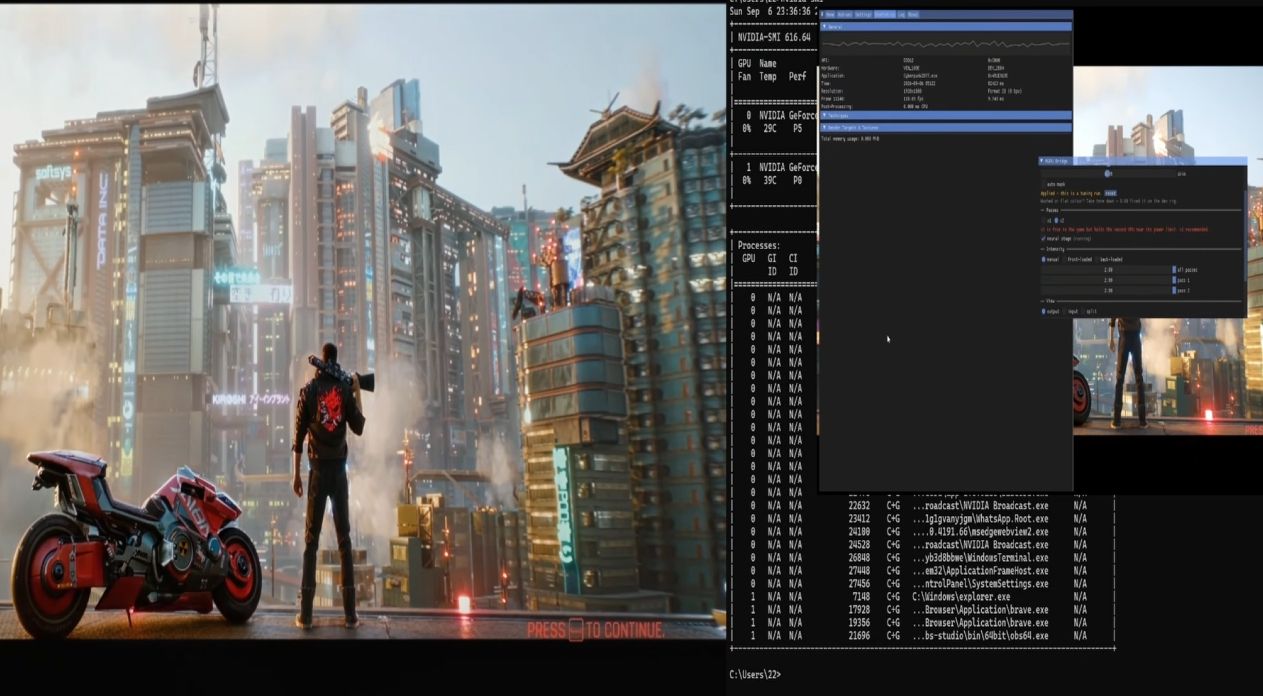
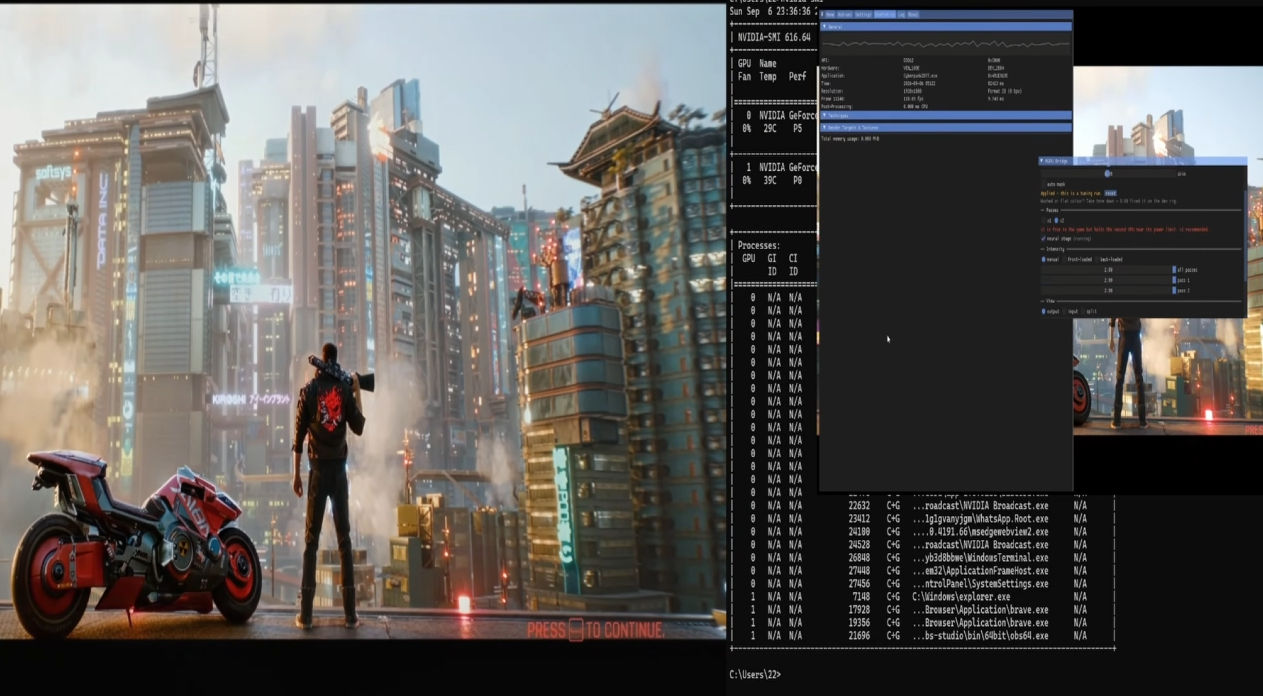
Guibout’s approach is elegant in its simplicity: the primary GPU focuses exclusively on rendering the raw frame, while the neural rendering workload is offloaded to a secondary card. By establishing a dedicated D3D12 device on the second GPU, the system transfers the finished, rendered frame to the secondary card. The second GPU then applies the DLSS-NR (Neural Rendering) algorithms and outputs the final, upscaled image to its own connected display.
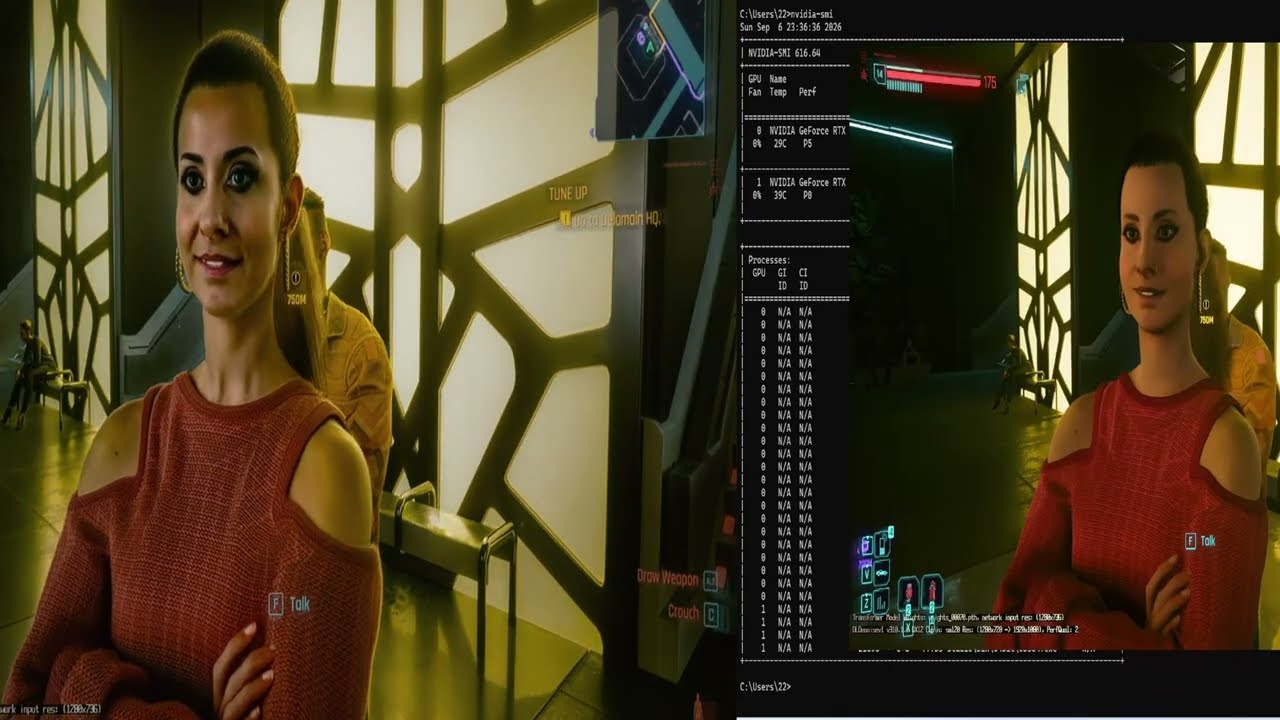
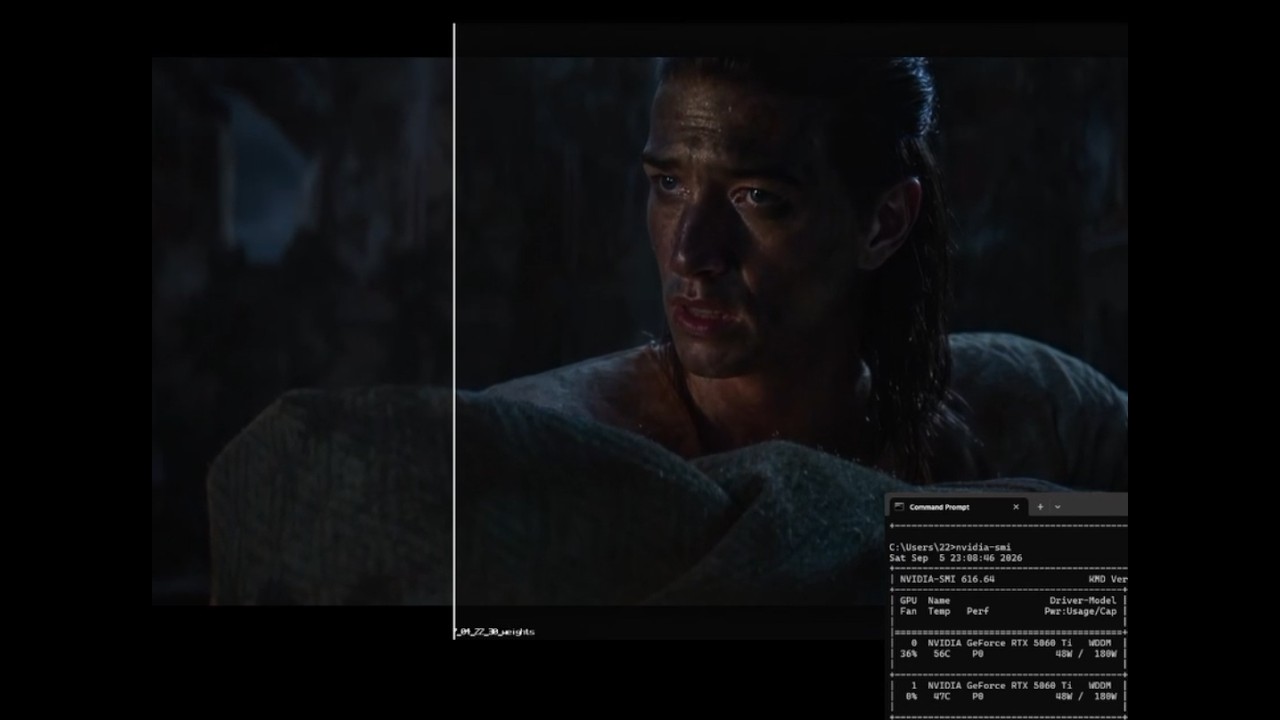
This decoupling allows the primary rendering card to run significantly cooler and more efficiently, as it is no longer tasked with the power-hungry and thermal-intensive process of neural inference. In testing, Guibout observed that the primary rendering GPU operated at temperatures approximately 21 degrees Celsius lower than when it was forced to handle both tasks simultaneously.
A Chronology of the Development
The discourse surrounding this breakthrough began with a series of technical demonstrations posted online, showcasing the technology running on demanding titles like Cyberpunk 2077 and a cinematic video from The Blood of Dawnwalker. These videos quickly went viral within the enthusiast community, sparking a debate regarding the viability of multi-GPU setups in the modern era.
Guibout was careful to frame these videos as technical proofs-of-concept rather than formal benchmarks. However, the data provided in these demonstrations proved compelling enough to warrant serious discussion. The project was subsequently made available via GitHub, allowing users with the necessary hardware—specifically, two functional GPUs and the capacity for dual-monitor output—to test the configuration for themselves.
The community reaction has been swift, with many comparing the utility of the second GPU in this setup to the old-school "PhysX" cards of the late 2000s, where a secondary Nvidia card was dedicated solely to physics calculations. While the technology is currently in its infancy, the ability for the average user to download and experiment with the "MGPU Bridge" has accelerated the pace of feedback and optimization.
Data Analysis: The Efficiency of Offloading
The performance figures provided by Guibout highlight the diminishing returns of traditional single-GPU rendering when neural processing is involved. In the Blood of Dawnwalker (TBOD) demo, the efficiency gains were stark. When running DLSS in "Ultra Performance" mode on a single card, the neural post-processing consumes a massive portion of the card’s overhead. Because neural processing always occurs at the output resolution, its cost remains relatively static, while the render work for the game itself scales down as the DLSS mode becomes more aggressive.
On a single card, as you drop the DLSS quality setting, the rendering work "collapses," but the neural load remains constant. Consequently, the user only retains about a third of the potential performance gain. By moving the neural workload to a second GPU, Guibout found that the system retains approximately 86% of the gains achieved by lowering the internal render resolution.
Comparative Performance Table (TBOD Demo)
| DLSS Mode | DLSS 5 Off (Baseline) | DLSS 5 (Single Card) | DLSS 5 (Dual Card Offload) |
|---|---|---|---|
| DLAA | 67-70 FPS | 44 FPS | 67-70 FPS |
| Quality | 98-99 FPS | 54-55 FPS | 91 FPS |
| Performance | 127-131 FPS | 59 FPS | 106-107 FPS |
| Ultra Performance | 172 FPS | 69-71 FPS | 157 FPS |
The data makes it clear: offloading the neural burden allows the primary GPU to act as a pure renderer, essentially reclaiming the overhead that would otherwise be lost to the AI upscaling process.
The Reality Check: Is This the Return of SLI?
It is critical to clarify that Guibout’s project is not, in any capacity, a return to Nvidia’s SLI (Scalable Link Interface) or AMD’s Crossfire. SLI functioned by splitting the workload of a single frame across two GPUs, which required massive driver-level support, specific game engine optimization, and often introduced micro-stuttering that plagued the experience for years.
Guibout’s "MGPU Bridge" operates on a fundamentally different principle. It does not split the rendering of a single frame between two cards; rather, it segments the tasks of the graphics pipeline. The primary card finishes the frame, and the second card performs post-processing. There is no synchronization of geometry or texture data between the two cards in the traditional SLI sense.
Furthermore, this method comes with significant caveats. The most notable is the requirement for a second display, as the final output is routed through the second GPU. Additionally, users must contend with doubled display latency, as the frame must be transferred across the PCIe bus and processed by a secondary device before reaching the screen. For competitive gamers who prioritize input latency above all else, this trade-off may be prohibitive.
Implications for the Future of PC Hardware
The existence of this project raises profound questions about the future of GPU architecture and AI integration. If neural rendering is becoming the industry standard, and if that rendering is becoming increasingly resource-intensive, should hardware manufacturers consider dedicated neural processing units (NPUs) within graphics cards?
Guibout’s demonstration proves that separating the "render" and the "post-process" is a viable path for increasing frame rates. While the average consumer is unlikely to run a dual-GPU setup in 2024, the findings may influence how developers and hardware engineers approach the next generation of GPUs. If a second, smaller, and cheaper card could handle the neural heavy lifting, it could allow a mid-range primary card to punch well above its weight class.
Moreover, the project highlights a shift in the philosophy of PC optimization. We are moving away from brute-force raw power toward a more modular approach where different aspects of the rendering pipeline are managed by specialized hardware. Whether this leads to specialized "AI Coprocessor" cards or more integrated solutions from Nvidia and AMD remains to be seen.
Conclusion
Marcelo Guibout’s work on DLSS 5 offloading is a testament to the ingenuity of the PC enthusiast community. By identifying the bottleneck created by neural rendering and finding a creative, if unconventional, workaround, he has provided a roadmap for how we might maximize the potential of our hardware.
While this solution is clearly intended for enthusiasts who have the spare hardware and the patience to deal with the inherent latency and setup complexities, it serves as a wake-up call for the industry. As neural rendering becomes the bedrock of modern gaming, the cost of processing those pixels cannot be ignored. Whether through better software optimization or a shift toward modular hardware, the "Neural Frontier" is expanding, and Guibout has provided the first real map of the territory.
For now, those looking to experiment with this setup should head to the project’s GitHub repository. While it may not replace the simplicity of a single-GPU setup, it provides a fascinating look at what happens when you dare to rethink the traditional boundaries of the graphics pipeline.

 Pevita Pearce
 Nana Muazin