

Microsoft has officially unveiled the logistics and thematic focus for Build 2026, the company’s premier developer conference. Scheduled for June 2 and 3 at the Fort Mason Center in San Francisco, this year’s event marks a significant departure from the company’s decade-long tradition of hosting the summit in Seattle. With a strictly limited capacity of approximately 2,500 attendees and an entry price of $1,099, Microsoft is positioning this year’s gathering as an intimate, high-impact "deep dive" rather than a massive, sprawling expo.
The central thesis of Build 2026 is clear: the era of speculative AI research is over, and the era of the AI Agent—as a reliable, production-ready enterprise asset—has begun.
A New Venue for a New Paradigm
The choice of San Francisco’s Fort Mason Center, a historic waterfront venue, signals a strategic pivot. Since 2016, Seattle served as the geographic anchor for Microsoft’s developer outreach. By relocating to the heart of the modern AI hub, Microsoft is signaling a tighter integration with the broader ecosystem, including the startup culture and the rapid pace of innovation emanating from the Bay Area.
Satya Nadella will once again anchor the opening keynote. However, the event’s structure has been intentionally streamlined to focus on two days of intense technical sessions. These sessions will bypass the "introduction to AI" fluff of previous years, focusing instead on the practicalities of shipping agentic software on Azure, the Windows platform, and GitHub’s evolving Copilot infrastructure.
Chronology: From Windows 8 to the Age of Agents
To understand the significance of Build 2026, one must look at the evolution of the event itself.
- 2011–2013 (The Windows-Centric Era): The early days of Build were defined by the push for Windows 8 and the WinRT platform. The developer mandate was clear: keep the ecosystem within the Windows sandbox.
- 2014–2017 (The Nadella Pivot): With Satya Nadella taking the helm, the company’s tone shifted. The open-sourcing of the .NET compiler (Roslyn) and the release of Visual Studio Code (2015) marked the beginning of a "developer-first, platform-agnostic" strategy.
- 2018–2023 (The GitHub and Cloud Expansion): The $7.5 billion acquisition of GitHub in 2018 gave Microsoft a direct line to 100 million developers outside its traditional orbit. This culminated in the 2021-2022 rollout of GitHub Copilot.
- 2024–2025 (The Agentic Awakening): Last year’s Build established the "Age of AI Agents." Microsoft spent the subsequent 12 months maturing its toolsets, culminating in the unified SDK for Semantic Kernel and AutoGen.
- 2026 (The Production Mandate): This year’s conference is dedicated to the "how-to" of deployment. The focus is no longer on what agents can do, but how to ensure they are secure, compliant, and performant in enterprise production environments.
The 50-Tool Blueprint: Preparing for the Keynote
The most effective way to extract value from Build 2026 is to arrive with a baseline understanding of the tools Microsoft is showcasing. Microsoft’s ecosystem is vast, but the following 50 tools—spanning developer environments to low-code platforms—form the backbone of the current AI-agent workflow.
Developer Tools & Environments
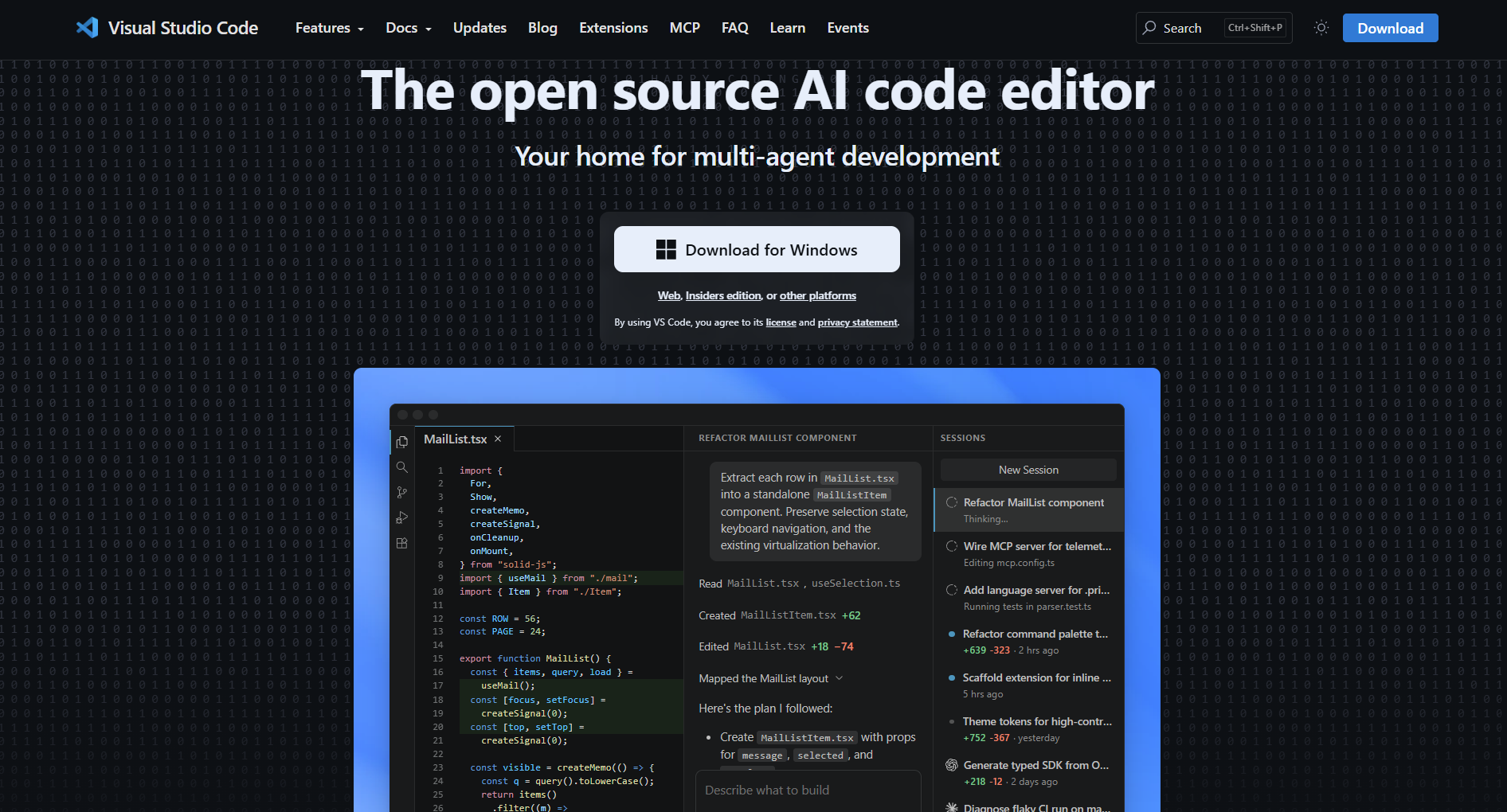
- Visual Studio Code: Remains the primary interface for agentic development. The remote development framework and Dev Containers extension are essential for replicating the cloud-native environments demonstrated in Build sessions.
- GitHub Copilot (Free Tier): Now offering 2,000 completions and 50 chat requests, this allows developers to test the real production models (GPT-4.1 and Claude Sonnet) before upgrading.
- Windows Terminal & WSL: With rumors of WSL 3 and NPU passthrough on the horizon, getting comfortable with Linux environments on Windows is no longer optional for AI developers.
- Dev Home & WinGet: These are the standard for automating machine configuration, reducing "setup fatigue" for teams onboarding new talent.
AI, Multi-Agent Systems, and Machine Learning
- AutoGen & Semantic Kernel: These have merged into a unified SDK. Running the local sample notebooks is the single most important pre-conference activity for any developer planning to attend the agentic workflow sessions.
- Phi-4: Microsoft’s 14B parameter small language model (SLM) is designed for local inference. It represents the future of privacy-conscious, low-latency AI that doesn’t rely on the cloud.
- Responsible AI Toolbox: With a dedicated track at Build 2026, this toolkit—which covers bias, fairness, and model explainability—is critical for developers in regulated industries like finance or healthcare.
Cloud Infrastructure and Data
- Azure AI Foundry: The central hub for model routing. Users should test the "playground" interface to compare OpenAI, open-source, and Phi models side-by-side.
- Azure Cosmos DB & AI Search: The integration of native vector search into these services has turned them into the go-to databases for RAG (Retrieval-Augmented Generation) pipelines.
- Azure Functions & Container Apps: These remain the standard for scaling agentic logic to zero when idle, providing cost-effective, event-driven architectures.
Official Stance and Market Competition
Microsoft faces a significantly more competitive landscape in 2026 than it did a year ago. AWS has aggressively expanded its Bedrock model catalog, and Google’s "Antigravity" platform has made inroads with developers by pitching itself as the "agentic-first" infrastructure option.
Microsoft’s internal response, as detailed by company leadership, centers on distribution advantages. With over 300 million Microsoft 365 users and a deep, existing footprint in enterprise cloud, Microsoft is betting that developers will prefer a platform that integrates directly with their existing data and security governance. The "Windows as a Deployment Platform" story is central to this: by utilizing NPU passthrough, Microsoft intends to turn its billion-device installed base into the largest distributed AI inference network in the world.
Implications: A Shift in Governance
Perhaps the most notable addition to the Build 2026 agenda is the Responsible AI Track. Following a turbulent 2025 marked by various enterprise security incidents and the tightening of AI regulations in both the EU and the US, Microsoft is moving governance from the "legal department" to the "developer workflow."
For the average engineer, this means that security tools—such as the Microsoft Security Compliance Toolkit and Entra ID identity management—are now being baked into the AI development lifecycle. The message is clear: if an agent cannot be audited, secured, and governed, it does not belong in a production enterprise environment.
Summary: Preparing for June
Build 2026 is less about "announcement bingo" and more about strategic planning. The sessions on multi-model routing, NPU-based inference, and agent orchestration will likely dictate how organizations structure their tech stacks for the next 12 months.
If you are attending—whether in San Francisco or via the free global stream—the goal should be to bridge the gap between "toy projects" and "production systems." By familiarizing yourself with the aforementioned tools (such as Prompt Flow for testing or the Sysinternals Suite for diagnostics) before the keynote begins, you will be better equipped to evaluate the technical reality behind the marketing polish.
As Microsoft evolves, the event is increasingly becoming a venue not just for software, but for the standards of the next decade of computing. The agentic future is here; Build 2026 is the manual for how to build it.












No comments yet. Be the first to join the conversation!