Muslim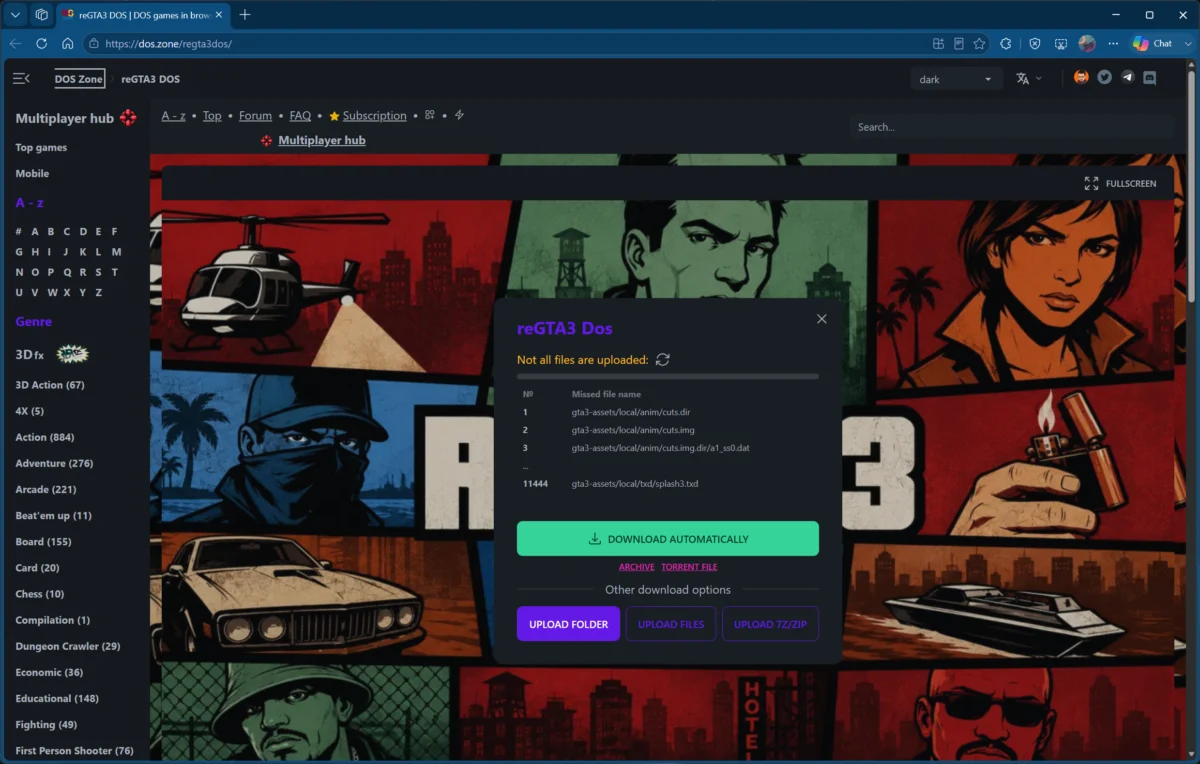
In the landscape of gaming history, few titles have achieved the cultural ubiquity of Rockstar Games’ Grand Theft Auto: Vice City. Originally released in 2002 for the PlayStation 2—and subsequently ported to Xbox and PC—the neon-soaked, 1980s-inspired criminal sandbox defined an entire generation of open-world gaming.
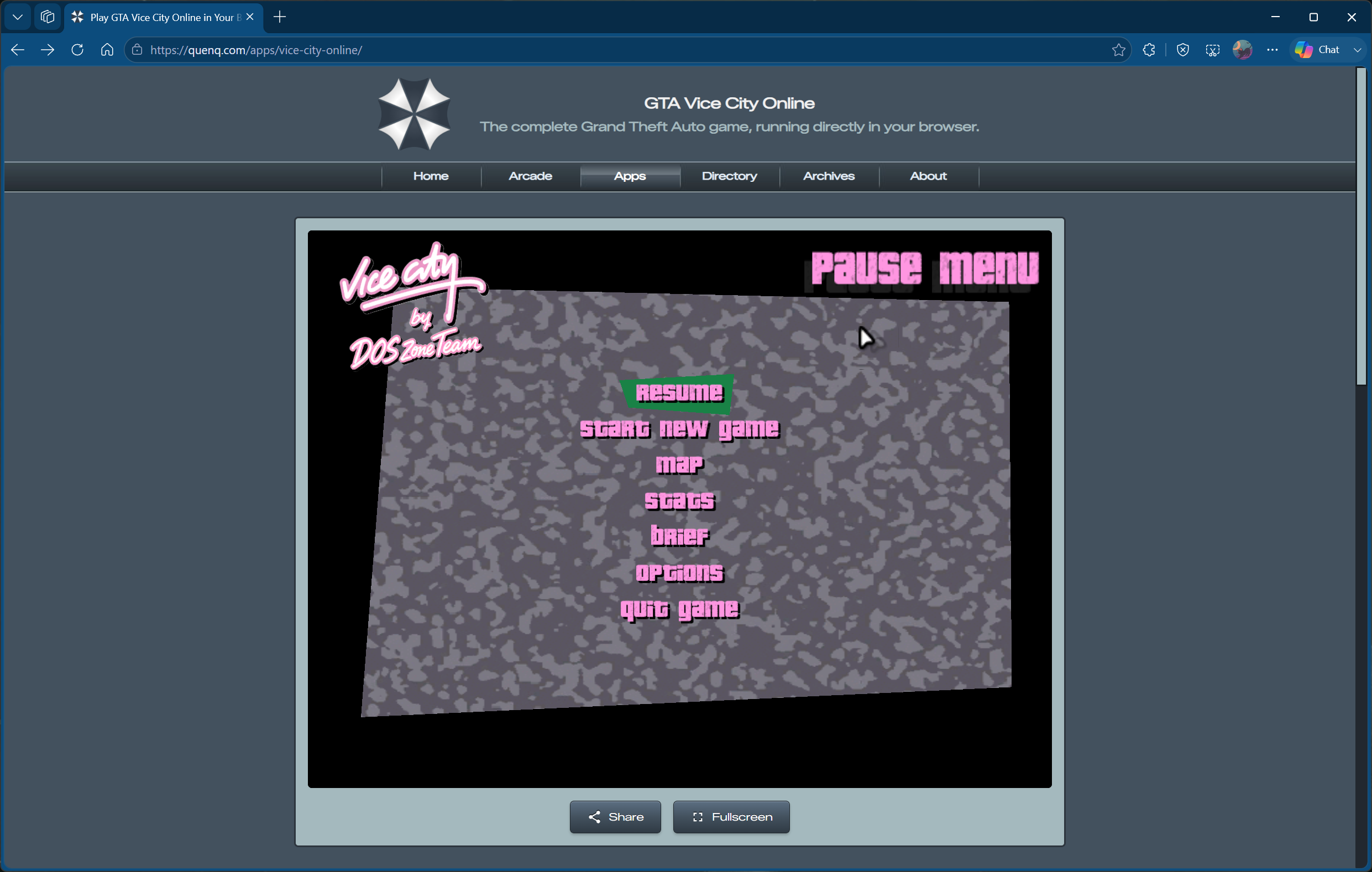
More than two decades later, the title has defied the constraints of proprietary hardware and static installations. In a feat of modern engineering, Vice City is now fully playable directly within a standard web browser. This remarkable development, facilitated by a new platform dubbed "Quenq," marks the latest chapter in a long-standing cat-and-mouse game between dedicated modders, legal entities, and the preservation of gaming heritage.
The Chronology of a Browser-Based Revolution
The journey of Vice City to the browser was not a singular event, but a culmination of years of community-led decompilation efforts.
The Initial Breakthrough
The concept of running GTA titles in a browser gained significant traction last year when the platform "DOS Zone" successfully demonstrated a functional port. By leveraging WebAssembly and WebGL, the developers proved that the game’s original engine could be translated into a language readable by modern browsers. This effectively turned any machine with a stable internet connection into a portable Vice City console.
The Legal Setback
The celebration was short-lived. Following a swift legal response from Take-Two Interactive, the parent company of Rockstar Games, the browser-based iteration on DOS Zone was shuttered. Take-Two cited infringement of intellectual property rights, arguing that the distribution of the game—even in a web-based format—violated their copyright, regardless of whether the platform required users to own a legitimate copy of the title to proceed.
The Current Status
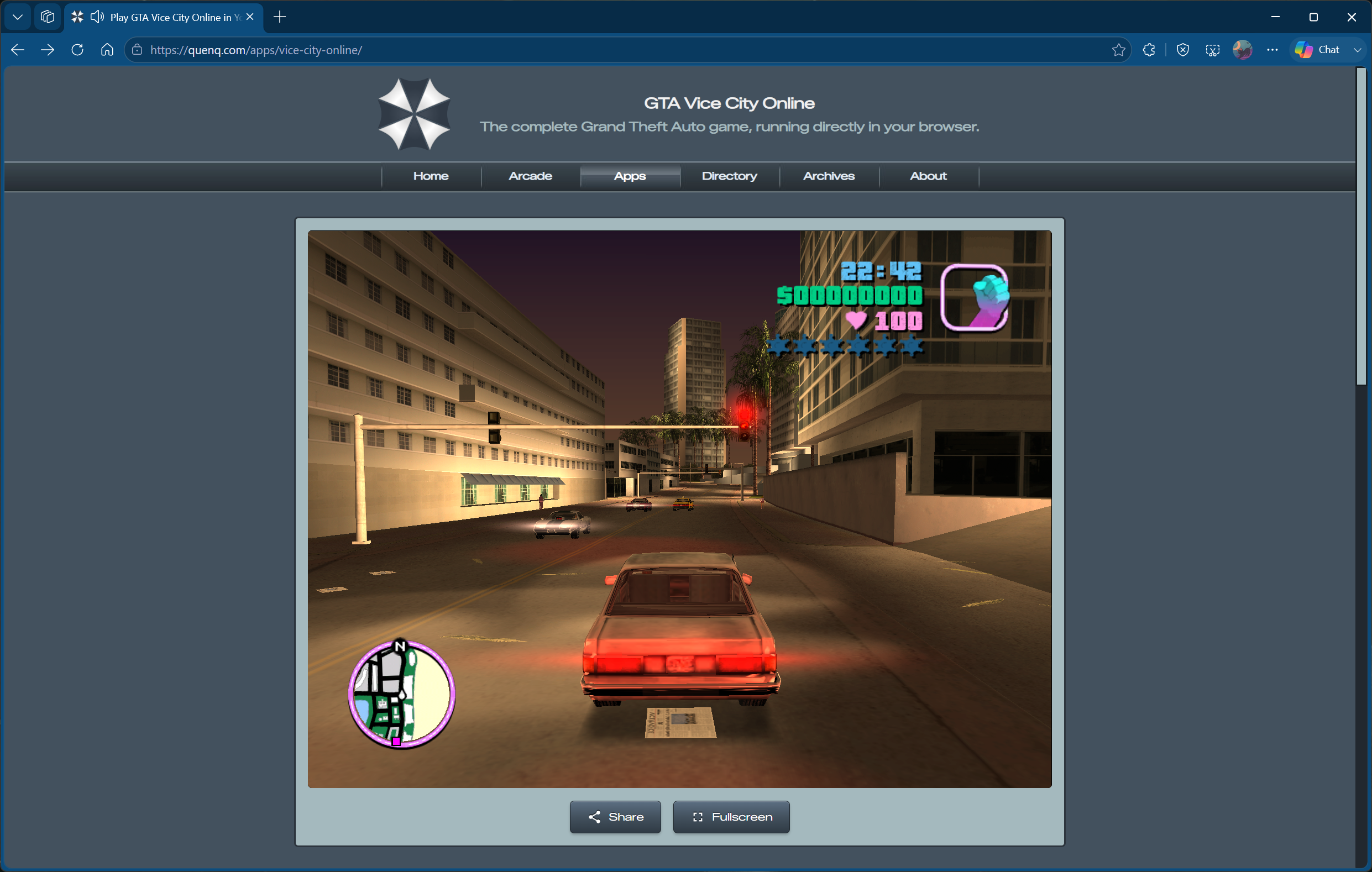
Despite the takedown, the community’s drive for accessibility proved insurmountable. A new platform, Quenq, has emerged as the latest host for these projects. Beyond Vice City, the site also offers a browser-based version of Grand Theft Auto III. This new iteration appears to have learned from its predecessor’s legal struggles, operating with a renewed focus on technical delivery while navigating the volatile landscape of digital copyright law.
Under the Hood: The Technology of Portability
The ability to run a 2002 AAA title in a browser window is not magic; it is the result of rigorous reverse engineering and modern web APIs.
The Role of Decompilation
The technical foundation for these ports lies in community projects known as reVC (for Vice City) and re3 (for GTA III). These projects represent years of effort by volunteer coders who painstakingly decompiled the original game binaries into clean, readable C++ source code. By mapping out how the original engine functioned, developers were able to rewrite it for modern environments.
WebAssembly and WebGL 2
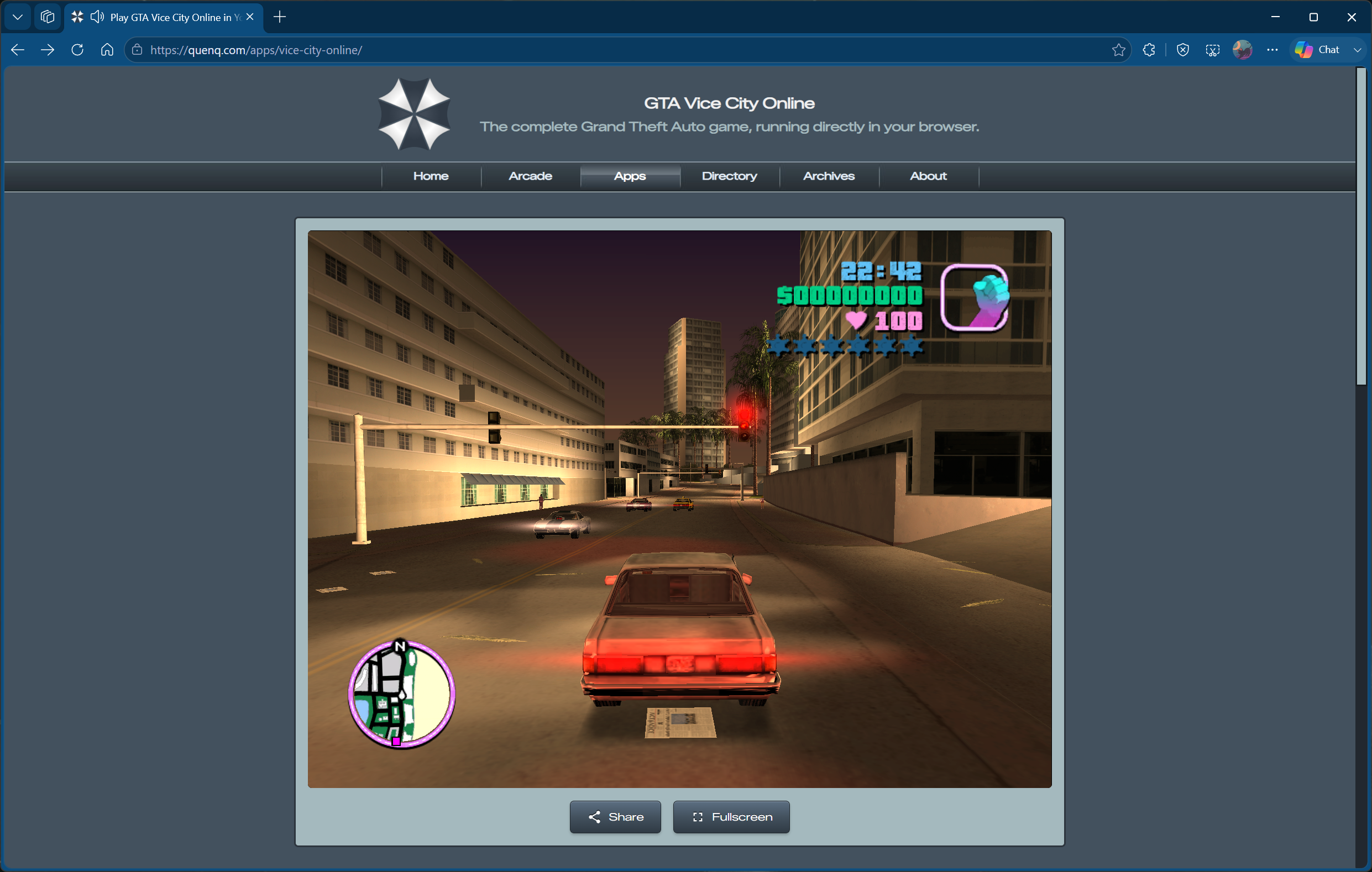
Once the source code was "modernized," the challenge became the execution. WebAssembly serves as the bridge, translating high-performance C++ code into a format that a browser’s engine can execute with near-native speed. Simultaneously, WebGL 2 acts as the critical interface. By bypassing the browser’s standard layout engine, WebGL 2 allows the application to communicate directly with the user’s GPU, enabling the rendering of 3D environments, complex lighting, and the physics-heavy gameplay that Vice City is known for.
Performance on Modern Hardware
Testing the platform on high-end hardware, such as the OnePlus 12, reveals the efficiency of this approach. The game loads near-instantaneously. The port supports a variety of input methods, including traditional keyboard-and-mouse setups, gamepads, and even intuitive touchscreen controls for mobile devices.
While the original title was hard-coded for a 30 FPS cap, these modern ports allow for unlocked framerates. Users on desktop systems have reported stable performance exceeding 100 FPS. However, there is a caveat: because the game’s physics engine is tied to its framerate, running at high speeds can occasionally result in unpredictable behavior or "physics glitches." To mitigate this, the platform includes an option to lock the framerate before launching.
Feature Set and User Experience
The browser versions provided by platforms like Quenq offer more than just a raw port. They are surprisingly feature-rich, catering to the needs of long-time fans.
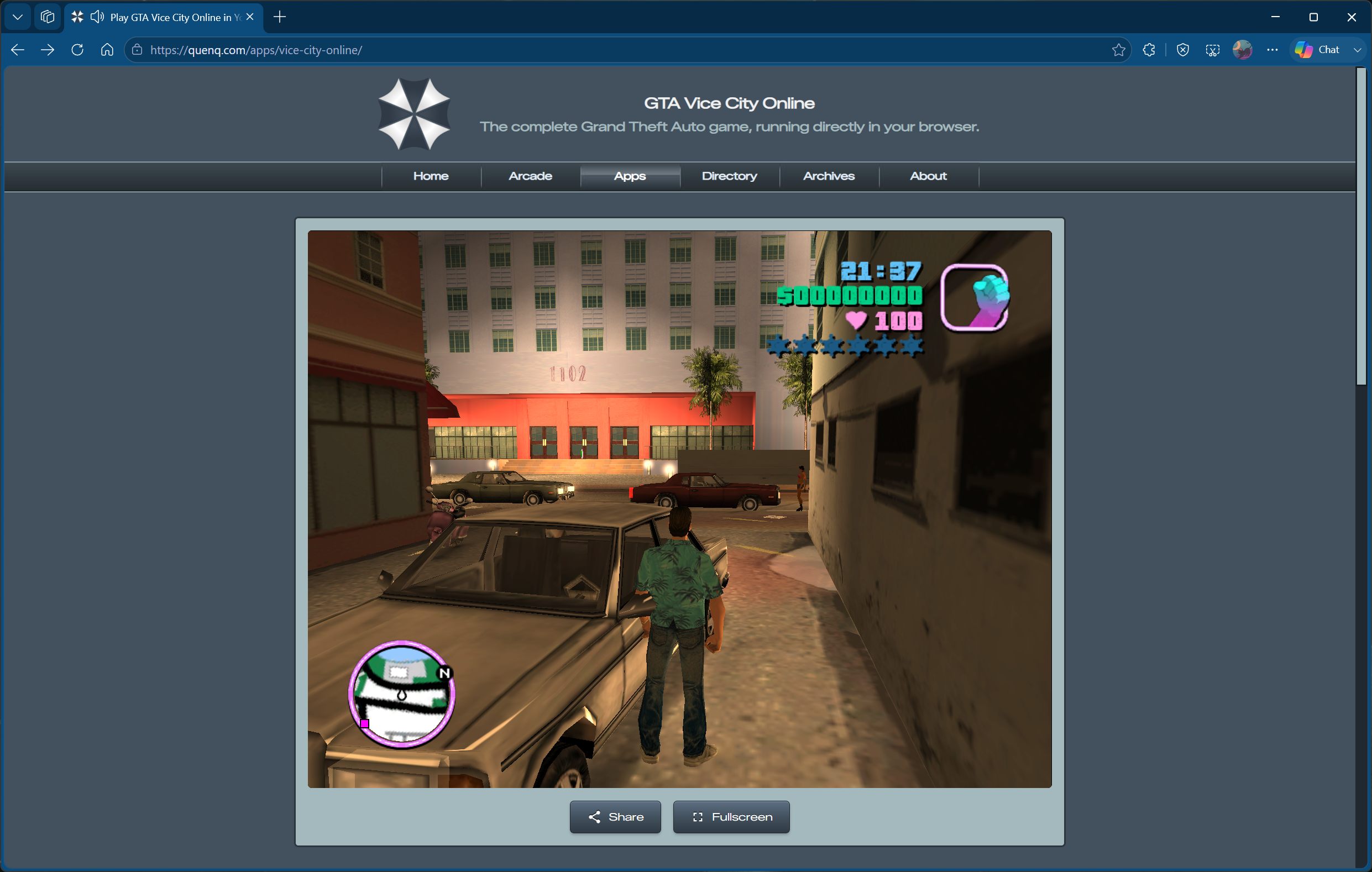
- Save and Mod Management: The browser environment includes a dedicated file manager, allowing users to upload their own game saves or custom modifications directly into the browser’s temporary storage.
- Cheat Codes: For those looking to relive the chaotic glory days of the game, standard cheat inputs are fully functional via external keyboards.
- Device Flexibility: Whether playing on a desktop, a tablet, or a high-performance smartphone, the game handles landscape and portrait orientations with remarkable fluidity, effectively making the game "pick-up-and-play" on any device with a modern browser.
Official Responses and Legal Implications
The existence of these projects highlights a growing tension between "fan-made preservation" and "corporate IP enforcement."
Take-Two Interactive has historically maintained a zero-tolerance policy toward projects that utilize their proprietary game code. The previous DMCA strike against DOS Zone serves as a stark reminder that even if a project is non-commercial or requires a user to own an original copy, the publisher retains the ultimate right to determine how their assets are accessed.
The "Asset Upload" Workaround
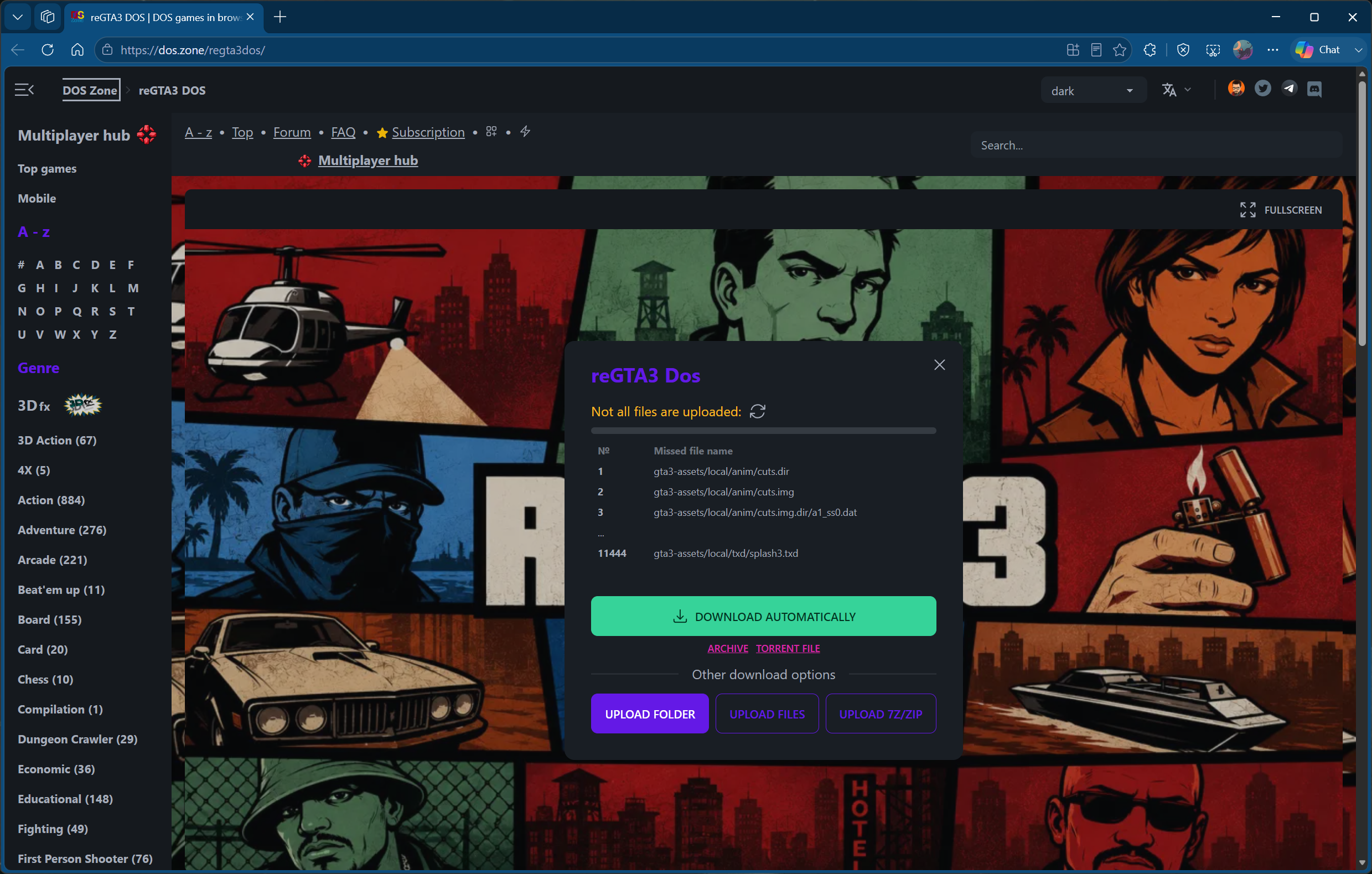
In response to these legal pressures, some platforms—including the current iteration of DOS Zone—have shifted their delivery model. Instead of providing the full game, they provide the engine, requiring users to upload their own legally obtained game assets to the site. While this aims to circumvent copyright claims by separating the engine from the proprietary game files, legal experts note that it remains a gray area that publishers like Take-Two continue to monitor aggressively.
The Future of Browser-Based Gaming
The rise of browser-playable classics like Vice City and GTA III suggests a broader shift in how we might preserve digital media in the future. As software ages, the hardware required to run it becomes increasingly scarce or obsolete. By migrating these titles to the browser, the community is essentially "future-proofing" them against hardware degradation.
However, the legal reality is that these projects exist on borrowed time. The ease of access provided by the browser is also what makes them a primary target for corporate litigation.
Why It Matters
For the gaming community, these browser ports are more than just a way to play an old game on a phone during a commute. They are a testament to the skill of independent developers and a powerful statement on the longevity of software. When an original publisher abandons a title or makes it difficult to access through modern storefronts, the community will inevitably step in to fill the void.
As technology continues to advance, the gap between "web applications" and "native software" will continue to narrow. We are likely to see more, not fewer, of these projects appearing in the coming years. Whether publishers will eventually embrace these community-driven ports as a form of marketing or continue to suppress them through legal channels remains the central question of the next decade of gaming preservation.
Final Thoughts
The ability to launch Vice City in a browser tab is a triumph of modern computer science. It proves that with enough community dedication, the boundaries of software can be pushed far beyond their original design. While the legal challenges persist, the technical achievement stands as a milestone, ensuring that even as the hardware of 2002 fades into history, the streets of Vice City remain open for business.
For now, players can enjoy the nostalgia of the 80s, the thrill of the mission, and the incredible convenience of a game that runs anywhere there is a URL. Just be sure to watch your framerate—some things in Vice City are best left at 30.

 Evan Lee Salim
 Laily UPN