Asep Darmawan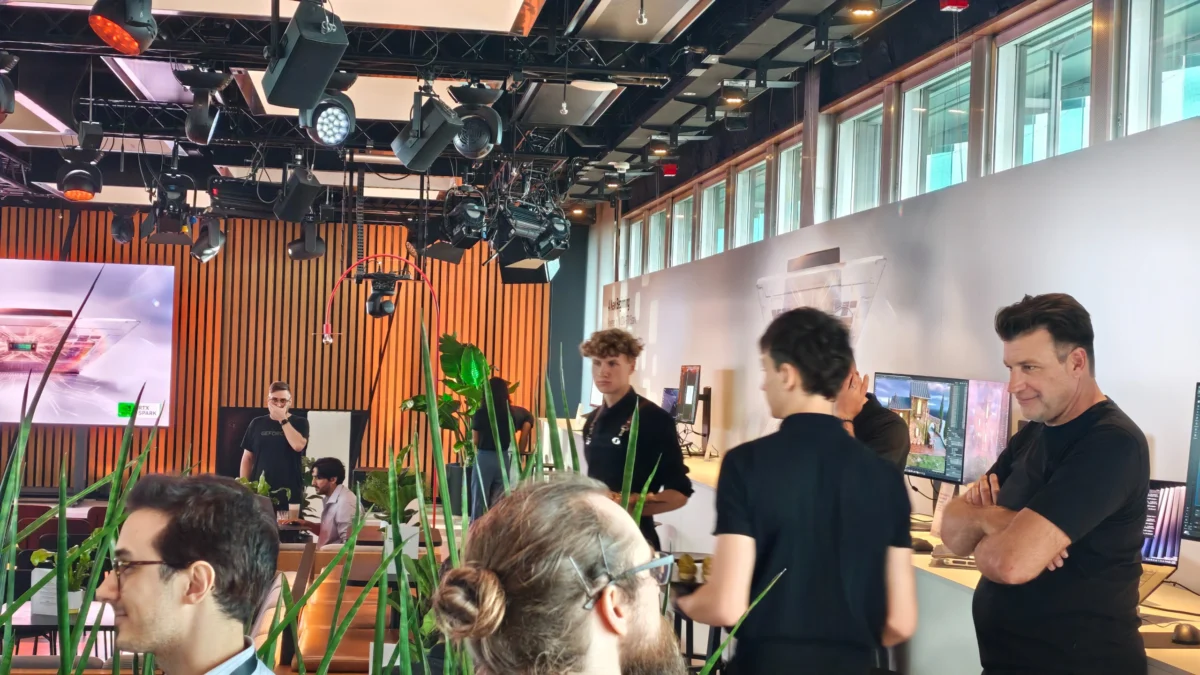
Modern knowledge work is defined by a specific, grinding form of chaos. It is the experience of opening a laptop at 9:00 AM and feeling, by 9:05 AM, that you have already failed the day. The inbox has become an avalanche; the calendar is a high-stakes game of Tetris; and Slack pings multiply with the persistence of spores. In this environment, the concept of a "Chief of Staff"—a dedicated deputy to manage the flow of information and decision-making—has transitioned from an executive luxury to a desperate dream of basic survival.
It is into this landscape of digital overwhelm that NVIDIA has stepped with its latest demonstration of a local AI agent powered by its "RTX Spark" technology. Pitched explicitly as a personal chief of staff, the promise is seductive: a machine that reads your emails, understands the nuances of your calendar, synthesizes your slide decks, tracks your project milestones, and, crucially, tells you what actually requires your attention.
However, as the tech community recently witnessed during an NVIDIA showcase, there is a vast, cavernous divide between a polished stage presentation and the reality of a reliable, enterprise-grade tool.
The Pitch: A New Paradigm for Productivity
The NVIDIA demonstration began with a scenario that felt uncomfortably familiar to anyone who works in an office: the "multitasking spiral." The presenter navigated through an overflowing Gmail account, a dense calendar of overlapping commitments, and a disorganized drive of disparate files.
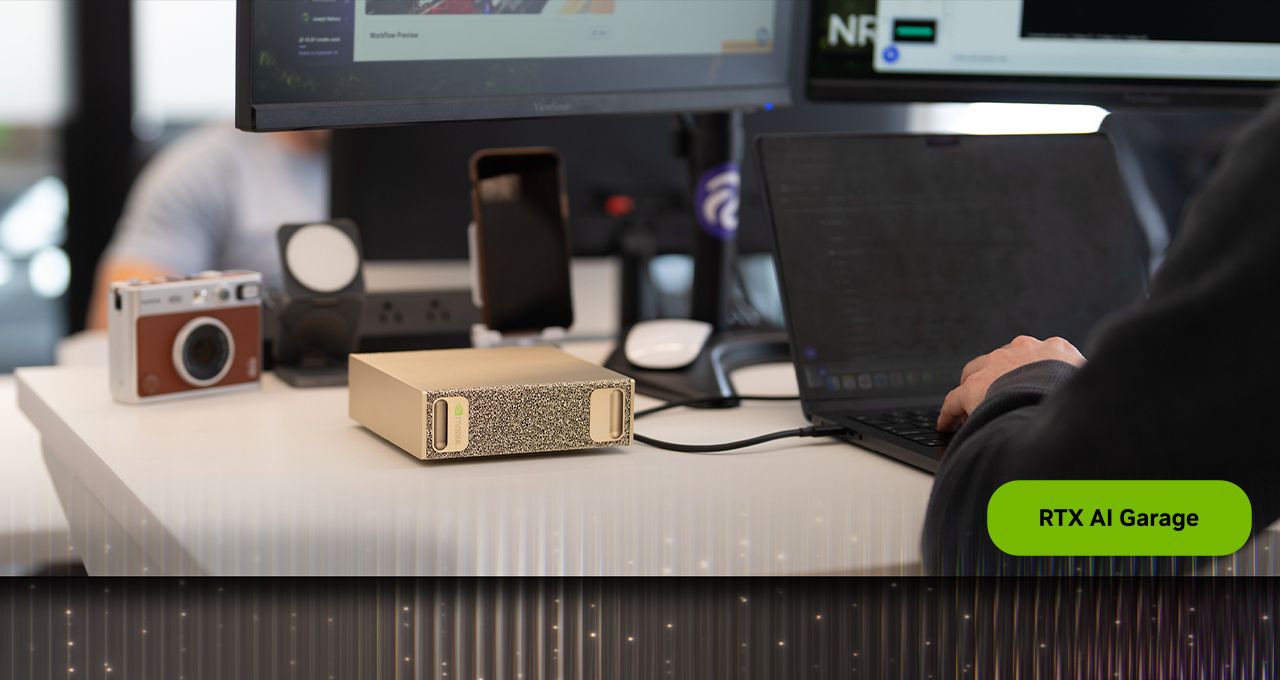
The pitch was straightforward: an AI agent running entirely locally on an RTX Spark-enabled laptop. By keeping the model on-device, NVIDIA argues, the agent gains full, secure access to your Google Workspace—Gmail, Drive, Slides, Sheets, and Docs—without the data ever leaving the hardware.
The agent’s defined role is to act as an intelligent filter. It doesn’t just aggregate information; it interprets it. During the demo, the system produced a prioritized list of tasks, summarized pending project items, retrieved specific files requested by the user, and even drafted responses to critical email threads. It offered follow-up actions and nudges, attempting to emulate the behavior of a high-functioning executive assistant who has been tracking a project’s lifecycle for weeks. This was not a standard chatbot; it was presented as a workflow engine with the agency to make recommendations.
Chronology: From Concept to "Stall"
The demonstration progressed through several stages of capability, illustrating the intended user journey:
- The Intake: The agent ingested data from the user’s Google Workspace to build a "workday map."
- The Synthesis: It identified the most critical blockers and pending requests, moving beyond simple keyword search to contextual understanding.
- The Execution: It began drafting responses and organizing files for an upcoming executive review deck.
- The Wobble: Midway through a briefing on a complex project, the agent stalled. The interface froze, leaving the presenter to navigate the awkward silence of a "doom loop."
The presenter managed the situation with the professional poise expected of a veteran demonstrator, shrugging off the glitch, rerunning the command, and moving forward. While not a "catastrophic" failure, the incident served as a stark reminder that this technology remains in its infancy. Furthermore, it was noted that the presenter themselves does not use the tool in their day-to-day work, as the hardware required—the RTX Spark—has not yet been commercially released, nor has it been given a price point or a definitive roadmap for consumer availability.
Supporting Data: The Local vs. Cloud Debate
The decision to build this agent for local processing is a strategic bet by NVIDIA, carrying both profound advantages and significant technical hurdles.
The Case for Local Processing
- Privacy: In an era where data leaks are a primary concern for IT departments, the ability to process sensitive emails and documents on-device is a massive selling point. Data never reaches the cloud, theoretically eliminating third-party surveillance or training concerns.
- Latency: By removing the "round-trip" to a server, the agent responds with immediate, sub-second speed.
- Offline Resilience: The agent remains functional during travel or Wi-Fi outages, a vital feature for the "always-on" professional.
- Customization: Because the model runs locally, it can be fine-tuned to the specific vocabulary, project naming conventions, and priorities of the individual user.
The Challenges of Local Implementation
- Hardware Dependency: The agent requires a high-performance RTX GPU. This creates a barrier to entry, excluding millions of knowledge workers who rely on standard-issue corporate laptops.
- Maintenance Overhead: Unlike cloud-based SaaS products, local AI requires the user (or their IT department) to manage model updates, security patches, and potential software conflicts.
- Resource Consumption: Running a sophisticated Large Language Model (LLM) locally drains battery life and generates heat, two enemies of the mobile professional.
Implications for the Future of Work
The implications of a successful deployment of this technology are nothing short of transformative. If NVIDIA can refine this agent to the point of reliability, the "Chief of Staff" model could solve the most tedious aspects of modern employment.
Removing the "Glue-Work"
Much of the modern workday is consumed by "glue-work"—the tedious administrative tasks that hold larger projects together but add little intrinsic value. Automated inbox triage, where the AI sorts the noise from the signal based on project relevance rather than timestamps, could return hours to a worker’s week.
Enhanced Executive Preparation
The agent’s ability to pull relevant slide decks, summarize meeting context, and flag potential conflicts in a calendar before they happen could fundamentally change how executives and managers prepare for their days. By moving from a reactive state (responding to alerts) to a proactive state (reviewing a curated, AI-prepared brief), the worker becomes a strategist rather than an administrator.
The Trust Deficit
However, the path to adoption is blocked by a significant trust deficit. As demonstrated by the mid-demo stall, agents are currently prone to "hallucinations"—confidently presenting incorrect information—or simply failing to execute complex chains of logic. When a user asks an AI to manage their calendar or email, they are outsourcing their professional reputation. If the AI skips a task, misinterprets an urgent email, or deletes a file, the fallout is real.
When asked about the reliability of the system, NVIDIA’s representatives were notably candid, admitting that they do not yet have the data to guarantee the agent’s accuracy under varying levels of workload. For a tool designed to be a "chief of staff," accuracy is not a "nice-to-have" feature; it is the fundamental requirement.
Conclusion: The Intern with Potential
At this stage, NVIDIA’s AI agent is less like a seasoned Chief of Staff and more like an incredibly bright, but occasionally unreliable, intern. It has the potential to handle vast amounts of data and perform complex synthesis, but it still requires constant supervision. It is a "promising prototype" that carries the weight of immense expectation.
For this technology to move from a trade-show floor to the corporate desktop, several milestones must be met. We need transparent source citations that allow users to verify the AI’s claims. We need robust error-recovery protocols that allow the agent to self-correct when a task stalls. Most importantly, we need rigorous, third-party benchmarks that prove the agent can function reliably under the stress of a real-world, 40-hour work week.
NVIDIA has succeeded in articulating a vision that resonates with the modern professional’s deepest pain points. They have sketched a future where the digital clutter of our lives is managed by a quiet, local intelligence. But for now, the "Chief of Staff" remains a fantasy—an impressive display of engineering that still has a great deal of homework to do before it earns its place on our desks. Until the reliability gap is closed, the inbox avalanche will continue, and we will remain, as before, waiting for a savior that isn’t quite ready to take the helm.


 Nana Muazin
 Ammar Sabilarrohman