Nana Muazin
The landscape of PC gaming performance is currently undergoing a radical transformation. As Nvidia pushes the boundaries of its proprietary upscaling and frame generation technologies, a persistent friction has emerged: the hardware divide. With the arrival of DLSS 5 and its demanding neural rendering requirements, users with older RTX architectures—from the pioneering 20-series to the workhorse 30-series—have largely been left behind by official support.
However, the resourceful PC modding community has once again stepped in to bridge this divide. A new, comprehensive utility dubbed "DLSS Unlocked," developed by modder ShyVox, has emerged as a definitive solution. By synthesizing existing community-driven mods into a single, cohesive package, DLSS Unlocked allows users across the entire RTX spectrum to access modern frame generation and neural rendering features. But as this technology gains traction, it brings with it a complex web of technical caveats, legal hurdles, and potential risks that every enthusiast should understand before attempting to modify their system.
The Technical Genesis: How DLSS Unlocked Works
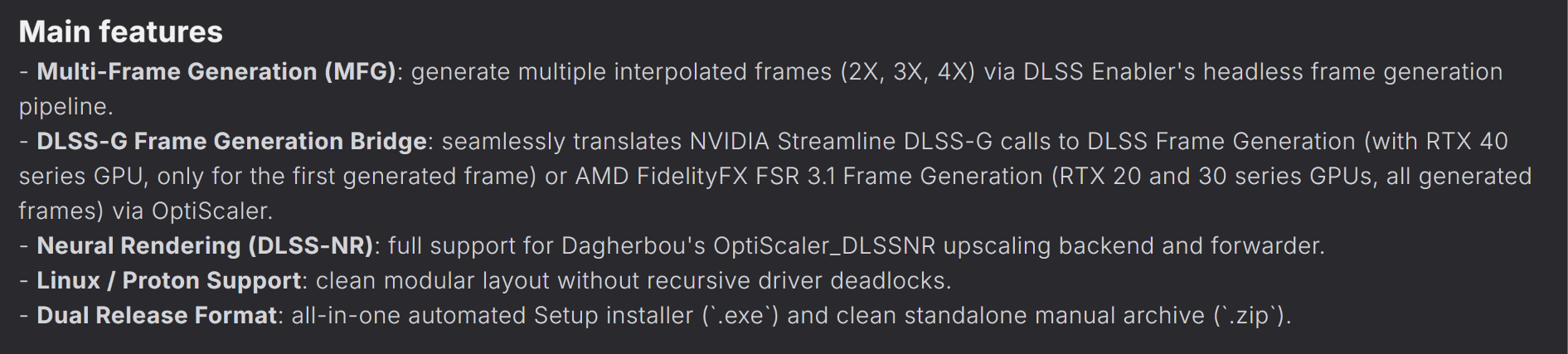
At its core, DLSS Unlocked is not a single, monolithic piece of code, but rather a masterfully orchestrated integration of two pre-existing community staples: OptiScaler_DLSSNR and DLSS Enabler.
The primary goal of the mod is to democratize features that Nvidia has restricted to its latest, most powerful silicon. While Nvidia claims that the specific architectural features of its newest GPUs are required for the overhead of DLSS 5, ShyVox’s mod challenges that narrative by leveraging clever workarounds to simulate the necessary compute pipelines.
The Component Architecture
To achieve its results, the mod utilizes a multi-layered approach:

- OptiScaler_DLSSNR: This component handles the neural rendering aspect. It essentially overlays a sophisticated upscaling and reconstruction algorithm that approximates the quality of DLSS 5 on hardware that doesn’t natively support the full stack.
- DLSS Enabler & DLSSG to FSR3: This is where the magic of frame generation occurs. For users on RTX 20- and 30-series cards, the mod routes frame interpolation through AMD’s FSR 3.1, effectively bypassing the need for Nvidia’s proprietary hardware-locked frame generation.
- The Hybrid Approach: On RTX 40-series cards, the mod is even more ambitious. It utilizes the native DLSS-G (Frame Generation) for the initial secondary frame, while handing off subsequent frames to FSR 3.1. This "hand-off" technique, powered by the DLSSG to FSR3 project, enables up to 6X Multi-Frame Generation (MFG), significantly boosting perceived fluidity in games that support native upscaling.
A Chronology of the Modding Movement
The release of DLSS Unlocked is the culmination of a months-long "arms race" between Nvidia’s software development and the modding community.
- Early 2026: As Nvidia began rolling out DLSS 5 with increased frequency, reports of performance bottlenecks and high power consumption on the flagship RTX 5090 hit the enthusiast press. This sparked a broader conversation about whether these requirements were truly hardware-dependent or simply a software gate.
- Mid-2026: Independent modders began experimenting with porting Nvidia’s multi-frame generation to older architectures. Nvidia responded with updates to the Nvidia App, designed to block unofficial dll-injection methods. These measures were largely ineffective, as the community restored support within hours of each patch.
- September 2026: ShyVox releases "DLSS Unlocked," providing a streamlined, user-friendly installation process. This moved the modding scene from a niche, command-line-heavy endeavor to an accessible utility for the average PC gamer.
Supporting Data: The Cost of Performance
While the prospect of enabling "next-gen" tech on an aging RTX 2060 is undeniably appealing, the data suggests that there is no such thing as a free lunch. The compute cost associated with DLSS 5 is substantial.
Early testing in high-fidelity titles—such as the recent NBA 2K27—reveals that even on the most capable hardware, enabling these features can result in significant power draw increases. In extreme cases involving the RTX 5090, enthusiasts reported power consumption spikes exceeding 600W, leading to anecdotal reports of thermal issues and, in rare instances, damaged hardware connectors.
For users on older cards, the situation is different. Because the mod relies on FSR 3.1 interpolation to fill in the gaps, the visual quality—while impressive—does not always match the native AI reconstruction of official DLSS 5. Users may experience "ghosting" or artifacts during high-motion sequences, a common trade-off when using frame interpolation outside of its intended, hardware-accelerated ecosystem.
Official Stances and Industry Implications
Nvidia has maintained a consistent, albeit somewhat ambiguous, stance regarding third-party modding of their software. While the company encourages open development and acknowledges the creativity of the community, they have explicitly warned that unofficial modifications to their drivers or software stacks are unsupported.
The Anti-Cheat Conflict
Perhaps the most significant implication for the average gamer is the interaction between these mods and anti-cheat software. Modern multiplayer games, particularly competitive shooters like Valorant or Call of Duty, utilize kernel-level anti-cheat engines. These systems look for unauthorized DLL injections—exactly the method used by DLSS Unlocked.
Using this mod in a multiplayer environment is a high-risk gamble. There is a high probability that anti-cheat software will flag the injection, leading to account bans. The modder, ShyVox, has been clear in their documentation: DLSS Unlocked is strictly for single-player experiences.
Looking Forward: The Future of Neural Rendering
The success of DLSS Unlocked signals a broader shift in the PC gaming industry. As games become more reliant on AI-driven upscaling to maintain frame rates at high resolutions, the barrier to entry for gaming becomes increasingly tied to software support rather than just raw GPU power.
Key Considerations for Users:
- Legal and Ethical Use: Users must provide their own patched DLSS 5 DLLs. The mod does not distribute proprietary Nvidia code, which is a crucial distinction for its continued existence on platforms like Nexus Mods and GitHub.
- Hardware Health: Given the power requirements of modern neural rendering, users are advised to monitor their GPU temperatures and power delivery closely. Older power supplies may not be equipped to handle the transient load spikes that come with aggressive frame generation.
- The "DirectX 12" Requirement: The mod is currently limited to titles running on the DX12 API. This is a technical constraint based on how the mod hooks into the game’s rendering pipeline.
Ultimately, DLSS Unlocked is a testament to the longevity of hardware. It proves that with enough community ingenuity, older GPUs can continue to perform well beyond their expected lifecycle. However, it also serves as a reminder that as we enter the era of neural-heavy gaming, the software-to-hardware relationship is becoming more fragile than ever. For those willing to tread carefully—and stay strictly within the confines of offline gaming—DLSS Unlocked provides a fascinating, high-performance glimpse into the future of rendering, regardless of the age of the silicon inside your machine.

 Asro
Asro
 Nana
Nana