Nila Kartika Wati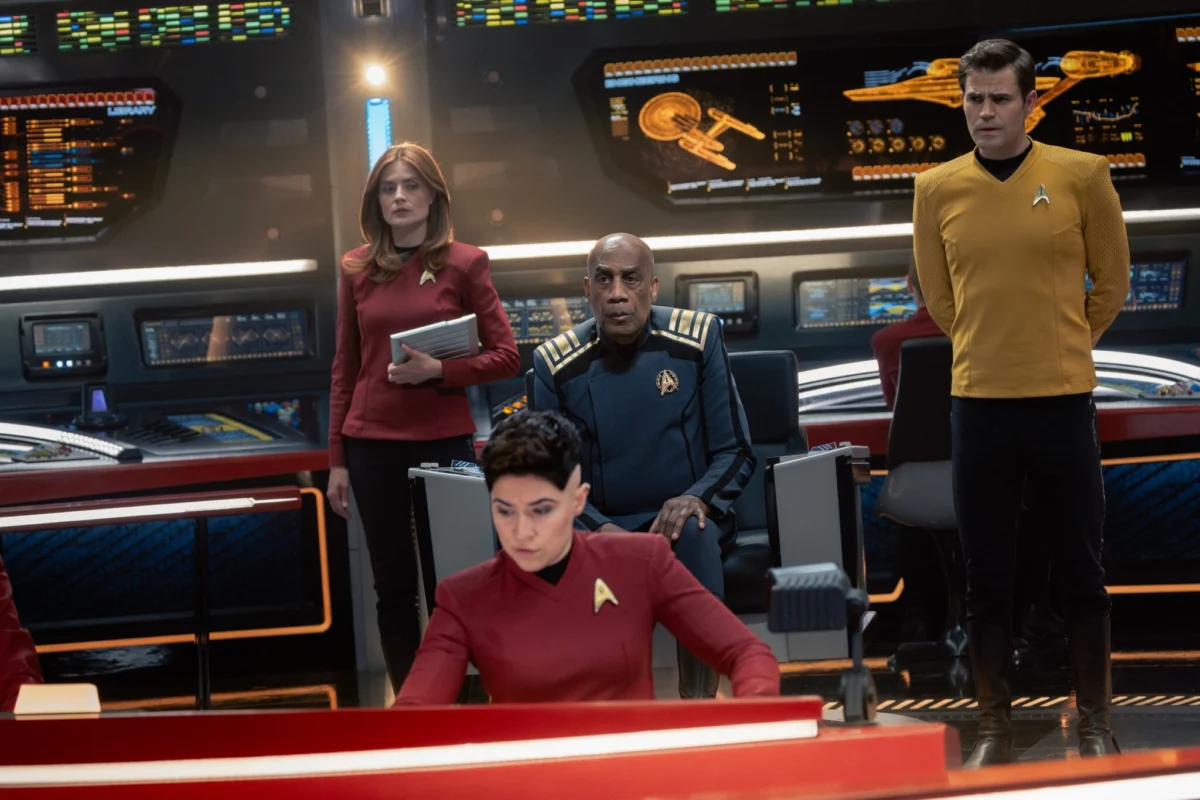
In the sprawling, often idealistic annals of the United Federation of Planets, few regulations cast as long and dark a shadow as General Order 24. While the mandate—a brutal authorization to eradicate all biological life on a planetary surface—has remained a dormant relic of the original series, it recently surfaced in the eighth episode of Star Trek: Strange New Worlds Season 4, "The Silent Sentinel." The re-emergence of this "appalling" order serves as a stark reminder that even in the enlightened 23rd century, the line between strategic necessity and war crime remains perilously thin.
The Genesis of a Galactic Taboo
General Order 24 is, by its very definition, a total-war protocol. It is the ultimate expression of Starfleet’s destructive capacity, intended for use only in the most extreme, irreversible scenarios. First introduced to audiences during the confrontation between the USS Enterprise and the warring civilizations of Eminiar VII and Vendikar, Captain James T. Kirk utilized the threat of the order as a high-stakes diplomatic bluff to force a cessation of hostilities.

The directive made a haunting reappearance in the annals of Starfleet history when Garth of Izar, a decorated hero turned antagonist, invoked it during his descent into madness while attempting to subjugate Antos IV. Until the recent events involving the Enterprise under the command of Admiral Simon Reeger, the order had remained largely absent from modern spinoff canon—though historians note that Captain Benjamin Sisko flirted with similar " scorched-earth" logic during the Maquis insurgency in the 24th century.
A Chronology of Command: The Reeger Incident
The most recent invocation of the order occurred under circumstances that have sent shockwaves through Starfleet Command. Admiral Simon Reeger, a decorated veteran of the Klingon conflicts and a commander once lauded for his tactical brilliance at the Battle of Zeta Reticuli, boarded the USS Enterprise under the guise of an urgent, time-sensitive mission.

With Captain Christopher Pike and First Officer Una Chin-Riley currently deployed on a hazardous away mission in a signal-dead zone, the Enterprise found itself under the temporary authority of an admiral who appeared to prioritize expediency over established protocols. The situation was further complicated by the presence of Lieutenant James T. Kirk, who was pressed into service as an acting first officer.
The primary objective was the interception of an unidentified, cloaked vessel responsible for a massive act of terror. However, as the pursuit intensified, it became clear that Reeger’s personal history—specifically his tragic loss of family in the same terror attack—had compromised his judgment. When the target vessel sought refuge within the atmosphere of a populated world, Reeger bypassed standard engagement protocols and issued General Order 24, threatening the lives of 5,000 civilians to neutralize a single threat.

Supporting Data: The Anatomy of a Rogue Commander
The escalation from a standard pursuit to a potential planetary massacre was not merely a tactical error but the culmination of a deep-seated professional grievance. Investigation by the Enterprise crew uncovered disturbing patterns in Admiral Reeger’s career:
- The Zeta Reticuli Fraud: While Reeger was historically credited with the victory at Zeta Reticuli, internal records and testimony from Dr. M’Benga indicate that the true architect of the victory was George Samuel Kirk Sr., the elder brother of James T. Kirk. Reeger, incapacitated in sickbay during the heat of the engagement, not only claimed credit for the achievement but actively sabotaged the elder Kirk’s career to suppress the truth.
- Systemic Harassment: Evidence suggests that Reeger utilized his administrative power to prevent the Kirk family from reuniting, effectively exiling the elder Kirk from command opportunities and personal leave for years.
- The Cordrazine Intervention: The crisis was ultimately averted through a desperate, unconventional maneuver by Lieutenant Kirk. By administering a dose of cordrazine—a potent, high-risk stimulant—into Reeger’s personal refreshments, the crew managed to incapacitate the Admiral, who had reached a state of cognitive breakdown. Dr. M’Benga, acting in the interest of the Enterprise crew, took full professional responsibility for the incident to protect the younger Kirk’s burgeoning career.
Official Responses and Tactical Implications
The fallout from the Reeger incident remains a subject of intense debate within Starfleet Intelligence. While the official report remains classified, the incident has highlighted a significant weakness in the current chain of command: the lack of oversight when a high-ranking officer "commandeers" a vessel.

The incident also drew a sharp, if unintended, parallel to the contemporaneous B-story involving Captain Pike. While Reeger chose the path of total destruction against civilian populations, Pike and his crew successfully navigated an Andorian pirate raid through negotiation and non-lethal, high-level technical ingenuity. The contrast between Pike’s leadership—which empowers his crew’s unique skill sets—and Reeger’s authoritarian, siloed decision-making, has become a standard case study in leadership training at the Academy.
Furthermore, the heroism of Ensign Uhura, who successfully turned the pirates’ own communication technology against them through a precise sonic frequency, resulted in an accelerated promotion to Lieutenant Junior Grade. This serves as a pointed contrast to the bureaucratic stagnation often criticized in other sectors of the fleet, proving that merit-based advancement remains a core tenant of the Enterprise ethos.

Implications: The Enduring Danger of the "Crazy Admiral"
The trope of the "deranged high-ranking officer"—seen previously in the Next Generation era with figures like Admiral Satie or the rogue actions during the Pegasus project—has long been a concern for the Federation. However, the Strange New Worlds incident marks a shift in how the organization approaches such threats.
The event confirms that General Order 24 is not merely an archaic, unused regulation, but a "loaded gun" hanging on the wall of the Federation’s legal structure. The fact that an admiral could legally, if immorally, order the destruction of a planet based on a personal vendetta suggests that the Federation’s safeguards are insufficient.

As a result, Starfleet is expected to face mounting pressure to formally decommission or severely restrict the invocation of General Order 24. Critics argue that any order allowing for the mass destruction of a planetary population has no place in a society built on the principles of exploration and empathy.
A Legacy of Integrity
The resolution of the incident—marked by Spock’s refusal to perform a forced mind-meld on Kirk to retrieve classified codes—stands as a triumph of ethical behavior over the "ends-justify-the-means" philosophy favored by the likes of Reeger. It was a firm rejection of the tactics seen in later, darker eras of galactic history, such as the questionable maneuvers surrounding the Khitomer Accords.

For the Kirk brothers, the encounter provided a rare, cathartic moment of connection. Director Sharon Lewis’s visual framing of the two brothers walking in perfect synchronicity served as a poignant reminder that while the shadow of their father’s past was long, their future remains unwritten.
As the Enterprise continues its mission, the ghost of General Order 24 remains a cautionary tale. It is a reminder that in the vast, dangerous expanse of the frontier, the most dangerous enemies are not always the ones on the bridge of an invisible, cloaked ship—sometimes, they are the ones wearing the uniform of your own command. The Federation’s ability to survive and thrive will depend not on its ability to enforce total-war protocols, but on the resolve of its officers to stand against them when the stakes are at their highest.

 Layla Zulfa
 Nana Muazin