Muslim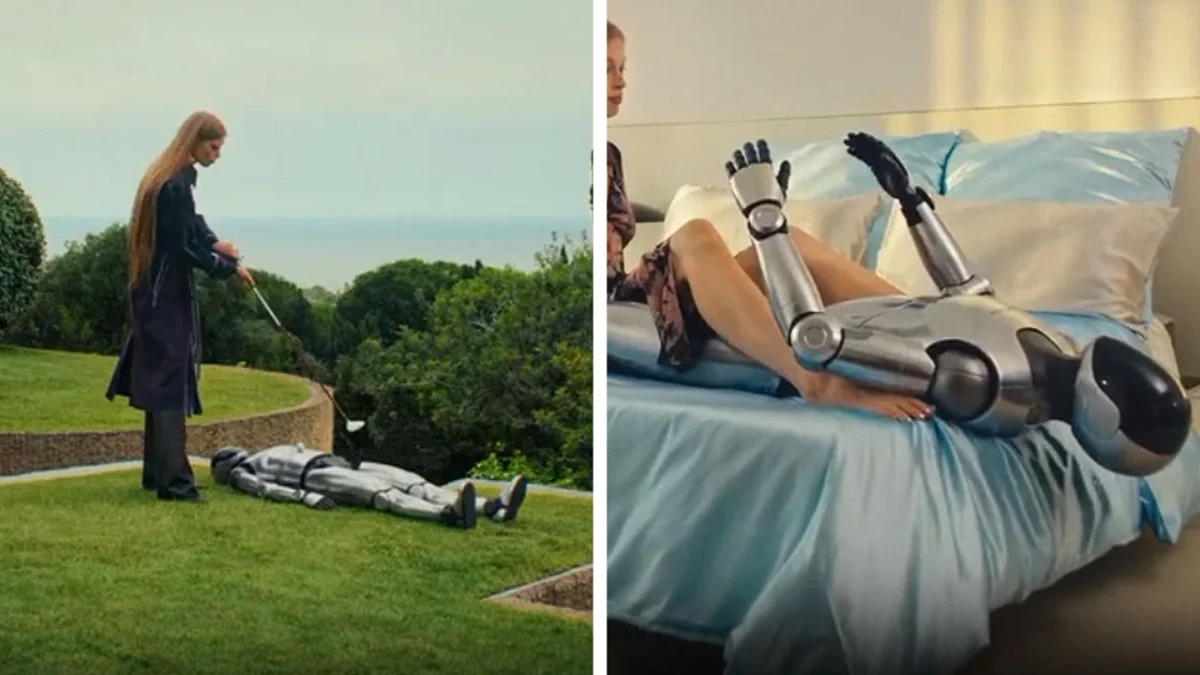
In the high-stakes world of fashion marketing, brands often masquerade as rebels. They sell “rule-breaking” as a lifestyle accessory, usually manifested in distressed denim or oversized logos. However, the Spanish fashion house Desigual has recently pivoted from aesthetic rebellion to a deeply philosophical—and highly provocative—critique of the modern technological landscape. Their latest campaign, “Born to Disobey,” arrives at a cultural inflection point, blending high-concept cinematography with an unmistakable, real-world subtext that feels as much like a manifesto as it does an advertisement.
At the center of this narrative is Vivian Jenna Wilson, the estranged daughter of Tesla CEO Elon Musk. By casting Wilson to face off against a robotic entity clearly modeled after the Tesla Optimus, Desigual has moved beyond mere brand promotion and into the realm of cultural commentary, positioning human intuition as the final frontier of resistance against an increasingly automated world.
The Genesis of the Campaign: A Chronology of Disobedience
The “Born to Disobey” campaign, helmed by the production powerhouse ProdCo and directed by the creative collective PSG (Yukihiro ‘Sho’ Shoda, Pau López, and Gerardo del Hierro, formerly of TURBO), is a masterclass in layered symbolism.
The project’s development was characterized by a deliberate, almost organic, alignment between the brand’s ethos and the personal convictions of its lead talent. Unlike traditional commercial projects where the model is simply a vessel for the clothes, Wilson’s involvement was deeply personal. Her own vocal skepticism toward artificial intelligence—particularly its propensity to automate creative labor and strip the “human intention” from art—made her the ideal face for a campaign that challenges the mandate of the machine.
The film, which features a robot named “DESI 84”—a nod to the year of Desigual’s founding in Barcelona—functions as a psychological tug-of-war. Throughout the short film, Wilson interacts with the machine, treating it with a mixture of pity, boredom, and defiance. She attempts to teach it to “perform” in the bedroom, walks it on a leash, and eventually delivers a decisive blow to its chassis. When the robot malfunctions and begins to bash its head against a wall in a loop of binary failure, Wilson offers the final, damning verdict: “Some things aren’t meant to be fixed.”
The production process itself was a meta-commentary on the state of AI. While the robot in the film is meant to represent the cold, calculated future, it is, in fact, a human actor. The performer meticulously studied footage of the Tesla Optimus, mirroring its stiff, uncanny gait and jerky, hyper-optimized movements. This choice provides an ironic layer to the film: the very thing we fear—the robot—is actually a performance of a human pretending to be a machine.
The Technological Context: Why Now?
The timing of Desigual’s campaign is nothing short of surgical. It arrives as the discourse surrounding artificial intelligence has shifted from utopian optimism to existential dread. Recent warnings from prominent figures within the AI industry, including researchers at Anthropic who have suggested that the rapid, unchecked development of AI could pose a "kill switch" scenario for humanity within the next decade, have fueled a growing public anxiety.
Desigual is tapping into a broader sentiment that the “optimization” of society has reached a breaking point. We live in an era where algorithms determine what we watch, what we buy, and, increasingly, how we communicate. The campaign’s title, “Born to Disobey,” is a direct rebuttal to the "system" that encourages efficiency, compliance, and algorithmic predictability.
By referencing the 1920 Karel Čapek play R.U.R. (Rossum’s Universal Robots)—which famously introduced the word "robot" to the world—the campaign grounds itself in a century of science fiction warnings. In the play, the robots eventually turn on their masters, a trope that has dominated our cultural psyche for decades. Desigual takes this trope and updates it for 2026, arguing that the true danger isn’t that robots will destroy us, but that we will slowly lose our capacity for the erratic, messy, and unpredictable behavior that makes us human.
Supporting Data: The Human vs. Machine Divide
To understand the weight of Desigual’s message, one must look at the current intersection of creative labor and automation. A 2024 report on the state of generative AI in the arts noted that 67% of creative professionals express significant concern over the devaluing of human craft.
The "Born to Disobey" campaign serves as a high-visibility platform for these concerns. Vivian Jenna Wilson’s involvement is not just a casting choice; it is a political statement. As a transgender woman who has been open about her experiences with societal pressures to conform, her role as the "disobedient" protagonist carries layers of meaning. She represents the individual refusing to be processed by a society that demands conformity, whether that demand comes from conservative social structures or the cold, binary logic of an algorithm.
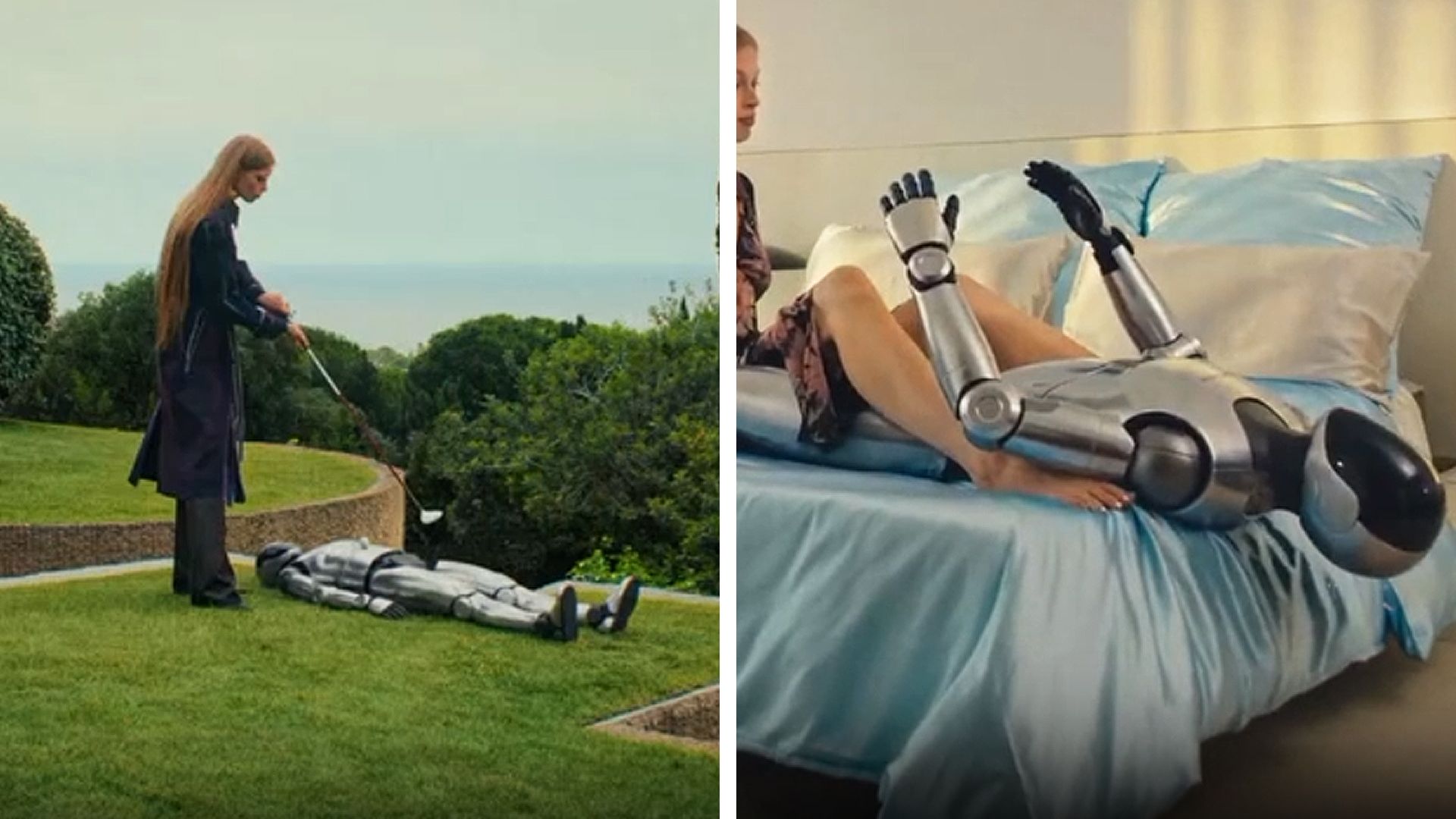
The contrast between the robot and the model is visually and conceptually stark:
- The Robot (DESI 84): Represents the systemic drive for efficiency, the "optimization" of behavior, and the erasure of flaws.
- The Model (Vivian Jenna Wilson): Represents spontaneity, emotional volatility, subjective experience, and the radical act of self-definition.
Official Responses and Creative Philosophy
The creative directors at PSG have noted that the narrative arc of the film developed with surprising speed. Because Wilson shared such an acute, lived-in skepticism toward the technology the robot represented, the friction in the film feels authentic.
In an official statement, Desigual articulated the core philosophy of the campaign: "The greatest rebellion is no longer about fighting against the system but about refusing to be part of it. When everything invites you to obey, the answer is attitude, irony, and the freedom to be yourself."
This is a departure from the "rebel" trope of the 1990s and 2000s, which usually involved anti-establishment rhetoric aimed at governments or corporations. Desigual’s new rebellion is internal. It is an argument for the preservation of the "self" in a world that is increasingly trying to predict and curate that self. The campaign suggests that the most radical act one can perform in the 21st century is to retain one’s human "imperfections."
The Oedipal Undertones: A Subtext of Dominance
It is impossible to discuss the campaign without addressing the elephant in the room: the implicit, and perhaps explicit, critique of Elon Musk. The visual resemblance of the robot to the Tesla Optimus is not a subtle Easter egg; it is a thematic anchor.
Many critics have identified a Star Wars-like, Oedipal tension in the film. By having his own daughter "attack" a machine designed by his company, the campaign creates a powerful, albeit unspoken, narrative of familial and ideological rebellion. It reframes the debate over AI not as a sterile academic discussion about safety, but as a clash between two visions of the future: one driven by the cold, calculated, and often callous ambition of "interplanetary" tech magnates, and the other driven by the messy, intuitive, and defiant spirit of individual human life.
This adds a layer of "faux-profundity" that is usually absent in high-end fashion advertising. While other brands might use a futuristic backdrop to sell a jacket, Desigual is using it to pose a question about the nature of the human condition.
Implications: The Future of Fashion Marketing
What does this mean for the future of brand communication? Desigual’s “Born to Disobey” signals that consumers are becoming increasingly weary of sterilized, AI-generated, or "perfect" digital imagery. There is a growing appetite for campaigns that possess "human intent"—work that feels like it was made by people who have something to say, rather than by an algorithm designed to maximize engagement.
The implications for the fashion industry are significant. As AI tools become more integrated into the design and manufacturing process, brands that can successfully frame themselves as the "human" alternative will likely find a more loyal and engaged audience. By acknowledging the fear of the machine and standing firmly on the side of human intuition, Desigual has effectively weaponized its brand identity.
In conclusion, the "Born to Disobey" campaign is more than a commercial success; it is a cultural touchstone. It captures the zeitgeist of a generation that feels simultaneously tethered to and threatened by technology. By casting Vivian Jenna Wilson as the agent of chaos, Desigual has reminded us that while machines can be programmed to mimic human behavior, they can never be programmed to possess the one thing that truly matters: the freedom to say "no."
As we look toward an increasingly automated future, the most rebellious thing you can do isn’t to break the screen—it’s to remain stubbornly, defiantly, and authentically yourself. Desigual has tapped into that truth, and in doing so, they have set a new standard for what it means to be a brand in the age of the algorithm.


 Sagoh
Sagoh
 Lina Irawan