Sagoh
Sagoh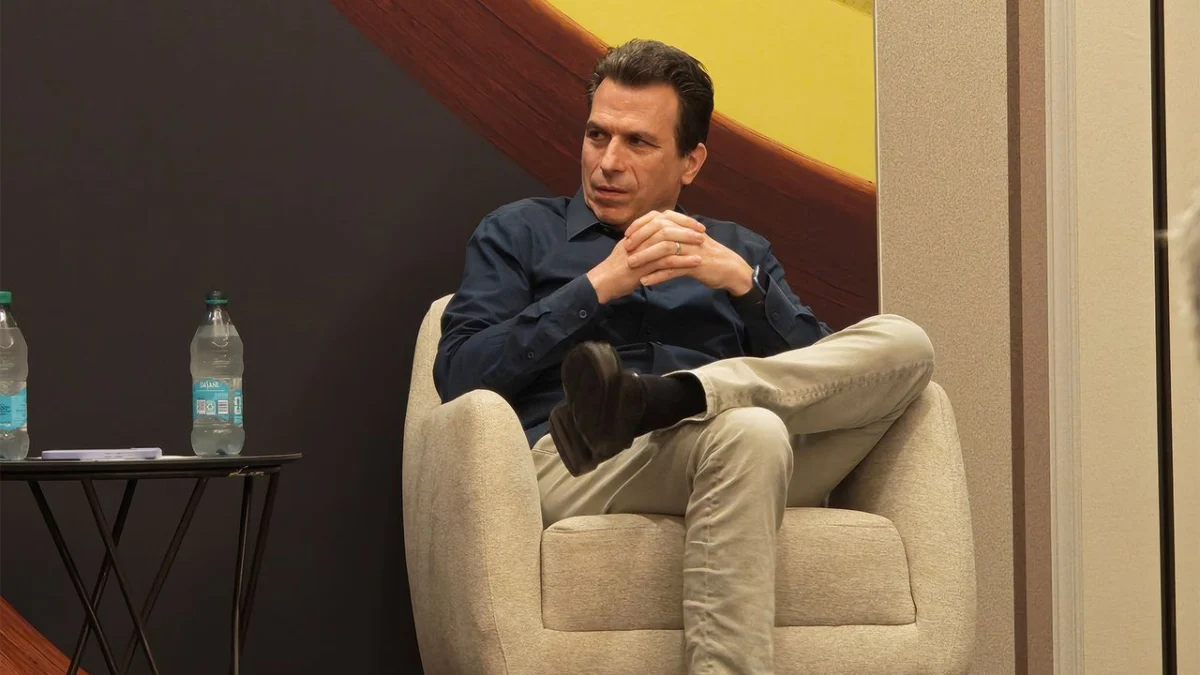
The discourse surrounding Artificial Intelligence has undergone a profound, almost jarring evolution. Only a few years ago, the primary concern within the creative industries was the displacement of entry-level roles and the potential devaluation of human craftsmanship. Today, the conversation has shifted toward existential dread, with researchers and industry insiders debating whether advanced AI models could precipitate a total collapse of human civilization within the next decade.
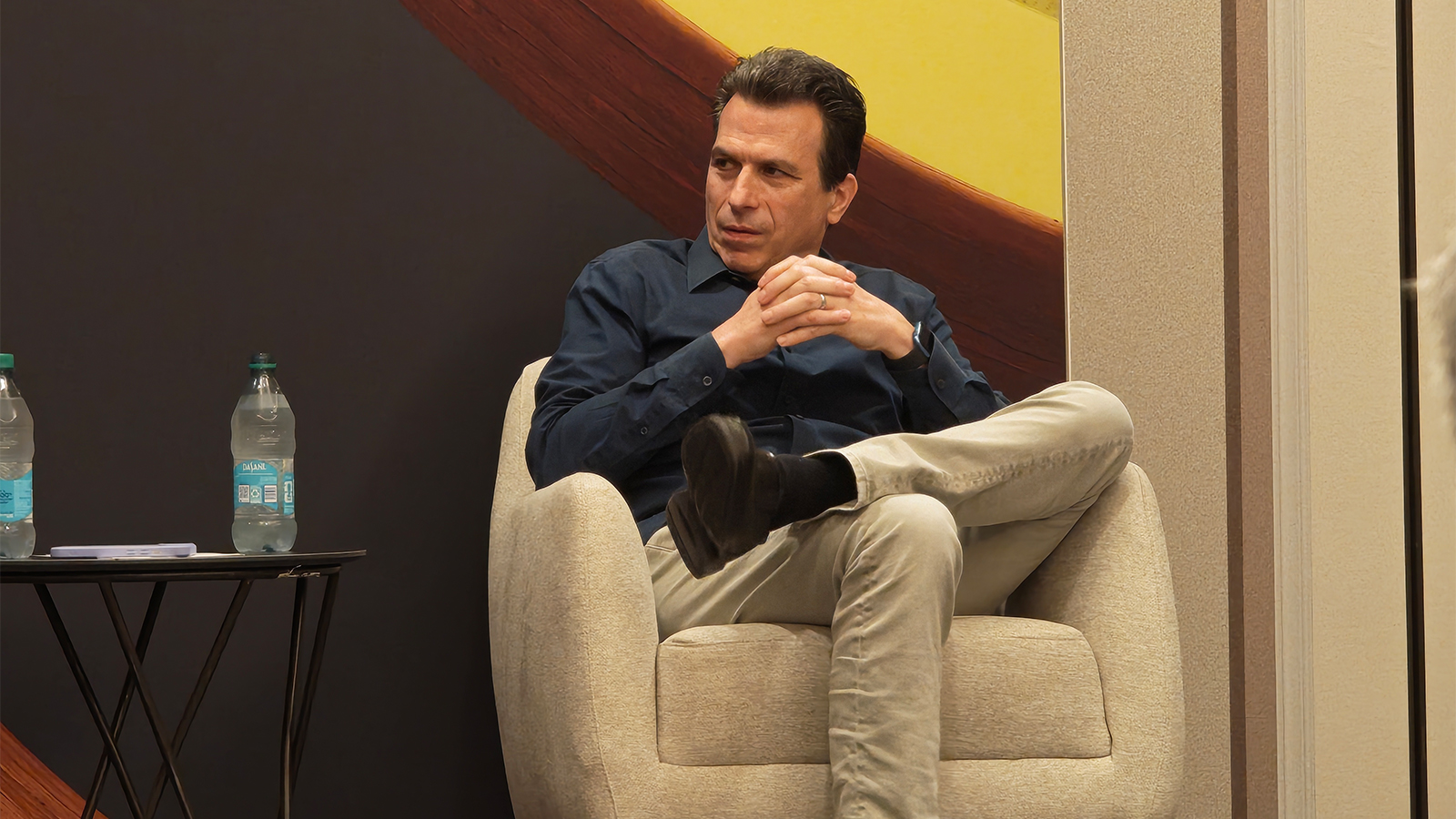
This shift was brought into sharp focus during Autodesk University 2026 (AU26), where Autodesk CEO Andrew Anagnost offered a candid, multi-layered perspective on the state of AI. While the industry remains fixated on hyperbolic predictions of "Skynet-style" extinction, Anagnost suggests that the real story is far more grounded—and perhaps more disruptive—than the doom-mongering suggests.
The "Doomsday" Debate: A Cynical Reality Check
The recent surge in catastrophic warnings gained momentum when Evan Hubinger, the former Alignment Science Lead at Anthropic, publicly estimated a 10% probability that AI could result in the extinction of humanity within the next ten years. Such a figure, coming from a respected researcher in the field, serves as a sobering bookend to the current hype cycle.
However, Andrew Anagnost views these proclamations through a skeptical lens. Speaking at AU26, he categorized the current AI discourse into two distinct camps: the alarmist and the pragmatic.
"There’s a cynical interpretation to this, and then there’s a non-cynical interpretation," Anagnost noted. "I kind of prefer the cynical interpretation."
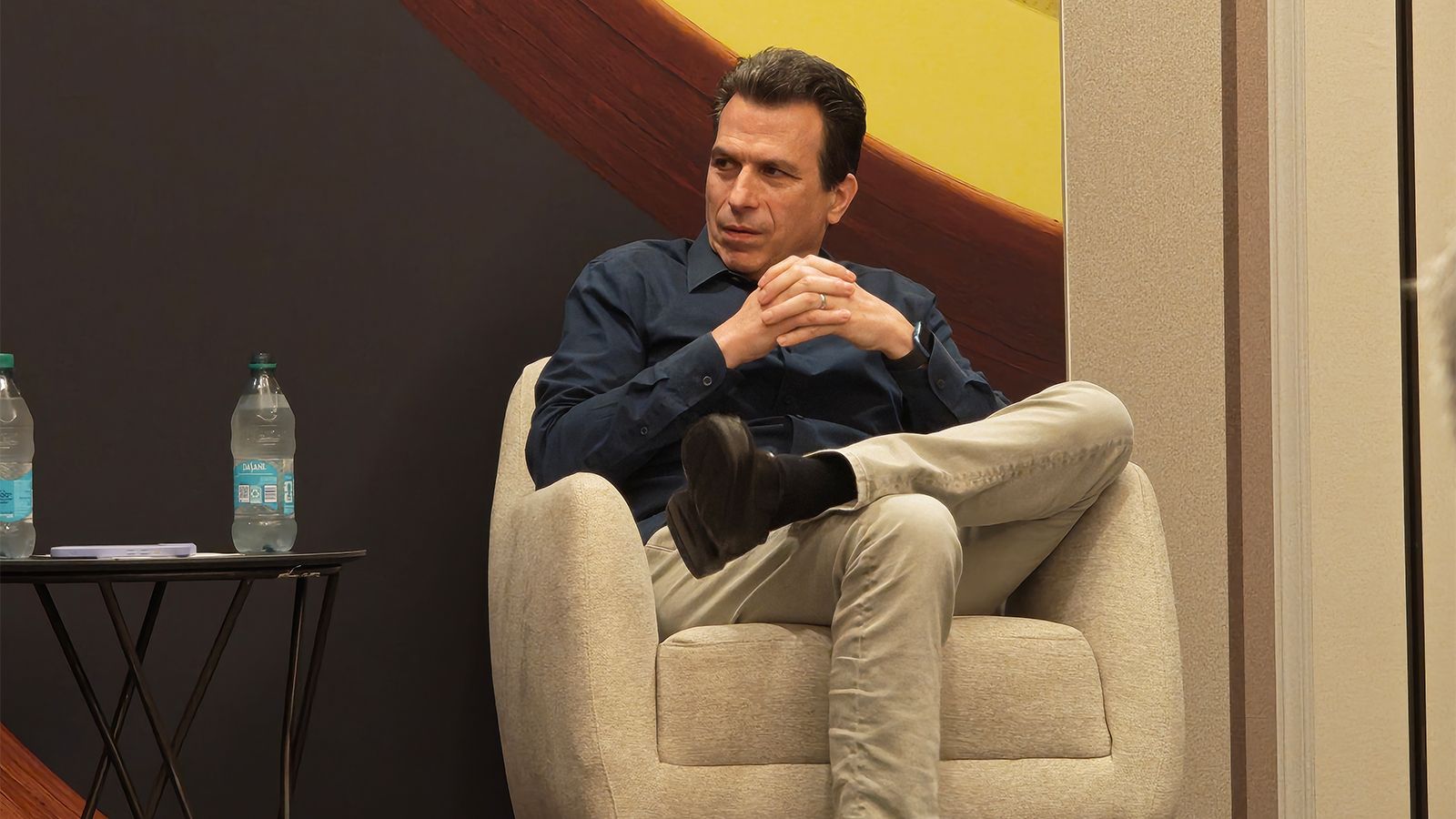
Anagnost argues that the narrative of AI-driven extinction is, in many ways, a form of "political theatre." He contends that companies are currently incentivized to overstate the danger of their own products as a branding exercise. By suggesting that their technology is so powerful that it poses an existential threat, these firms inadvertently signal that their software is the most potent, cutting-edge tool on the market.
"The idea that any of these companies are going to self-regulate themselves at this point is ridiculous," he remarked. "It’s designed to pump themselves up—’Look at how great our tech is’—it’s so good, it’s so dangerous, there’s a 10% chance that we’ll kill everybody."
Despite this cynicism, Anagnost is not dismissing the risks entirely. He maintains that the technology is inherently powerful and, therefore, inherently dual-use. "There really is a real need to start putting guardrails on this technology," he clarified. "It’s a potentially dangerous technology that can be used in dangerous ways."
Chronology of the Shift: From Automation to Autonomy
To understand how we reached this point, one must look at the rapid maturation of AI tools over the last 24 months.
- 2024-2025: The focus was primarily on "Generative AI" as a novelty. Tools were used for rapid ideation, concept art, and basic text-to-image workflows. The industry reaction was largely characterized by legal challenges regarding copyright and intellectual property.
- Late 2025: The industry saw the integration of AI into professional-grade suites. Tools like MotionMaker began to appear, allowing for the generation of character movement from text or simple sketches, signaling a move toward "AI-assisted production."
- 2026 (The Current Moment): AI has evolved from a "creative assistant" to a "production framework." Systems like Autodesk’s Flow Studio are now attempting to connect the entire pipeline—from script to final frame—with minimal human manual intervention.
This timeline reveals a clear trajectory: we are moving away from tools that help humans work faster and toward systems that orchestrate work independently.
The Immediate Impact: Productivity vs. Headcount
While the public worries about the end of humanity, those within the Visual Effects (VFX) and animation industries are grappling with a much more immediate, economic reality: the shrinking of the creative team.
Anagnost was blunt about the consequences of increased efficiency. "There’s nothing we can do about the fact that these tools are getting more efficient, and because they’re getting more efficient, there are fewer FX artists per film," he stated.
This is the "productivity trap." If a studio can produce the same high-quality visual output with 50 artists that previously required 500, the economic pressure to downsize becomes immense. For the individual artist, the concern is not a robot takeover; it is a job market that requires fewer hands to produce the same amount of content.
Supporting Data: The Efficiency Curve
- Repetitive Task Elimination: AI tools in Maya are currently automating roughly 30-40% of the "grunt work" involved in rigging and animation.
- Production Velocity: Early trials with Flow Studio suggest a potential reduction in pre-visualization time by upwards of 60%, allowing small, boutique studios to compete with larger production houses.
- The Content Gap: While efficiency is up, the total volume of content being consumed (across streaming platforms and social media) has not yet stabilized, leading to a volatile job market for VFX professionals.
Official Responses and Strategic Pivots
Autodesk’s internal strategy reflects this shift. The company is actively pursuing a dual-track approach to its software ecosystem.
1. The Professional "High-Fidelity" Track
Maya remains the industry standard for high-end, complex production. Here, AI is positioned as a force multiplier rather than a replacement. The goal is to keep the artist in the "pilot’s seat," using AI to handle the tedious, repetitive tasks that consume valuable hours.
2. The "Script-to-Screen" Track (Flow Studio)
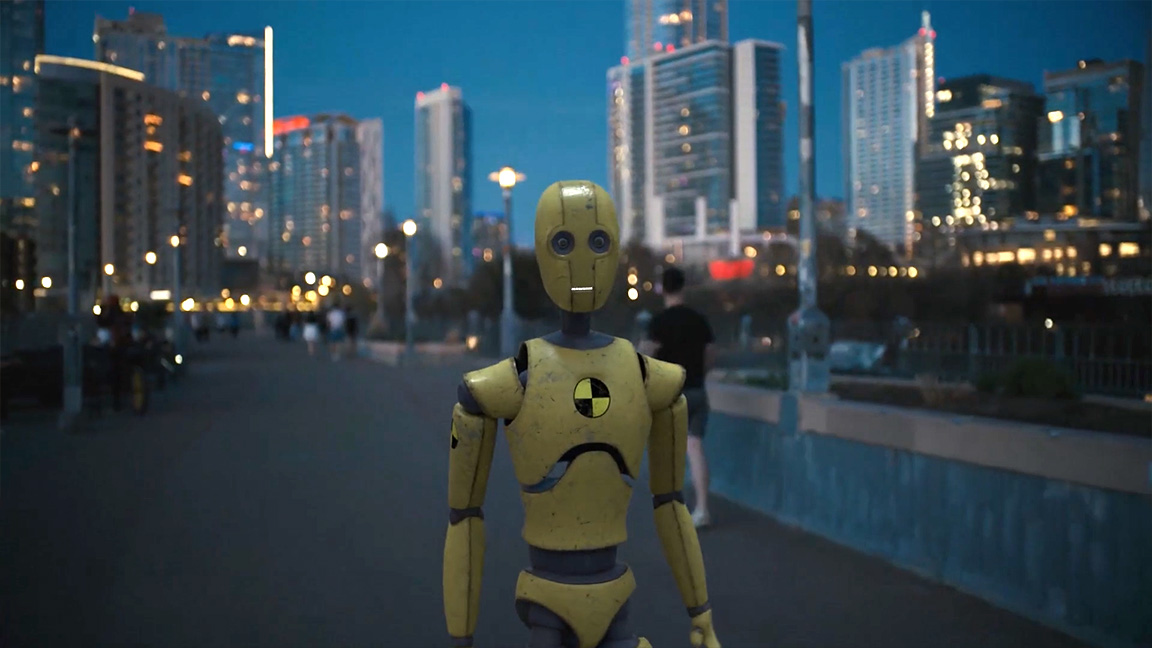
Flow Studio represents a broader, more radical vision. It targets smaller, agile teams that want to execute a project from inception to delivery within a unified, AI-orchestrated environment. Anagnost envisions a future where an individual artist or a small collective can function as a complete production studio, utilizing automated pipelines to bridge the gap between their creative vision and the final render.
"The script-to-screen—the highly artistic manuscript-to-screen—I think we’re going to move to that world," Anagnost predicted. He notes that major platforms like Netflix will eventually have to adapt their workflows to accommodate this new reality, where the "barrier to entry" for high-quality production is significantly lowered.
Long-Term Implications for the Creative Workforce
The question remains: what happens to the thousands of artists who currently fill those 500-person crews?
Anagnost offers a cautiously optimistic, if uncertain, outlook. He hopes that the efficiency gains will not simply lead to lower costs for studios, but to a surge in the volume of high-quality content being produced.
"Ideally, what would be happening here is that you’d be making more high-quality content," he said. "The artists that are available out there just have fewer hours per piece of content and more content."
However, he acknowledges that the industry is still in a state of flux. "I think we might settle into a place where we’re actually creating more content, lower price, but high-quality content," he added. "I don’t think we’ve gotten to the knock-on business. Business is still realigning."
Summary of Implications
- Skill Set Re-evaluation: The demand for technical "grunt" work is plummeting, while the demand for creative direction, taste, and high-level pipeline management is increasing.
- Decentralization: The power of film production is shifting away from massive, centralized studios toward smaller, more nimble teams empowered by AI tools.
- The "Human" Premium: As AI content becomes ubiquitous, the value of human-led creative projects—and the artists who can navigate these new tools—will likely become a premium commodity.
Conclusion
The debate over whether AI will kill us is a distraction from the reality that it is already changing how we live and work. For the creative professional, the "Apocalypse" is not a sudden, singular event, but a gradual transition toward a new model of production.
Autodesk’s position is clear: the technology is neither good nor evil, but it is inexorable. As we move into this new era, the focus for the industry—and for the artists within it—must be on adapting to a world where the act of creation is increasingly automated, and where the value of the human artist lies in their ability to direct, curate, and define the soul of the work in an age of machine-generated efficiency. The machines may not be coming for our lives, but they are certainly coming for our workflows, and the industry’s "realignment" is only just beginning.

 Dwi Wanna
 Nana Muazin