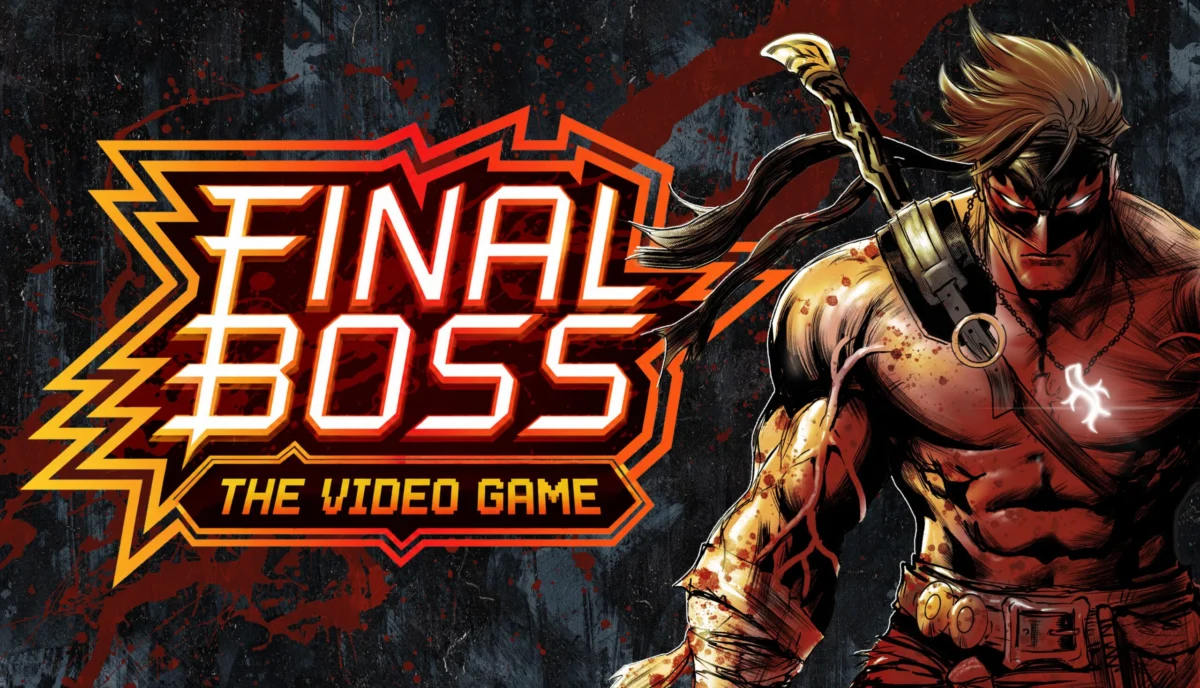
LOS ANGELES, CA – July 14, 2026 – Gamers and comic enthusiasts alike are buzzing with anticipation following the official announcement of Final Boss: The Video Game, an ambitious title set to redefine genre conventions. Developed by Bit Bot Media in collaboration with its in-house studio Mecanimal Games, this innovative game promises a unique hybrid experience, seamlessly transitioning between a pixel art side-scrolling beat ’em up and a modern 3D fighting game. Slated for a Q4 2028 launch on PC via Steam, the game is a direct adaptation of the acclaimed Final Boss Image Comics series, meticulously crafted by creator Tyler Kirkham.
The reveal has ignited considerable interest due to its audacious premise: a game that dynamically shifts its core mechanics and visual style as players progress. What begins as a nostalgic homage to ’80s arcade brawlers will dramatically evolve into a high-stakes, skill-based 3D fighting game during pivotal boss encounters, all while weaving in animated comic book storytelling to drive its narrative. This bold design choice aims to deliver a "love letter to the golden age of gaming, reimagined for a new generation," as stated on its Steam page, appealing to both seasoned veterans of classic arcades and contemporary fighting game aficionados.
The Genesis of a Hybrid Vision: From Comic Panels to Interactive Pixels
The conceptualization of Final Boss: The Video Game stems directly from the creative DNA of its source material. Tyler Kirkham, the visionary behind the Final Boss Image Comics series, expressed his deep personal connection to the project, revealing the diverse influences that shaped both the comic and, subsequently, the game. "Final Boss was born from my love of classic arcade games, fighting games, action movies, and comics," Kirkham shared in a press release. This multifaceted inspiration is precisely what Bit Bot Media and Mecanimal Games sought to translate into an interactive medium, aiming for an adaptation that not only respects its origins but also expands upon them.
The collaboration with Bit Bot Media is described as a direct and integral partnership, ensuring that the game remains authentic to Kirkham’s original vision while exploring new narrative and mechanical avenues. "Working directly with Bit Bot allows us to translate that DNA into a video game that feels authentic to the comic while expanding the world in exciting new ways," Kirkham affirmed, highlighting the importance of this symbiotic relationship in crafting a truly faithful yet innovative adaptation.
Frank O’Connor, Creative Director at Bit Bot Media, shed further light on the underlying philosophy guiding the game’s development, emphasizing the thematic resonance between the comic’s narrative structure and the game’s evolving gameplay. "At its heart, Final Boss is about escalation. The gameplay mirrors the structure of the story. What begins as a cooperative street fight gradually narrows into a personal showdown," O’Connor explained. This "escalation" principle is central to the game’s unique genre-blending approach, providing a narrative justification for the dramatic shift in gameplay styles. It’s a format, O’Connor noted, that "lets us combine two beloved genres while remaining completely faithful to the spirit of the comic."
Joshua Viola, co-owner of Bit Bot Media, articulated the immediate appeal of the Final Boss comic series to the development team, pointing to its inherent video game sensibilities. "One of the things that immediately excited us about Final Boss is that the comic already feels like a video game. Tyler created a world that celebrates arcade brawlers, fighting games, comics, and action cinema," Viola stated. This intrinsic quality of the source material provided a fertile ground for adaptation, allowing the developers to move beyond a mere translation of ideas. "Rather than simply adapting those ideas, we’re building a game around them," Viola emphasized, signaling a profound commitment to crafting an experience that feels organically interactive and deeply embedded in the spirit of gaming culture. This approach suggests a deliberate effort to leverage the comic’s strengths as a foundation for a truly immersive and dynamic video game.
Bridging Worlds: From Panel to Pixel with Seamless Transitions
The core innovation of Final Boss: The Video Game lies in its audacious genre-blending mechanics. Players will embark on their journey through stages rendered in vibrant, retro-inspired pixel art, engaging in classic side-scrolling beat ’em up combat. This initial phase promises the nostalgic thrill of ’80s arcade brawlers, where players must navigate treacherous environments, confront hordes of diverse enemies, and master basic combat maneuvers. The pixel art style not only evokes a strong sense of nostalgia but also allows for a distinct visual identity during these cooperative street-fighting segments.
However, the game’s true magic unfolds when players reach a stage’s ultimate challenge: the boss. At this critical juncture, the entire visual and mechanical paradigm shifts dramatically. The game seamlessly transitions from its pixel art beat ’em up aesthetic to a fully rendered 3D fighting game, plunging players into intense one-on-one showdowns. This isn’t just a cosmetic change; the combat system completely overhauls, demanding a different set of skills centered around timing, precision, and strategic execution. Players will need to adapt quickly from the chaotic, multi-enemy encounters of the beat ’em up sections to the more focused, technical duels of a modern 3D fighter.
This dynamic transition is meticulously designed to mirror the narrative’s "escalation" theme, transforming a collective struggle into a personal test of skill. Each boss battle is not merely a difficult encounter but a culmination of the mechanics introduced throughout the preceding beat ’em up stage, challenging players to apply learned abilities in a high-pressure, competitive environment. The developers are keen to ensure that this transition feels organic and impactful, rather than jarring. The ambition is to create a unified experience where the two distinct genres complement each other, with the brawler segments serving as an elaborate training ground for the more demanding boss fights.
Adding another layer to this innovative structure is the "animated comic book storytelling" component. Interspersed throughout the gameplay, these sequences will likely serve as narrative bridges, advancing the plot, introducing characters, and providing crucial backstory, all while maintaining the visual flair inherent to the Image Comics series. This three-pronged approach—retro brawling, modern fighting, and comic book narrative—aims to deliver a truly multi-faceted and immersive experience that continuously surprises and challenges players.
A Deep Dive into Gameplay Mechanics: Brawling, Fighting, and Cooperative Strategy
Final Boss: The Video Game promises a rich tapestry of gameplay, designed to engage players across its varied segments. The beat ’em up portions will see players traversing "dangerous islands, forgotten deserts, criminal empires, and larger-than-life villains" in a vibrant world inspired by classic action games and comics. These stages are expected to feature intricate level designs, environmental hazards that players must overcome or utilize to their advantage, and a diverse roster of enemies, each potentially requiring different combat approaches. Players will "smash their way through hordes of enemies," likely utilizing a range of basic attacks, special moves, and environmental interactions. As they progress, they will "master new abilities," suggesting a character progression system that allows for customization and growth, empowering them for the challenges ahead.
When the transition occurs and "the boss arrives, everything changes." The scrolling action gives way to a fixed 3D arena, initiating a "fully 3D one-on-one showdown where timing, skill, and strategy matter." These boss battles are envisioned as the ultimate test, demanding precise input, effective blocking, parrying, and counter-attacking. Each boss will likely feature unique move sets, attack patterns, and weaknesses, requiring players to analyze and adapt their strategies on the fly. The integration of mechanics is crucial here: "Every stage introduces new mechanics during the beat ’em up sections and then challenges you to master them during an intense boss duel." This design philosophy ensures that the two genres are not merely juxtaposed but are intricately linked, with the brawler segments serving as a crucible for the skills needed in the fighting game segments.
A significant highlight of Final Boss: The Video Game is its robust cooperative play feature. Up to three friends can join forces in local couch cooperative play, a nod to the social arcade experiences of yesteryear. Players can choose from a roster of distinct characters: Tommy Brazen, the protagonist; Rabak; Masked Vigilante; and Midnight Lily. While specific details on their individual playstyles are yet to be fully revealed, it’s reasonable to expect each character to possess unique abilities, combat advantages, and perhaps even narrative roles that encourage diverse team compositions.
The co-op experience is further enhanced by a "tag teammates into battle" system. This mechanic promises to add a layer of tactical depth, allowing players to strategically swap characters mid-combat. In the beat ’em up sections, this could mean bringing in a character better suited for crowd control or specific enemy types. More intriguingly, the tag system in the 3D fighting game boss battles could create a truly unique hybrid experience, combining "the chaos of an arcade brawler with the precision of a competitive fighting game." Imagine a scenario where one player weakens a boss in the 3D fighting mode, only to tag in a teammate who specializes in burst damage or a specific counter-attack, turning boss encounters into dynamic, team-based duels. This cooperative framework aims to deliver a fresh take on both genres, emphasizing synergy and coordinated effort.
Unpacking the Narrative: Tommy Brazen’s Awakening Destiny
At the heart of Final Boss: The Video Game is the compelling narrative of Tommy Brazen, the central figure from Tyler Kirkham’s Image Comics series. Players will accompany Tommy and his allies on an epic journey through a world brimming with danger and intrigue. The game’s setting is described as a sprawling landscape encompassing "dangerous islands, forgotten deserts, criminal empires, and larger-than-life villains." This promises a diverse array of environments and antagonists, ensuring that Tommy’s quest is continually fresh and challenging. The world itself is "inspired by the classic action games and comics that defined a generation," suggesting a vibrant, stylized aesthetic filled with exaggerated characters and cinematic set pieces.
Tommy Brazen’s personal journey is central to the overarching plot. As players progress, they will witness "Tommy’s mysterious powers awaken and the truth behind his family’s legacy begins to unfold." This suggests a coming-of-age story interwoven with elements of mystery and ancient lore. The discovery of his powers and lineage will undoubtedly have significant implications for his role in the world and his ability to confront the formidable "final bosses" that stand in his way. Every fight, from the street-level skirmishes to the epic one-on-one duels, is depicted as bringing him "closer to uncovering a destiny far greater than he imagined."
The narrative progression is designed to seamlessly integrate with the game’s hybrid structure. The beat ’em up sections could represent Tommy’s initial encounters and the broadening scope of his mission, as he gathers allies and confronts the criminal underworld. The 3D fighting game boss battles, conversely, could symbolize pivotal confrontations that push Tommy to tap into his evolving powers, face personal demons, or uncover crucial pieces of his family’s past. The animated comic book storytelling will likely fill in the gaps, providing exposition, character development, and dramatic reveals that enrich the overall lore. The goal is to create a narrative that is not only compelling but also intrinsically linked to the player’s evolving experience of the game’s unique mechanics.
The Collaborative Force Behind the Scenes: Bit Bot Media and Mecanimal Games
The ambitious scope of Final Boss: The Video Game is a testament to the collaborative spirit driving Bit Bot Media and its in-house studio, Mecanimal Games. While specific details about the studios’ past projects are not extensively detailed in the initial announcement, the commitment to such a complex and genre-defying title suggests a team with a strong vision and technical prowess. Bit Bot Media’s role as a publisher and co-developer, alongside Mecanimal Games, indicates a vertically integrated approach, allowing for close communication and creative control over the project.
The direct involvement of Tyler Kirkham, the original creator of the Final Boss comic series, is a critical factor in ensuring the game’s authenticity. This level of creator engagement often proves invaluable in comic book adaptations, preventing deviations from the source material’s tone, characterizations, and lore. Kirkham’s presence guarantees that the game remains true to the spirit of the comic, while Bit Bot Media and Mecanimal Games bring the necessary technical expertise and game design sensibilities to translate that spirit into an interactive experience.
The synergy between Kirkham’s creative vision and the development team’s execution is evident in the statements from Frank O’Connor and Joshua Viola. Their emphasis on the comic’s inherent "video game" feel and the concept of "building a game around" its core DNA highlights a development philosophy rooted in understanding and amplifying the source material’s strengths. This collaborative model, where the original creator works hand-in-hand with experienced game developers, often leads to adaptations that resonate deeply with fans and offer fresh perspectives on beloved universes. The long development cycle leading to a Q4 2028 release also suggests a meticulous and unhurried approach, allowing the teams ample time to refine the game’s intricate mechanics and narrative presentation.
Market Context and Future Outlook: A Genre-Bending Gamble
Final Boss: The Video Game enters a dynamic and competitive market, yet its unique selling proposition positions it to potentially carve out a distinctive niche. The gaming landscape has seen a resurgence of interest in retro-inspired titles, with pixel art aesthetics and classic arcade mechanics finding a new generation of fans. Simultaneously, the fighting game genre continues to thrive, fueled by competitive esports scenes and dedicated communities. By attempting to bridge these two popular genres, Final Boss aims to appeal to a broad audience, from nostalgic older gamers to younger players seeking innovative experiences.
Comic book adaptations in video games have a mixed track record, but recent successes like Marvel’s Spider-Man and Guardians of the Galaxy demonstrate the potential when developers truly understand and respect the source material. Final Boss: The Video Game has the advantage of direct creator involvement, which mitigates many of the risks associated with adaptations. Furthermore, adapting an Image Comics series, rather than a mainstream Marvel or DC property, grants the developers more creative freedom to define the game’s world and characters without being beholden to decades of established lore.
The "love letter to the golden age of gaming, reimagined for a new generation" tagline encapsulates the game’s dual appeal. It aims to satisfy the longing for classic arcade experiences while introducing modern gameplay refinements and narrative depth. The local couch co-op feature, in particular, is a welcome return to a social gaming experience that many contemporary titles have moved away from. This focus on shared, in-person play could be a significant draw for groups of friends looking for a communal gaming experience.
The Q4 2028 release window, while still distant, indicates a substantial development cycle, allowing for extensive polish and refinement of its complex genre-blending mechanics. The success of Final Boss: The Video Game could have significant implications for the industry. If it effectively executes its ambitious hybrid design, it could inspire other developers to experiment with similar genre fusions, pushing the boundaries of what a single game can offer. For Image Comics, a successful video game adaptation could further expand the reach and recognition of the Final Boss series, potentially leading to more interactive ventures for its diverse catalog of intellectual properties. The game represents a bold gamble on innovation, nostalgia, and authentic adaptation, and its journey to release will be closely watched by the gaming community.
Conclusion: Anticipation Builds for a Nostalgic Yet Revolutionary Future
Final Boss: The Video Game stands as a testament to creative ambition and the enduring appeal of classic gaming. By meticulously adapting Tyler Kirkham’s Final Boss Image Comics series and injecting it with a revolutionary genre-blending mechanic, Bit Bot Media and Mecanimal Games are poised to deliver an experience that promises both nostalgic comfort and exhilarating novelty. The seamless transition from pixel art beat ’em up to 3D fighting game, coupled with engaging cooperative play and a compelling narrative, sets a high bar for this upcoming title.
As the Q4 2028 launch on PC via Steam approaches, the gaming community eagerly awaits further details and deeper dives into the unique gameplay systems. With its roots firmly planted in the golden age of arcade gaming and its sights set on a modern, innovative future, Final Boss: The Video Game is shaping up to be more than just an adaptation; it aims to be a definitive interactive celebration of fighting games, brawlers, and the timeless art of comic book storytelling. The journey of Tommy Brazen is not just a quest for destiny within the game’s narrative, but also a metaphorical journey for the developers to deliver a truly groundbreaking and memorable gaming experience.